


1 Michelin Star · SCMP 100 Top Tables Restaurants
Our verdict
I M Teppanyaki and Wine Hong Kong elevates Japanese grilling to Michelin-starred artistry, where Chef Lawrence Mok's 30-year mastery transforms daily-flown premium ingredients into refined teppanyaki theater. This intimate Tin Hau destination prioritizes culinary precision over flashy showmanship, creating Hong Kong's most sophisticated grilled dining experience.

Pearl is the En Primeur Club membership app, where members save venues, book tables and use the concierge.
The menu
What to order
- Amadai with Sea Urchin Cream Sauce
- Hokkaido Abalone with Liver Sauce
Teppanyaki in Tin Hau: A Smaller Stage, a Sharper Focus
Electric Road in Tin Hau is not where most visitors expect to find a Michelin-starred teppanyaki counter. The neighbourhood sits east of Causeway Bay, past the point where the restaurant density of Wan Chai and the hotel-district dining of Admiralty give way to something more residential. The building address places I M Teppanyaki and Wine on the first floor of SL Ginza, a low-key commercial block that offers no architectural announcement of what happens inside. That contrast between the understated approach and the serious cooking taking place on the iron griddle is, in many respects, the story of where teppanyaki has arrived in Hong Kong at this point in the decade.
Teppanyaki's original proposition was always dual: precision cooking and direct theatre. The chef working a flat iron surface at close quarters collapses the kitchen boundary, which means the sourcing decisions are visible in a way that a closed kitchen allows a restaurant to obscure. When the product is strong, that exposure is an asset. When it is weak, there is nowhere to hide. The counters that have earned sustained critical recognition in Hong Kong have moved firmly toward the first category, treating the format as a vehicle for ingredient-forward cooking rather than performance for its own sake.
The Sourcing Question and What It Means at This Level
The editorial angle that separates serious teppanyaki from mid-market versions of the format is ingredient provenance. At I M Teppanyaki and Wine, sea urchin, abalone, and blue lobsters are flown in daily from Japan and France. That logistics commitment is not incidental to the cooking; it is the cooking. The iron surface does not transform mediocre product into something exceptional. It concentrates and chars, it builds crust and releases fat, but the quality ceiling is set by what arrives at the counter before the session begins.
This approach sits inside a wider pattern visible across Hong Kong's premium dining tier. The city's geography and airport infrastructure make it one of the most efficiently supplied fine dining markets in the world. Restaurants from Amber to Caprice and Ta Vie have built supply chains that treat same-day Japanese product as a baseline expectation at the upper tier. I M Teppanyaki's daily sourcing commitment places it squarely within that discipline, applying it to a format where the ingredient cannot be obscured by sauce or long preparation.
The sustainability dimension of that sourcing deserves attention. Daily air freight from Japan and France is operationally demanding and carries environmental cost. The counterargument made by the highest-end venues in this tier is that the discipline of same-day sourcing reduces waste at the back end: product ordered to session is product used in session, without the cold-storage attrition that longer supply windows introduce. Whether that trade-off satisfies a strict environmental accounting is a legitimate debate, but the practice does reflect a supply-chain discipline that goes beyond convenience. Venues like Aponiente in El Puerto de Santa María have pushed the opposite argument, making locality and zero-waste the culinary brief itself; the Hong Kong premium tier operates on a different axis, where global sourcing precision stands in for local abundance. Both represent considered positions, not default behaviour.
What the Recognition Record Says
I M Teppanyaki and Wine holds a Michelin one-star rating as of 2024 and has appeared on the Opinionated About Dining (OAD) Leading Restaurants in Asia list across multiple consecutive years: Highly Recommended in 2023, ranked 195th in 2024, and ranked 208th in 2025. The OAD methodology relies on aggregated expert diner input rather than anonymous inspector visits, which means the listing reflects a repeat-visit audience rather than a single-occasion assessment. Sustaining that recognition across three consecutive cycles, including a numbered rank in the most recent two, indicates consistency at the counter rather than a single strong season.
Among Hong Kong teppanyaki specifically, that dual recognition from two independent systems is not common. The Michelin star places the restaurant in a peer tier that includes larger-format or hotel-anchored venues at considerably higher price points. The OAD Asia placement puts it in the same conversation as restaurants across the full range of formats and cuisines across the region, including heavy-hitter addresses like 8 1/2 Otto e Mezzo Bombana and Forum at the category level. Globally, comparison points for sustained technical recognition in theatrical cooking formats extend to venues like Alinea in Chicago and Alléno Paris au Pavillon Ledoyen, where cooking format and critical longevity intersect, though the teppanyaki format is categorically its own discipline.
The Room: Scale, Format, and the Private Dining Tier
Chef Lawrence Mok relocated the restaurant to its current Electric Road address in 2021, moving into a larger space than the previous location. The current setup includes a main dining room and a private room seating eight. That configuration matters for understanding what the venue is selling beyond the food itself. An eight-seat private room at this recognition level is not an overflow option; it is a format in its own right, one that compresses the theatrical cooking dynamic into an even more concentrated setting. For small groups seeking a teppanyaki session without the ambient noise of a fuller dining room, that room functions as a different product.
The expanded space also enabled a more developed wine programme. The list has grown significantly since the move, which positions the restaurant as part of a broader Hong Kong trend toward treating serious wine as integral to teppanyaki, not supplementary to it. The combination of Japanese and European product on the plate with a wine list designed to match across those registers reflects a hybrid sourcing and pairing philosophy that tracks with how the city's most technically attentive counters have evolved. For context on how Hong Kong's wider drinking scene has developed in parallel with its dining, see our full Hong Kong bars guide.
On the Amadai Dish Specifically
OAD's own documentation of the venue identifies the amadai preparation with sea urchin cream sauce as a reference dish: crispy scales, juicy flesh, the richness of sea urchin pulling in a different textural and flavour register from the fish itself. That description is from OAD's published record, not from an EP Club visit. Amadai, tilefish, in Japanese classification, is a fish that rewards careful heat management because the scales, when cooked correctly, render into a crackling layer that Western fish cookery rarely attempts. The teppanyaki surface, with its direct and controllable heat, is a logical environment for that technique. The addition of sea urchin cream introduces a brininess that complements the delicacy of the fish without overwhelming it. Whether that specific dish remains on the current menu requires direct confirmation with the restaurant.
How I M Teppanyaki Sits in the Wider Hong Kong Scene
Hong Kong's premium restaurant tier has a particular relationship with format diversity. The city supports three-Michelin-star French kitchens, deeply traditional Cantonese rooms, cross-cultural innovators, and focused single-format counters across a relatively compact geography. The teppanyaki format occupies a distinctive niche in that spread: it is Japanese in origin and technique, but Hong Kong's versions have absorbed local ingredient preferences and sourcing relationships in ways that make the city's leading counters distinct from their Tokyo counterparts. For readers building a broader Hong Kong dining itinerary, the full picture is in our Hong Kong restaurants guide, which maps the city across format, cuisine, and price tier.
Comparisons to theatrically engaged cooking formats at venues like Le Bernardin in New York City or Lazy Bear in San Francisco are structurally useful in that all three use the cooking process itself as part of the guest experience, though the mechanics differ entirely. Closer in format but different in geography, Emeril's in New Orleans and Atomix in New York City illustrate how counter-forward, ingredient-driven formats land differently depending on local ingredient culture. Alain Ducasse at Louis XV in Monte Carlo offers another reference for how committed ingredient sourcing at the European level plays out in a concentrated, high-stakes dining room.
For those planning a broader Hong Kong visit, our hotels guide, wineries guide, and experiences guide cover the city's wider hospitality picture.
Know Before You Go
- Address: 1/F, SL Ginza, 68 Electric Rd, Tin Hau, Hong Kong
- Neighbourhood: Tin Hau, Eastern District
- Hours: Monday to Sunday, 12 PM–3 PM (lunch) and 6 PM–10 PM (dinner)
- Chef: Lawrence Mok
- Recognition: Michelin 1 Star (2024); OAD Leading Restaurants in Asia #208 (2025), #195 (2024); OAD Highly Recommended (2023)
- Private Room: Available, seats eight
- Booking: Contact the restaurant directly; advance booking advised given consistent critical recognition
- Wine: Extended list introduced following the 2021 relocation
Frequently asked questions
at I M Teppanyaki and Wine?
Based on published OAD documentation, the amadai with sea urchin cream sauce has been identified as a reference dish: the tilefish is prepared with its scales left intact, which render into a crispy layer on the teppanyaki surface, while the sea urchin cream adds depth and brine. The kitchen sources sea urchin, abalone, and blue lobsters daily from Japan and France, so the menu at any given session reflects what arrived that day. The consistent critical recognition across Michelin and OAD systems suggests the cooking across the menu holds to a high standard, but the amadai preparation is the single dish with documented critical endorsement from the venue's public record. Confirming current menu availability directly with the restaurant before your visit is advisable.
Credentials Lens
A quick peer reference to anchor this venue in its category.
| Venue | Cuisine | Price | Awards | Notes |
|---|---|---|---|---|
| I M Teppanyaki and WineThis venue (the venue you are viewing) | Michelin-Starred Teppanyaki | $150–200 | 1 Michelin Star · SCMP 100 Top Tables Restaurants | Not listed |
| 8 1/2 Otto e Mezzo Bombana (Hong Kong) | 3 Michelin-Star Italian Fine Dining | $200–300 | 3 Michelin Stars · World's 50 Best #94 | Italian |
| Ta Vie | Modern French-Japanese Fine Dining | $300–500 | 3 Michelin Stars · World's 50 Best #68 | Japanese - French, Innovative |
| Caprice | Contemporary French Fine Dining | $200–300 | 3 Michelin Stars · World's 50 Best #35 | French, French Contemporary |
| Feuille | Modern Vegetable-Forward French | $200–300 | 1 Michelin Star · World's 50 Best #93 | French Contemporary |
| Neighborhood | Modern French with Asian Influences | $50–100 | 1 Michelin Star · World's 50 Best #24 | International, European Contemporary |
Recognition history
Dated appearances from independent guides and award organizations, with the underlying list record or original source where available.
Michelin 1 Star
Michelin
Opinionated About Dining Top Restaurants in Asia Recommended
Opinionated About Dining
SCMP 100 Top Tables Restaurants
SCMP 100 Top Tables
Full recognition history (8 entries)
Michelin 1 Star
Michelin
Opinionated About Dining Top Restaurants in Asia Ranked #208
Opinionated About Dining
Michelin 1 Star
Michelin
Opinionated About Dining Top Restaurants in Asia Ranked #195
Opinionated About Dining
Opinionated About Dining Top Restaurants in Asia Highly Recommended
Opinionated About Dining
Continue exploring
More in Hong Kong
Restaurants in Hong Kong
All restaurants in Hong Kong →
Bars in Hong Kong
All bars in Hong Kong →
Hotels in Hong Kong
All hotels in Hong Kong →
Wineries in Hong Kong
All wineries in Hong Kong →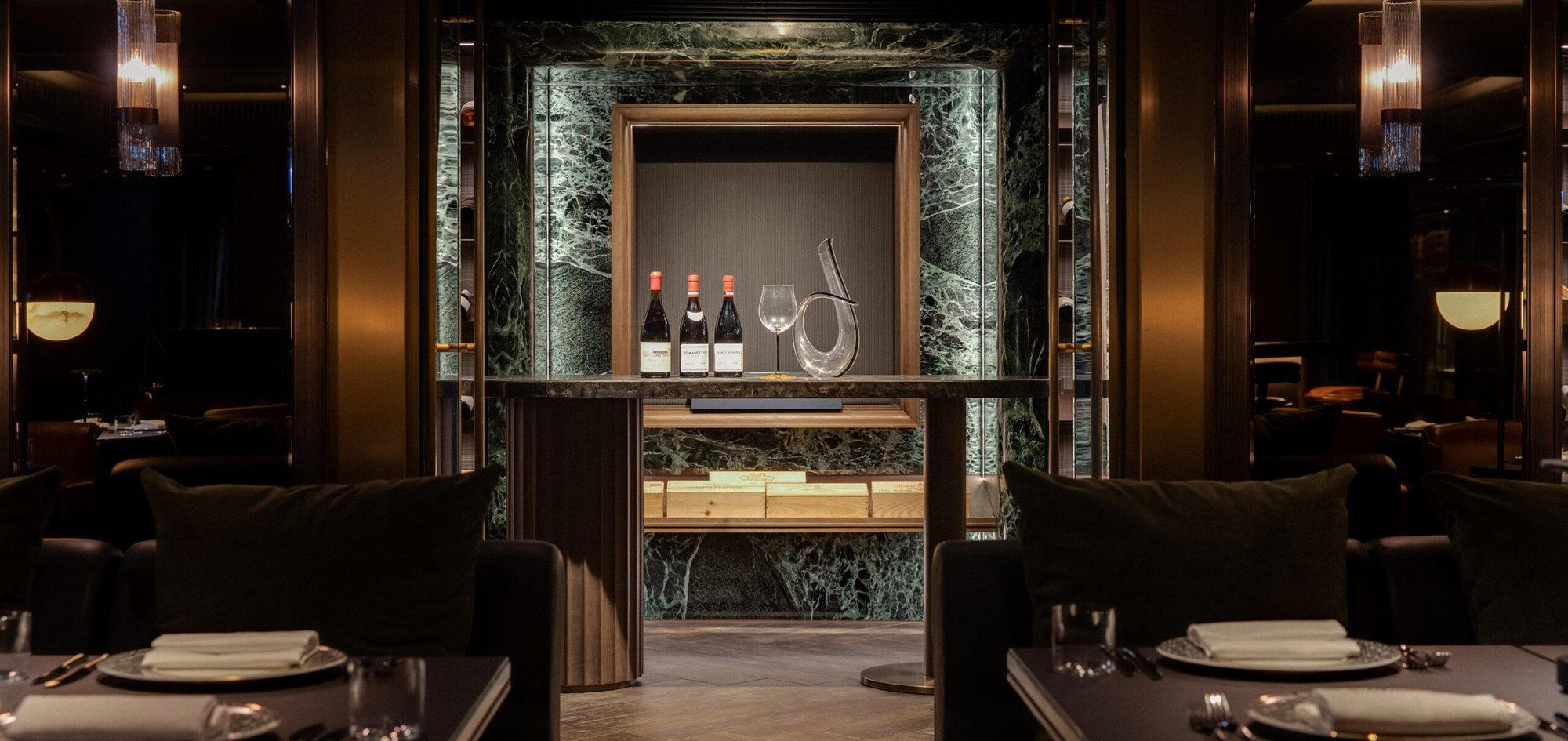
Details
- Elegant
- Intimate
- Sophisticated
- Date Night
- Business Dinner
- Special Occasion
- Chefs Counter
- Open Kitchen
- Private Dining
- Extensive Wine List
- Sake Program
- Tasting Menu
- A La Carte
- Counter Dining
- Sake
- Wine
- Allergy Accommodating
Current opening hours
- Monday
- 12–3 PM, 6–10 PM
- Tuesday
- 12–3 PM, 6–10 PM
- Wednesday
- 12–3 PM, 6–10 PM
- Thursday
- 12–3 PM, 6–10 PM
- Friday
- 12–3 PM, 6–10 PM
- Saturday
- 12–3 PM, 6–10 PM
- Sunday
- 12–3 PM, 6–10 PM
Hours can change for holidays and private events. Hours as of .
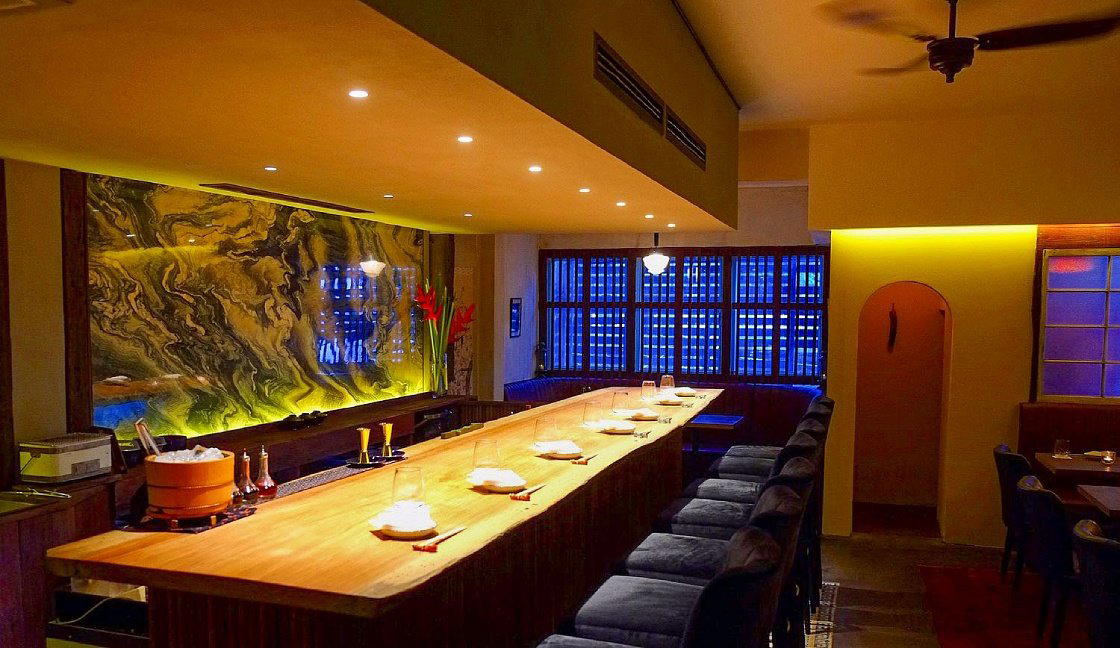
Sleek, modern Japanese with dim lighting focused on the teppanyaki tables, posh and intimate atmosphere.