I Fuletti
Our verdict
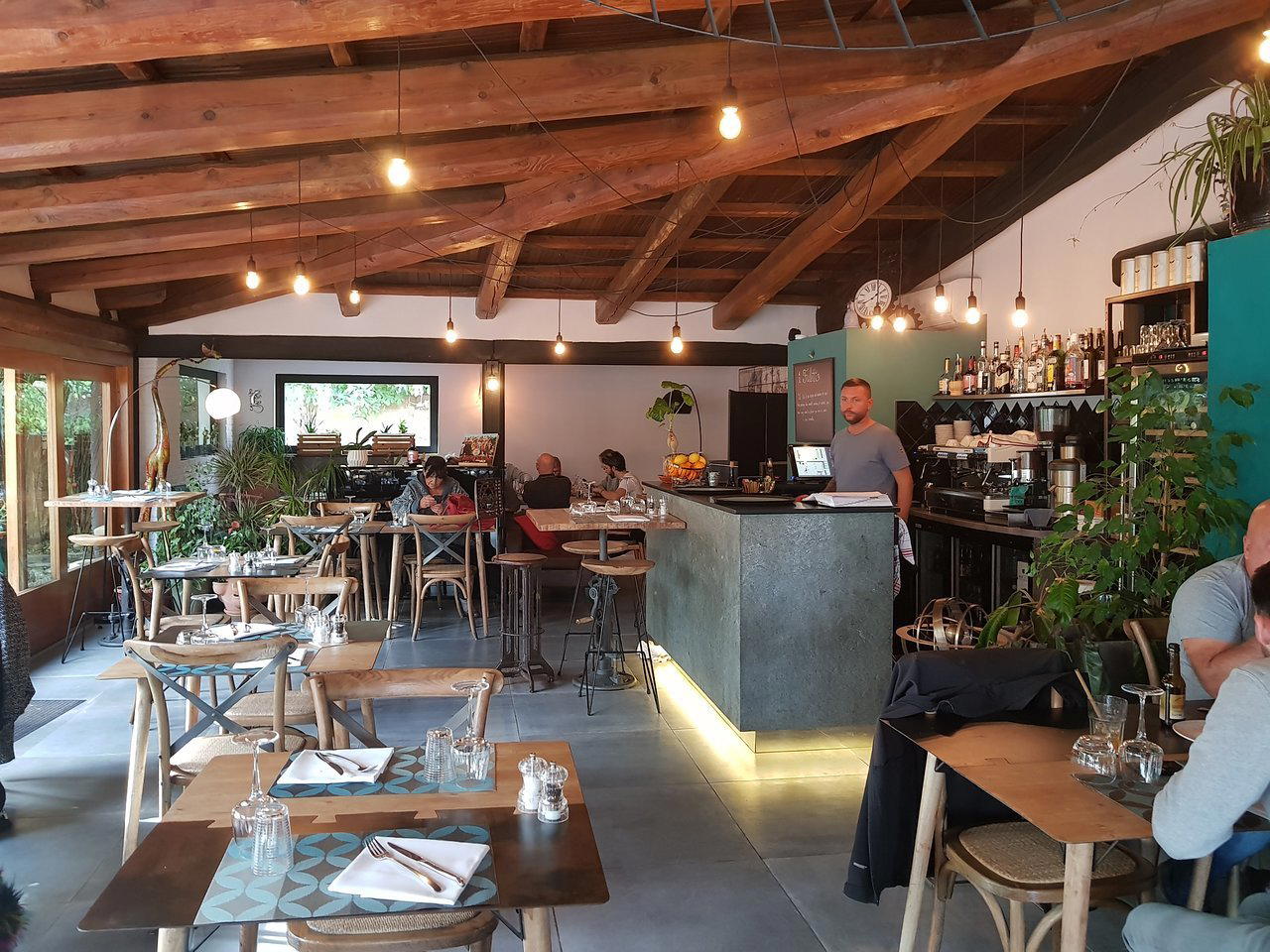
I Fuletti serves Mediterranean cooking with Corsican and Italian influences, plus craft cocktails, an open kitchen, and terrace seating for leisurely lunch or dinner.

Pearl is the En Primeur Club membership app — saves, bookings, and concierge access live there. Same editors, same standards.
The menu
What to order
- Gnocchi stracciatella
- Spaghetti with boutargue
- Il polpettone della Mamma dello Chef
Where the Castagniccia Meets the Table
The approach to Penta-di-Casinca sets the register before you arrive anywhere near a kitchen. The village sits in the lower reaches of the Castagniccia, Corsica's chestnut-forested interior, where the land drops toward the eastern plain and the Tyrrhenian coast shimmers in the distance. This is agricultural Corsica, not resort Corsica: the rhythms here are agricultural rather than touristic, and the food that comes out of this zone reflects that distinction with some force. I Fuletti, addressed on the Allée du Vieux Chêne, occupies that context directly.
Corsican village restaurants at this latitude tend to operate as extensions of local supply rather than as destinations in the conventional sense. The island's geography enforces a kind of ingredient discipline that more celebrated French kitchens sometimes have to manufacture artificially. Compare that position to destination restaurants like Mirazur in Menton, where sourcing is a deliberately constructed program, or Bras in Laguiole, where the terroir philosophy is explicit and narrated. In village Corsica, the supply chain is simply shorter and the philosophy rarely needs stating because the geography makes it self-evident.
The Ingredient Logic of the Castagniccia
Corsica's food identity is inseparable from what the island's interior produces. Chestnut flour, cured pork from semi-wild pigs that forage on the forest floor, brocciu (the fresh sheep and goat cheese that appears across the island's cooking in forms both sweet and savoury), aromatic herbs from the maquis scrubland, and the olive oils of the coastal slopes. These are not imported or approximated ingredients. They come from the land that surrounds places like Penta-di-Casinca, and restaurants rooted in villages like this one are positioned closer to their origin than any urban Corsican address could manage.
That proximity matters structurally. In France's broader fine-dining conversation, the sourcing argument has become central to how restaurants establish authority. Houses like Auberge du Vieux Puits in Fontjoncouse or L'Oustau de Baumanière in Les Baux have built their identities partly on proximity to specific regional producers. Corsican village cooking does not always have the critical apparatus or the Michelin infrastructure around it to make that argument legibly, but the underlying condition, short supply chains and seasonal dependence, is present in a very direct form.
Charcuterie from the Castagniccia carries an AOC designation in the case of certain Corsican pork products, reflecting formal recognition of the region's production character. Brocciu similarly holds AOC status, placing it in the same protected category as France's most formally recognised cheeses. A restaurant operating in Penta-di-Casinca is, in effect, operating inside one of France's defined ingredient-origin zones, even if the marketing language around it is far quieter than what you would find in Alsace or the Périgord.
Setting and Register
Village restaurants in Corsica's interior tend toward informal registers that do not map neatly onto the continental French categories of brasserie, bistro, or gastronomique. The physical environment tends to reflect the agricultural character of the surroundings: outdoor seating under trees is common, interior spaces are often modest, and the meal is framed as a domestic or convivial occasion rather than a performance. The address on the Allée du Vieux Chêne, meaning the old oak lane, places I Fuletti in that tradition. The oak is not incidental: chestnut and oak forest define this part of Corsica's interior, and the naming convention locates the restaurant inside that natural register rather than in opposition to it.
This is a different experiential mode from urban Corsican restaurants or from the island's coastal dining, which tends toward seafood-led menus with a more Mediterranean holiday pitch. Visitors who travel specifically to the Castagniccia zone are typically looking for the interior's character: the relative quiet, the agricultural density, the food that comes from elevation rather than from the shore.
Corsican Dining in French Context
France's dining geography has an enormous range. The Michelin-starred circuit, which includes properties like Alléno Paris au Pavillon Ledoyen, Assiette Champenoise in Reims, and Flocons de Sel in Megève, represents one end of that range. Regional village cooking, rooted in AOC ingredients and seasonal supply, represents a structurally different proposition: it is not competing with that tier but operating in a different register entirely, where the measure is fidelity to place rather than technical ambition at scale.
Corsica's position within France is particular. The island has its own language tradition, its own protected ingredient categories, and a food culture that draws on both French and Italian (particularly Genoese) influences. The eastern plain and the Castagniccia carry a density of that layered influence: chestnut-based cooking developed during centuries of Genoese rule, and the pastoral traditions that underpin the charcuterie and cheese production predate modern administrative categorisation. Restaurants in this zone are, whether or not they articulate it, drawing on one of France's more historically specific food cultures.
For readers building a broader understanding of French regional dining, see our full Penta-di-Casinca restaurants guide. For comparative reference across France's regional fine-dining tier, Georges Blanc in Vonnas, Auberge de l'Ill in Illhaeusern, Christopher Coutanceau in La Rochelle, La Marine in Noirmoutier-en-l'île, Au Crocodile in Strasbourg, Paul Bocuse in Collonges-au-Mont-d'Or, AM par Alexandre Mazzia in Marseille, and Troisgros in Ouches each represent the kinds of regional anchors against which France's full dining range becomes legible. For international reference points that illuminate how place-rooted sourcing operates at the top of the market, Le Bernardin in New York City and Atomix in New York City show how ingredient provenance functions across different culinary traditions.
Planning a Visit
Penta-di-Casinca is accessible by road from Bastia, roughly 20 kilometres to the north, making it a realistic half-day or full-day detour for travellers based on the island's northeastern coast. The village is not on the main tourist infrastructure routes, so arriving by car is the practical approach.
Frequently asked questions
Can I bring kids to I Fuletti?
Village restaurants in Corsica's interior, including those in Penta-di-Casinca, typically operate with an informal register that suits families without making it a primary focus. The setting at Allée du Vieux Chêne is low-key rather than formal, so children are unlikely to feel out of place.
What's the overall feel of I Fuletti?
I Fuletti sits in Penta-di-Casinca, a village in the lower Castagniccia, and carries the unhurried register typical of Corsica's interior. The address on Allée du Vieux Chêne places it away from the coastal tourist circuit, which shapes the tone: practical, rooted in local tradition rather than staged for visitors. Expect a room that reflects the surrounding landscape rather than continental French dining conventions.
Is I Fuletti worth the drive from Bastia for a lunch stop?
Penta-di-Casinca sits roughly 20 kilometres south of Bastia, making I Fuletti a realistic lunch destination for travellers based on the coast or passing through Haute-Corse. The village is in the lower Castagniccia, a region where the food identity is shaped by chestnut flour and cured pork from pigs that forage on forest undergrowth — ingredients you will not encounter in the same form closer to the waterfront. For anyone tracing Corsican food at its most interior and unmediated, the detour is purposeful rather than incidental.
What do people recommend at I Fuletti?
The cuisine in this part of the Castagniccia draws on chestnut flour, semi-wild pork, and the island's interior larder, ingredients that define what Corsican village cooking actually tastes like at its most direct. Dishes built around these products are the reason to make the detour from Bastia, roughly 20 kilometres to the north. Specific menu details are best confirmed with the restaurant before your visit.
How do I find I Fuletti?
I Fuletti is located at All. du Vieux Chêne, 20213 Penta-di-Casinca, France, Penta Di Casinca.
How far ahead should I plan for I Fuletti?
Village restaurants in Corsica's interior often operate on seasonal schedules and may have limited covers, so contacting I Fuletti ahead of any visit is sensible. Penta-di-Casinca is accessible from Bastia as a half-day or full-day detour, but arrival without a reservation risks a wasted journey. No booking lead time is publicly documented, so direct confirmation is the only reliable approach.
What's I Fuletti best at?
I Fuletti's position in the Castagniccia makes it a reference point for Corsican interior cooking rather than the coastal or Continental French styles more familiar to most visitors. The kitchen works within a tradition shaped by chestnut production, semi-wild pig rearing, and cured meat craft that the island's interior has sustained for centuries. That specificity of place and ingredient is what separates it from resort-area Corsican restaurants.
Quick Comparison
Comparable venues nearby, for context on price, style, and recognition.
| Venue | Cuisine | Price | Notes |
|---|---|---|---|
| I FulettiThis venue — the venue you are viewing | Mediterranean with Corsican and Italian influences | Not listed | Not listed |
| La Table de Mare & Gustu | Corsican Mediterranean Seafood | $30–50 | Vieux-Port |
| Alain Ducasse Baccarat | Avant-garde French fine dining in a crystal-clad Maison Baccarat setting | $150–200 | 16th arrondissement |
| The Maybourne Riviera | Mediterranean Fine Dining | Not listed | Roquebrune-Cap-Martin |
| La Table du Pinarello | Refined French-Mediterranean | Not listed | Sainte-Lucie-de-Porto-Vecchio |
| L'EssenCiel panoramic restaurant | Panoramic Mediterranean Fine Dining | Not listed | Cœur de Nice |
Continue exploring
More in Penta Di Casinca
Restaurants in Penta Di Casinca
All restaurants in Penta Di Casinca →
Hotels in Penta Di Casinca
Browse all →
Wineries in Penta Di Casinca
Browse all →
I Fuletti
The wine
- Wine program
- Curated wine list
- Craft cocktails
Details
- Rustic
- Cozy
- Family
- Casual Hangout
- Special Occasion
- Open Kitchen
- Terrace
- Craft Cocktails
- Local Sourcing
- A La Carte
Current opening hours
- Monday
- 9 AM–3 PM, 5:30–11 PM
- Tuesday
- 10 AM–3 PM, 6 PM–12 AM
- Wednesday
- 10 AM–3 PM, 6 PM–12 AM
- Thursday
- 10 AM–3 PM, 6–11 PM
- Friday
- 10 AM–3 PM, 6–11 PM
- Saturday
- 10 AM–3 PM, 6–11 PM
- Sunday
- 10 AM–3 PM, 6–11 PM
Hours can change for holidays and private events. Last verified .
Warm and welcoming with friendly attentive service in a natural setting, featuring air-conditioned dining room and shaded terrace.