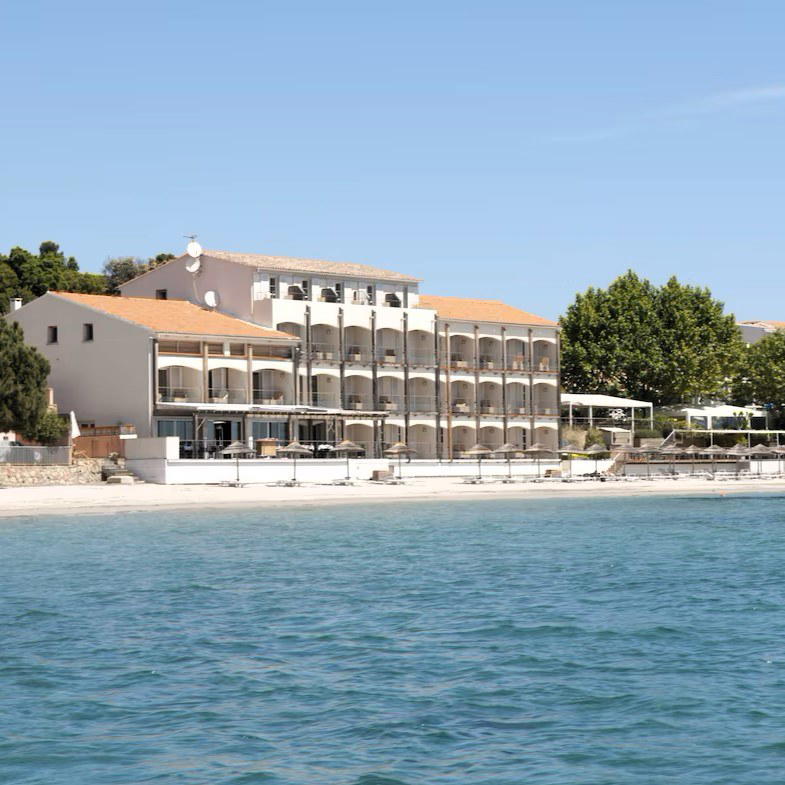
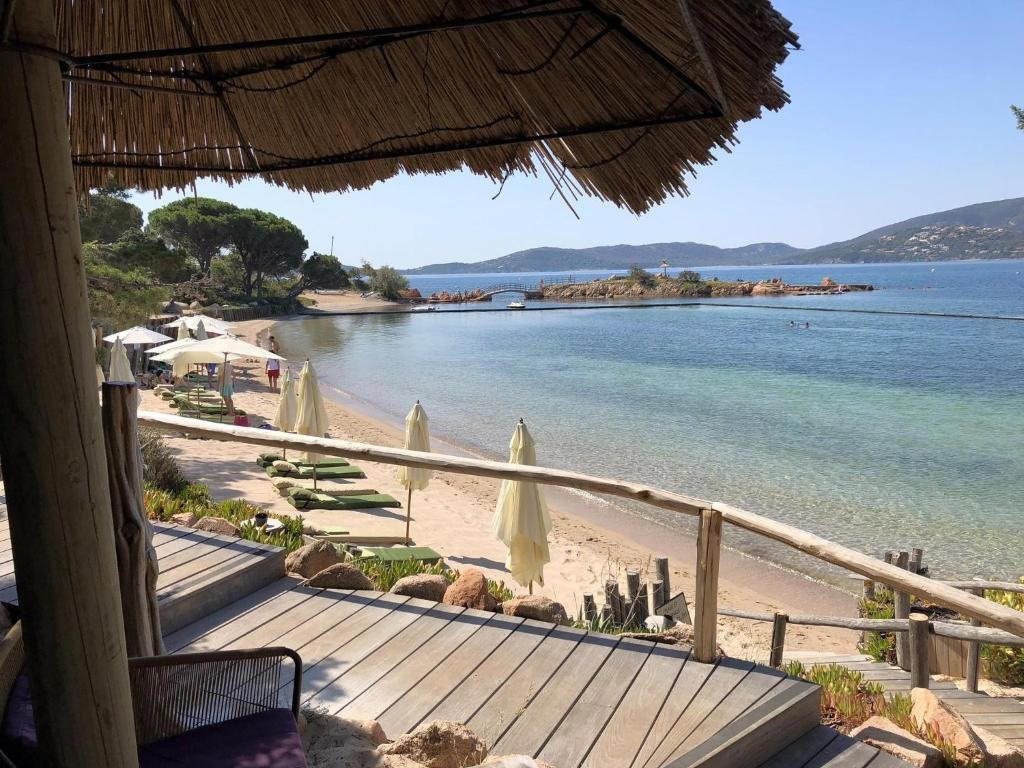
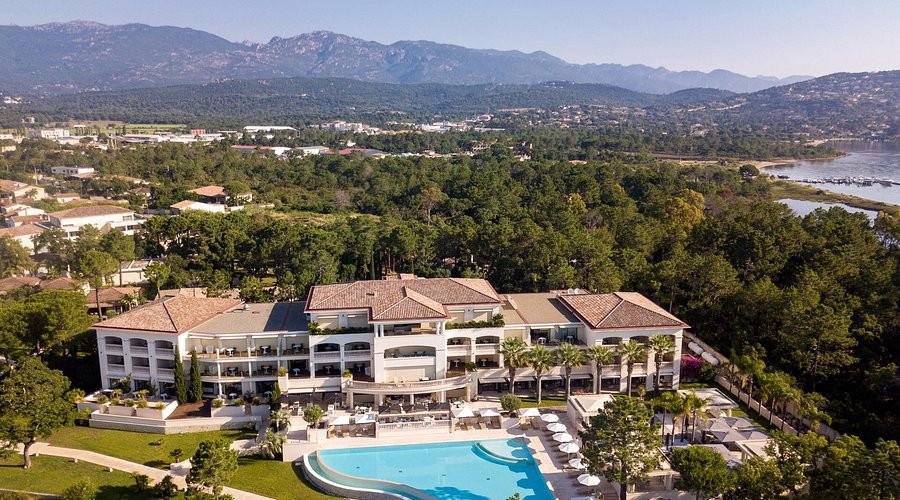
Set at the edge of Plage de Pinarello on Corsica's southern coast, La Table du Pinarello offers a dining position that few restaurants on the island can match, the sea arrives before the food does. The setting places it firmly within the tradition of Corsican coastal dining, where the quality of the view and the provenance of the catch carry as much weight as the kitchen's technique.
Pearl is the En Primeur Club membership app — saves, bookings, and concierge access live there. Same editors, same standards.
- Address
- Ste Lucie de, Plage de Pinarello, 20144 Porto-Vecchio, France
- Phone
- +33 4 95 26 92 70
- Website
- lepinarello.com
- Directions
- Get directions
 Saves & bookings on Pearl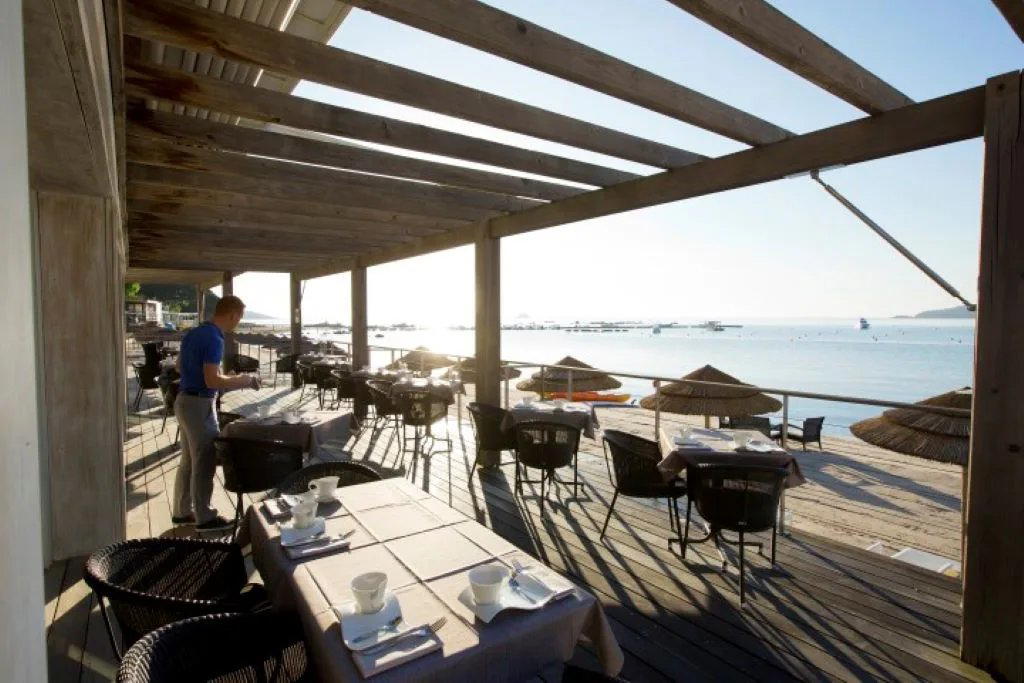
Where the Shoreline Sets the Agenda
Corsica's southern coast has long operated by a different set of dining rules than the mainland. In a region where the relationship between place and plate is not decorative but structural, the position of a restaurant at the waterline is not incidental, it shapes what gets cooked, how it gets cooked, and what the meal is actually for. La Table du Pinarello, set directly at Plage de Pinarello near Porto-Vecchio, sits inside that tradition. The beach arrives first, and the dining follows its logic.
This coastal positioning does not function as a backdrop. In southern Corsica, particularly in the arc between Bonifacio and Porto-Vecchio, the leading beachside tables have always been defined by immediacy: fish landed nearby, herbs that grow on the maquis-covered hills behind the shore, charcuterie from the interior that finds its way to the coast because the island is not large enough to keep its own regions separate for long. That combination, sea and maquis, coast and interior, is among the more coherent regional food propositions in France, and it is what animates restaurants at this address.
Corsican Cooking in Its Southern Register
Southern Corsican cuisine occupies a specific position within the broader French regional tradition. It shares technique with the mainland but draws its character from an entirely distinct set of raw materials: lonzu and coppa cured from free-ranging pigs, brocciu fresh cheese made from ewe's milk, sea bass and sea bream pulled from the clear water between Corsica and Sardinia, and wines from appellations like Figari and Porto-Vecchio that are barely exported and largely unknown outside the island. This insularity is a feature, not a limitation. The food at a well-positioned southern Corsican restaurant is legible precisely because its sources are geographically bounded.
The Porto-Vecchio area supports a tier of restaurants that takes those materials seriously. In Zonza, addresses like Domaine Le Mouflon d'Or, which holds to the Corsican traditional format, and L'Eternisula represent the kind of locally-anchored cooking that defines the region's dining character away from the tourist circuit. Hôtel Restaurant de La Terrasse and Le Patio fill adjacent positions in the same local ecosystem. La Table du Pinarello operates in a different register, coastal rather than village-set, but draws from the same regional larder.
The Beach Setting as a Culinary Argument
Across France, restaurants positioned directly at the water tend to split into two categories: those that treat the view as the product and deliver little behind it, and those that understand the view as a commitment, a signal to the kitchen that the sourcing must match the setting. The leading coastal dining rooms in France, whether in Brittany, Provence, or on the island territories, operate from the second position. The setting becomes a form of editorial pressure on the plate.
Corsica's beach restaurants carry a particular version of this pressure. The island's fishing tradition, concentrated around the Gulf of Porto-Vecchio and the straits between Corsica and Sardinia, produces catches of sea bass, red mullet, and octopus that rarely travel far before service. A restaurant at Plage de Pinarello, positioned as directly as La Table du Pinarello is, operates within a supply chain that is, by geography, shorter than almost anything available on the French mainland. That proximity is the central culinary argument of the address.
By contrast, the French fine dining tradition that has consolidated in Paris and major regional cities Restaurants like Alléno Paris au Pavillon Ledoyen or Assiette Champenoise in Reims operate from a different platform entirely, technique and terroir brokered through complex sourcing networks across France and beyond. Southern Corsican coastal cooking, at its most honest, reverses that model. The sourcing radius is tight, the techniques serve the material rather than the other way around, and the room itself is shaped by proximity to the sea rather than by an interior design budget. Among France's distinctly place-rooted restaurants, addresses like Bras in Laguiole and Flocons de Sel in Megève demonstrate how powerfully a single landscape can anchor a kitchen's identity. The restaurant works in a structurally similar mode, but with the Mediterranean as its defining reference rather than the Aubrac plateau or the Savoyard peaks.
For those arriving by yacht, the sheltered bay at Pinarello offers anchorage and the beach is accessible by tender, making it a natural stop on the southern Corsican circuit that runs between Bonifacio and Porto-Vecchio.
Southern Corsica's restaurant season runs primarily from May through September, with peak period in July and August when capacity across the Porto-Vecchio area is under significant pressure. Restaurants at beach locations like Pinarello operate to summer rhythms, and demand at the table tracks directly with beach occupancy. Visiting in June or early September typically offers better availability alongside temperatures that are still fully suited to outdoor coastal dining. For reference, the broader southern Corsican dining circuit also includes Le Rouf in the area, which serves a different format and provides useful contrast.
Mirazur in Menton and AM par Alexandre Mazzia in Marseille represent the upper boundary of the French Mediterranean tradition, a useful calibration point when thinking about how different registers of coastal cooking relate to one another. At the opposite end of the ambition and formality scale from those addresses, the restaurant represents Corsican coastal dining in its most direct, location-specific form.
Price and Positioning
Comparable venues nearby, for context on price, style, and recognition.
| Venue | Cuisine | Price | Notes |
|---|---|---|---|
| La Table du PinarelloThis venue — the venue you are viewing | Not listed | $$$$ | Not listed |
| Le Rouf | Not listed | $$$$ | Pinarello, Mediterranean Brasserie with Corsican Influences |
| Hôtel Restaurant de La Terrasse | Village, Corsican Bistro | $$ | Not listed |
| L'Eternisula | Zonza, Corsican Café-Deli | $$ | Not listed |
| Le Patio | Zonza, Authentic Corsican | $$ | Not listed |
| Domaine Le Mouflon d'Or | Not listed | $$$$ | Alta Rocca, Zonza, Mediterranean Fine Dining |
Continue exploring
More in Zonza
Restaurants in Zonza
Browse all →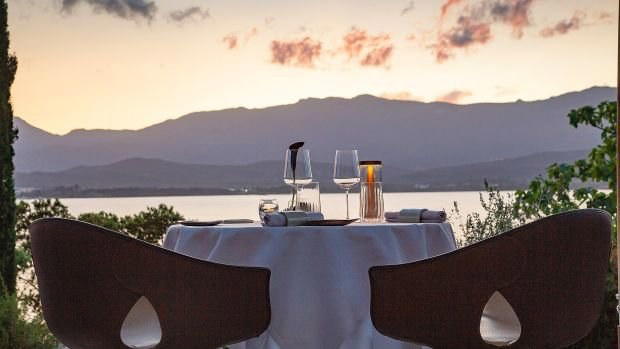
At a Glance
- Elegant
- Scenic
- Romantic
- Special Occasion
- Brunch
- Terrace
- Waterfront
- Hotel Restaurant
- Extensive Wine List
- Waterfront
Current opening hours
- Monday
- 12–2:30 PM
- Tuesday
- 12–2:30 PM
- Wednesday
- 12–2:30 PM
- Thursday
- 12–2:30 PM
- Friday
- 12–2:30 PM
- Saturday
- 12–4:30 PM
- Sunday
- 12–2:30 PM
Hours can change for holidays and private events. Last verified .
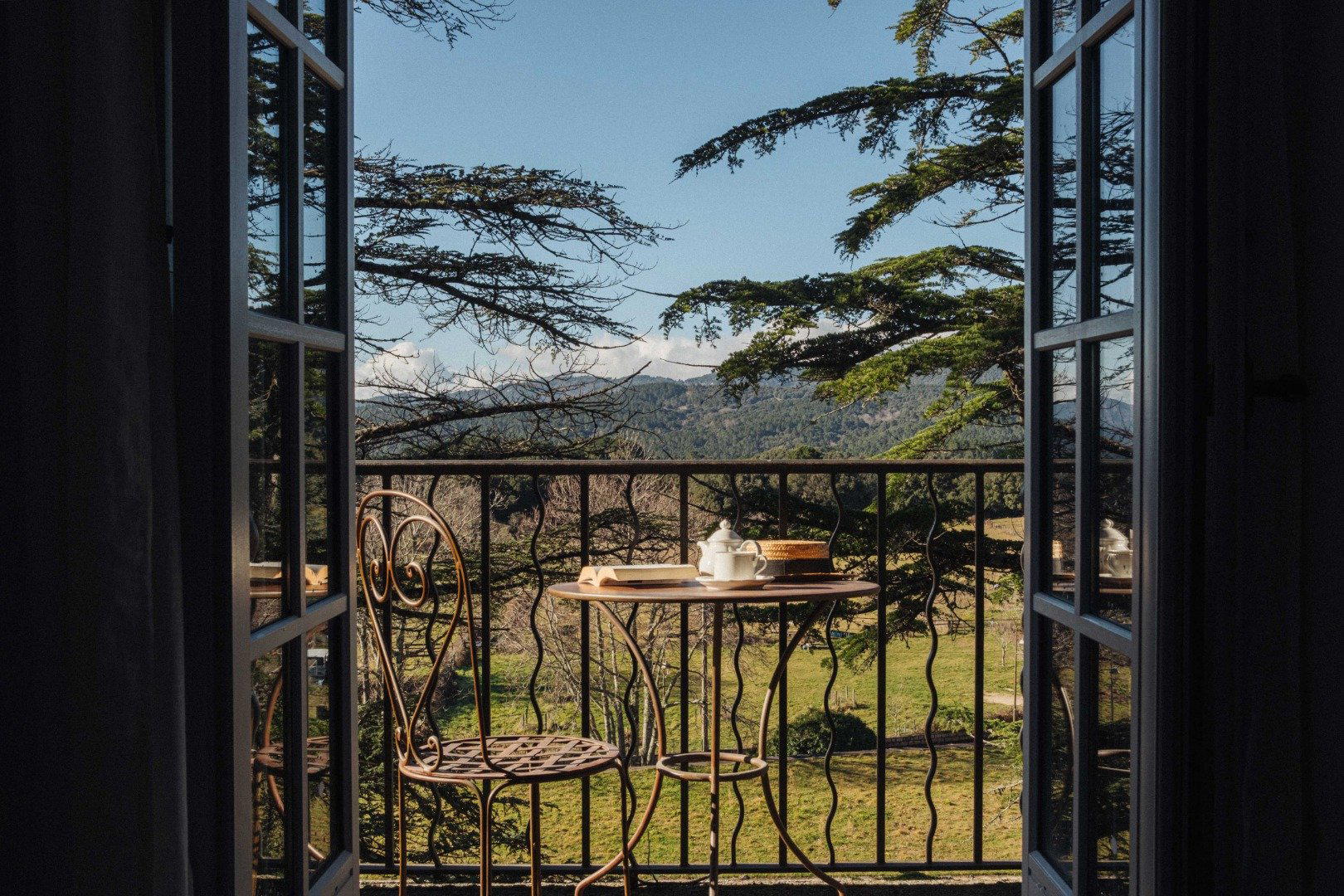
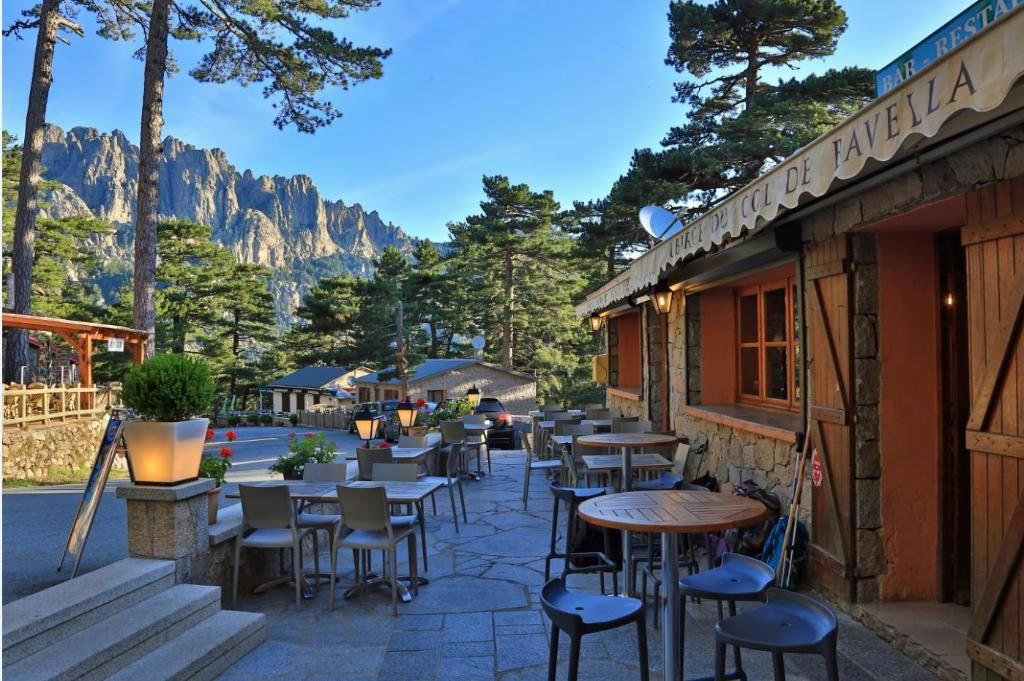
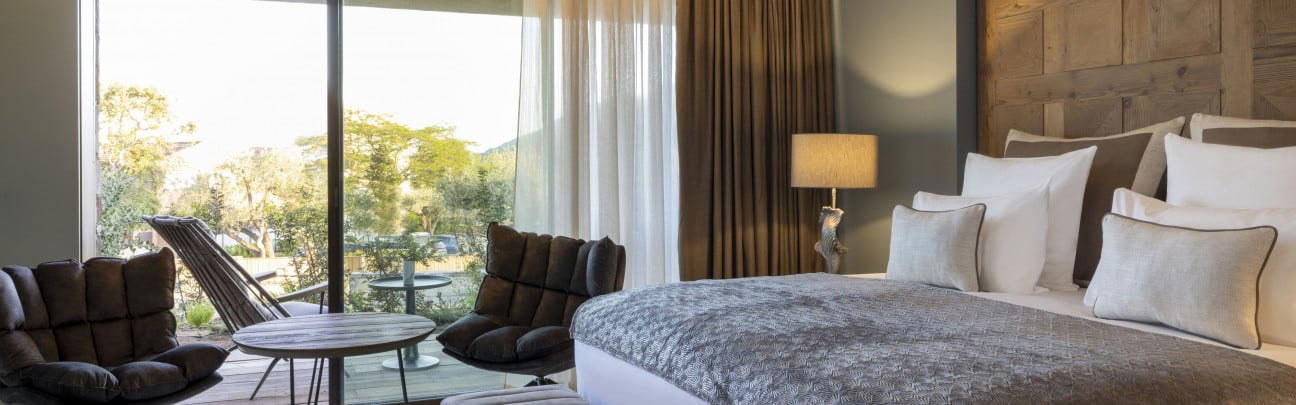
Elegant beachfront terrace with panoramic sea views, polished service, and a light, summery atmosphere.