
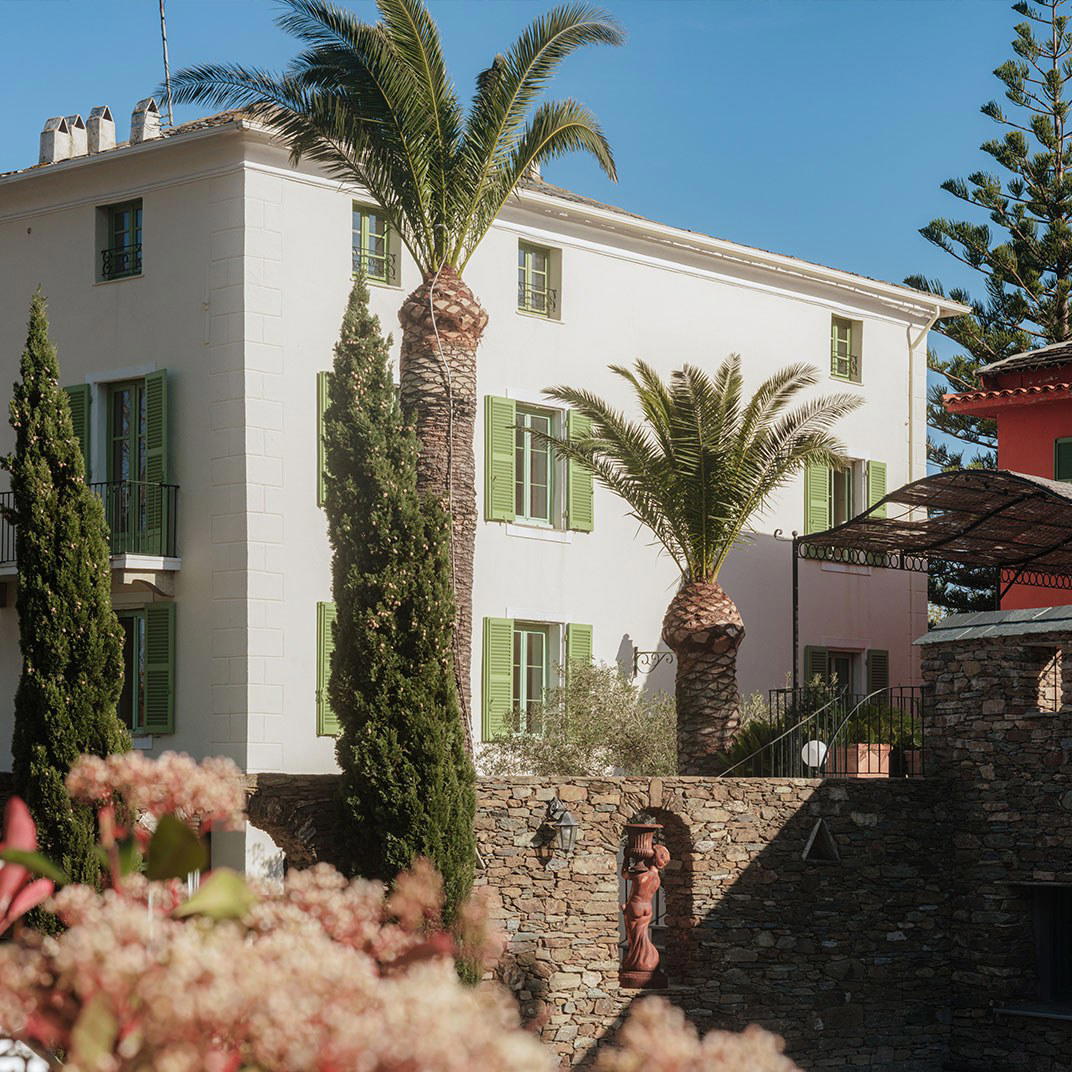
An 18th-century farmhouse a few miles inland from Saint-Florent, La Dimora translates a working agricultural past into 17 rooms, suites, and villas set across substantial gardens in the Corsican interior. The property holds a Michelin Key (2024) and operates its restaurant, Pera Bianca, from the estate's original stone sheepfolds. Reservations require direct confirmation through EP Club's customer service team.
Pearl is the En Primeur Club membership app — saves, bookings, and concierge access live there. Same editors, same standards.
- Address
- Route de Saint-Florent, 20232 Oletta
- Phone
- +33 4 95 35 22 51
- Website
- ladimora.fr
- Directions
- Get directions
 Saves & bookings on Pearl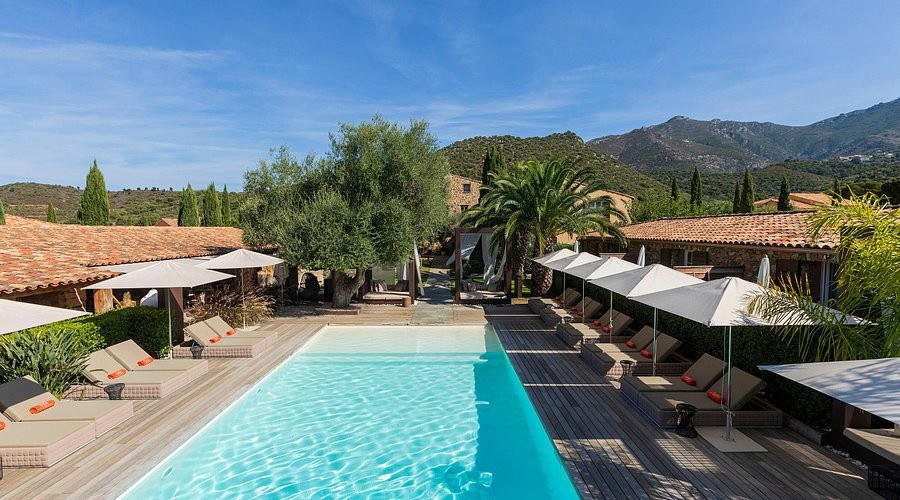
Stone Walls, Working Farmland, and the Architecture of Corsican Leisure
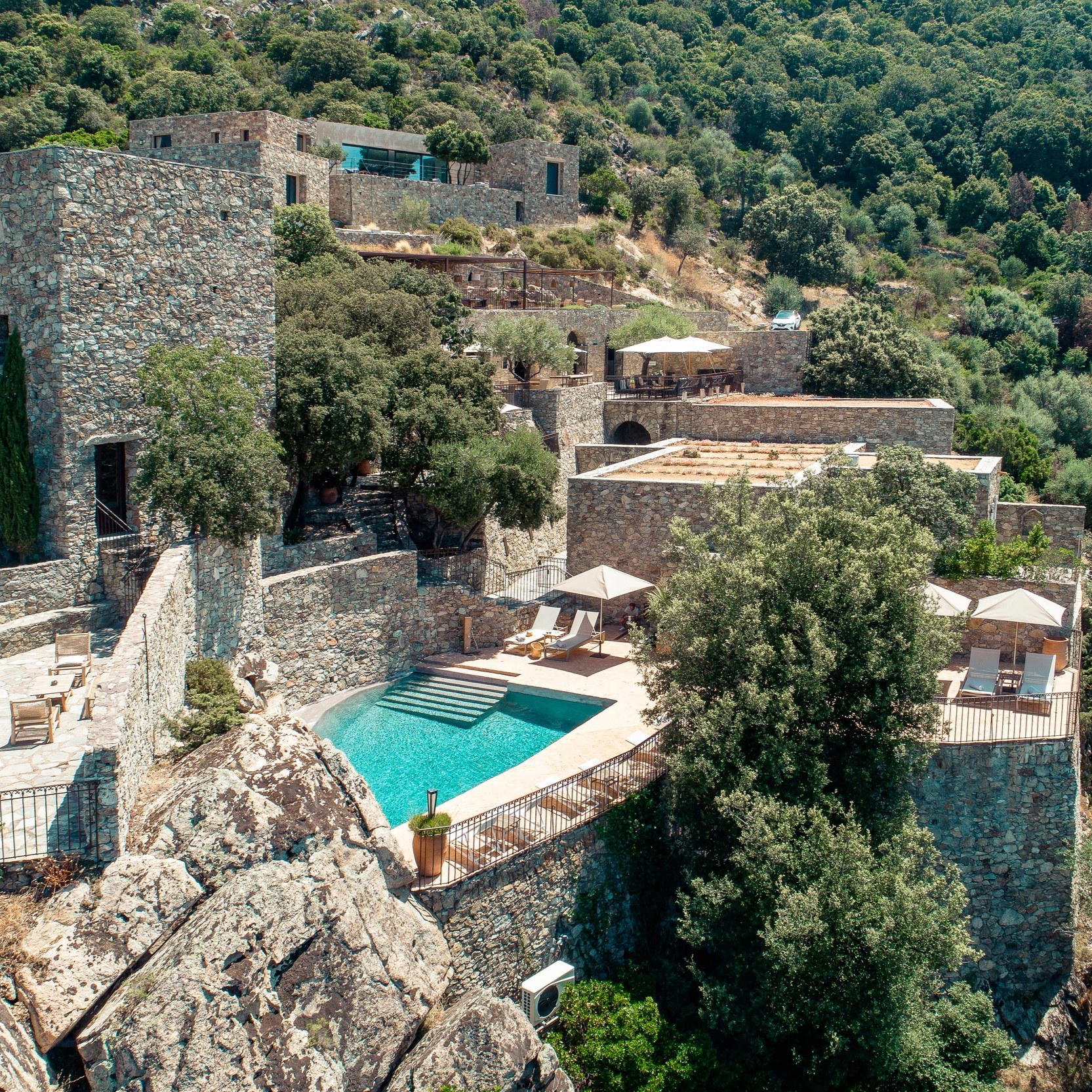
The drive from Saint-Florent into the interior gives you the measure of what northern Corsica actually is: a range of maquis scrub, olive groves, and rough stone walls that have been built and rebuilt over centuries. La Dimora sits a few miles along that road, in Oletta, occupying an 18th-century farmhouse whose bones, and much of its character, predate the modern hospitality industry by roughly two hundred years. That longevity of form is the property's defining architectural argument. The walls are thick, the stonework is exposed, and the proportions of the original structure have been preserved rather than opened up into the kind of airy minimalism that characterises contemporary rural hotel conversions elsewhere in southern France.
Properties like La Bastide de Gordes in Gordes and Villa La Coste in Le Puy-Sainte-Réparade have demonstrated that guests will travel significantly for the specific atmosphere that comes from a building with genuine age and setting.
Seventeen Rooms and the Question of Scale
At 17 rooms, suites, and villas, the property sits at a scale that allows it to function as a country house rather than a resort. That distinction matters architecturally and experientially. Smaller key counts change how shared spaces feel, how the gardens read, and how the overall atmosphere calibrates. In the French interior luxury market, this scale positions La Dimora closer to Château de Montcaud in Sabran or Château du Grand-Lucé in Le Grand-Lucé than to the larger coastal properties that dominate the luxury conversation in southern France.
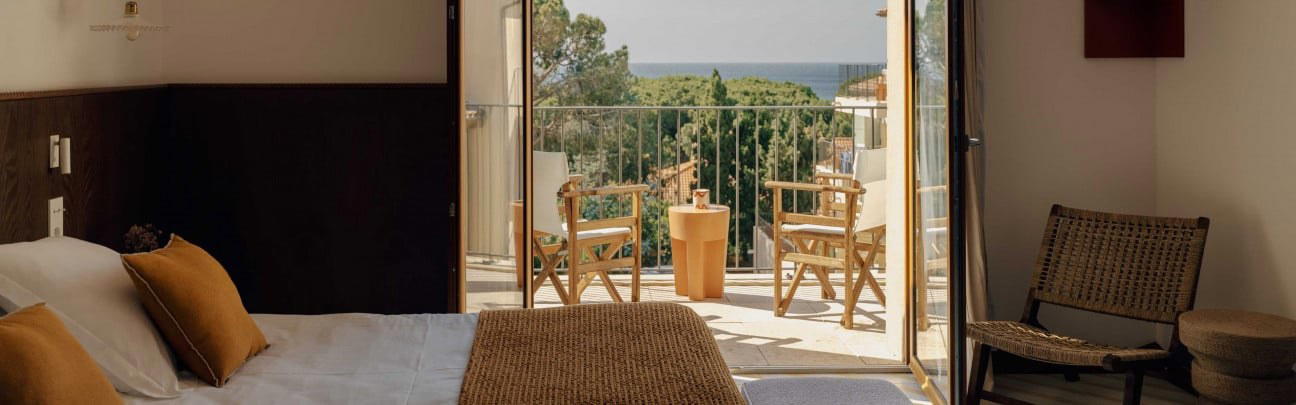
The room mix spans standard rooms, suites, and villas. The villas carry the additional feature of private pools, which represents the clearest functional differentiation within the property's accommodation tiers. In a destination where the summer heat makes water a practical consideration rather than a decorative amenity, the private pool access that comes with the villa category has real operational weight, not merely symbolic upgrade value. The rooms and suites combine what the property describes as rough-hewn rustic charm with contemporary comforts, a pairing that reflects a broader design philosophy in converted historic estates: the preservation of material honesty, exposed stone, worn wood, uneven plaster, alongside the infrastructure that a modern traveller expects.
The Sheepfold Dining Room: Adaptive Reuse as Design Statement
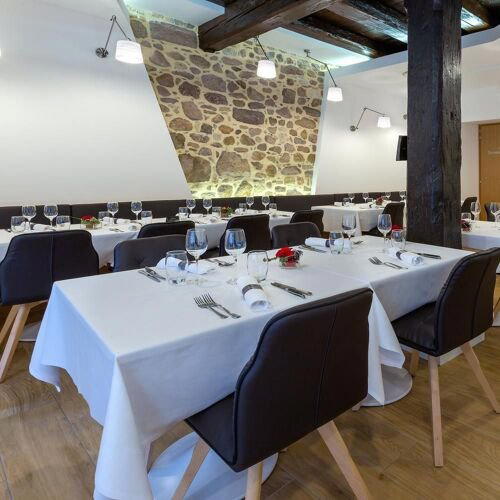
Agricultural conversions succeed or fail on how honestly they treat their source material. La Dimora's restaurant, Pera Bianca, occupies the estate's original stone sheepfolds. This is a specific architectural decision: sheepfolds are low structures, built for function rather than grandeur, and they carry a different atmospheric register than a manor dining room or a converted chapel. Eating inside a former sheepfold, with the original stonework visible overhead, connects the dining experience to the working history of the land in a way that decorative rural references rarely achieve. Comparable adaptive reuse projects in French hospitality, such as Les Sources de Caudalie in Bordeaux, which built its identity around existing vineyard infrastructure, demonstrate that the integrity of the source building tends to be what determines whether the conversion reads as authentic or theatrical.
The Michelin Key awarded to the hotel in 2024 validates the overall hospitality proposition. Michelin's Key system, introduced to evaluate hotels rather than restaurants, applies criteria across service, design coherence, and guest experience. Holding a Key places the hotel in a formally recognised tier of French accommodation, distinct from properties relying solely on self-description. Properties at comparable recognition levels in France include Baumanière Les Baux-de-Provence in Les Baux and Domaine Les Crayères in Reims, both of which demonstrate how strongly the Key correlates with properties where architecture, setting, and food service operate at a consistent standard.
The Gardens and the Hammam: Connective Tissue of a Country Estate
Beyond the accommodation and restaurant, the property's amenity set functions as the connective tissue that determines the daily rhythm of a stay. A heated pool, a spa with hammam, and substantial gardens and grounds collectively define how time passes when guests are not eating or sleeping. This configuration, grounds-heavy, leisure-paced, disconnected from urban stimulation, describes a particular type of travel that has a long history in the European interior but that Corsica, due to the dominance of coastal tourism in its identity, has not always been associated with delivering at this standard.
The property's position inland from Saint-Florent is relevant here. Coastal Corsican hotels compete on sea access and beach proximity. The hotel's design logic runs perpendicular to that: the gardens and grounds represent the amenity, not a view of the water. This is not a compromise but a deliberate orientation toward a different kind of Corsican experience, one rooted in the island's agricultural and cultural interior rather than its coastline.
Comparable Properties and Where La Dimora Sits
Positioning the hotel within the broader French luxury accommodation market requires acknowledging the range of properties competing for similar guests. At the coastal and urban end, properties like Hotel Du Cap-Eden-Roc in Cap d'Antibes and La Réserve Ramatuelle in Ramatuelle define one pole of the market. Cheval Blanc Paris and The Maybourne Riviera in Roquebrune-Cap-Martin represent the international luxury brand tier. The hotel occupies a different position: a single, historically specific property in a less-trafficked part of Corsica, with a Michelin Key and a design approach anchored to the authenticity of its 18th-century structure. The nearest Corsican peer in terms of design seriousness and small-scale ambition is Casadelmar in Porto-Vecchio, though the two properties make different architectural and atmospheric arguments. Other design-led properties in France that occupy a comparable niche include Château de la Gaude in Aix-en-Provence, Hôtel and Spa du Castellet in Le Castellet, and Château Lafaurie-Peyraguey in Lieu-dit Peyraguey.
Planning a Stay
Reservations are recommended. This is a practical consideration worth factoring into planning, particularly for peak summer travel when northern Corsica sees its highest visitor volumes. The villa category, with private pools, warrants early enquiry given the limited number of units at that tier.
Comparison Snapshot
Comparable venues nearby, for context on price, style, and recognition.
| Venue | Cuisine | Price | Awards | Notes |
|---|---|---|---|---|
| La DimoraThis venue — the venue you are viewing | Restored 18th-century farmhouse blending rustic authenticity with contemporary elegance | $$$ | Michelin 1 Key | Not listed |
| NOAE by Emerald Stay | Historic 17th-century palazzo reimagined as a contemporary luxury boutique hotel with art gallery elements. | $$$$ | 4-Star | Oletta |
| Hôtel Marinca et Spa | Mediterranean beachfront luxury resort with individually furnished rooms and suites. | $$$$ | Michelin 1 Key | Olmeto-Plage |
| Sainte-Victoire | Modern luxury boutique facing Mont Sainte-Victoire | $$$$ | Michelin 1 Key | Vauvenargues |
| Dominique Colonna | Contemporary boutique in harmony with nature | $$$ | Michelin 1 Key | Vallée de la Restonica |
| Belles Rives | Historic Art Deco palace with contemporary updates, blending 1930s authenticity with modern luxury and refined hospitality. | $$$$ | Michelin 1 Key | Cap d'Antibes |
Recognition history
Dated appearances from independent guides and award organizations, with the underlying list record or original source where available.
Michelin 1 Key
Michelin
Michelin 1 Key
Michelin
Continue exploring
More in Oletta
Hotels in Oletta
Browse all →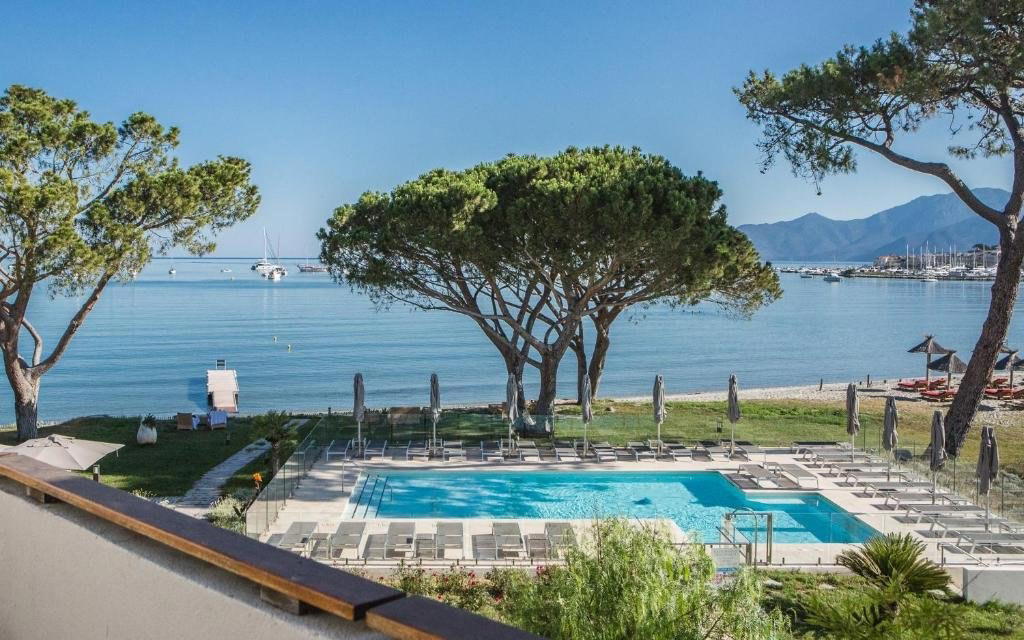
Restaurants in Oletta
Browse all →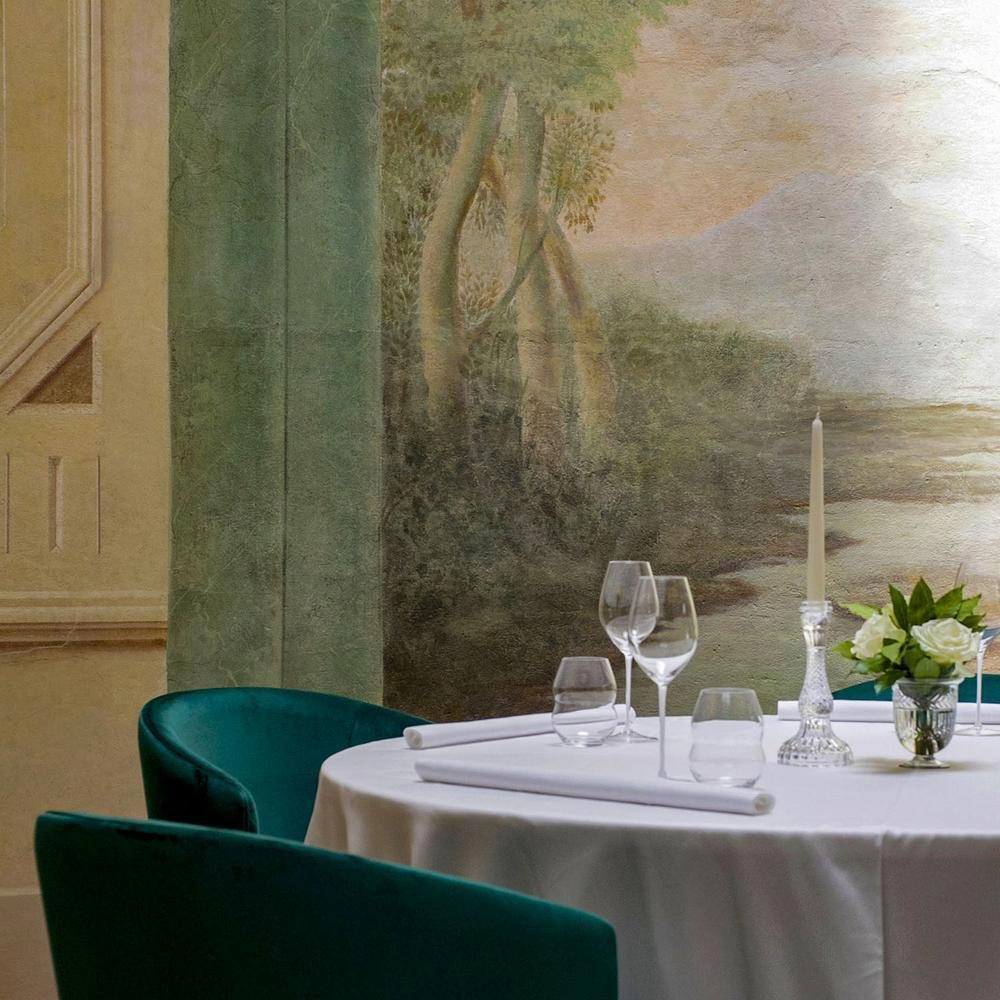
Wineries in Oletta
Browse all →
At a Glance
- Romantic
- Quiet
- Elegant
- Rustic
- Cozy
- Intimate
- Romantic Getaway
- Wellness Retreat
- Weekend Escape
- Garden
- Wi Fi
- Pool
- Spa
- Restaurant
- Room Service
- Concierge
- EV Charging
- Garden
- Wi Fi
- Pool
- Spa
- Restaurant
- Room Service
- Concierge
- EV Charging
Tranquil and serene with warm lighting, exposed stone walls, and a peaceful countryside atmosphere praised for its relaxing poolside and lounge areas.