Aux Trois Fourchettes occupies a quiet corner of Cervione, a hilltop village in the Haute-Corse that remains largely outside the coastal tourist circuit. The kitchen draws on the produce traditions of Cap Corse and the Castagniccia, a region whose chestnut forests, sheep pastures, and mountain herb fields define a larder that most French mainland restaurants cannot replicate. For travellers prepared to drive inland, this is where Corsican ingredient culture reads most clearly on the plate.
Pearl is the En Primeur Club membership app — saves, bookings, and concierge access live there. Same editors, same standards.
- Address
- Place de l'Eglise, 20221 Cervione, France
- Phone
- +33495381486
- Website
- facebook.com
 Saves & bookings on Pearl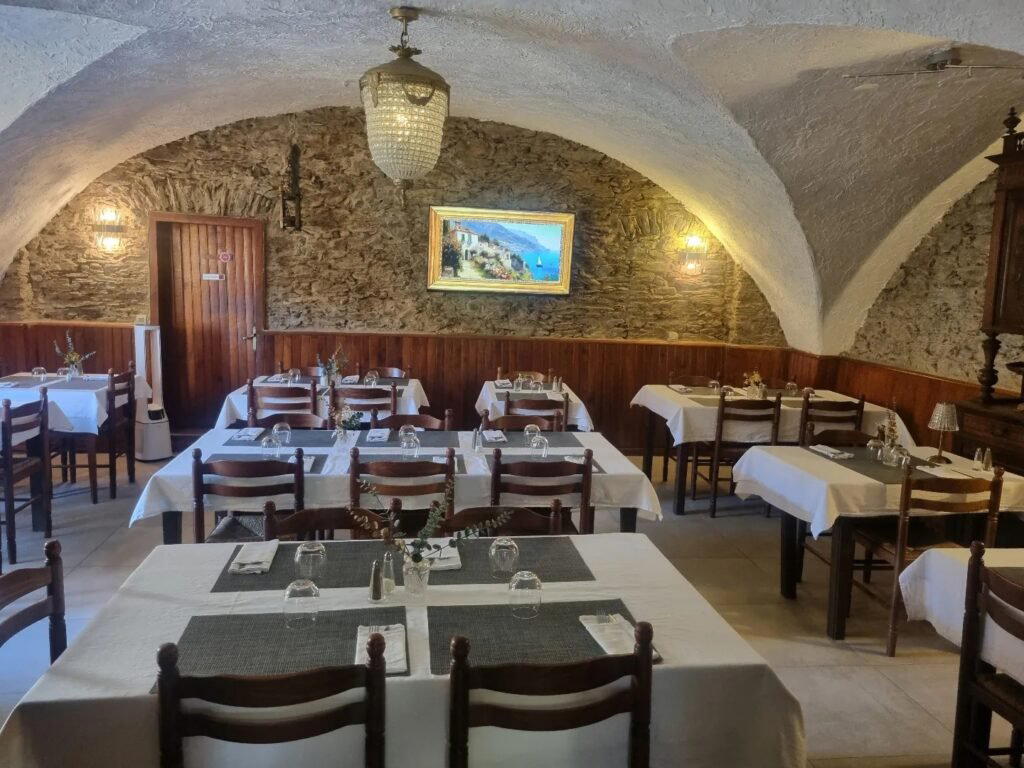
A Village Square Table in the Castagniccia
Cervione sits on a ridge in the eastern Castagniccia, roughly 60 kilometres north of Bastia along a road that trades the coast's beach traffic for a slower procession of chestnut groves and stone villages. The square fronting the church of Saint-Érasme is the kind of place where French provincial life still organises itself around the midday meal, and Aux Trois Fourchettes occupies that square in the literal sense: the address is Place de l'Eglise. Approaching from the lower road, you climb through terraced orchards and arrive at a setting that announces, before you sit down, that the food here is rooted in a specific geography rather than a generic Corsican shorthand.
That geography matters more than it might in other parts of France. The Castagniccia takes its name from the chestnut tree — castagna in the Corsican language — and the forests that define the subregion have shaped local cooking for centuries. Chestnut flour appears in polenta, pulenda, and pastry traditions that have no real equivalent on the mainland. Sheep and goats graze at altitude. Charcuterie here carries the AOC designation Charcuteries de Corse, a protected status that requires specific breed, feed, and curing conditions tied to the island's interior. A kitchen in Cervione is, by proximity, inside one of France's more distinctive ingredient corridors, a position that restaurants in Paris or Lyon can reference but cannot physically replicate.
What Corsican Ingredient Culture Actually Means at Table
France's most discussed restaurants tend to concentrate near its major cities or in regions with well-established gastronomic infrastructure. Mirazur in Menton, Alléno Paris au Pavillon Ledoyen in Paris, Flocons de Sel in Megève, Bras in Laguiole, operates within a framework of critical visibility, supplier networks, and food media attention that Corsica sits largely outside. Aux Trois Fourchettes, by contrast, is a modest village restaurant rather than a destination dining room. That distance is not a disadvantage for a village restaurant drawing on local product. It is, in several ways, a structural asset. The ingredient chains are short. The competitive pressure to perform for Parisian critics is low. The expectation of the table is set by the landscape visible through the window rather than by a Michelin expectation the diner has arrived with.
Corsican charcuterie is the clearest case study in why provenance functions differently on this island. The pigs raised for lonzu, coppa, and figatelli are fed on chestnuts and acorns in a system that ties the flavour of the cured meat directly to the forest floor. A restaurant positioned in Cervione has access to that supply chain at source, in a way that distinguishes it from the Corsican-inflected menus you encounter in Nice or Marseille, where the same product arrives after more handling and distance. For diners who track provenance rather than solely looking at destination fame, the eastern Castagniccia presents a case worth making the drive for.
The broader French restaurant tradition of sourcing from a defined terroir, practised at different scales by Georges Blanc in Vonnas, Auberge de l'Ill in Illhaeusern, and Auberge du Vieux Puits in Fontjoncouse, finds a Corsican counterpart in restaurants that engage with the island's specific produce calendar. Brocciu, the fresh sheep or goat cheese that holds a protected designation of origin, appears from November through June when the milk supply aligns with traditional production windows. Chestnut season runs from October through December. A kitchen in Cervione that programmes around these rhythms is doing something closer to true seasonal cooking than a mainland restaurant sourcing from regional markets at two removes from the farm.
Cervione in the Context of Eastern Corsica's Dining Scene
Eastern Corsica's dining attention clusters around the coast: Bastia in the north, the Porto-Vecchio area in the south, with resort restaurants filling the summer corridor in between. The interior receives fewer column inches and proportionally fewer visitors who have planned a meal as the reason to be there rather than a by-product of passing through. This is partly a function of how travel journalism has covered the island, coastal photography sells, mountain villages require explanation, and partly a function of the seasonal pattern that concentrates dining demand in July and August along the beach routes.
Cervione sits off that main current. Its elevation gives it a cooler summer than the coast, and the town retains a working character that distinguishes it from purely seasonal resort villages. The Thursday market in nearby towns draws local producers rather than tourist-facing stalls. For visitors constructing a Corsican itinerary with the island's food culture rather than its beaches as the organising principle, the eastern highlands offer a denser concentration of authentic produce context per kilometre than any stretch of the coastal road.
Planning a Meal at Aux Trois Fourchettes
Cervione is most practically reached by car from Bastia, roughly 50 kilometres to the north, or from the Porto-Vecchio direction as part of a longer inland routing. The D71 through the Castagniccia offers a more scenic approach and passes through villages where the chestnut agriculture that underpins the region's cooking is visible at the roadside. Public transport connections to Cervione are limited, making a hire car the practical choice for most travellers based on the coast. The village is compact enough that parking near the church square is manageable outside peak summer weekends. Specific hours and booking are best confirmed directly before the journey.
For readers whose French dining itinerary extends to the mainland, the contrast between Corsica's ingredient-led village cooking and the more elaborate menus at Troisgros - Le Bois sans Feuilles in Ouches, Paul Bocuse - L'Auberge du Pont de Collonges in Collonges-au-Mont-dOr, or Les Prés d'Eugénie - Michel Guérard in Eugénie-les-Bains is worth holding in mind as context. Village-scale restaurants like this one operate in a different register from destination dining at La Table du Castellet in Le Castellet, Maison Lameloise in Chagny, Le 1947 à Cheval Blanc in Courchevel, or L'Oustau de Baumanière in Les Baux. The point is that they answer different questions. Corsica's inland tables answer the question of what this island actually grows, raises, and cures, and that answer is specific enough to reward the detour.
Side-by-Side Snapshot
Comparable venues nearby, for context on price, style, and recognition.
| Venue | Cuisine | Price | Awards | Notes |
|---|---|---|---|---|
| Aux Trois FourchettesThis venue — the venue you are viewing | Traditional Corsican | $ | , | |
| Le 24 | Mediterranean Fusion Tapas & Wine Bar | $$ | , | Corte |
| Osteria di U Portu | Traditional Corsican Mediterranean | $$ | , | Macinaggio |
| A Siesta | Mediterranean Seafood | $$$ | , | L'Ile-Rousse |
| Père et fils Raingeard | Mediterranean Bistro | $$ | , | Sclos-de-Contes |
| La Table de Mare & Gustu | Corsican Mediterranean Seafood | $$$ | , | Vieux-Port |
Continue exploring
More in Cervione
Restaurants in Cervione
Browse all →
At a Glance
- Rustic
- Cozy
- Classic
- Intimate
- Family
- Group Dining
- Casual Hangout
- Terrace
- Historic Building
- Standalone
- Beer Program
- Farm To Table
- Organic
- Local Sourcing
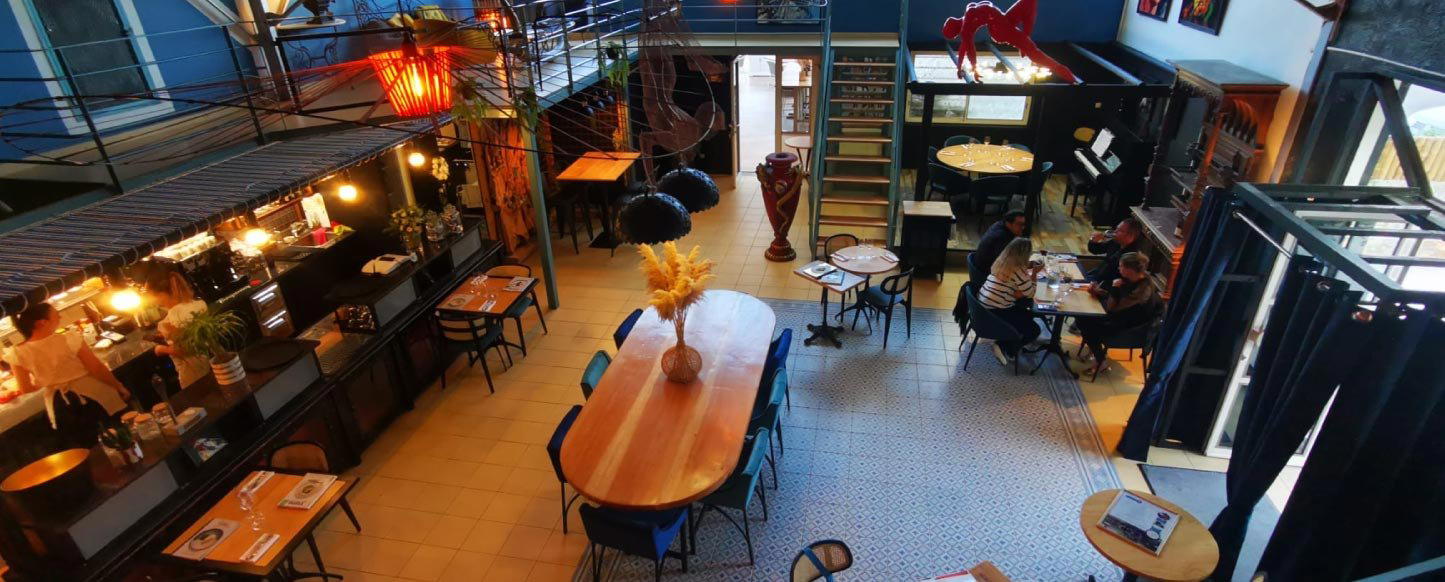
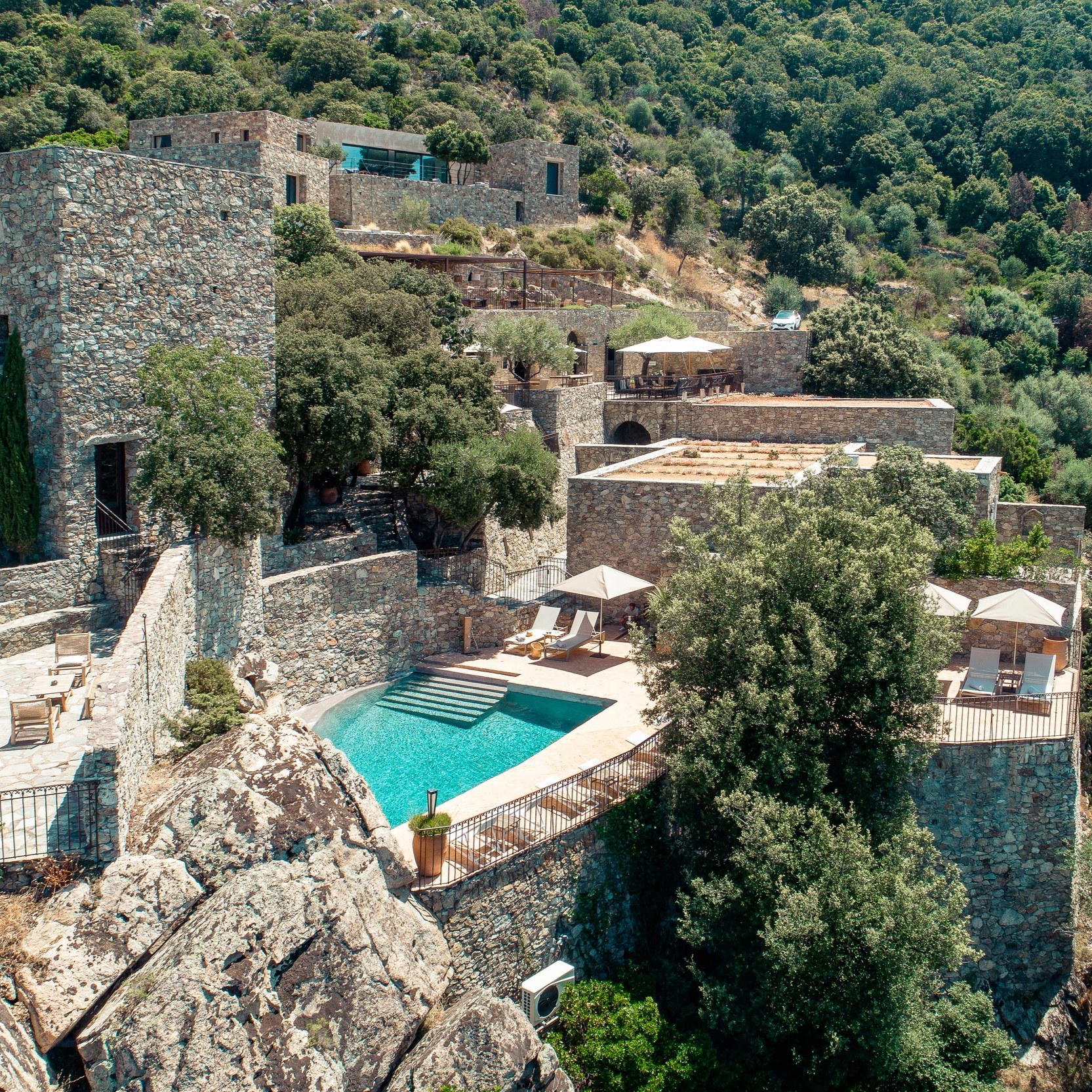
Warm and welcoming family atmosphere with rustic charm; simple, traditional décor reflecting Corsican heritage; intimate stone-vaulted dining room with a shaded terrace overlooking the village square.