Hubertusstube



Hubertusstube at Hotel Jagdhof holds a Michelin star for 2025, serving five-to-seven-course menus of classic and regional cuisine in an elegantly rustic dining room with pale wood panelling. Chef Christian Jeske leads a kitchen that draws on local Alpine ingredients, including venison from the hotel's own hunting grounds, alongside a wine list spanning around 20,000 bottles and 1,250 labels.
Pearl is the En Primeur Club membership app — saves, bookings, and concierge access live there. Same editors, same standards.
- Address
- Scheibe 44, 6167 Neustift im Stubaital, Austria
- Phone
- +43 5226 2666
- Website
- hotel-jagdhof.at
- Directions
- Get directions
 Saves & bookings on Pearl
A Tyrolean Dining Room Where the Hunting Grounds Are Literally Next Door
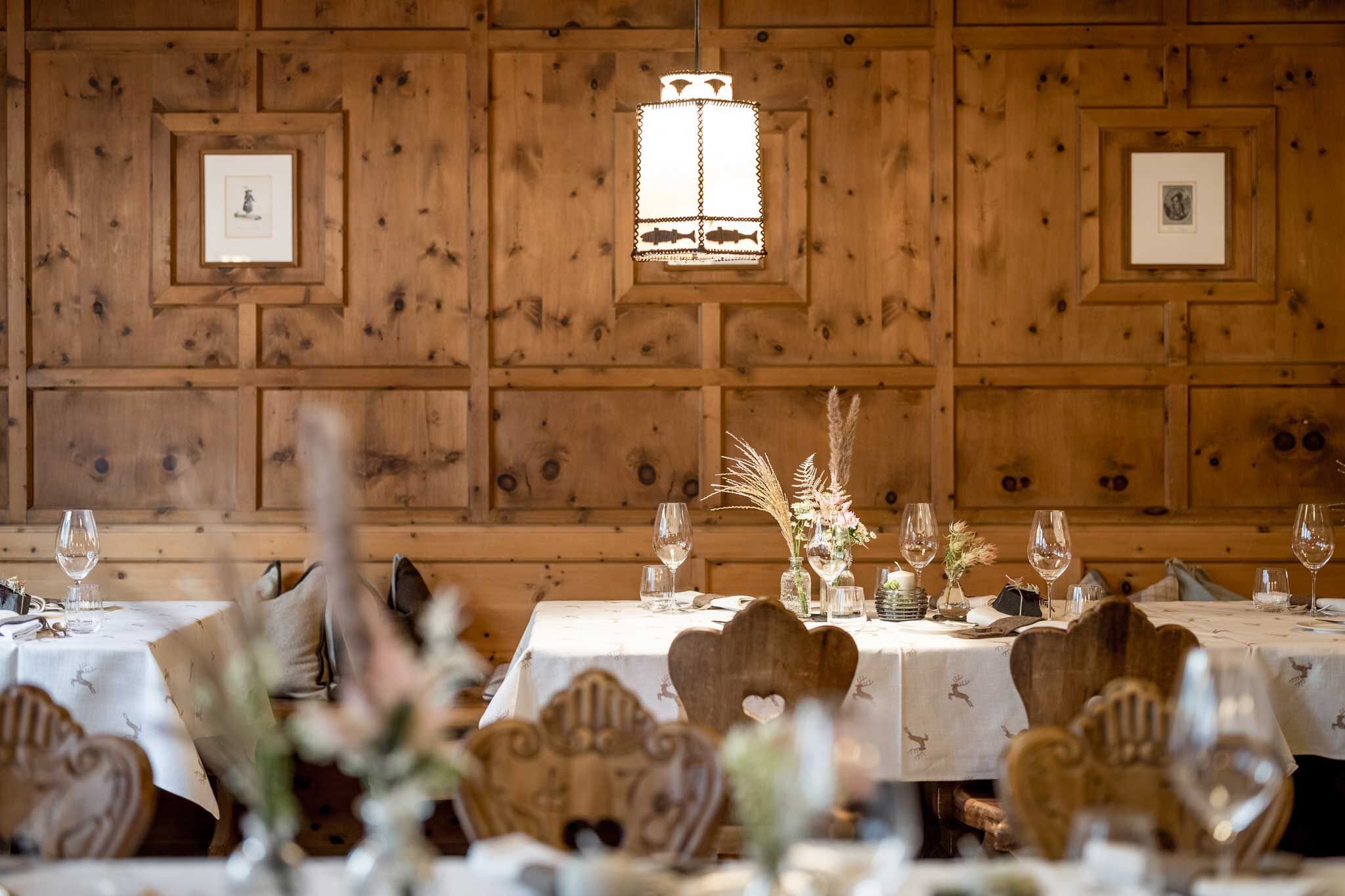
Walk into the Hubertusstube and the architecture does the storytelling before any plate arrives. Pale wood panelling lines the walls in the manner of a traditional Tyrolean Stube, the decorative elements referencing the hunting heritage the name announces, and the overall effect is one of warmth that has been earned rather than manufactured. This is a mountain restaurant that serves food at Michelin-starred level.
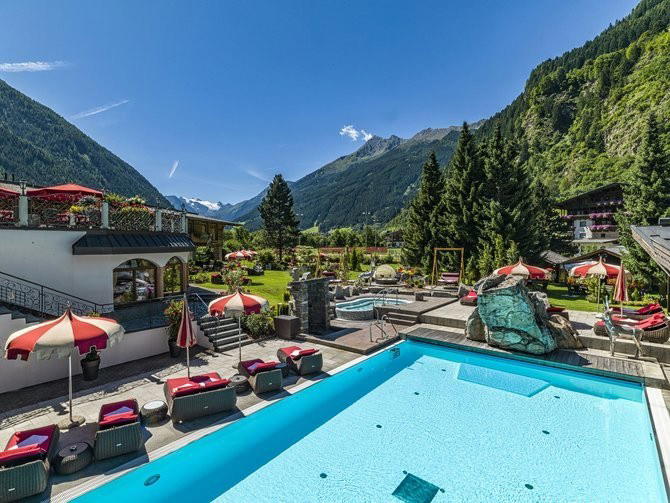
The village of Neustift im Stubaital sits at the head of the Stubai Valley in Tyrol. The Stubai Glacier above it makes the area a year-round destination, and a handful of serious kitchens have established themselves here to meet the expectations of guests who arrive with both skiing stamina and a willingness to spend at the table. Hubertusstube, within the Hotel Jagdhof at Scheibe 44, is the address that carries formal recognition in the valley at present, awarded one Michelin star in the 2025 Guide.
Where Classic Cuisine Meets Regional Provenance
Austrian fine dining has, over the past decade, split into two broad tendencies. One side emphasises avant-garde technique and international reference points, as seen at addresses like Steirereck im Stadtpark in Vienna or Ikarus in Salzburg. The other maintains the primacy of ingredient quality and classical form, allowing provenance to carry the argument rather than process. Hubertusstube belongs firmly to the second category. Its Michelin descriptor notes the kitchen's emphasis on ingredient quality across a five-to-seven course set menu, with regional produce anchoring the format.
One direct expression of that regional commitment is the three-week-aged saddle of venison sourced from the hotel's own hunting grounds. This is not a marketing statement about locality; it is a practical supply chain that gives the kitchen genuine control over the animal's handling from field to larder. Comparable arrangements are rare even in Austrian alpine restaurants, where many kitchens invoke the mountains in their language but source proteins through conventional channels. The smoked char, caught locally, and the medallions of Breton lobster tail that appear alongside these alpine ingredients suggest a kitchen comfortable working across different geographical registers without losing the regional anchor.
For broader context on what serious Austrian kitchens are doing with regional product, Döllerer in Golling an der Salzach offers a useful comparison, as does Landhaus Bacher in Mautern an der Donau, which shares the classic cuisine designation and a similar premium price tier. The Tyrolean alpine context has its own comparable set, with Gourmetrestaurant Tannenhof in Sankt Anton am Arlberg and Griggeler Stuba in Lech representing the standard for hotel-based fine dining in Austrian alpine resort environments.
The Kitchen Team and the Classic Cuisine Framework
In Austrian Michelin kitchens, pedigree and mentorship lines carry weight. The menu at Hubertusstube is credited to Christian Jeske and his team. This collaborative attribution is characteristic of the classic cuisine format, where kitchen coherence and consistency matter as much as individual expression. The Michelin note also flags creative cooking as a highlight, which positions the kitchen slightly closer to the interpretive end of the classical spectrum than straight-line traditional Tyrolean cooking would suggest.
Within Austria's broader fine dining geography, classic cuisine kitchens working at this level tend to draw on French classical training or the Central European hotel-school tradition, both of which emphasise mise en place discipline and sauce work. The wine list at Hubertusstube, spanning about 20,000 bottles, signals a house that takes the full dining experience seriously. A cellar of that depth, in a valley resort setting, requires sustained investment and expertise across multiple decades of buying decisions; it does not accumulate by accident.
If classic cuisine as a format interests you beyond the Austrian context, KOMU in Munich and Maison Rostang in Paris offer instructive points of comparison in neighbouring European cities.
The comparable set in the Tyrol Region
The Tyrolean Alps have produced a number of kitchens worth tracking in their own right. Schwarzer Adler in Hall in Tirol and Restaurant 141 by Joachim Jaud in Mieming represent different positions in the regional fine dining field. Further afield in the broader Austrian alpine arc, Kräuterreich by Vitus Winkler in Sankt Veit im Pongau, Obauer in Werfen, and Ois in Neufelden demonstrate that serious cooking is distributed across the country's alpine and semi-alpine zones rather than concentrated in the cities.
What distinguishes Hubertusstube within that geography is the combination of the formal setting, the depth of the wine program, and the hunting-ground sourcing. The Stubai Valley does not have the name recognition of St. Anton or Lech in international fine dining conversation, which means a kitchen earning a Michelin star here is doing so without the marketing lift that resort-brand recognition provides.
Planning Your Visit
The restaurant operates Wednesday through Sunday, opening from 6:30 PM with service running until midnight, and is closed Monday and Tuesday. The price range sits at the summit tier of Austrian dining (€€€€), in line with the Michelin-starred alpine resort category. The address is Scheibe 44, 6167 Neustift im Stubaital; driving from Innsbruck takes approximately 30 minutes via the Brenner motorway junction toward the Stubai Valley.
Comparison Snapshot
Comparable venues nearby, for context on price, style, and recognition.
| Venue | Cuisine | Price | Awards | Notes |
|---|---|---|---|---|
| HubertusstubeThis venue — the venue you are viewing | Alpine Fine Dining | $$$$ | Michelin 1 Star | Not listed |
| Interalpen - Chef's Table | Modern Austrian Fine Dining | $$$$ | Michelin 1 Star | Telfs-Buchen |
| Alpin Gourmet Stube | Contemporary Alpine Fine Dining | $$$$ | Michelin 1 Star | St. Jakob |
| Paznaunerstube | Modern Austrian Fine Dining | $$$$ | Michelin 1 Star | Ischgl |
| Kilian Stuba | Modern Alpine Fine Dining | $$$$ | Michelin 1 Star | Hirschegg |
| Atelier Fischer | Modern Austrian Fusion Fine Dining | $$$$ | Michelin 1 Star | Sankt Gilgen |
Recognition history
Dated appearances from independent guides and award organizations, with the underlying list record or original source where available.
Falstaff Restaurant - 96 Falstaff Points
Falstaff
Michelin 1 Star
Michelin
Relais Chateaux Award
Relais Chateaux
Michelin 1 Star
Michelin
Relais Chateaux Award
Relais Chateaux
Michelin 1 Star
Michelin
Continue exploring
More in Neustift im Stubaital
Restaurants in Neustift im Stubaital
Browse all →
Bars in Neustift im Stubaital
Browse all →
At a Glance
- Rustic
- Cozy
- Elegant
- Classic
- Intimate
- Special Occasion
- Date Night
- Celebration
- Historic Building
- Wine Cellar
- Extensive Wine List
- Sommelier Led
- Local Sourcing
- Farm To Table
- Mountain
Current opening hours
- Monday
- Closed
- Tuesday
- Closed
- Wednesday
- 6:30 PM–12 AM
- Thursday
- 6:30 PM–12 AM
- Friday
- 6:30 PM–12 AM
- Saturday
- 6:30 PM–12 AM
- Sunday
- 6:30 PM–12 AM
Hours can change for holidays and private events. Last verified .
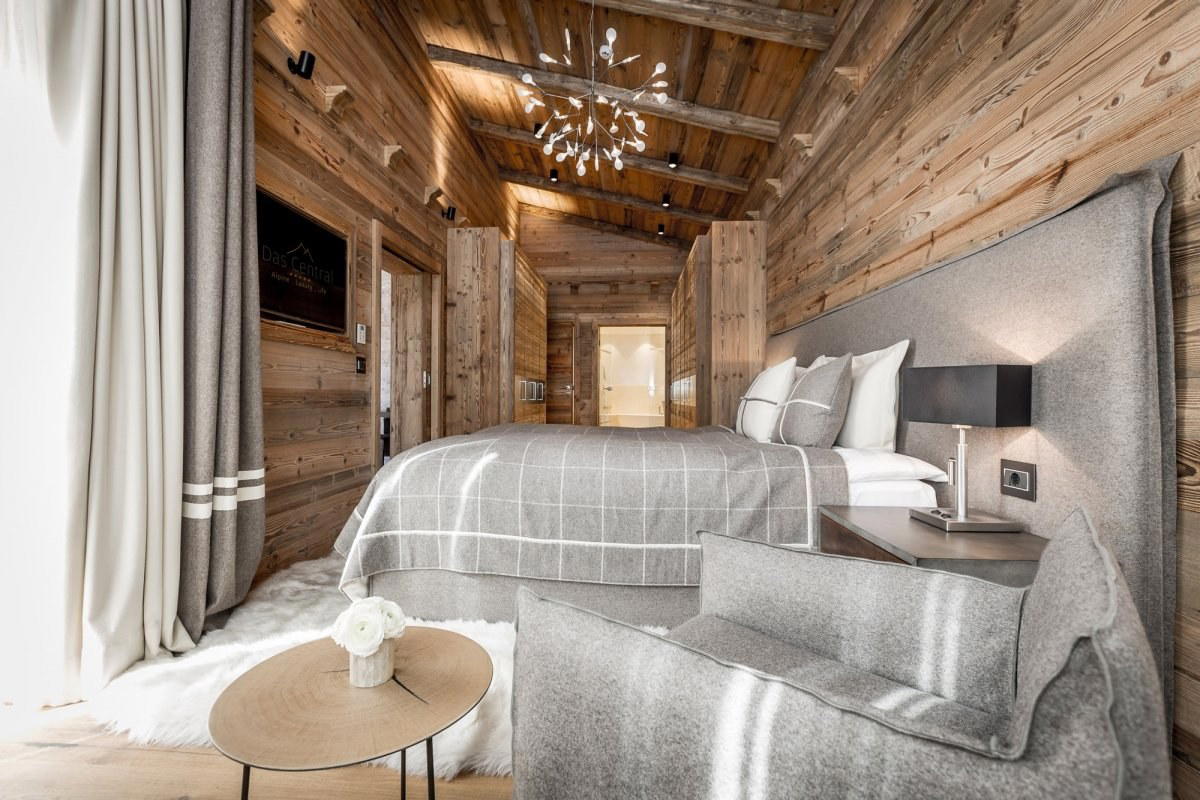
Warm wood panelling, subdued lighting, elegant interior with authentic Tyrolean craftsmanship creating a cozy, welcoming atmosphere.