Tabelog 100 #91
Our verdict
Osaka’s tachinomi culture rewards places with tight rooms, quick decisions, and drinks chosen for food rather than ceremony. Horumon Gibier Myojo sits in that lane with offal, wild game, sake, shochu, and wine, backed by selection for Tabelog 100 Tachinomi 2025 and a compact standing-bar format in Sennichimae.

Pearl is the En Primeur Club membership app, where members save venues, book tables and use the concierge.
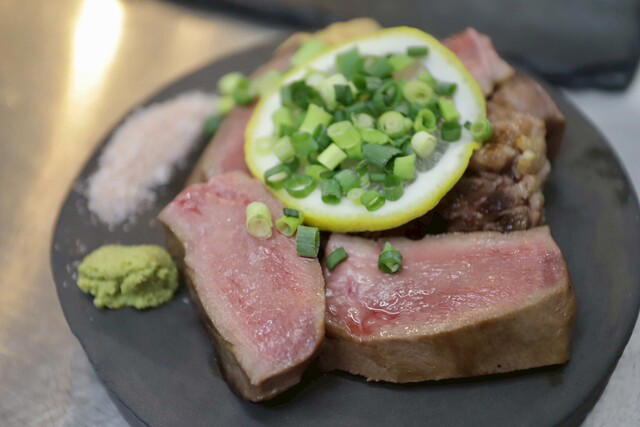
Osaka is built for close-range eating: narrow frontages, fast foot traffic, and rooms where the experience often turns on the rhythm of orders rather than the theatre of service. In that environment, tachinomi is not a stripped-down version of dining. It is a format with its own logic: stand, drink, eat decisively, then make space for the next guest. Horumon Gibier Myojo belongs to that Osaka grammar, where the format matters as much as the kitchen and the food-and-drink balance has to work harder than it looks.
The more interesting reading here is not luxury, but compression. Tripe and wild game ask for structure around them: enough seasoning, pacing, and drinking logic to keep richness and intensity in check. Many casual Japanese drinking rooms rely on easy, familiar habits; this one is more clearly listed as a stand-up bar with a narrower food identity, which places the experience closer to a food-led tachinomi stop than a generic after-work room.
Offal, game, and the drinking logic of Osaka tachinomi
Osaka has always been good at formats that collapse the distance between kitchen and guest. Quick-service rooms and standing bars share a civic impatience with ceremony when the food does not need it. Horumon, often used around offal and less-polished cuts, fits that temperament: it is direct, economical, and dependent on handling rather than ornament. Game adds a second register, pushing the room away from standard comfort and toward ingredients that need sharper framing and a more deliberate rhythm.
That is where the standing-bar angle becomes useful. In a compact tachinomi room, breadth is rarely the point; the question is whether the available choices understand the food’s edges. Tripe and organ-driven flavours need enough clarity around them not to feel heavy. Wild game benefits from a format that can keep portions, seasoning, and drinks moving. The point is not abundance for its own sake, but curation that keeps pace with a compact menu category.
Selection for Tabelog 100 Tachinomi 2025 gives the place a clear trust signal inside a category that can be difficult for visitors to parse. Tabelog’s standing-bar list is not measuring the same values as a fine-dining ranking; it rewards a more local intelligence: pacing, value, drink compatibility, and whether a small room can hold attention without padding the experience. A 3.58 Tabelog score in this genre also reads differently from a score attached to a formal restaurant. For tachinomi, the competitive set is crowded, informal, and often hyper-local.
A stand-up room built for focused eating, not lingering
The room’s format is part of the argument. Standing service creates a different social contract from seated dining: no sprawling table order, no long progression, no slow occupation of a room designed for turnover. Stand-up service turns the experience into something more focused. This is the opposite of the tasting-menu instinct that has shaped much of premium dining in Japan’s larger cities. The pleasure is in choosing well, drinking with attention, and understanding when the format has given all it needs to give.
That compactness also explains why the venue reads as a natural stop for focused eating. Osaka is especially strong for individual diners because compact, direct formats remain normal rather than second-class experiences. The standing-bar structure makes a short visit feel aligned with the room’s design, not like a compromise. For travellers mapping a night through Osaka, this is the sort of stop that works between larger meals, or as the main event for drinkers more interested in tripe and wild game than in decorative small plates.
Within the local comparison set, it sits near places such as utage dotonbori, Datedachi, and Gyokusei Ya as part of Osaka’s casual, highly specific dining landscape. That matters because tachinomi is price-sensitive by nature. The category loses its identity when it drifts too far into polished dining, but it also depends on enough ambition in sourcing, seasoning, and drinks to justify attention. Horumon Gibier Myojo lands in the middle of that tension: casual in format, more pointed in ingredient focus.
How to place it within an Osaka itinerary
For visitors building a broader Osaka food plan, this address belongs to the city’s drinking-and-snacking side rather than its reservation-led restaurant tier. It pairs well with a day that treats the city by format: a casual morning stop, counter or street-adjacent food at lunch, and a standing bar after dark. EP Club’s wider Osaka map is useful for that spread, from other Osaka cafes and bakeries to casual local restaurants and more polished dining rooms.
The decision point is simple: choose this for a standing-bar reading of Osaka, not for a conventional restaurant arc. The food categories are specific, the format is direct, and the recognition places it inside a documented tachinomi cohort. Travellers who want plush seating, private-room pacing, or a chef-driven narrative will be looking at the wrong format. Those interested in how Osaka frames tripe and wild game in a standing-bar setting will understand the appeal quickly.
For broader planning, use Our full Osaka restaurants guide alongside Our full Osaka hotels guide, Our full Osaka bars guide, Our full Osaka wineries guide, and Our full Osaka experiences guide. Readers comparing Japanese casual formats beyond Osaka can also place it generically against other counter restaurants, standing bars, casual drinking rooms, and snack-led dining formats in Japan and abroad.
Frequently asked questions
What should I budget for a meal at Horumon Gibier Myojo?
Pricing at Horumon Gibier Myojo is listed as JPY 2,000 - JPY 2,999 View spending breakdown.
What's the address for Horumon Gibier Myojo?
Osaka.
How hard is it to get a table at Horumon Gibier Myojo?
Horumon Gibier Myojo is a stand-up bar in Osaka, so timing and flexibility matter more than expecting a long, seated restaurant experience.
What makes Horumon Gibier Myojo worth seeking out?
Its 2025 Tabelog 100 selection is the cleanest credential here, backed by a format built around stand-up drinking rather than a full seated dinner. The listed focus on tripe and wild game dishes places it in a narrower, more specific lane than many Osaka bars.
Can Horumon Gibier Myojo adjust for dietary needs?
The published categories center on tripe and wild game dishes, so diners with dietary needs should treat the menu as specialised and check directly before visiting.
Is Horumon Gibier Myojo good for families?
Horumon Gibier Myojo is listed as a stand-up bar, so it is better understood as a casual drink-and-snack stop in Osaka than as a conventional family meal setting.
Compact Comparison
Comparable venues to place this listing in its category.
| Venue | Cuisine | Price | Awards | Notes |
|---|---|---|---|---|
| Horumon Gibier MyojoThis venue (the venue you are viewing) | Stand-up Japanese horumon & wild game bar | $20–30 | Tabelog 100 #91 | Not listed |
| utage dotonbori | Modern standing wine bar with Spanish-style small plates | $20–30 | Tabelog 100 #89 | JPY 2,000 - JPY 2,999 View spending breakdown |
| Gyokusei Ya | Traditional Japanese wagashi & ohagi specialty shop | $10–20 | Tabelog 100 #58 | JPY 1,000 - JPY 1,999 JPY 1,000 - JPY 1,999 |
| Datedachi | Stand-up Yakitori & Izakaya | $30–50 | Tabelog 100 #85 | JPY 2,000 - JPY 2,999 JPY 2,000 - JPY 2,999 View spending breakdown |
| 鮨一永 | Japanese Pasta | $10–20 | Not listed | Not listed |
| Yakiniku Rikimaru Sennichimae | All-You-Can-Eat Yakiniku | $20–30 | Not listed | Not listed |
Recognition history
Dated appearances from independent guides and award organizations, with the underlying list record or original source where available.
Tabelog 100 #91 · No. 91
Tabelog · Tabelog 100 - Tachinomi - 2025