
A Michelin Plate-recognised hawker stall in Bedok South serving fish ball kway teow mee, Hock Seng Choon sits inside Singapore's most closely watched category of food recognition: the award-carrying kopitiam counter.
Pearl is the En Primeur Club membership app — saves, bookings, and concierge access live there. Same editors, same standards.
- Address
- 16 Bedok S Rd, #01-50, Singapore 460016
- Phone
- +65 9818 1611
- Directions
- Get directions
 Saves & bookings on Pearl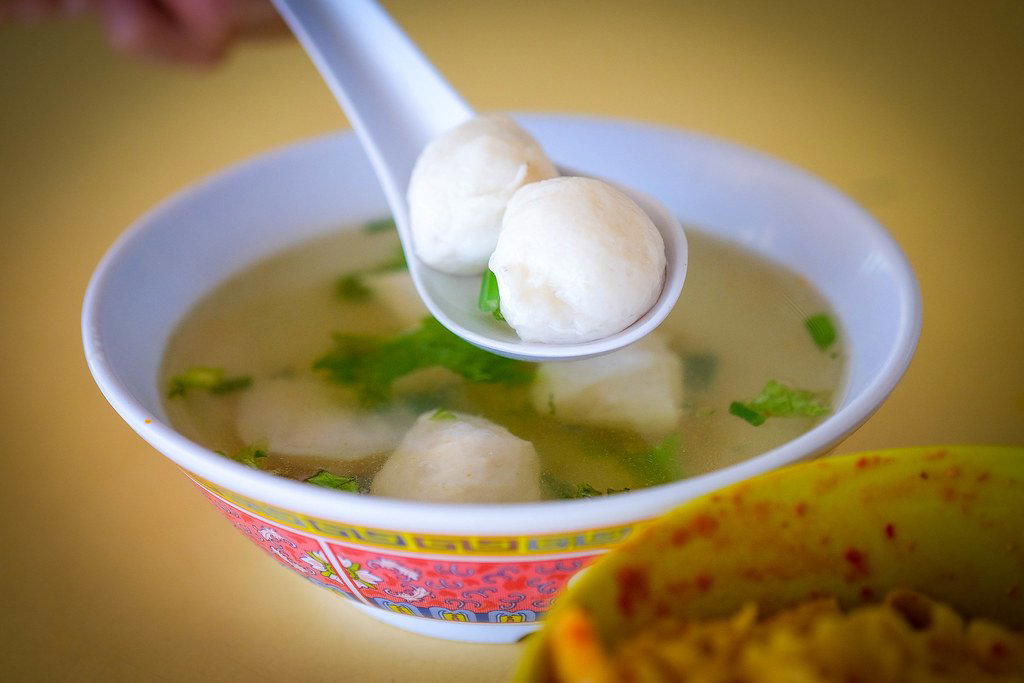
The Hawker Counter as Critical Subject
Singapore's Michelin programme has done something unusual among the world's major award systems: it has turned the hawker stall into a legitimate critical subject. Since the first Michelin Guide Singapore appeared in 2016, the annual Plate and Bib Gourmand listings have mapped a layer of the city's food culture that fine-dining guides elsewhere ignore entirely. The Plate designation, which signals cooking good enough to appear in the Guide without reaching Bib Gourmand thresholds, covers a wide band of Singapore stalls and is often where the more specialist, neighbourhood-embedded operations sit.
What the award does not capture, and what matters when you are planning a visit, is geography. Bedok is a mature Housing Development Board estate in the city's east, well outside the tourist circuits that loop between Marina Bay and Orchard Road. Eating here is a deliberately outward journey, the kind that rewards readers who treat Singapore's food map as an east-west proposition rather than a central-precinct exercise.
Fish Ball Noodles and the Teochew Inheritance
The dish at the centre of this stall belongs to a tradition with clear Teochew origins. Fish ball noodle soup, and its drier kway teow and mee variants, traces back to Teochew immigrants who settled in Singapore and Malaysia across the nineteenth and early twentieth centuries, bringing with them a repertoire built on handmade fish paste products: fish balls, fish cakes, and fish dumplings formed from fresh batches of pounded fish, typically yellow tail or wolf herring. The Teochew preference for clear, clean broths and restrained seasoning shaped the soup versions; the drier preparations developed alongside, dressed with dark soy sauce, chilli, and lard.
At its most considered, a fish ball noodle stall is doing several things simultaneously: maintaining the texture and bounce of handmade or carefully sourced fish balls (the dividing line between a stall worth visiting and one that is not), producing a broth with sufficient depth from fish bones and other aromatics, and calibrating the noodle choice, whether flat kway teow or thin yellow mee, to match the sauce weight. These are craft variables, and they explain why the category sustains critical interest across generations of food writing about Singapore. For comparison of how this segment positions within Singapore's recognised noodle stall tier, see also Hill Street Tai Hwa Pork Noodle and 545 Whampoa Prawn Noodles, both of which occupy distinct positions within the Michelin-recognised hawker category.
Recognition at a 3.5 Rating
Stalls operating in residential HDB complexes rather than food centres frequented by tourists or food bloggers often carry lower aggregate scores simply because the review pool skews toward locals, who rate against a more exacting set of expectations and who are less motivated by novelty.
The 2024 Michelin Plate functions as the counterweight here. The Guide's Singapore team has consistently demonstrated a willingness to recognise stalls that operate outside the tourist zone, and the Plate designation at Hock Seng Choon represents an independent, documented editorial position on the cooking's standard.
The Bedok Context
Bedok is one of Singapore's most densely populated residential towns, and its food ecosystem reflects that density. The area supports multiple hawker centres and kopitiams, and competition among noodle stalls is sustained and local. The Bedok South Road address puts Hock Seng Choon inside a neighbourhood kopitiam format, the kind of multi-stall coffee shop arrangement that predates the purpose-built hawker centre model. These settings typically have a more compressed physical environment than the large open-air centres, and the experience of eating there is closer to a neighbourhood ritual than a food tourism event.
For visitors approaching from the city centre, Bedok MRT on the East-West Line is the most practical entry point. From the station, the address is reachable on foot or by a short taxi or ride-share. The east corridor of Singapore, running through Katong, Joo Chiat, and into Bedok, carries considerable density of recognised hawker eating and is worth treating as a half-day or full-day food itinerary rather than a single-stop visit. Other recognised hawker operations in this broader regional tradition can be found across the city; for the full picture, see Adam Rd Noo Cheng Big Prawn Noodle as a point of comparison for how Michelin-recognised hawker stalls distribute across Singapore's geography.
Where This Sits in the Broader Award Tier
Singapore's Michelin universe in 2024 runs from three-star European fine dining at the leading, represented by operations like Zén, down through one-star and Bib Gourmand levels to the Plate tier. The Plate at Hock Seng Choon exists at the furthest remove from the city's fine-dining circuit in terms of price, format, and location, and that distance is part of what makes it a useful data point. The award system's credibility in Singapore depends partly on its willingness to track cooking quality at the single-dollar price point in outer residential estates, not only at the multi-hundred-dollar tasting counter in the CBD. A Michelin Plate at a kopitiam in Bedok says something about the breadth of the Guide's Singapore scope.
The fish ball noodle category also has strong regional resonance. Variants of the dish appear in hawker contexts across Penang and George Town, where Teochew-influenced noodle stalls form part of the same broader food inheritance. For readers who track this tradition regionally, see also Ah Boy Koay Teow Th'ng in George Town, which operates in a related but distinct noodle tradition. The Southeast Asian street food context extends further with listings including 888 Hokkien Mee (Lebuh Presgrave), A Pong Mae Sunee in Phuket, Air Itam Duck Rice, Air Itam Sister Curry Mee, Ali Nasi Lemak Daun Pisang, Anuwat in Phang Nga, and Banana Boy in Hong Kong.
For the full picture of where to eat, drink, and stay in Singapore, EP Club maintains dedicated guides: our full Singapore restaurants guide, our full Singapore hotels guide, our full Singapore bars guide, our full Singapore wineries guide, and our full Singapore experiences guide.
Know Before You Go
- Address: 16 Bedok South Road, #01-50, Singapore 460016
- Cuisine: Fish ball kway teow mee (street food / hawker)
- Price range: $ (single-dollar hawker pricing)
- Award: Michelin Plate 2024
- Getting there: Bedok MRT (East-West Line) is the nearest station; onward by foot or short ride
- Hours: Not confirmed — verify on arrival or via local directories before visiting
- Booking: Walk-in format typical of kopitiam stalls; no booking infrastructure listed
What Should I Order at Hock Seng Choon Fish Ball Kway Teow Mee?
The stall's name points directly to its core offering: fish ball noodles in kway teow (flat rice noodle) or mee (yellow wheat noodle) format. In the Teochew hawker tradition, these are typically available in soup or dry preparations. The dry version, dressed with dark soy and chilli with a side of broth, tends to show off fish ball quality more clearly because there is less liquid to mask texture. Given that the Michelin Plate recognition is attached to this specific stall and this specific dish category, the fish ball preparation is the evident focus of any visit.
How Hock Seng Choon Fish Ball Kway Teow Mee in Singapore compares with similar nearby venues.
| Venue | Cuisine | Price | Awards |
|---|---|---|---|
| Hock Seng Choon Fish Ball Kway Teow Mee | Street Food | $ | Michelin Plate (2024) |
| Hock Hai (Hong Lim) Curry Chicken Noodle | Street Food | $ | Not listed |
| Sin Huat Seafood Restaurant | Street Food | $$ | Not listed |
| New World Mutton Soup | Street Food | $ | Not listed |
| Na Na Curry | Street Food | $ | Not listed |
| San Xiang Rou Cuo Mian | Street Food | $ | Not listed |
Recognition history
Dated appearances from independent guides and award organizations, with the underlying list record or original source where available.
Michelin Guide Plate
Michelin Guide
Michelin Plate
Michelin
Continue exploring
More in Singapore
Restaurants in Singapore
Browse all →
Bars in Singapore
Browse all →
At a Glance
- Classic
- Rustic
- Casual Hangout
- Solo
- Open Kitchen
- Local Sourcing
Current opening hours
- Monday
- Closed
- Tuesday
- 10:45 AM–8:30 PM
- Wednesday
- 10:45 AM–8:30 PM
- Thursday
- 10:45 AM–8:30 PM
- Friday
- 10:45 AM–8:30 PM
- Saturday
- 10:45 AM–8:30 PM
- Sunday
- 10:45 AM–8:30 PM
Hours can change for holidays and private events. Last verified .
Simple, no-frills hawker stall atmosphere with minimal decor; bustling with queues during peak hours reflecting its popularity despite unassuming storefront.
Know Before You Go
- Getting there
- 16 Bedok S Rd, #01-50, Singapore 460016