




1 Michelin Star · Michelin Guide 1 Star · World's 50 Best #50
Our verdict
Waku Ghin Singapore transforms fine dining into culinary theater, where Chef Tetsuya Wakuda's two-Michelin-starred vision unfolds through intimate teppanyaki performances in private rooms. This exclusive 20-seat destination at Marina Bay Sands showcases premium Japanese seafood and seasonal ingredients through precise omakase menus that have defined Singapore's luxury dining scene since 2010.

Pearl is the En Primeur Club membership app — saves, bookings, and concierge access live there. Same editors, same standards.
- Address
- 10 Bayfront Ave, #02-03 The Shoppes, Marina Bay Sands, Singapore 018956
- Phone
- +65 6688 8507
- Hours
- Daily 5–11 PM
- Website
- marinabaysands.com
- Directions
- Get directions
- Booking
- Book on the venue's website
The menu
What to order
- Marinated Botan Shrimp with Sea Urchin and Oscietra Caviar
- A5 Ohmi Wagyu Roll
- Amadai Uroko
- Fresh Oyster with Ginger and Rice Vinegar
Dinner as Event: The Format That Keeps Regulars Coming Back
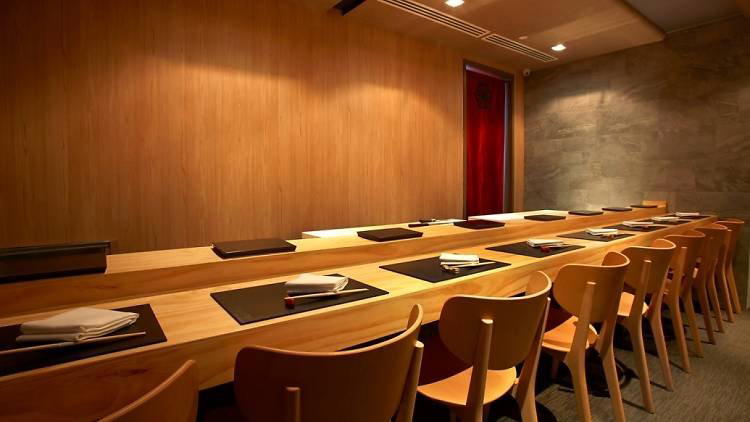
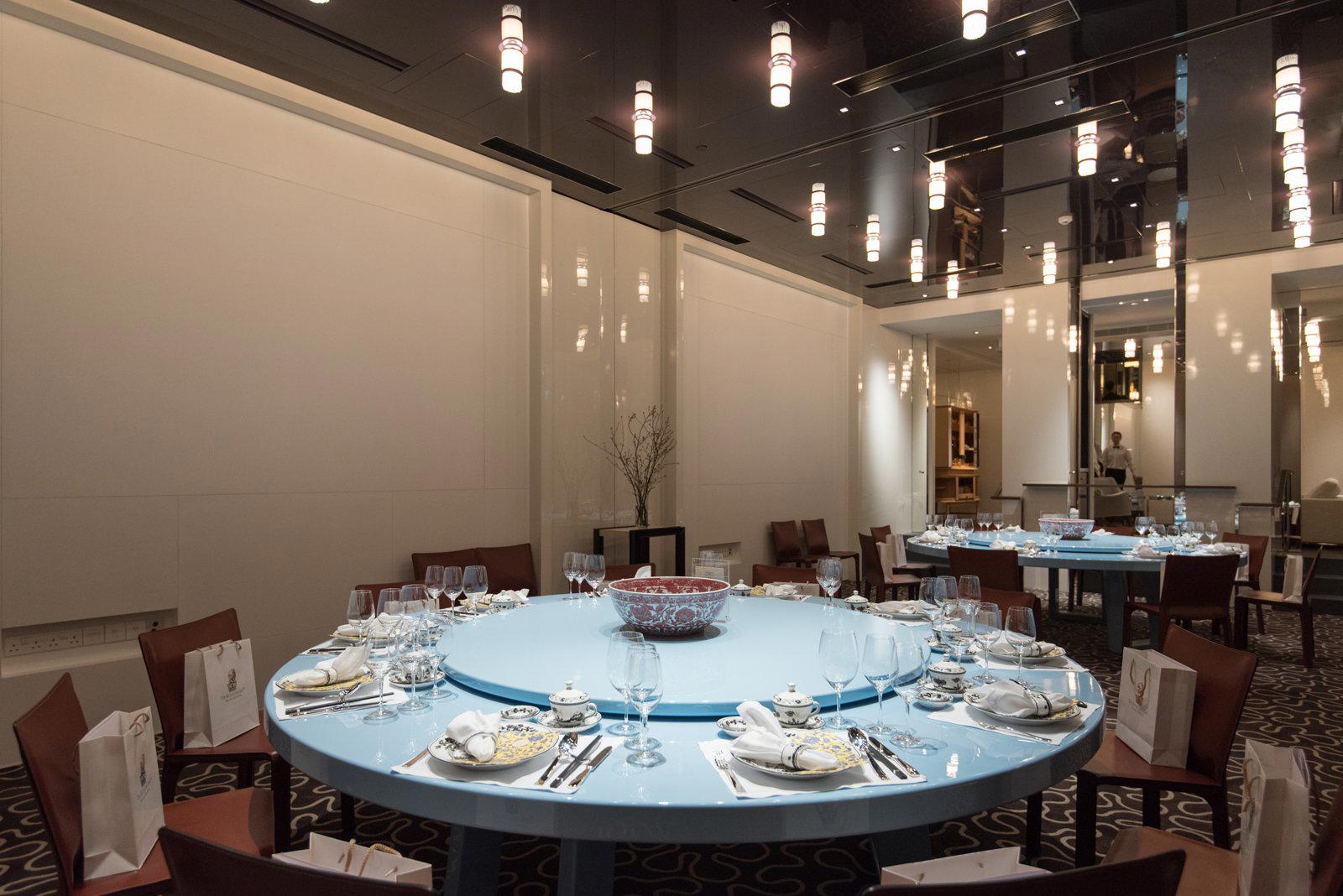
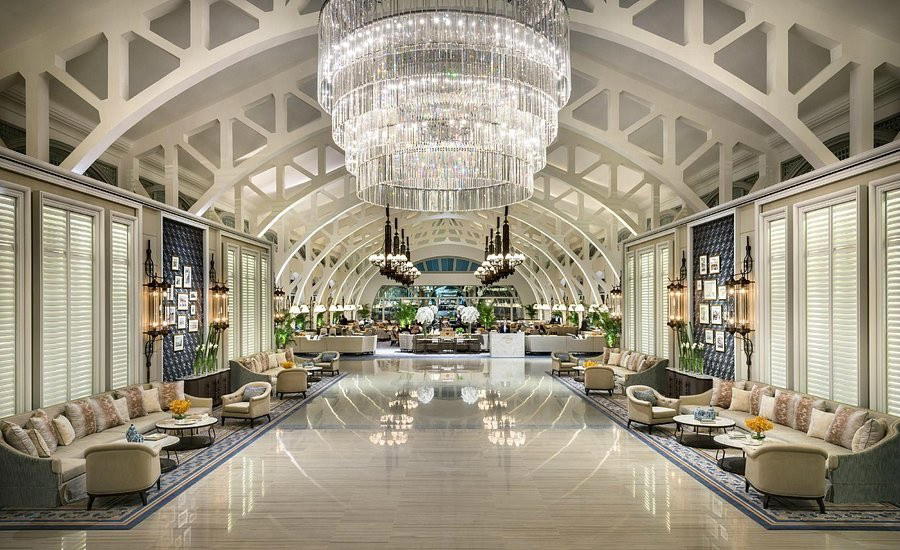
There is a category of fine-dining room where the experience is inseparable from its architecture of service. Waku Ghin, on the second level of The Shoppes at Marina Bay Sands, operates in that category. The entry sequence matters here: guests move through a space marked at the threshold by a two-tonne stone sculpture sourced from Shikoku, Japan, before being guided by staff to one of four private dining rooms. The dining table in the Chef's Table room was crafted from Kaba Zakura (Japanese cherry) by artisans from the same region, using methods that predate industrial furniture-making by centuries. The room communicates provenance before a single dish arrives.
That provenance is the through-line that explains why the restaurant, which opened in 2010, has sustained a loyal following across fifteen years. The format disciplines the experience in ways that reward repeat visits: one sitting per evening, a personal chef preparing each course on an induction grill at the table, seasonal produce and seafood presented raw before cooking begins. Regulars describe returning not simply for the food but for the rhythm of the meal, which follows a structure consistent enough to feel ceremonial and variable enough, night to night, to remain worth tracking.
Where Waku Ghin Sits in Singapore's Fine-Dining Tier
Singapore's top-tier restaurant scene has consolidated around a small group of destination kitchens, each occupying a distinct position. Odette and Les Amis represent the French-contemporary and classical French tracks respectively. Zén holds the European contemporary position with a Swedish-inflected tasting menu at the same price tier. Jaan by Kirk Westaway anchors the British contemporary strand. Waku Ghin occupies a different register: creative Japanese cooking with a pronounced Italian accent in specific preparations, executed under chef Tetsuya Wakuda's framework and currently led in the kitchen by chef Inoue Masahiko.
The restaurant's award trajectory maps its position within that peer group. A Michelin star was held in 2024. La Liste scored the restaurant 90 points in its 2025 ranking and 88 points in 2026. Opinionated About Dining placed it 39th among Asia's restaurants in 2024, rising to 50th in 2025, and it previously ranked 46th in 2023. At its peak, the restaurant appeared on the World's 50 Best list, reaching 39th globally in 2012 and 50th in 2014. The Black Pearl programme awarded one diamond in 2025. Across those systems, the venue consistently holds a position in the upper bracket of Singapore's dining hierarchy, comparable in recognition to peers like 8½ Otto e Mezzo Bombana in Hong Kong in terms of chef-led Japanese-influenced fine dining within major Asian cities.
For context outside Asia, the immersive chef's-table format with live preparation echoes approaches taken at destination rooms such as Lazy Bear in San Francisco, where the boundary between kitchen and dining room is deliberately collapsed. The difference at Waku Ghin is that the theatrical element is embedded in the private-room format rather than a communal dining hall, which produces a more intimate register and makes the comparison with open-kitchen spectacle restaurants in Europe, like Alléno Paris au Pavillon Ledoyen or Aponiente in El Puerto de Santa María, less relevant than it might first appear.
The Menu Structure and What It Signals
The degustation format changes daily, which is the primary reason the restaurant's regulars return as often as they do. The menu offers a choice between a traditional and a seasonal path, both built from high-quality produce and seafood that staff present to guests prior to preparation. The cooking involves a personal chef working at an induction grill tableside, explaining each dish and taking questions through the meal.
The cuisine sits at a point where Japanese technique meets European, and specifically Italian, flavour logic. Australian wagyu appears with citrus and wasabi soy, a pairing that encodes the Japanese-Australian axis that runs through Wakuda's career. The Ghin cheesecake, finished with lemon curd, is a consistent dessert reference among those who have dined multiple times. The menu does not repeat, but these signatures recur in variation, which is part of what gives regulars a framework for anticipating without predicting.
Approach shares something with how kitchens like Le Bernardin in New York City treat protein quality as the primary variable in a menu that changes with seasonal availability, or how Alain Ducasse at Louis XV in Monte Carlo maintains a recognisable flavour identity across menus that rotate continuously. The logic is consistent: when the base quality of ingredients is held at a fixed high level, the daily change functions as variation within a known register rather than uncertainty about what to expect.
The Wine Program
Cellar runs to approximately 2,100 bottles across 360 selections, with particular depth in Burgundy, Bordeaux, French regional wine, California, and Italy. The program is overseen by sommelier Krishnan Saseaselan. Pricing falls in the upper bracket, consistent with a list where many bottles exceed $100 Singapore dollars. For a restaurant whose food bridges Japanese and European registers, the emphasis on French and Italian wine makes structural sense: the list is designed to pair with both halves of the kitchen's vocabulary rather than defaulting to purely sake-focused or Japanese-imported wine options. That positioning is worth noting for guests planning pairings in advance.
The Space Beyond the Private Rooms
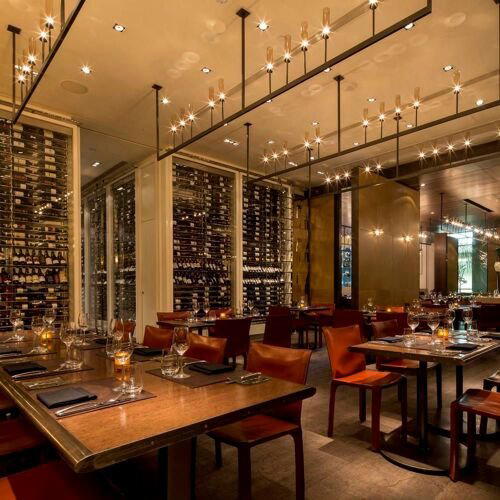
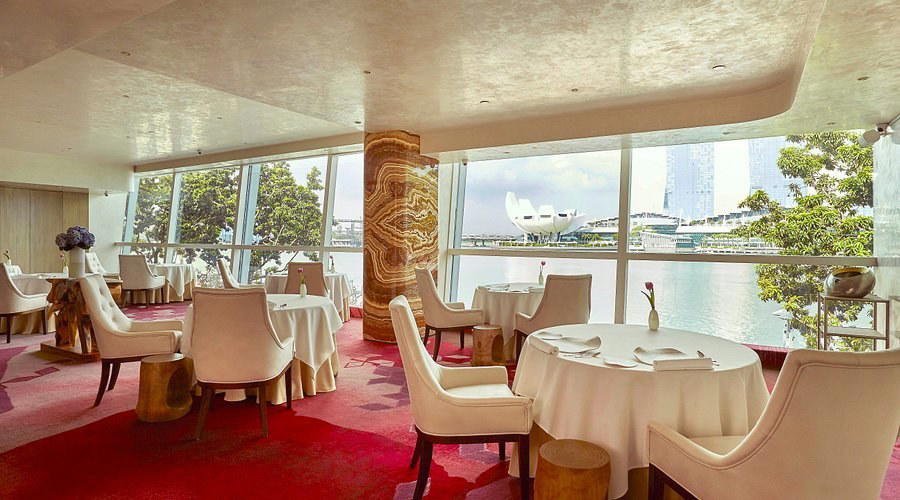
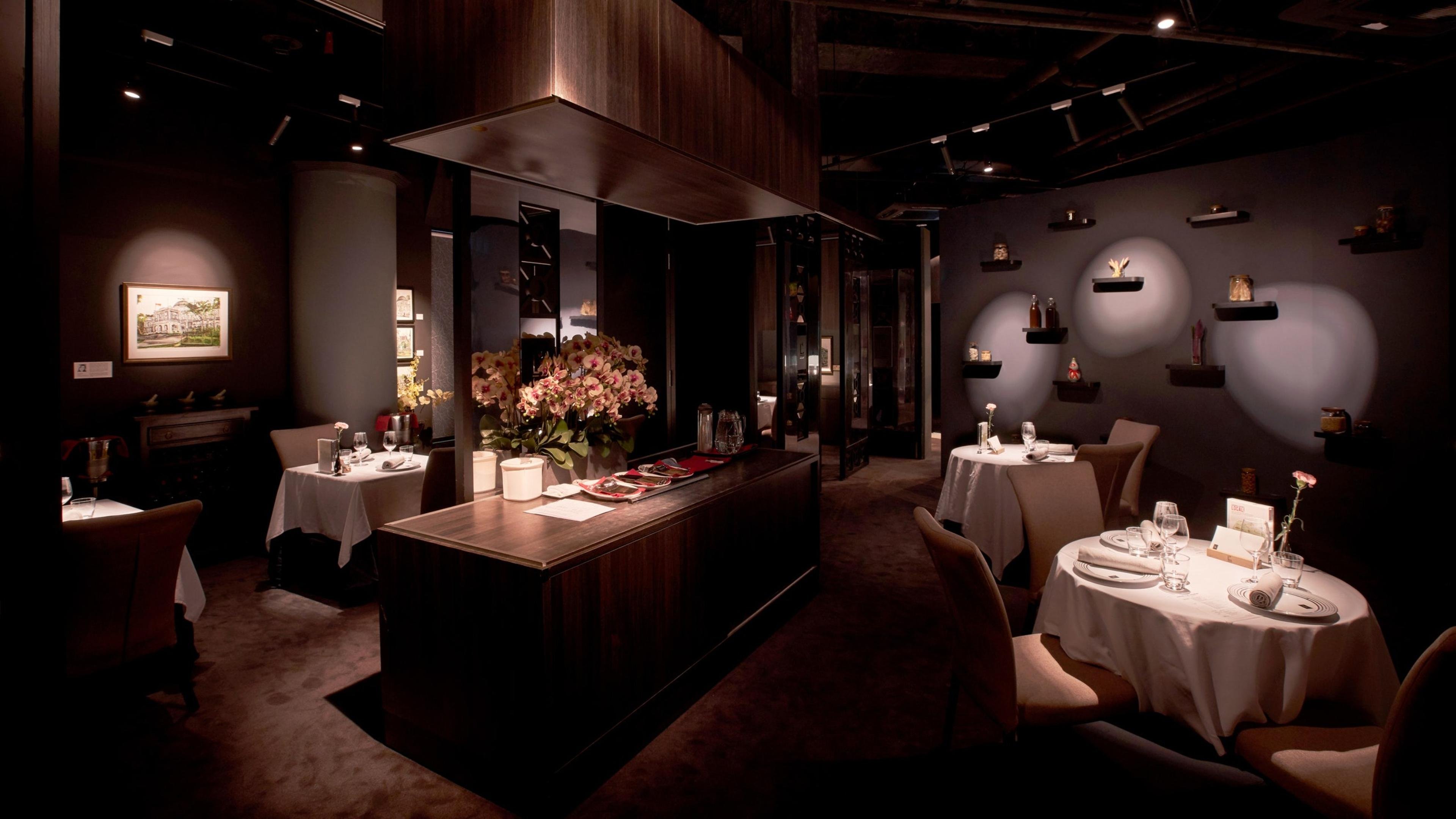
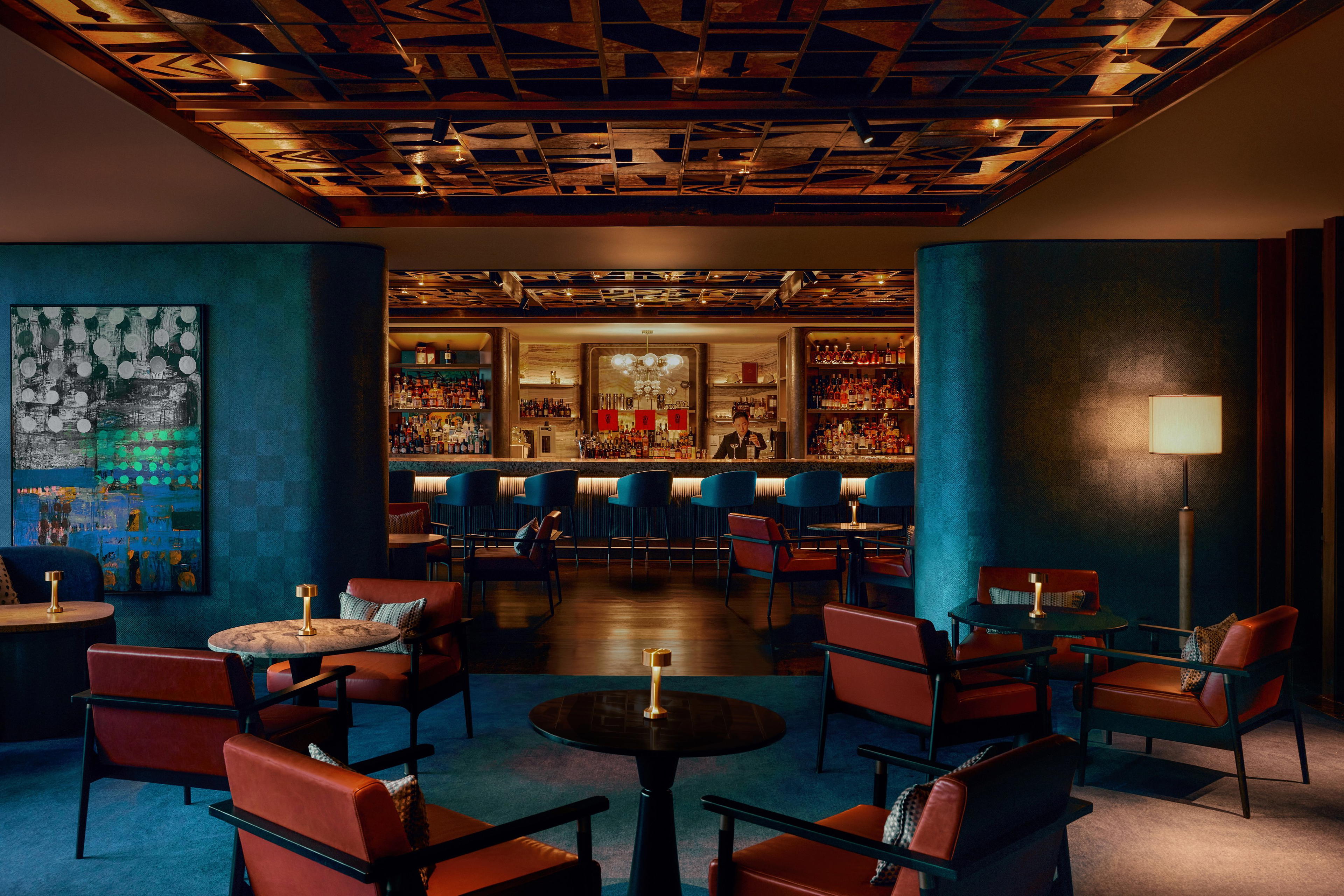
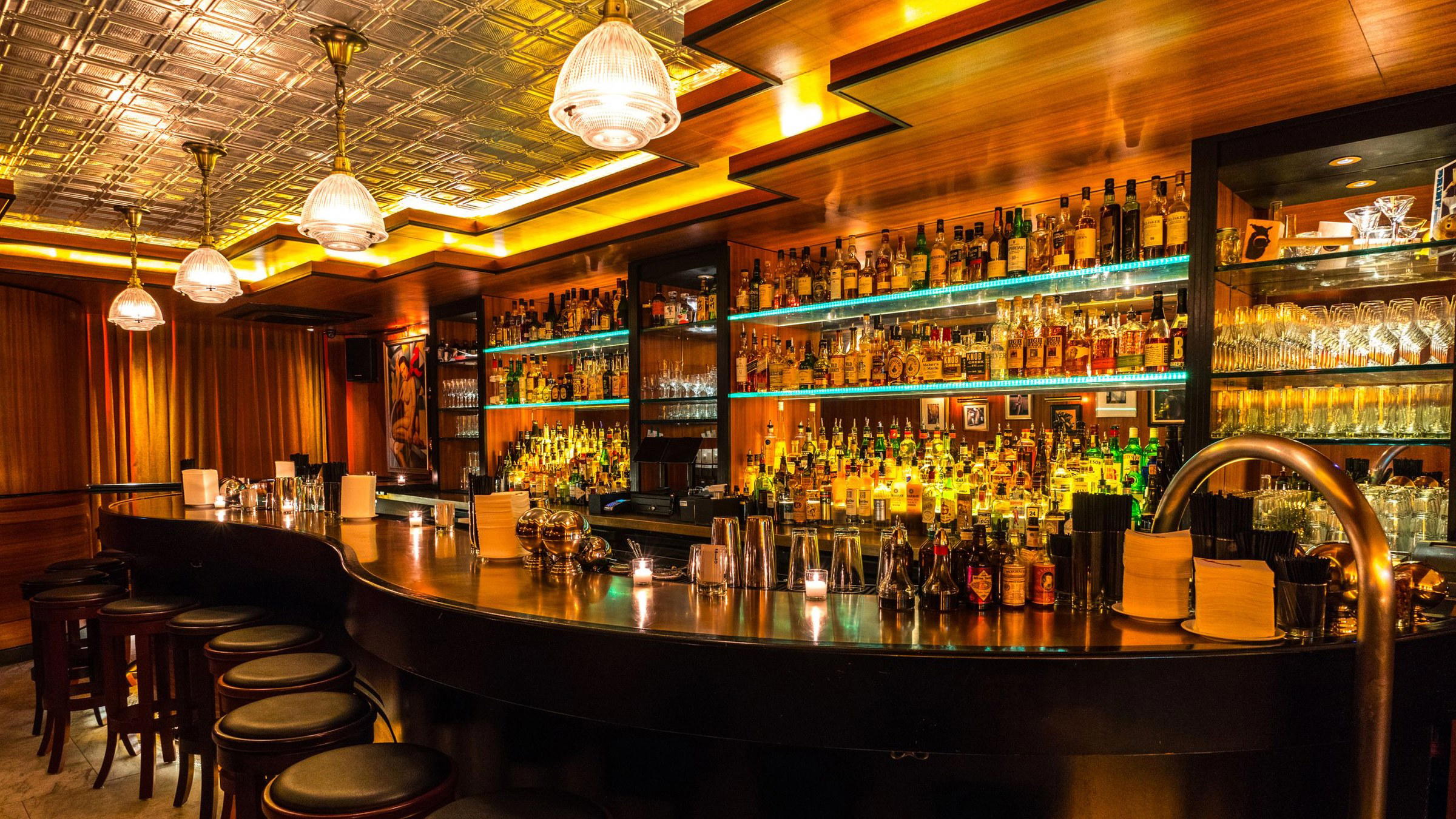
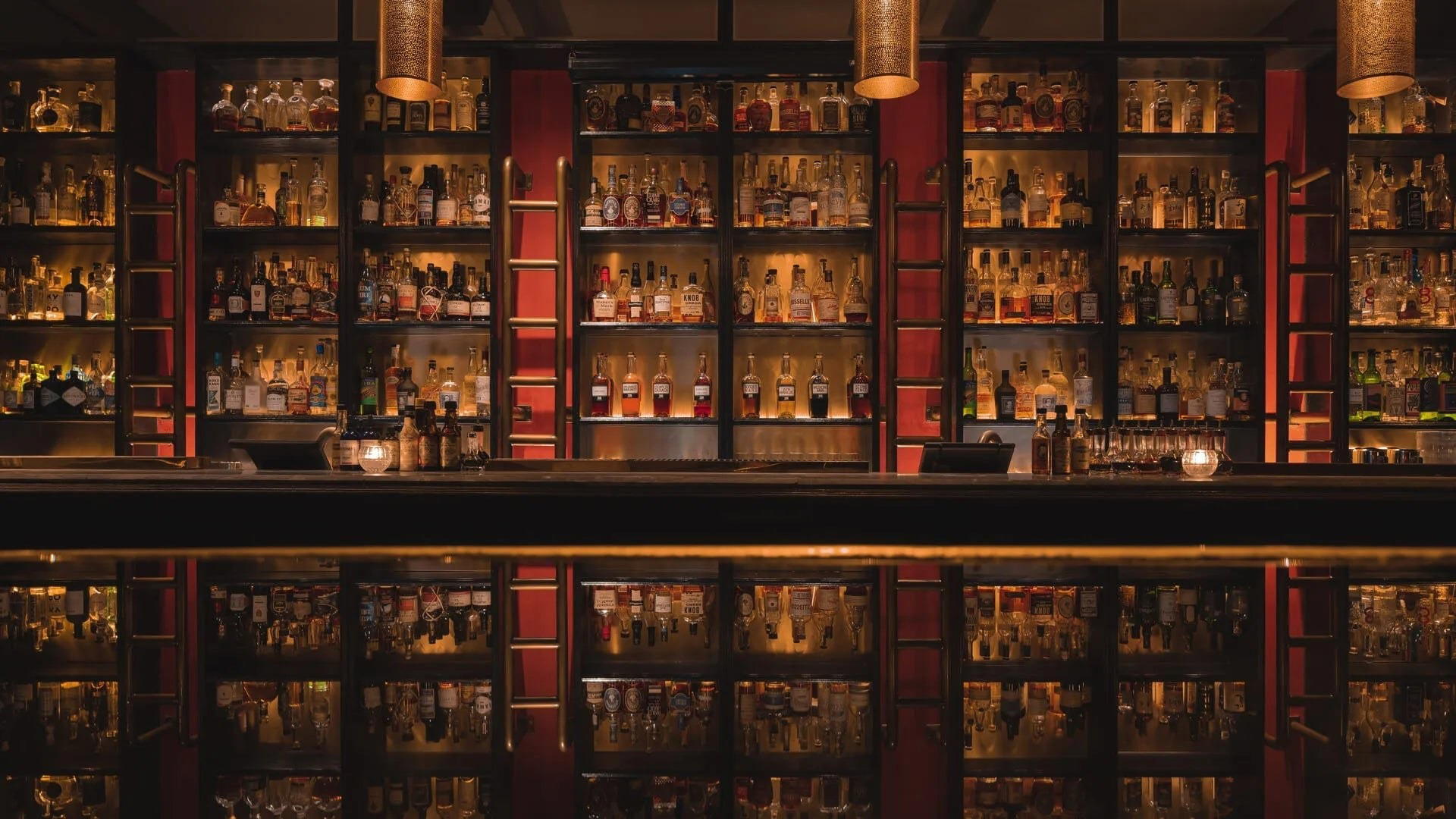
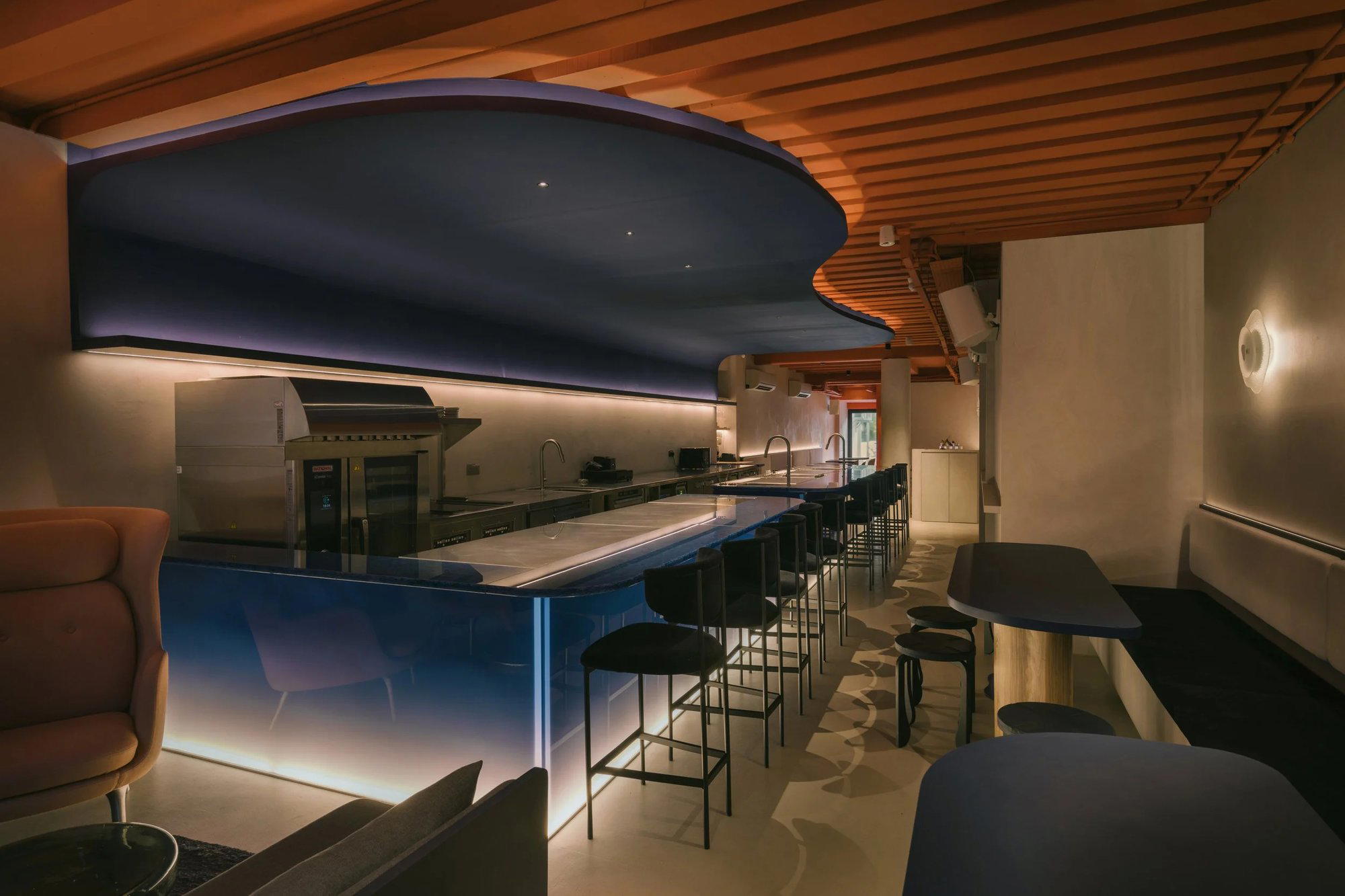
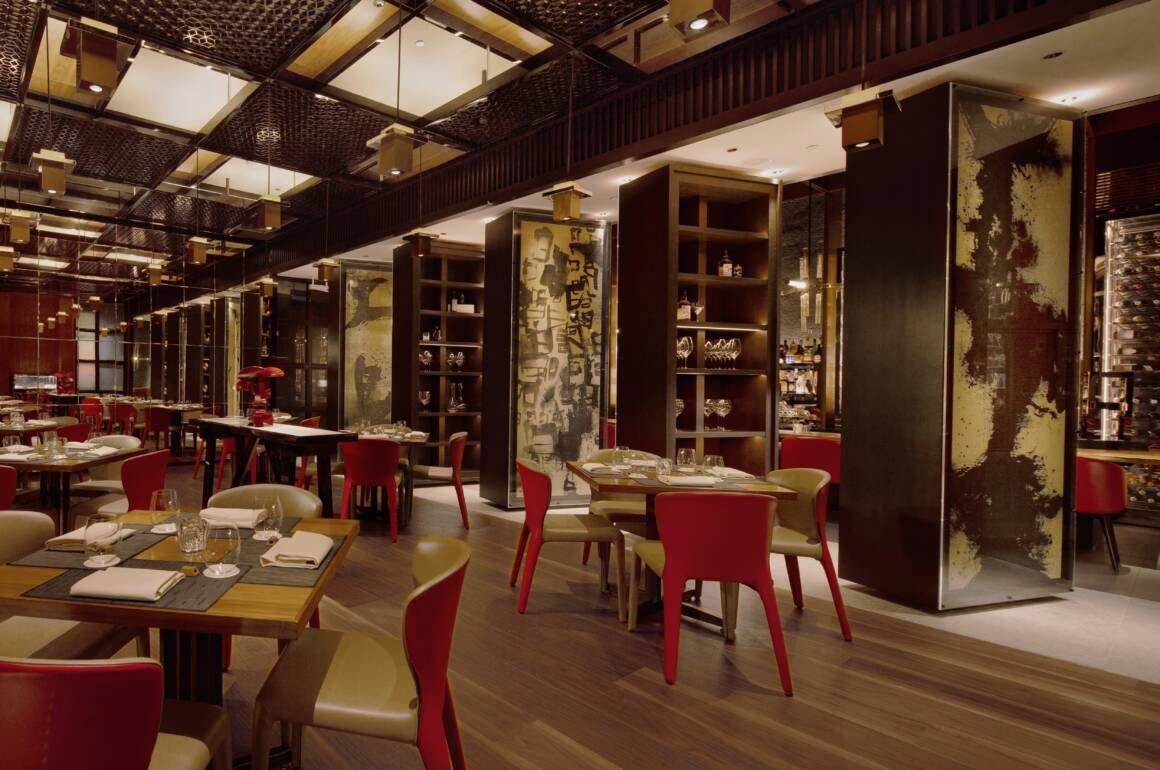
Restaurant's layout divides into three functional zones beyond the private dining rooms: an eight-seat Japanese cocktail bar with a 24-seat extended bar area, the eight-seat Chef's Table, and a dedicated dessert room. Pre-dinner drinks and snacks take place in the bar before guests are escorted to their dining room, which means the experience has a structured two-act form: drinks in the shared space, then dinner in the private room. The dessert room separates the conclusion of the meal from the main dining room, giving the end of the experience a distinct spatial signature. For guests who have dined at the restaurant before, these transitions are part of what they return to. The interior design throughout references Japanese craft materials without being literal about it: the stone at the entrance, the cherry-wood table, the natural materials in the room surfaces all belong to a coherent design language rather than a decorative theme.
What the Regular Returns For
Case for returning to Waku Ghin rests on a specific combination: the daily menu change means no two dinners are identical, the private-room format produces a different atmosphere from open dining rooms at comparable price levels, and the tableside preparation model means the cooking is visible and legible in a way that a closed kitchen cannot replicate. Among Singapore's $$$$-tier restaurants, that format is relatively uncommon. Meta and other innovative restaurants at lower price points offer creative menus with a different structural approach. At the top tier, the closest comparison in format terms within Asia would be private kaiseki rooms in Tokyo or Kyoto, where the single-sitting, tableside-interaction model is standard. In Singapore, Waku Ghin holds that position in a more singular way. For the full picture of where it sits within the city's dining scene, see our full Singapore restaurants guide. Those planning a wider trip can also reference our full Singapore hotels guide, bars guide, and experiences guide. Wine-focused visitors may find our Singapore wineries guide useful context as well.
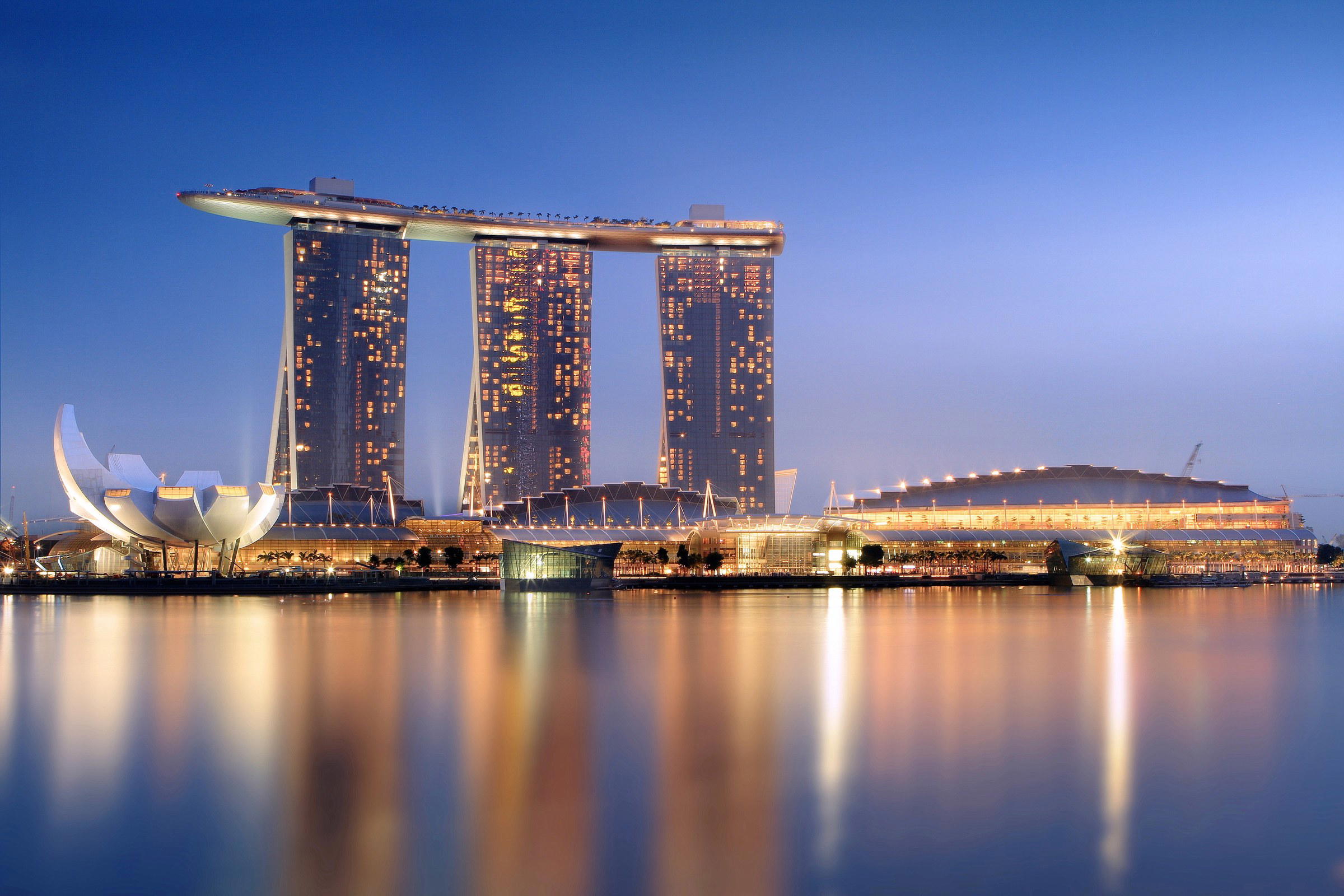
Restaurant also represents a specific moment in Singapore's development as a fine-dining destination: a 2010 opening that coincided with the Marina Bay Sands complex changing the city's commercial and cultural geography. The location within a large luxury retail complex might suggest a hotel-dining compromise to a visitor unfamiliar with the room, but the format and kitchen practice operate at a level independent of the surrounding retail context, comparable in that sense to how Atomix in New York City or Emeril's in New Orleans have built reputations that exist separately from their physical neighbourhoods. General Manager Eric Li Xing oversees operations, and the ownership structure involves Tetsuya Wakuda alongside Marina Bay Sands, which has not altered the kitchen's independence in practice across fifteen years of operation.
Planning Your Visit
Address: 10 Bayfront Ave, #02-03 The Shoppes, Marina Bay Sands, Singapore 018956. Hours: Dinner only, Monday to Sunday, 5 PM to 11 PM, one sitting per evening. Format: Degustation with a choice of traditional or seasonal menu; tableside preparation by a personal chef. Budget: $$$$ for food; wine list pricing runs $$$, with many bottles above SGD 100. Reservations: Advance booking is strongly recommended given the single-sitting format and limited private-room capacity. Getting there: Bayfront MRT station connects directly to Marina Bay Sands.
Frequently asked questions
What cuisine category does Waku Ghin fall under?
What are the opening hours for Waku Ghin?
Hours at Waku Ghin: Monday 5 PM-11 PM Tuesday 5 PM-11 PM Wednesday 5 PM-11 PM Thursday 5 PM-11 PM Friday 5 PM-11 PM Saturday 5 PM-11 PM Sunday 5 PM-11 PM.
Is Waku Ghin Michelin-listed?
Waku Ghin has received recognition including: In a city flush with critically acclaimed fine-dining restaurants from some of the food world’s most decorated chefs, Waku Ghin just might be the best of the best.; La Liste Top Restaurants (2026): 88pts; Opinionated About Dining Top Restau….
What's the must-try dish at Waku Ghin?
Because the degustation menu changes daily, no single dish is guaranteed on any given evening. That said, documented signature preparations include marinated botan shrimp with osetra caviar and sea urchin served on ice in its own shell, and Australian wagyu with citrus and wasabi soy. The Ghin cheesecake with lemon curd has appeared consistently enough to carry signature status. Confirm current availability when booking, as the kitchen's daily rotation is precisely what draws regulars back.
What does dinner at Waku Ghin typically cost?
Pricing at Waku Ghin is listed as $$$$.
Where do I go for Waku Ghin?
Waku Ghin is located at 10 Bayfront Ave, #02-03 The Shoppes, Marina Bay Sands, Singapore 018956, Singapore.
Compact Comparison
A quick peer list to put this venue’s basics in context.
| Venue | Cuisine | Price | Awards | Notes |
|---|---|---|---|---|
| Waku GhinThis venue — the venue you are viewing | Modern Japanese Omakase | $500+ | 1 Michelin Star · Michelin Guide 1 Star | Not listed |
| Zén | Yakitori & Japanese Izakaya | $50–100 | Tabelog 100 #92 | European Contemporary |
| Jaan by Kirk Westaway | Modern British Fine Dining | $200–300 | 2 Michelin Stars · Michelin Guide 2 Stars | British Contemporary |
| Burnt Ends | Modern Australian Barbecue | $100–150 | 1 Michelin Star · Michelin Guide 1 Star | Australian Barbecue, Barbecue |
| Summer Pavilion | Michelin-Starred Cantonese | $100–150 | 1 Michelin Star · Michelin Guide 1 Star | Cantonese |
| Born | Contemporary Fusion Fine Dining | $200–300 | 1 Michelin Star · Michelin Guide 1 Star | Creative Cuisine, Innovative |
Recognition history
Dated appearances from independent guides and award organizations, with the underlying list record or original source where available.
Michelin 1 Star
Michelin
Michelin Guide 1 Star
Michelin Guide
World's 50 Best Restaurants #50
World's 50 Best
La Liste Top Restaurants
La Liste
Black Pearl 1 Diamond
Black Pearl
Full recognition history (17 entries)
Forbes 5-Star
Forbes
Opinionated About Dining Top Restaurants in Asia Ranked #61
Opinionated About Dining
Wine Spectator Best of Award of Excellence
Wine Spectator
Black Pearl 1 Diamond
Black Pearl
Forbes 5-Star
Forbes
La Liste Top Restaurants
La Liste
Opinionated About Dining Top Restaurants in Asia Ranked #50
Opinionated About Dining
Wine Spectator Best of Award of Excellence
Wine Spectator
Michelin 1 Star
Michelin
Opinionated About Dining Top Restaurants in Asia Ranked #39
Opinionated About Dining
Opinionated About Dining Top Restaurants in Asia Ranked #46
Opinionated About Dining
World's 50 Best Restaurants #39
World's 50 Best