

Michelin Guide Bib Gourmand · Michelin Bib Gourmand · Wine Spectator Award of Excellence
Our verdict
A Noodle Story holds consecutive Michelin Bib Gourmand recognition (2024 and 2025) from its stall at Maxwell Food Centre, one of Singapore's most-visited hawker complexes. Chef Toshiyuki Suzuki brings a Japanese-trained precision to Singapore's ramen-hawker crossover format, producing a bowl that sits in a small category of its own within the city's noodle stall circuit.

Pearl is the En Primeur Club membership app, where members save venues, book tables and use the concierge.
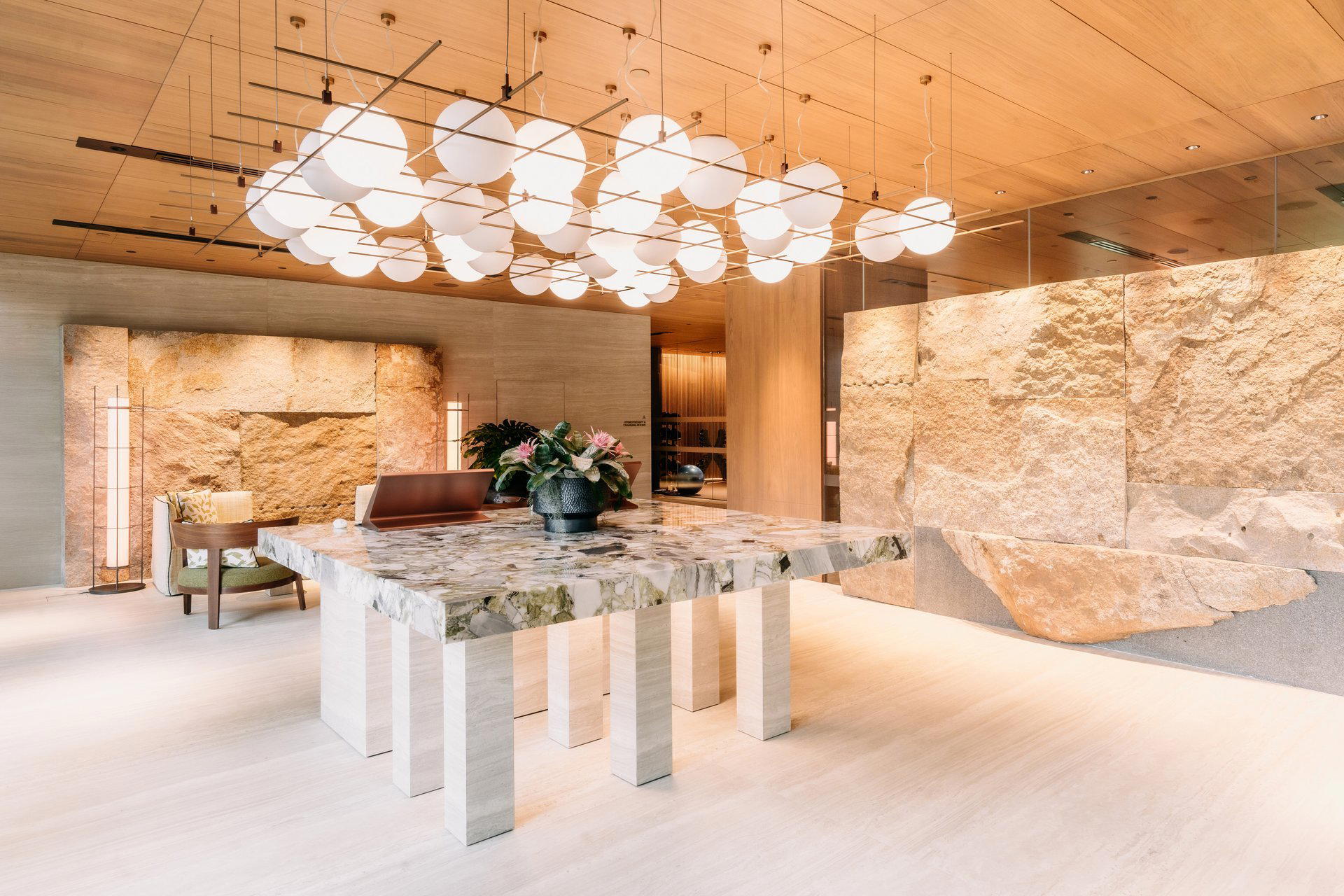
Maxwell Food Centre and the Hawker Counter That Earned Two Bib Gourmands
Maxwell Food Centre operates at a different register from most hawker complexes in Singapore. Positioned at the edge of Chinatown, along Teck Chye Terrace and Maxwell Road, it draws a mix of CBD workers, tourists staying in the surrounding shophouse hotels, and the kind of Singaporean who tracks Michelin Bib Gourmand releases the way others track restaurant openings. The air inside carries the layered heat of a dozen different woks firing simultaneously, and the stall-to-table rhythm during lunch service is relentless. It is a working food centre in the most literal sense, efficiency and flavour are the only currencies that matter. A Noodle Story, at stall #01-39, fits that environment while sitting at an angle to it.
The Bib Gourmand, awarded consecutively in 2024 and 2025, places A Noodle Story in a specific tier of Singapore hawker recognition. The Bib designation signals good cooking at a price that does not require a fine-dining budget, the stall's pricing sits at the single-dollar tier, meaning a full bowl lands well under $40 by any measure. In a city where the gap between a $6 hawker bowl and a $400 omakase counter can be a ten-minute MRT ride, that recognition carries genuine weight. It positions the stall alongside a handful of hawker operators citywide who receive Michelin attention without trading up to a restaurant format. For a point of comparison, Hill Street Tai Hwa Pork Noodle holds a full Michelin Star in the same hawker-counter category, which gives a sense of how seriously the Guide treats this segment of Singapore dining.
A Japanese Lens on the Singapore Noodle Tradition
Singapore's noodle stall circuit is wide and deeply layered. Prawn noodles, bak chor mee, wonton mee, Hokkien mee, laksa, each format has its own orthodoxy, its own debated reference points, and its own generational practitioners. 545 Whampoa Prawn Noodles and Adam Rd Noo Cheng Big Prawn Noodle represent the depth of craft within a single sub-category. Ah Hock Fried Hokkien Noodles and 91 Fried Kway Teow Mee demonstrate how wok-based noodle traditions sustain their following across decades. A Noodle Story operates in a different register: rather than working within an established hawker lineage, it approaches the bowl through a Japanese-trained sensibility, with chef Toshiyuki Suzuki applying techniques and stock-building logic drawn from Japanese ramen culture to a Singapore street food context.
That cross-tradition positioning is not unique to Singapore, ramen-influenced hawker hybrids have appeared across Southeast Asia, but executing it at a hawker price point, in an open-air food centre environment, and with enough consistency to earn repeat Michelin recognition is a more demanding task. The stall format leaves little room for the controlled kitchen variables that a sit-down restaurant can manage. Temperature, service timing, and consistency across a high-volume lunch rush are harder to hold. The Bib Gourmand in consecutive years is, in part, a comment on that operational consistency.
What the Bib Gourmand Means in This Context
The Michelin Bib Gourmand is specifically a value-quality signal. It is not a starred rating and does not imply the same tasting-menu register as Zén or Jaan by Kirk Westaway. Its function is to identify cooking that punches above what the price point would normally suggest. For hawker stalls, where the price ceiling is set by the market and not by the operator's ambition, the Bib becomes a marker of quality within a constrained format. A Noodle Story's consecutive recognition in 2024 and 2025 suggests the panel found the cooking consistent enough across visits to confirm rather than question the earlier award.
The stall's approach, Japanese technique applied to Singapore noodles, also places it in a conversation happening across the region. In George Town, Penang, stalls like 888 Hokkien Mee and Ah Boy Koay Teow Th'ng represent the depth of tradition that defines the Straits Chinese noodle heritage. Singapore hawker culture draws on many of the same roots while also absorbing influences from waves of migration and, more recently, from chefs who have trained abroad and returned with different technical frameworks. A Noodle Story sits at that intersection.
Planning a Visit: Logistics at Maxwell Food Centre
Maxwell Food Centre is located at 1 Kadabar Road, though the stall address of 7 Maxwell Road, #01-39 is the more commonly used reference point. The complex sits a short walk from Chinatown MRT on the North-East and Downtown Lines, making it accessible from most parts of central Singapore. Queue lengths at recognised stalls inside Maxwell can be significant during peak hours, and the Michelin designation has added foot traffic that longer-term regulars will recognise. Coming slightly before or after the core lunch rush is the practical approach for those who want to eat without standing in line for an extended period.
Seating inside Maxwell is communal and self-organised. The centre's layout means you choose your stall, join the queue, and find a table independently, standard hawker protocol that applies whether you are at a Bib Gourmand counter or the stall next door. No booking is possible, no dress code applies, and payment norms follow the cash-heavy convention of most hawker centres, though some stalls have adopted QR payment systems. A Noodle Story operates within those same hawker-centre norms regardless of its award status.
For those building a broader Singapore eating itinerary around this visit, the EP Club guides cover the full range: our full Singapore restaurants guide, our full Singapore hotels guide, our full Singapore bars guide, our full Singapore wineries guide, and our full Singapore experiences guide provide context across the city's full hospitality range. For readers drawn to the street food format across the wider region, A Pong Mae Sunee in Phuket, Air Itam Sister Curry Mee in George Town, Air Itam Duck Rice, Ali Nasi Lemak Daun Pisang, Anuwat in Phang Nga, and Banana Boy in Hong Kong each represent the category across different cities and culinary traditions.
Frequently asked questions
Who is the chef at A Noodle Story?
The chef associated with A Noodle Story is Toshiyuki Suzuki.
What should I order at A Noodle Story?
The Michelin Bib Gourmand recognition in both 2024 and 2025 points squarely at the noodle dishes that define Chef Toshiyuki Suzuki's Japanese-influenced take on Singapore hawker traditions. Given the stall's Japanese lens applied to formats like prawn noodles and wonton mee, the house noodle bowl is the anchor order. Pricing sits at the $ tier, meaning a full meal runs well under $40 SGD.
Is A Noodle Story expensive?
Pricing at A Noodle Story is listed as $.
What's A Noodle Story's location?
A Noodle Story is located at 7 Maxwell Rd, #01-39, Singapore 069111, Singapore.
What kind of recognition has A Noodle Story received?
A Noodle Story has received recognition including: WINE: Wine Strengths: California, Italy Pricing: $ i Wine pricing: Based on the list\'s general markup and high and low price points:$ has many bottles < $50;$$ has a range of pricing;$$$ has many $100+ bottles Selections: 365 Inventory: 2,….
Reputation First
| Venue | Cuisine | Price | Awards | Notes |
|---|---|---|---|---|
| A Noodle StoryThis venue (the venue you are viewing) | Singapore-style Ramen | $10–20 | Michelin Guide Bib Gourmand · Michelin Bib Gourmand | Not listed |
| Zén | Yakitori & Japanese Izakaya | $50–100 | Tabelog 100 #92 | European Contemporary |
| Jaan by Kirk Westaway | Modern British Fine Dining | $200–300 | 2 Michelin Stars · Michelin Guide 2 Stars | British Contemporary |
| Burnt Ends | Modern Australian Barbecue | $100–150 | 1 Michelin Star · Michelin Guide 1 Star | Australian Barbecue, Barbecue |
| Summer Pavilion | Michelin-Starred Cantonese | $100–150 | 1 Michelin Star · Michelin Guide 1 Star | Cantonese |
| Born | Contemporary Fusion Fine Dining | $200–300 | 1 Michelin Star · Michelin Guide 1 Star | Creative Cuisine, Innovative |
Recognition history
Dated appearances from independent guides and award organizations, with the underlying list record or original source where available.
Michelin Guide Bib Gourmand
Michelin Guide
Michelin Bib Gourmand
Michelin
Wine Spectator Award of Excellence
Wine Spectator
Full recognition history (4 entries)
Michelin Bib Gourmand
Michelin
Continue exploring
More in Singapore
Restaurants in Singapore
All restaurants in Singapore →
Bars in Singapore
All bars in Singapore →
A Noodle Story
The wine
A Noodle Story holds the Wine Spectator Award of Excellence, which Wine Spectator gives to lists of usually 90 or more selections.
- Wine Spectator
- Wine Spectator Award of Excellence
- Selections
- 365
- Bottles in cellar
- 2,000
- List strengths
- California, Italy
- Wine director
- Jason Kerstein
Details
- Trendy
- Modern
- Casual Hangout
- Open Kitchen
- A La Carte
Current opening hours
- Monday
- 10 AM–8 PM
- Tuesday
- 10 AM–8 PM
- Wednesday
- 10 AM–8 PM
- Thursday
- 10 AM–8 PM
- Friday
- 10 AM–8 PM
- Saturday
- 10 AM–4 PM
- Sunday
- 10 AM–4 PM
Hours can change for holidays and private events. Hours as of .
Casual hawker centre atmosphere with hustle and bustle, long queues at peak times, and efficient stall operation.