
Shi Le Yuan operates from a Redhill Lane hawker stall and holds a 2024 Michelin Plate, placing it in the tier of Singapore street food that the guide treats as reference-level rather than merely accessible. The cooking sits in the single-dollar price range, where the discipline required to earn external recognition is carried entirely by the food itself, without the support of a dining room, a wine list, or a reservations system.
Pearl is the En Primeur Club membership app — saves, bookings, and concierge access live there. Same editors, same standards.
- Address
- Singapore, Redhill Ln, 85号, 编码: #01-82 邮政, Singapore 150085
- Directions
- Get directions
 Saves & bookings on Pearl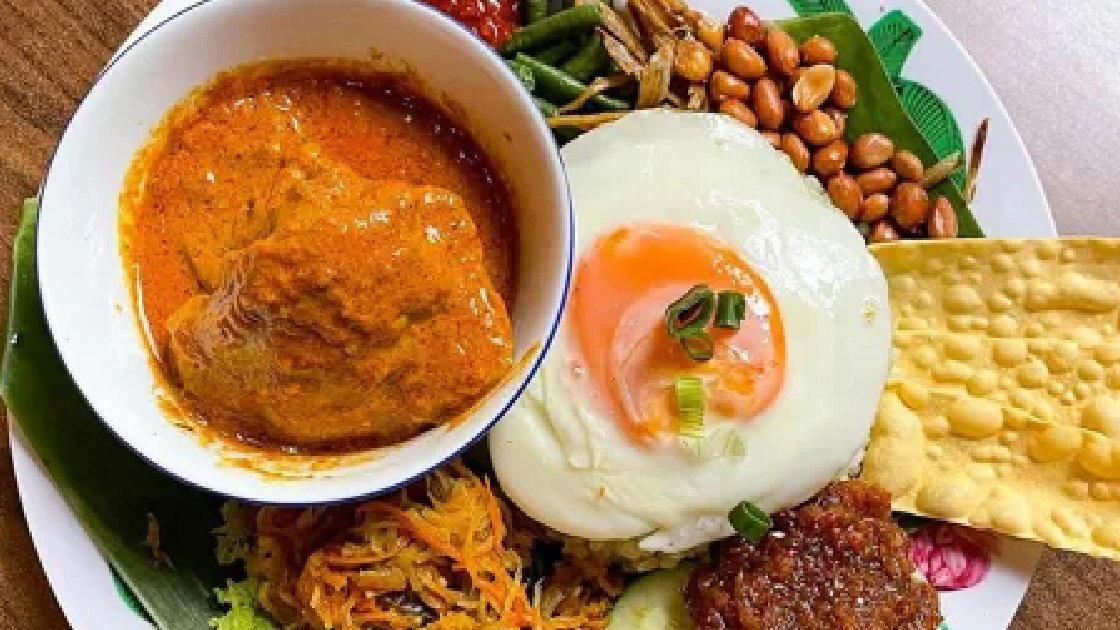
Redhill and the Hawker Tier That Michelin Takes Seriously
Singapore's hawker centres occupy a structural position in the city's food culture that has no precise equivalent elsewhere. They are not the bottom rung of a dining hierarchy but a distinct and seriously contested category, one that Michelin has been recognising since its 2016 Singapore guide introduced Bib Gourmand and Plate distinctions for stalls charging less than twenty dollars a head. By 2024, the guide's Plate designation had become a credible signal within that category: not a star, but an acknowledgment that the cooking clears a threshold of quality that the inspectors consider worth directing readers toward. Shi Le Yuan is a Singaporean kway chap stall in Singapore, awarded a 2024 Michelin Plate.
Redhill sits southwest of the city centre, in a residential precinct built around Housing Development Board blocks and the kind of neighbourhood infrastructure, wet markets, coffee shops, provision stores, that characterises Singapore's mature public housing estates. It does not attract the tourist foot traffic of Maxwell Road or the media attention of Chinatown Complex, which is part of what makes the Michelin recognition here carry a different charge. The stalls that earn recognition in areas like Redhill tend to draw a local clientele first, and external visitors second. That ordering matters: it is a useful marker of a stall cooking to its own standard rather than to the expectations of a transient audience.
Where Shi Le Yuan Sits in the Street Food Tier
Singapore's Michelin-recognised hawker stalls now span a wide range of formats and price points, but the single-dollar sign bracket, where Shi Le Yuan operates, represents one demanding version of the discipline. At this price level, there is no margin for imported ingredients, elaborate technique, or service infrastructure. The credibility of the food rests entirely on sourcing consistency, process control, and the accumulated institutional knowledge of whoever is running the station on any given day. That is the competitive context the Michelin Plate places the restaurant inside.
Across Singapore, the stalls that hold Michelin recognition at this price tier tend to specialise narrowly. Hill Street Tai Hwa Pork Noodle, which has held a Michelin star for several consecutive years, built its reputation on a single noodle preparation executed with considerable precision. 545 Whampoa Prawn Noodles and Adam Rd Noo Cheng Big Prawn Noodle represent the prawn noodle tradition at different points on the price and recognition spectrum. 91 Fried Kway Teow Mee and A Noodle Story extend the recognised noodle category in different directions. The restaurant's classification as street food within this landscape positions it as part of a broader tradition of Chinese-heritage hawker cooking that Singapore has preserved, and increasingly institutionalised, as a form of cultural infrastructure.
The contrast with the city's upper-end restaurant tier is instructive. Zén operates at the four-dollar-sign level with a European Contemporary format. Born and Jaan by Kirk Westaway occupy similar territory. Summer Pavilion, a Cantonese restaurant at the two-dollar-sign level, sits in yet another tier. The restaurant occupies the opposite end of that spectrum, where the price point is the lowest and the physical infrastructure is minimal, but the Michelin Plate signals that the cooking belongs to the same broader conversation about quality and consistency.
The Coordination Behind a Hawker Counter
Team dynamics apply differently to a hawker stall than they do to a brigade kitchen. There is no sommelier, no front-of-house manager, and no expediting system. What replaces those functions is a tighter, more compressed form of operational coordination: the division of prep, cooking, and serving between however many people are working the stall at any given time. In the hawker context, that coordination is often generational, with knowledge and technique passed between family members rather than formalised through culinary training institutions. The Michelin Plate, applied at this level, is in effect a recognition of that transmission process as much as it is a recognition of any individual's skill.
The same dynamic appears in other recognised Asian street food contexts. At 888 Hokkien Mee in George Town, the wok work and supporting prep operate as a coordinated unit rather than as a single cook's performance. Ah Boy Koay Teow Th'ng and Air Itam Duck Rice in Penang represent the same principle applied to different preparations. Even at smaller-format stalls, as with A Pong Mae Sunee in Phuket or Anuwat in Phang Nga, the coordination between whoever handles ingredients and whoever handles fire is what determines whether the output is consistent enough to earn external recognition. Ali Nasi Lemak Daun Pisang and Air Itam Sister Curry Mee in George Town demonstrate how that model extends across different culinary traditions within the same regional category. Banana Boy in Hong Kong applies a comparable discipline to a different format.
Getting There and Planning Your Visit
The restaurant operates from unit #01-82 at 85 Redhill Lane, Singapore 150085. Redhill MRT station on the East-West Line is one direct public transport option. Hawker stalls at this recognition level in residential estates tend to draw queues during peak meal periods, particularly at lunch. Visiting outside the main lunch and dinner rushes is the practical approach for anyone arriving specifically to eat rather than to join a regular neighbourhood crowd. Parking in the surrounding HDB estate is available but limited during peak hours.
Where the Accolades Land
Comparable venues nearby, for context on price, style, and recognition.
| Venue | Cuisine | Price | Awards | Notes |
|---|---|---|---|---|
| Shi Le YuanThis venue — the venue you are viewing | Singaporean Kway Chap | $ | Michelin Plate | Not listed |
| Heng Long BBQ Chicken Rice | Cantonese BBQ Chicken Rice | $ | Michelin Plate | MEI CHIN |
| Hokkien Street Bak Kut Teh | Hokkien-style Bak Kut Teh | $ | Michelin Plate | CHINA SQUARE |
| Leon Kee Claypot Pork Rib Soup | Hokkien-style Claypot Bak Kut Teh | $ | Michelin Plate | ALEXANDRA HILL |
| Hill Street Fried Kway Teow | Traditional Singaporean Char Kway Teow | $ | Michelin Plate | CHINATOWN |
| Tien Lai Rice Stall | Cantonese Roast Meats | $ | Michelin Plate | TAMAN JURONG |
Recognition history
Dated appearances from independent guides and award organizations, with the underlying list record or original source where available.
Michelin Guide Plate
Michelin Guide
Michelin Plate
Michelin
Continue exploring
More in Singapore
Restaurants in Singapore
Browse all →
Bars in Singapore
Browse all →
At a Glance
- Classic
- Cozy
- Casual Hangout
- Family
- Standalone
Current opening hours
- Monday
- Closed
- Tuesday
- 7 AM–1 PM
- Wednesday
- 7 AM–1 PM
- Thursday
- 7 AM–1 PM
- Friday
- Closed
- Saturday
- 7 AM–1 PM
- Sunday
- 7 AM–1 PM
Hours can change for holidays and private events. Last verified .
Humble hawker centre setting with a casual, unassuming atmosphere typical of Singapore's local food centres.