
Hitotsu is a 10-seat counter sushi restaurant in Miyazaki City, operating since January 2022 and holding Tabelog Bronze Awards consecutively from 2023 through 2026, alongside selection in the Tabelog Sushi WEST Top 100. Dinner runs JPY 15,000–19,999 per person, with two seatings nightly and a particular focus on Kyushu-sourced fish. Reservations are accepted online and by phone.
 Discover on Pearl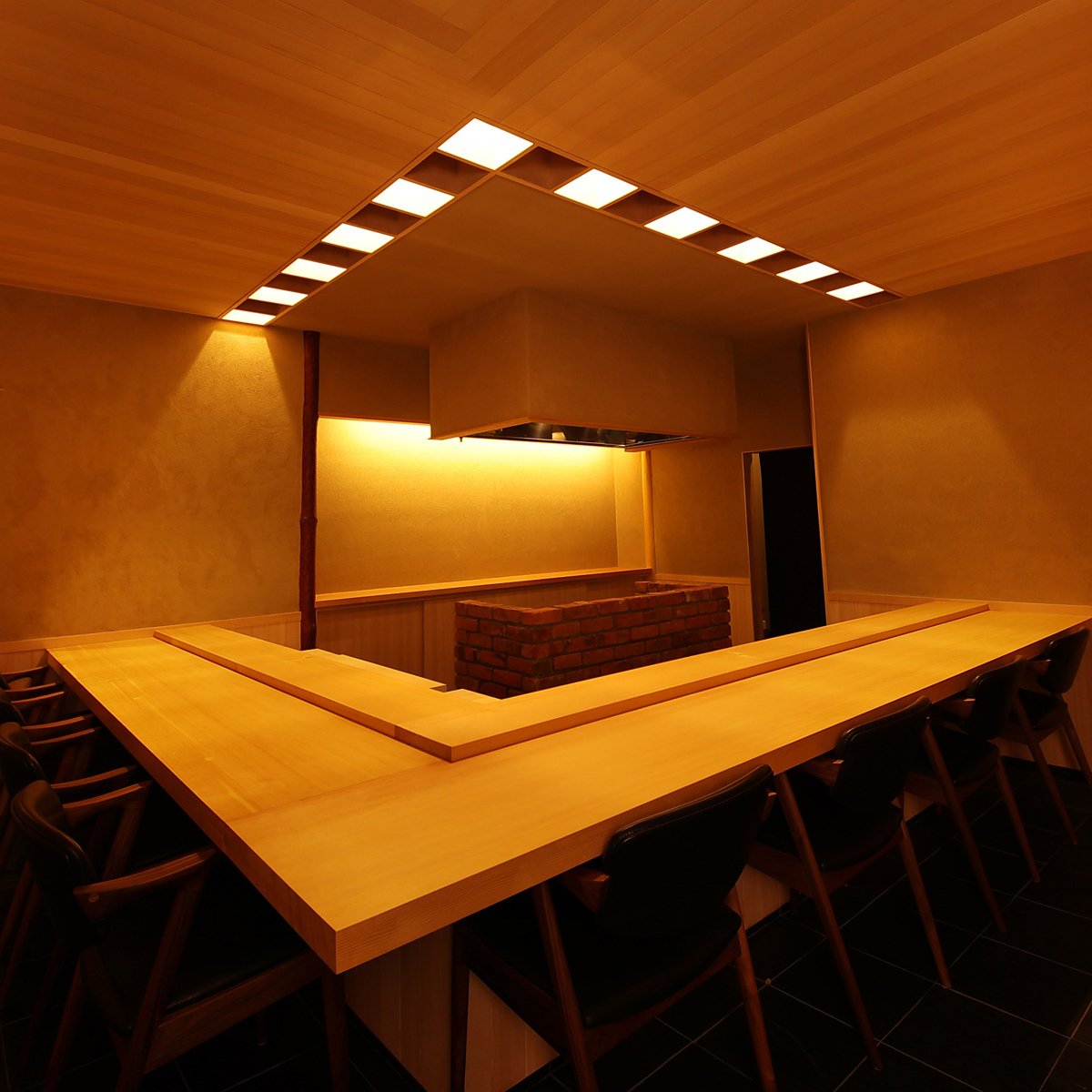
A Counter at the Edge of Kyushu's Sushi Conversation
The ground floor of Bricks MB Building on Tachibanadori Higashi is not an address that announces itself. The street is workaday Miyazaki — wide enough for traffic, lined with the kind of buildings that hold dental clinics and accounting firms above small restaurants below. Hitotsu occupies that first floor without ceremony. Ten counter seats, no private rooms, no overflow space. What the room offers is proximity: the counter format that defines serious omakase practice across Japan, applied to a city that sits far outside the Fukuoka–Osaka–Tokyo corridor where most sushi criticism is concentrated.
That geography matters. Miyazaki prefecture faces the Pacific along Kyushu's southeastern coast, which positions it closer to some of Japan's most productive fishing grounds than most celebrated sushi addresses ever get. The premise at Hitotsu, as stated in its own Tabelog description, is sushi drawn directly from those regional blessings — Kyushu produce and coastal fish treated as primary material rather than supplement to a Tokyo-derived canon. That framing places it in a growing cohort of regional counters that argue, through the food itself, that the sushi conversation does not have to begin and end in Ginza.
The shortlist, unlocked.
Hard-to-book tables, cellar releases, and concierge-planned trips.
Get Exclusive Access →The Ritual of Two Seatings
The structure of the meal at Hitotsu follows a format recognisable to anyone who has sat at an omakase counter in Japan: two services per evening, each with a defined start time, each with no more than ten guests. The first seating runs 17:30 to 19:30, the second 20:00 to 22:00. Closed on Wednesdays, and on the first and third Tuesday of each month , the kind of irregular closure schedule that signals a kitchen running on its own rhythm rather than a hospitality-industry template.
The pacing implicit in that two-hour window is deliberate. Omakase dining at this price tier , Tabelog places the average spend at JPY 15,000 to 19,999 at the listed rate, with review-based data suggesting some guests reach JPY 20,000 to 29,999 , operates as a sequence, not a menu. Guests do not order; they receive. The counter position means each piece is handed directly across, the chef reading the room, adjusting pace and portion by what has already been consumed. For a table accustomed to à la carte dining, the adjustment is less about the food than about surrendering control of the evening's tempo.
Drinks program reinforces that rhythm. Sake and shochu are the focus, described explicitly as a point of distinction in the venue's own materials. Wine is available, but the emphasis on nihonshu and Kyushu-produced shochu is a deliberate pairing choice that keeps the experience anchored in regional character. For visitors unfamiliar with shochu at table, the pairing with fish-forward sushi is worth understanding: the spirit's range , from barley-based mugi to sweet potato-based imo , offers different registers of weight and finish that read differently against lean versus fattier fish.
Four Years, Four Bronze Awards
Hitotsu opened on 11 January 2022. By the time the Tabelog Award cycle ran for 2023, it had earned Bronze , a recognition it has held for four consecutive years through 2026. The Tabelog Bronze tier represents roughly the top 3.5 percent of reviewed restaurants in Japan by score, making it a meaningful signal in a country where the density of serious restaurants makes simple star counting inadequate. The venue carries a Tabelog score of 4.09, and has been selected for the Tabelog Sushi WEST Top 100 list in both 2022 and 2025.
The Sushi WEST designation is contextually significant. Tabelog's regional categorisation for western Japan , covering Kyushu, Chugoku, Shikoku, and Kansai , runs against a peer set that includes Osaka and Fukuoka counters with considerably longer track records and greater name recognition internationally. Placement in that Top 100 twice in three years of operation, from a Miyazaki address, is the kind of credential that draws attention from domestic food media before international guides catch up. For regional dining outside Japan's main urban corridors, Tabelog recognition of this consistency often precedes Michelin coverage by several years, if Michelin coverage comes at all , the guide's Kyushu prefecture reach remains more limited than its Tokyo and Osaka operations.
For context on how Hitotsu's award tier reads against other recognised Japanese counters, the distinction is clear when placed alongside addresses like Harutaka in Tokyo or considered alongside Kyushu's broader culinary ambition, visible at places like Goh in Fukuoka. Hitotsu operates in a different register , regional, counter-only, fish-particular , but the award consistency puts it in a conversation that extends beyond Miyazaki's city limits.
Miyazaki's Dining Context
Miyazaki city's restaurant scene is smaller and less internationally documented than Fukuoka or Kagoshima, but it is not thin. The city has a genuine dining culture built on the prefecture's agricultural and coastal output , Miyazaki beef, local chicken dishes, and the Pacific seafood that defines the prefecture's coastal identity. Fine dining here tends to operate at mid-range price points, with Hitotsu's JPY 15,000–19,999 dinner bracket positioning it at the upper end of the city's sushi offer. For comparison, Chinese Sen operates in the JPY 10,000–14,999 range, and Ranpu Tei, which covers Yoshoku and European cuisine, sits at JPY 8,000–9,999. Other Miyazaki sushi addresses worth knowing include Isshinzushi Koyo and iwanaga, both of which occupy different positions in the city's counter sushi tier. For kaiseki and broader Japanese cooking, Dewaya represents the city's ryotei tradition.
Hitotsu's position on Tachibanadori Higashi puts it roughly ten minutes on foot from Miyazaki Station, which is also the main access point for visitors arriving by shinkansen from Fukuoka or by limited express from Kagoshima. The walk is flat and direct. No parking is available at the venue, but coin parking is nearby , a logistical detail that matters less than the absence of private rooms, which makes the counter experience non-negotiable. Groups seeking separation or privacy will find the format unsuitable; the ten-seat counter is the only configuration available.
Booking and Planning
Reservations are accepted online through the venue's own site and by phone. Credit cards are accepted across the main networks , Visa, Mastercard, JCB, Amex, and Diners , though electronic money and QR code payment are not. The cancellation policy carries a fee structure that applies from the point of change request, not just from the date of the booking, which is worth reading carefully before scheduling. The venue does not list a dress code, but the counter format and price tier suggest guests arrive with some awareness of the context.
For visitors building a broader Miyazaki itinerary, the full EP Club guides cover the city's hotels, bars, wineries, and experiences: our full Miyazaki restaurants guide, hotels, bars, wineries, and experiences. For those building a longer Japan itinerary that uses Hitotsu as a regional anchor, the contrast with major-city counters is instructive: the format at Hitotsu is structurally similar to what you would find at Harutaka in Tokyo or the tightly controlled kaiseki rhythm at Gion Sasaki in Kyoto, but the sourcing is anchored to a coastline those kitchens can only approximate. Elsewhere in Japan's award-recognised dining circuit, HAJIME in Osaka, akordu in Nara, and 1000 in Yokohama operate in very different registers, while internationally, Le Bernardin in New York City and Atomix in New York City represent the fish-focused and Korean omakase ends of what counter dining has become outside Japan.
Frequently Asked Questions
- What is the signature dish at Hitotsu?
- Hitotsu does not operate with a fixed signature dish in the conventional sense. The omakase format means the sequence changes according to what Kyushu coastal sourcing makes available. The venue's own materials emphasise a particular focus on fish and regional produce, and the awards record , four consecutive Tabelog Bronze years and two Sushi WEST Top 100 selections , reflects consistent execution across changing seasonal material rather than a single anchoring preparation. Specific dish details for any given service are not published in advance.
Cuisine Context
A fast peer set for context, pulled from similar venues in our database.
| Venue | Cuisine | Awards | Notes |
|---|---|---|---|
| Hitotsu | {"Year":"2026","Award Source":"Tabelog",… | This venue | |
| Chinese Sen | Chinese | Chinese, JPY 10,000 - JPY 14,999 | |
| Dewaya | |||
| Isshinzushi Koyo | |||
| iwanaga | |||
| Ranpu Tei | Yoshoku (Japanese style western cuisine), European | Yoshoku (Japanese style western cuisine), European, JPY 8,000 - JPY 9,999 |
Need a table?
Our members enjoy priority alerts and concierge-led booking support for the world's most difficult tables.
Get Exclusive AccessThe shortlist, unlocked.
Hard-to-book tables, cellar releases, and concierge-planned trips.
Get Exclusive Access →