Tabelog 100 #79
Our verdict
Hishida-ya Sakaba brings Tokyo’s izakaya tradition into a compact Komaba setting, with fish-led cooking, Chinese-inflected dishes, and a drinks range that includes sake, shochu, wine, and cocktails. Its selection for Tabelog 100 Izakaya EAST 2025 places it in a serious local conversation rather than the polished tasting-menu circuit.

Pearl is the En Primeur Club membership app, where members save venues, book tables and use the concierge.
The menu
What to order
- Chicken karaage (toributsugiri karaage)
- Mapo tofu
- Shumai dim sum
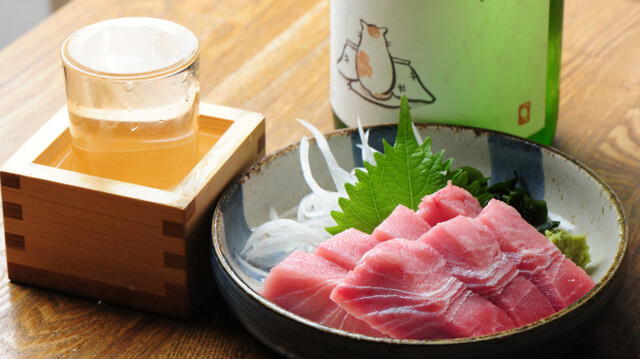
- Fresh natural tuna dishes
- Assorted sashimi course
Tokyo’s dining rhythm is broader than the neon shorthand outsiders attach to the city. Across casual rooms and regulars’ counters, the appeal often lies in practical pacing and kitchens that move from a rice set at lunch to drinks at night without changing character. Hishida-ya Sakaba fits that register: compact in spirit, casual in format, and built around the izakaya’s strength, range without ceremony.
The contemporary Tokyo izakaya is not one format. At one end are chain taverns built for volume; at the other, specialists whose cooking draws destination diners while keeping the grammar of shared plates and drinks. Hishida-ya Sakaba sits in the latter camp. Its 2025 recognition through Tabelog’s izakaya coverage matters because the category is broad and fiercely local, rewarding places that make sense to Tokyo diners, not only travelers chasing formal accolades.
Izakaya cooking without the trophy-restaurant script
The kitchen is best read through the breadth of the izakaya format rather than genre purity. The listing identifies Hishida-ya Sakaba as an izakaya, placing the restaurant in a familiar Tokyo pattern: a casual room where food, drinks, and repeat use matter as much as any single signature dish. This is not spectacle. In tavern culture, it is often how regular dining works, with varied plates and drink food sharing one table.
That breadth separates a serious sakaba from a restaurant built around a single tasting-menu idea. The evening budget sits in the JPY 4,000 to JPY 4,999 band, below Tokyo’s luxury counter economy and above the cheapest drinking dens. The lower lunch band, JPY 1,000 to JPY 1,999, recalls how many Tokyo restaurants maintain two identities in one room: daytime value and nighttime social dining. This is where the city’s everyday craft often lives, outside the trophy reservation circuit.
The appeal is therefore less about a scripted drinks program or a polished luxury setting than about the flexible grammar of the Japanese tavern. In Tokyo, ambitious casual restaurants can feel serious without turning formal, and an izakaya can support a meal that is as much about rhythm as it is about individual orders. The format is flexible, but the recognition gives the room a clearer place in the city’s dining conversation.
Tokyo gives the room its scale, not a tourist script
Tokyo is an instructive setting for this restaurant. It is large enough to support every form of destination dining, but its izakaya culture depends on repeat use as much as visitor attention. A tavern can serve regulars, groups, and food-focused visitors without performing as a luxury destination restaurant at every turn.
The scale is part of the argument. Rather than leaning on grand design language or private-room theater, Hishida-ya Sakaba reads through the practical social logic of the izakaya: a room for shared plates, drinks, and flexible pacing. That says more about the genre than a more formal description could. Izakaya dining is social, direct, and often defined by how naturally the meal unfolds.
Compared with Hishida Ya, Hishida-ya Sakaba reads as a separate sakaba choice within Tokyo’s casual dining field. Against Shinsen Ichinoya or Shoto Ran Kan, it occupies its own lane in the city’s wider restaurant map. Cignale Enoteca and Keichitsu belong to another Tokyo conversation, which helps clarify the appeal here. This is not the night for linen, course progression, and hushed pacing. It is the night for a serious tavern meal where the room’s informality is part of the point.
How to place it in a Tokyo itinerary
For travelers building a Tokyo dining week, avoid stacking only sushi counters, ramen queues, and luxury kaiseki. A city this large is better understood through category shifts. Put an izakaya such as Hishida-ya Sakaba beside other Tokyo dining rooms, and Tokyo becomes more legible. EP Club’s broader Tokyo restaurant map can help: Our full Tokyo restaurants guide is the primary starting point, while nearby category browsing can extend into Our full Tokyo hotels guide, Our full Tokyo bars guide, Our full Tokyo wineries guide, and Our full Tokyo experiences guide.
Within Tokyo’s restaurant field, the comparison is not only between izakaya. A traveler might pair this room with other Tokyo dining in different formats, from counter-led meals and casual specialists to visual, easygoing stops that show another side of the city. The point is range: Tokyo rewards diners who move between formats rather than treating every meal as a prestige appointment.
For a wider Japan itinerary, the same logic applies beyond the capital. Regional and city-to-city contrasts sharpen the reading of Tokyo’s casual dining culture, while international examples of Japanese-influenced drinking and snack culture show how formats travel, adapt, and lose or gain context in translation. Hishida-ya Sakaba is best understood inside that broader movement, but without losing sight of its straightforward identity as a Tokyo izakaya.
The editorial case for Hishida-ya Sakaba is not spectacle. It is that the room makes a compact argument for where Tokyo casual dining is strong: a recognizable tavern format, accessible lunch and dinner budgets, and enough recognition to matter without abandoning the everyday scale that gives izakaya culture its force.
Frequently asked questions
Where exactly is Hishida-ya Sakaba?
Tokyo.
What's the price range at Hishida-ya Sakaba?
Pricing at Hishida-ya Sakaba is listed as Dinner: JPY 4,000 - JPY 4,999; Lunch: JPY 1,000 - JPY 1,999.
Should I book Hishida-ya Sakaba in advance?
For a recognized Tokyo izakaya, booking ahead is a sensible plan, especially at busy dining times. Check the venue's official channels for the latest reservation details.
What do critics highlight about Hishida-ya Sakaba?
The clearest marker is its inclusion in Tabelog’s 2025 izakaya recognition. The listing identifies Hishida-ya Sakaba as an izakaya and gives it a Tabelog score of 3.60.
Can Hishida-ya Sakaba adjust for dietary needs?
Those details are not published. For specific requests, the listed phone number is +81-3-6336-8891. Check the venue's official channels for the latest details.
Is Hishida-ya Sakaba suitable for children?
Those details are not published. If you are visiting with children, check the venue's official channels for the latest details before you go.
Cuisine Lens
Comparable venues by cuisine and price in the same metro.
| Venue | Cuisine | Price | Awards | Notes |
|---|---|---|---|---|
| Hishida-ya SakabaThis venue (the venue you are viewing) | Chinese-influenced Izakaya with Fresh Tuna | $30–50 | Tabelog 100 #79 | Not listed |
| Wakana Sushi | Traditional Japanese Sushi | $20–30 | Not listed | Higashi Nagasaki |
| Kajitsuen Riberu | Fruit Parlor | $10–20 | Not listed | Meguro |
| Sora to Mugi to | Organic Vegan Bakery & Café | $10–20 | Tabelog 100 #51 | Shibuya |
| 梢 | Modern Japanese Kaiseki | Not listed | Not listed | Shinjuku |
| Tonkatsu Ouryu | Tonkatsu specialist | $20–30 | Tabelog 100 #17 | Minato |
Recognition history
Dated appearances from independent guides and award organizations, with the underlying list record or original source where available.
Tabelog 100 #79 · No. 79
Tabelog · Tabelog 100 - Izakaya - EAST - 2025