
Tabelog 100 #12
Our verdict
Hirokawa Tailor sits in Osaka’s tachinomi category: a stand-up bar format where pace, price discipline, and regulars’ confidence matter more than ceremony. Its 2025 selection for Tabelog 100 Tachinomi places it in a sharper critical bracket than a casual drink stop, with dinner spending commonly listed at JPY 3,000–3,999.

Pearl is the En Primeur Club membership app, where members save venues, book tables and use the concierge.
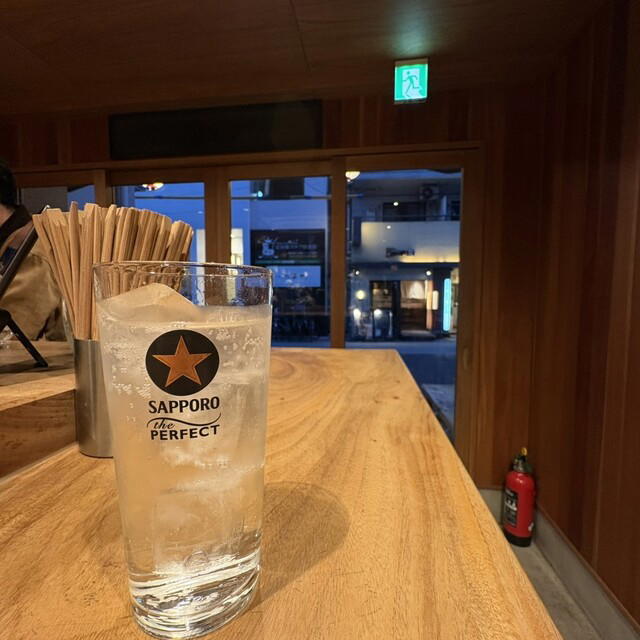
Stand-up drinking in Osaka has its own grammar: compact rooms, quick decisions, little patience for theatrical service, and a bill that keeps the evening mobile. In Osaka, that grammar matters. The setting sits within the city’s larger food culture, where a tachinomi counter can function as a first stop, a full evening, or a corrective after too much formal dining.
Hirokawa Tailor belongs to that sharper version of the genre. The useful signal is not grandeur, but recognition: selection for Tabelog 100 Tachinomi 2025, with a Tabelog score of 3.53, places it among Japan’s closely watched stand-up bar addresses rather than the general pool of casual after-work drinking rooms. In a city that can make even modest formats competitive, that distinction carries weight.
Osaka tachinomi, judged by discipline rather than comfort
Tachinomi is often misunderstood by visitors as a budget category. Price is part of the appeal, but the form is stricter than that. A stand-up bar has less room to hide weak pacing, unclear ordering, or careless drinks. The guest is not settling in for a long dining room performance; the value is measured through rhythm, turnover, and the confidence of the counter.
That is why awards in this category read differently from awards attached to fine dining. A Tabelog 100 Tachinomi selection is not an argument for luxury. It is an argument for consistency inside a format that rewards repetition. The dinner spend listed for Hirokawa Tailor, JPY 3,000–3,999, keeps it within the range where Osaka drinkers expect precision rather than ceremony. At that price, acclaim has to come from execution and atmosphere, not from imported scarcity signals.
Osaka’s range is broad enough to make the comparison useful. A visitor can move among places such as Hakugin Tei, PAINDUCE Honten, Imparfait, Aozora blue, or Okashi Tsukasa Takaoka Fukunobu, each occupying a different point on the city’s dining map. Tachinomi sits on another axis: less about courses or seated comfort, more about how much character can be compressed into a standing room without turning it into a gimmick.
The city’s broader dining map helps explain the draw. Osaka does not require a formal table to be serious about food and drink. The same itinerary might include counter dining, bakeries, curry, udon, department-store food halls, late bars, and a standing stop in between. For a wider sweep of the city’s options, Our full Osaka restaurants guide gives the broader restaurant context, while Our full Osaka bars guide is the more natural companion for this particular format.
Recognition matters more when the format is this compressed
Award attention in tachinomi has a practical meaning for travellers: it narrows a crowded field. Stand-up bars often lack the English-language infrastructure that helps visitors assess restaurants before arrival. A public selection list gives a useful filter without asking the venue to behave like an international hospitality product. Hirokawa Tailor’s inclusion in the 2025 Tabelog 100 Tachinomi list is the clearest reason to treat it as more than a convenient drink in Osaka.
The category also resists the usual chef-driven narrative. There is no need to inflate the room into a personality story. The editorial point is simpler: Osaka’s drinking culture rewards places that can hold attention with limited physical comfort and little explanatory apparatus. In that setting, a standing bar asks for a different kind of planning. It suits small groups, flexible timing, and guests comfortable with a room where the format, not the chair, sets the tempo.
Access and timing also shape the experience. This is a stand-up bar rather than a full-service restaurant built around lingering, so the smarter approach is to treat it as part of an evening rather than the only booking on the calendar. The Osaka setting makes that easy: start with a drink-led stop, continue toward a seated meal, or reverse the order and use tachinomi as a final, lower-commitment landing.
That flexibility is central to Osaka. A polished day might begin with bread or coffee, move through the city’s familiar casual canon, then pivot toward other dining rooms or pizza. A standing bar fits because Osaka dining rarely moves in a single lane.
How to place it in an Osaka itinerary
For travellers, the decision is less about whether this is a grand destination and more about whether the evening needs a high-signal local drinking stop. Hirokawa Tailor is strongest in that role. The Tabelog 100 Tachinomi 2025 recognition gives it critical ballast, the Osaka location keeps it practical, and the stand-up format makes it better suited to adaptable diners than to anyone seeking a long seated dinner.
The category also pairs well with a wider Japan itinerary because it shows a different side of restaurant culture from destination tasting menus. For contrast across the country, EP Club’s Japan and international listings include formal rooms, casual counters, regional specialists, and drink-and-food crossovers. Seen against exported versions of Japanese dining, Osaka’s standing-bar culture feels especially compressed, local, and direct.
Build the rest of the trip around the city rather than a single venue category. Our full Osaka hotels guide helps with neighbourhood choice, Our full Osaka experiences guide covers cultural planning, and Our full Osaka wineries guide is useful for readers mapping wine-focused detours. Within that broader frame, Hirokawa Tailor is a compact, critically noted expression of Osaka’s standing-drink tradition: informal in posture, but not casual in reputation.
Frequently asked questions
Where is Hirokawa Tailor located?
Osaka.
Is Hirokawa Tailor expensive?
Pricing at Hirokawa Tailor is listed as JPY 3,000 - JPY 3,999 View spending breakdown.
What's the best way to book Hirokawa Tailor?
Plan around the stand-up bar format in Osaka, treating it as a flexible drinking stop rather than a long seated booking.
What's the standout thing about Hirokawa Tailor?
Its main signal is recognition: Tabelog selected Hirokawa Tailor for the 2025 Tabelog 100 in the Tachinomi category. Add the stand-up bar format and the JPY 3,000–JPY 3,999 price range, and it reads as a sharply edited Osaka drinking stop rather than a casual bar with little curation.
Pricing, Compared
Comparable venues to calibrate price, style, and recognition.
| Venue | Cuisine | Price | Awards | Notes |
|---|---|---|---|---|
| Hirokawa TailorThis venue (the venue you are viewing) | Japanese stand-up bar (tachinomi) | $20–30 | Tabelog 100 #12 | Not listed |
| Kikujudo Yoshinobu | Traditional Japanese wagashi & tea cafe | Not listed | Tabelog 100 #4 | Chūō, Traditional Japanese wagashi & tea cafe |
| Spice curry 43 | Osaka-style spice curry | $10–20 | Tabelog 100 #15 | Nishi, Osaka-style spice curry |
| Kokopelli Curry | Japanese curry house | Not listed | Tabelog 100 #56 | Kita, Japanese curry house |
| hadoromanchikka | Japanese stand-up bar with fried skewers and sake | $10–20 | Tabelog 100 #96 | Chūō, Japanese stand-up bar with fried skewers and sake |
| Totomen En | Creative seafood ramen | $10–20 | Tabelog 100 #19 | Higashi-Osaka, Creative seafood ramen |
Recognition history
Dated appearances from independent guides and award organizations, with the underlying list record or original source where available.
Tabelog 100 #12 · No. 12
Tabelog · Tabelog 100 - Tachinomi - 2025
Continue exploring
More in Osaka
Restaurants in Osaka
All restaurants in Osaka →


Bars in Osaka
All bars in Osaka →



Hotels in Osaka
All hotels in Osaka →



Wineries in Osaka
Browse all →
Details
- Lively
- Trendy
- Energetic
- Cozy
- After Work
- Casual Hangout
- Solo
- Late Night
- Standalone
- Beer Program
- Small Plates
- Counter Dining
- Beer
- Highballs
- Sake