Tabelog 100 #19
Our verdict
Totomen En belongs to Osaka’s serious ramen conversation rather than its tourist-facing food circuit: a small Higashiosaka shop with counter seating, repeat Tabelog Ramen OSAKA “Tabelog 100” selection in 2023, 2024, and 2025, and a format built for focused solo dining. The appeal is precision and tempo, not ceremony.

Pearl is the En Primeur Club membership app, where members save venues, book tables and use the concierge.
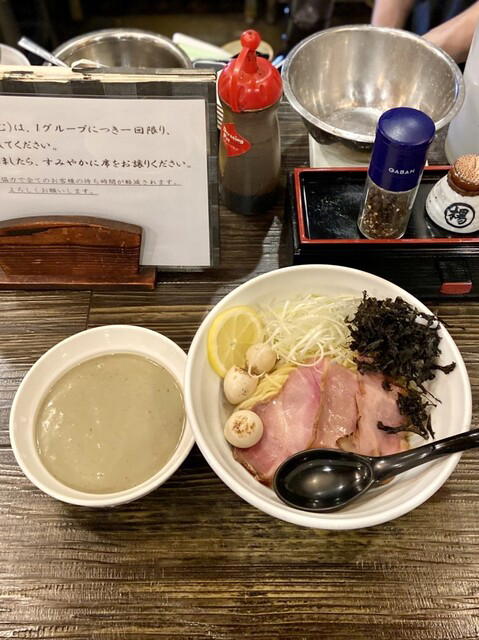
The menu
What to order
- Jun Niboshi Soba
- Tai Shiratsu Ramen
- Limited Ankimo Paitan specials
Approaching a ramen venue in Osaka shifts the scale of the city’s dining. Beyond bright signage, market grazing, and late-night eating, a focused ramen stop follows another rhythm: ordering, waiting, bowls landing, and a meal that turns on concentration rather than performance. Totomen En works in that exacting register, where the experience rests on the minutes between choosing to eat ramen, receiving a bowl, and judging whether the visit justifies attention in a crowded local category.
Osaka ramen has never been as easily branded abroad as some regional Japanese ramen styles, so its better-known shops reward attention. The city absorbs many approaches rather than defending one orthodoxy, and ramen remains one part of a broad everyday dining culture. In that context, Tabelog Hyakumeiten recognition matters because it places a shop inside a local field judged by diners who compare ramen constantly. Totomen En is listed with 2025 recognition, a useful signal within a crowded Osaka category.
Osaka ramen rewards patience over spectacle
Osaka’s specialist ramen rooms can sit outside the visitor’s most obvious dining orbit, shaping the meal. This is not necessarily the city’s polished dining grammar or visitor-heavy snack trail. The food culture around these shops is often more everyday than celebratory, with diners measuring value quickly. For ramen, that audience is useful: less forgiving of decoration, more interested in balance, consistency, and enough identity to make a venue worth seeking out.
The competitive set underlines it. Junai Udon Nadeshiko and Chotakasui Jun Teuchi Men Nishimura operate in accessible noodle territory, while Fuse Hosomi Shoten and Taishu Chuuyuuka Shokudo Hakkai show how casual Chinese and noodle-adjacent cooking remain part of the same everyday dining economy. Chuka Soba Fukuhara sits within the same broader conversation around focused casual eating. Totomen En belongs in that conversation, not the luxury restaurant frame; its credibility comes from focus and recognition within a narrow category.
That distinction helps travellers. Osaka can make casual dining feel effortless, but ramen at this level is rarely casual in execution. The format compresses everything. The meal is direct, timing matters more than lingering, and diners know ramen is eaten with pace. The form is democratic but not loose: a bowl arrives, the first minutes count, and attention belongs to the food rather than ceremony.
A ramen venue with award-list gravity
The ramen-shop format gives the meal immediate pressure. This is not tasting-menu intimacy, with service choreographed across hours. Ramen intimacy is simpler: a short meal, a clear focus, and little distance between expectation and result. That scale explains why recognition changes the stakes. A Tabelog score of 3.70 is a meaningful marker in Japan’s restaurant-rating culture, especially where diners split hairs over ramen quality and repeatability.
The Tabelog Hyakumeiten designation needs nuance. It is not a Michelin star, and it does not turn ramen into fine dining. Its value is category precision. Osaka ramen lovers compare shops bowl by bowl, and 2025 recognition signals relevance within that local field. For a venue working in a focused, accessible ramen category, that matters: the point is not luxury, but whether the bowl earns repeat attention.
Sensory frame is disciplined rather than lavish. Ramen shops run on direct signals: bowls moving from preparation to diner, chopsticks lifting noodles before the soup cools, and the low sound of people concentrating on a short meal. Without verified dish names or tasting notes, the responsible reading of Totomen En is through category and recognition: a ramen specialist with enough local traction to sit among Osaka’s notable ramen addresses, not a broad-menu restaurant built for every mood.
That focus separates it from the wider Osaka table. A day might move through other Osaka dining rooms, casual urban stops, snack counters, bakeries, or international-leaning kitchens. Ramen asks for a narrower appetite: one bowl, one short window of attention, and a willingness to let a modest meal carry the day’s strongest signal.
How to place it within an Osaka food itinerary
Totomen En is strongest for travellers who know Osaka’s food identity is not confined to its most photographed food streets. The city’s better eating often comes from matching appetite to format: central areas for breadth, quick stops for speed, and specialist venues for loyal local followings. Osaka supports all of those modes. The reward here is not convenience theatre, but a clearer view of how everyday Japanese dining becomes obsessive when one dish type is refined through repeated service.
Plan it as a focused ramen stop, not a long lunch. The listed budget keeps the meal in an accessible range, with both lunch and dinner shown at JPY 1,000 - JPY 1,999. In Japan, ramen remains one of the easiest serious meals to take alone, and the format suits diners who want quality without a drawn-out booking ritual.
The broader EP Club Osaka map frames the decision. Use Our full Osaka restaurants guide for the city’s dining range, then layer in Our full Osaka hotels guide, Our full Osaka bars guide, Our full Osaka wineries guide, and Our full Osaka experiences guide if the trip extends beyond meals. For comparison across Japan and Japanese dining abroad, the editorial trail can also be followed through other cities and formats, from casual counters to specialist dining rooms, without losing sight of what makes Osaka ramen its own compact pursuit.
The editorial verdict is simple: this is a specialist ramen address for travellers willing to trade certainty for a tighter local signal. Its 2025 Tabelog Hyakumeiten recognition, listed 3.70 score, accessible budget, and Osaka setting make it a useful counterweight to the city’s louder food mythology. Go for concentration, not ceremony.
Frequently asked questions
What part of town is Totomen En in?
Osaka.
What are the operating hours at Totomen En?
Operating hours for Totomen En are not specified in the provided venue information.
How much does it cost to eat at Totomen En?
The listed budget for Totomen En is Dinner: JPY 1,000 - JPY 1,999; Lunch: JPY 1,000 - JPY 1,999.
What is Totomen En known for?
Totomen En is known as a ramen venue in Osaka with 2025 Tabelog Hyakumeiten recognition and a listed score of 3.70.
Price and Recognition
Comparable options at the same price tier.
| Venue | Cuisine | Price | Awards | Notes |
|---|---|---|---|---|
| Totomen EnThis venue (the venue you are viewing) | Creative seafood ramen | $10–20 | Tabelog 100 #19 | Not listed |
| Gokuju Bimen umami | Ramen shop | $10–20 | Tabelog 100 #40 | Higashi-Osaka, Ramen shop |
| Yuiitsu Muni no Ramen Senmon Ten Ibukuro Washizukami | Specialty Ramen Shop | $10–20 | Tabelog 100 #61 | Tennōji, Specialty Ramen Shop |
| Yuai Tei | Traditional soy sauce ramen shop | $10–20 | Tabelog 100 #82 | Naniwa, Traditional soy sauce ramen shop |
| Buttah | Japanese Curry | Not listed | Tabelog 100 #55 | Chūō, Japanese Curry |
| Okonomiyaki Chitose | Traditional Osaka okonomiyaki | $10–20 | Tabelog 100 #17 | Nishinari, Traditional Osaka okonomiyaki |
Recognition history
Dated appearances from independent guides and award organizations, with the underlying list record or original source where available.
Tabelog 100 #19 · No. 19
Tabelog · Tabelog 100 - Ramen - OSAKA - 2025