Himari
Himari occupies a strip-center address on West 34th Street in Houston's Garden Oaks corridor, positioning itself inside the city's growing tier of precision-focused, Japanese-inflected dining rooms. The venue sits in a price and format conversation that includes Houston's most serious omakase and tasting-menu counters, where the coordination between kitchen, floor, and beverage program carries as much weight as any single dish.
Pearl is the En Primeur Club membership app — saves, bookings, and concierge access live there. Same editors, same standards.
- Address
- 1223 W 34th St C500, Houston, TX 77018
- Phone
- +18325825005
- Website
- opentable.com
- Directions
- Get directions
 Saves & bookings on Pearl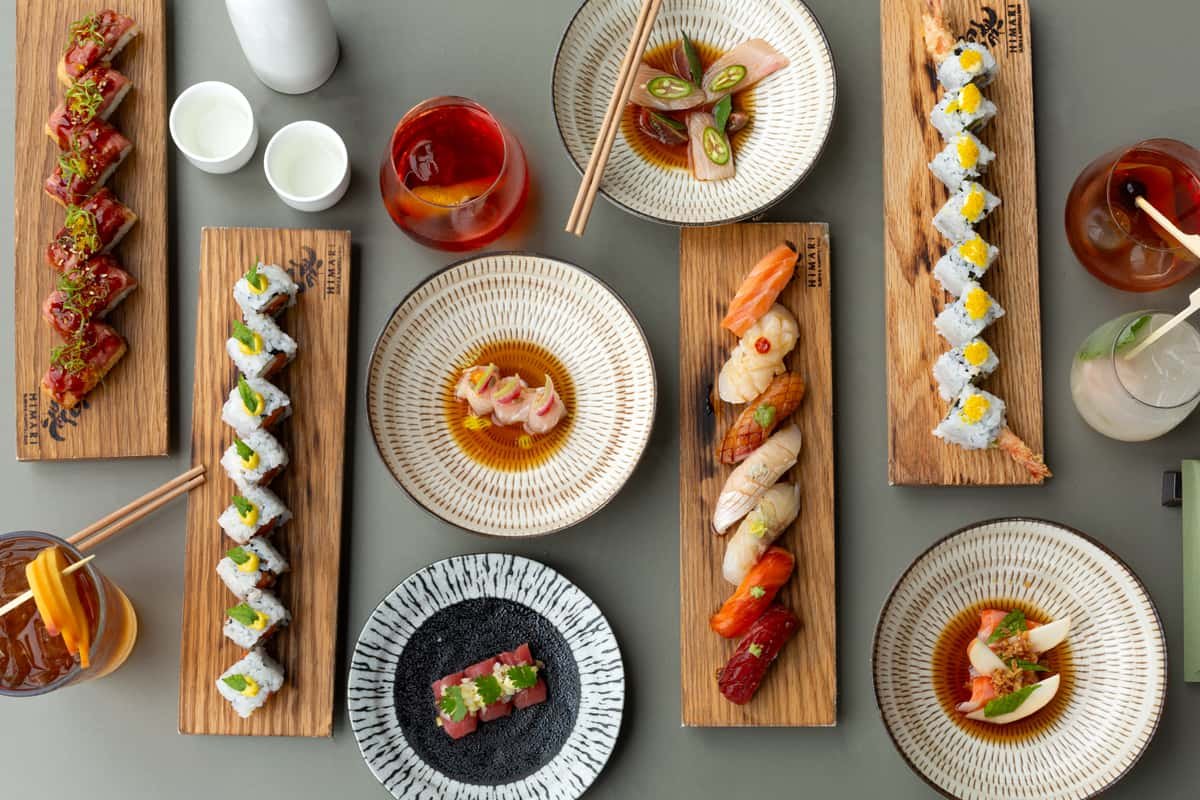
Where West 34th Street Places Himari in Houston's Dining Order
Houston's dining geography has never been tidy. The city's most serious kitchens are scattered across strip malls, converted warehouses, and low-slung retail corridors rather than concentrated in a single prestige district. West 34th Street, running through Garden Oaks and Oak Forest, has become one of the quieter but more consequential addresses in this pattern. The neighborhood draws restaurants that prioritize format and craft over high-visibility real estate, and Himari at 1223 W 34th St fits that template precisely. Its strip-center setting is not incidental; in Houston, some of the most focused dining rooms have always operated outside the conventional hospitality zip codes.
That context matters when placing Himari against the broader Houston tasting-menu and Japanese-influenced tier. Venues like March, which works a Venetian idiom at the leading price bracket, and Musaafer, which brings a high-production Indian format to the same tier, define one end of the city's premium dining spectrum. Himari occupies a different register, one where the physical scale is smaller and the signal is carried through restraint rather than spectacle.
The Format and What It Asks of the Room
Across American cities, the most demanding tasting-menu formats succeed or collapse depending on whether the entire operation moves as a unit. This is where the editorial angle of team dynamic becomes analytically useful rather than merely complimentary. At the caliber of restaurant Himari appears to represent, the kitchen's pacing, the floor's read of the table, and the beverage program's arc through a meal are not separate performances. They are a single choreography, and any visible seam between them breaks the experience.
This is a discipline that distinguishes Houston's upper-tier rooms from one another as much as cuisine type does. Tatemó, which works masa as a central format discipline, achieves something similar through the precision of a single ingredient treated with deep technical seriousness. BCN Taste & Tradition channels Spanish culinary tradition through a team fluency with Iberian cooking and wine. In each case, the operation's coherence is the product. Himari sits in that conversation.
Nationally, the restaurants that have made team coordination their public story include places like Single Thread Farm in Healdsburg, where kitchen, floor, and a full farming operation run as an integrated program, and Blue Hill at Stone Barns in Tarrytown, where the relationship between land, kitchen, and table is the explicit frame. At a different scale, Atomix in New York City has demonstrated that Korean fine dining at its most considered operates through front-of-house programming, visual presentation, and beverage sequencing as much as through any single course. These are the peer frameworks through which rooms like Himari get read by experienced diners.
Houston's Japanese-Influenced Tier
Japanese culinary influence in Houston runs deeper than the city's omakase surge might suggest. The metro area has a substantial Japanese-American community and a long commercial relationship with Japan through the energy sector, which has supported a level of Japanese food literacy in the dining public that is higher than many comparable American cities. That foundation means restaurants drawing on Japanese technique, ingredient philosophy, or service codes are not operating in a vacuum; they are read against a baseline that includes serious sushi, ramen, and izakaya options across price points.
At the premium end, Houston has produced formats that treat Japanese influence as a structural logic rather than a surface aesthetic. Hidden Omakase sits firmly in the leading price tier for sushi-focused rooms. Himari appears to occupy adjacent territory, where Japanese sensibility informs the frame without necessarily defining the menu as sushi or kaiseki in the orthodox sense. This is the space where some of the country's more interesting fine-dining rooms have been operating, including Providence in Los Angeles and, at the maximalist end of technique, Alinea in Chicago.
For a comparative reference outside the United States, 8½ Otto e Mezzo Bombana in Hong Kong offers a useful model of how a technically European kitchen can operate with genuine authority in an Asian dining context. The dynamic is different but the principle is similar: cuisine identity and geographic identity do not have to be in perfect alignment for a room to earn serious standing.
How Himari Sits Against Houston's Wider Scene
Houston's restaurant culture has been shaped by a combination of factors that few American cities share simultaneously: extraordinary ethnic diversity, a dining public with genuine global exposure through the international energy industry, low barriers to restaurant entry relative to coastal markets, and a critical mass of serious kitchens that has grown steadily since roughly 2010. The result is a city where format and cuisine experimentation carry real audience, not just critical notice.
Within that context, Le Jardinier Houston represents the French fine-dining anchor, a vegetable-forward format with a pedigree that connects it to Alain Verzeroli's broader work. March sits at the top of the wine-integrated tasting-menu tier. Himari operates in a different quadrant, one where the reference points are more likely to include Lazy Bear in San Francisco or The French Laundry in Napa than any single Houston peer. That is not a claim about equivalence; it is a claim about the category of ambition and format logic the room is working within.
For readers building a Houston itinerary, the broader range of the city's finest rooms is mapped in our full Houston restaurants guide. Rooms at Himari's apparent register tend to reward advance planning; serious tasting-menu counters in American cities at this level typically require reservation windows of several weeks to two months depending on day and party size.
Planning Your Visit
Himari's address at 1223 W 34th St, Suite C500, places it in the Garden Oaks strip-center corridor, which is leading accessed by car or rideshare. Street parking and surface lots are available in the immediate area. For diners comparing programs across Houston's top tier, the venue sits in productive sequence with March and Musaafer as representatives of different format philosophies within the same city. National comparison points for this style of precision room include Le Bernardin in New York City, Addison in San Diego, The Inn at Little Washington, and Emeril's in New Orleans, each of which represents a distinct answer to the question of what sustained culinary ambition looks like in a non-coastal or mid-tier American city.
How Himari Houston compares with similar nearby venues.
| Venue | Cuisine |
|---|---|
| Jax on the Tracks | American (wings, burgers, pizzas) |
| Gatlin’s BBQ | Barbecue |
Continue exploring
More in Houston
Restaurants in Houston
Browse all →
Bars in Houston
Browse all →
Hotels in Houston
Browse all →
At a Glance
- Modern
- Trendy
- Cozy
- Date Night
- Casual Hangout
- Open Kitchen
- Sake Program
Current opening hours
- Monday
- 11 AM–9 PM
- Tuesday
- 11 AM–9 PM
- Wednesday
- 11 AM–10 PM
- Thursday
- 11 AM–10 PM
- Friday
- 11 AM–10 PM
- Saturday
- 11 AM–10 PM
- Sunday
- 11 AM–9 PM
Hours can change for holidays and private events. Last verified .
Lively and modern sushi bar with inviting, cozy atmosphere and friendly service.
Know Before You Go
- Getting there
- 1223 W 34th St C500, Houston, TX 77018