Aburi Sushi
Aburi sushi — fish briefly torched or flame-kissed to alter texture and fat — occupies a specific and growing niche in Houston's Japanese dining scene. Located along the Southwest Freeway corridor, Aburi Sushi addresses a gap between entry-level conveyor formats and the full omakase commitment, offering a counter experience where the technique is the main event rather than the ceremony around it.
Pearl is the En Primeur Club membership app — saves, bookings, and concierge access live there. Same editors, same standards.
- Address
- 3800 Southwest Fwy Suite 104, Houston, TX 77027
- Phone
- +13467017953
- Website
- opentable.com
- Directions
- Get directions
 Saves & bookings on Pearl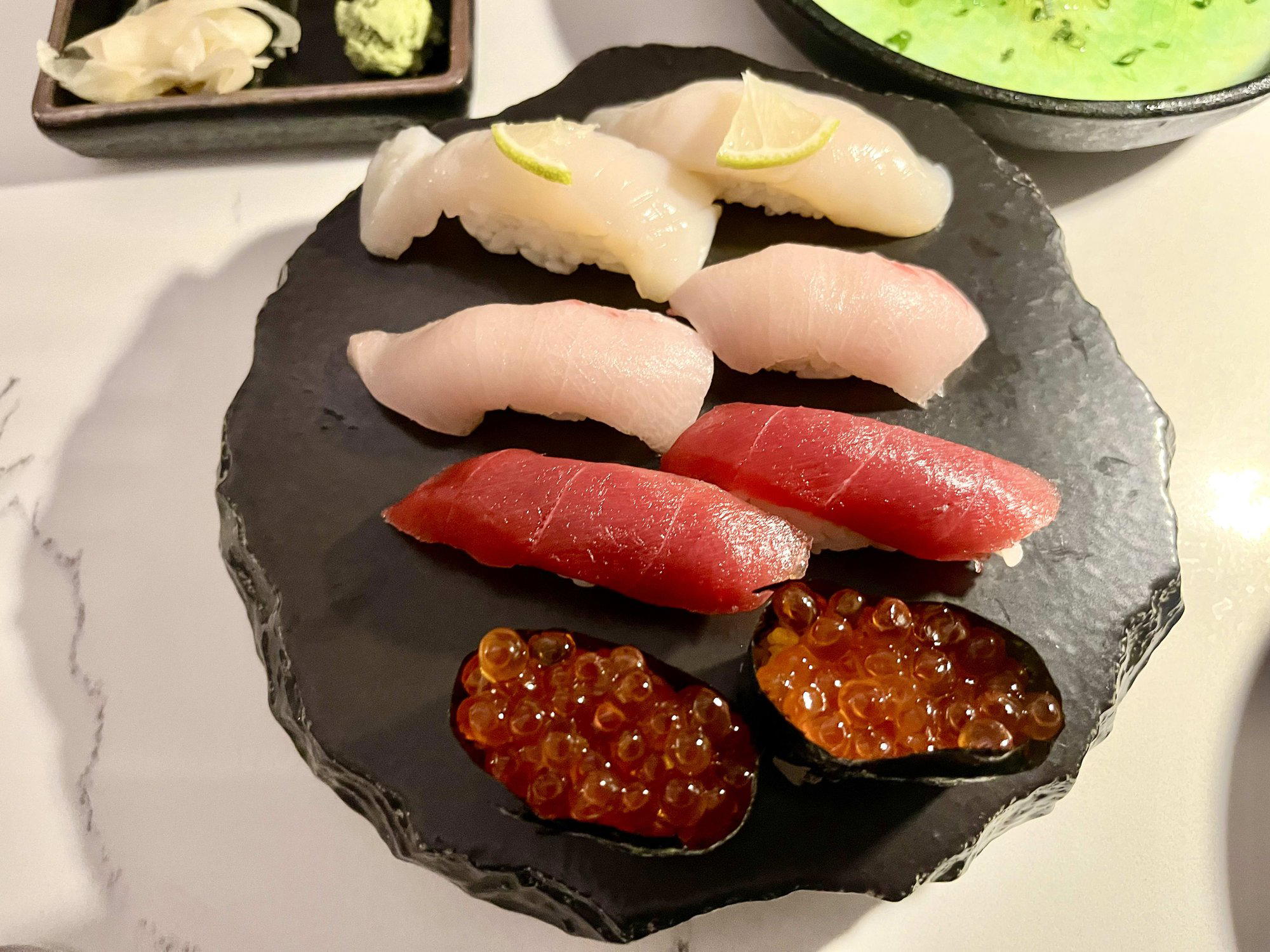
Flame and Fat: What Aburi Technique Means on the Plate
Most diners who have sat at a Japanese counter know the ritual of nigiri presented at near-ambient temperature on hand-pressed rice. Aburi format breaks from that orthodoxy by applying a brief pass of flame to the fish, softening connective tissue, coaxing fat to the surface, and introducing a faint char that changes the aromatic profile entirely. The technique originated in Osaka and spread through Vancouver's Japanese-Canadian dining scene before reaching the continental United States in any sustained way. What arrives at the table is neither raw nor cooked in any conventional sense — it sits in a middle register that rewards attention rather than speed.
In Houston, that middle register matters. The city's Japanese dining options have widened considerably over the past decade, with omakase-format counters now occupying a distinct upper tier. Aburi Sushi, at 3800 Southwest Fwy Suite 104, positions itself within a more accessible bracket than the reservation-required, chef's-discretion omakase rooms, while still operating above the casual roll-and-tempura format that fills most strip-mall Japanese restaurants across the metro. Understanding where aburi sits in that hierarchy helps set expectations before you walk in.
The Lunch-Dinner Divide at This Address
Houston's better Japanese restaurants tend to show a meaningful split between their lunch and dinner personalities, and the aburi format amplifies that division. At lunch, torched sushi counters typically function as a focused, lower-ceremony affair: the technique remains the same, the sourcing doesn't change, but the pacing is tighter and the room carries a different energy. Diners are usually on a schedule, the ordering tends toward individual pieces or compact sets rather than extended progressions, and the value proposition is sharper — you access the same kitchen at a price point that reflects midday convention rather than evening positioning.
Evening service shifts the frame. The flame-finishing technique, which can feel almost procedural at lunch, takes on a more deliberate quality when the room slows down. Sets become more elaborate, the rice work receives more attention, and the overall arc of a meal extends in ways that reward sitting rather than transacting. For first-time visitors, lunch is the rational entry point: lower cost, shorter commitment, sufficient to assess whether the sourcing and technique merit a longer return visit. For diners who already understand what aburi does to fatty fish like salmon belly or yellowtail, dinner is where the format has room to build.
Houston's dining culture has long compressed the lunch-dinner price gap more aggressively than comparable cities like Chicago (where Smyth maintains sharp service distinctions between services) or New York (where counters like Atomix operate almost exclusively in evening omakase mode). That compression works in the diner's favour here.
Where Aburi Sushi Sits in Houston's Japanese Scene
Houston's premium Japanese tier is anchored by omakase operations where the chef controls the sequence, the price is fixed, and the seat count is deliberately small. That format has expanded in Houston over the past several years, with Hidden Omakase representing the upper end of the local sushi bracket at the $$$$ price tier. Aburi Sushi occupies different ground: the torching technique is central, but the format allows more diner agency over what is ordered and at what pace, which suits a different kind of visit.
Compared to the multi-course Indian progression at Musaafer or the Venetian tasting architecture at March, aburi sushi represents a shorter commitment and a more interruptible meal structure. It fits a two-hour window more naturally than a four-course sequence, which is part of why the format has grown across North American cities with dense lunch-trade populations. The Southwest Freeway location, close to the Galleria area's office and hotel corridor, positions the restaurant to capture both lunch trade and early-evening dining before the area's post-work traffic disperses.
For Houston diners building a broader picture of the city's dining range, our full Houston restaurants guide covers the spectrum from BCN Taste & Tradition in the Spanish register to Le Jardinier Houston in the French fine-dining tier and Tatemó for masa-focused Mexican work. Aburi Sushi addresses a gap in that map that neither the European tasting-menu format nor the casual Japanese roll restaurant fills.
The Aburi Method in Broader Context
Flame-seared sushi has found consistent traction in cities where Japanese dining culture has developed beyond the sashimi-and-maki baseline. Vancouver, Los Angeles (where Providence has long anchored the city's serious seafood tier), and New York have all seen aburi-specific restaurants establish durable followings. The technique suits diners who find fully raw fish texturally demanding but find fully cooked fish a compromise, the torched surface delivers warmth and fat expression without surrendering the fresh-catch quality that makes raw fish worth seeking out.
That positioning is distinct from the European fine-dining seafood tradition represented by operations like Le Bernardin in New York or from the farm-to-table frameworks at Blue Hill at Stone Barns. Aburi's logic is technique-first rather than sourcing-narrative-first, which gives it a different kind of legibility for diners: you can understand what you're eating and why the preparation matters without needing extensive context from a server or a printed backstory.
In the American South specifically, where Japanese dining culture has historically been thinner than on the coasts, Houston represents one of the few cities with the population density and international dining exposure to sustain specialist Japanese formats beyond the sushi roll. That the aburi technique has reached the city in dedicated form is a marker of how far Houston's dining infrastructure has developed over the past fifteen years.
Know Before You Go
Address: 3800 Southwest Fwy Suite 104, Houston, TX 77027
Neighbourhood: Southwest Freeway / Galleria corridor
Reservations: Booking method not confirmed, call ahead for peak times, particularly Friday and Saturday evenings
Price tier: Not formally confirmed; the aburi format in comparable North American markets typically sits in the $$ to $$$ range depending on order depth
Leading for: Lunch visits for value and pace; evening visits for a fuller progression
Continue exploring
More in Houston
Restaurants in Houston
Browse all →
Bars in Houston
Browse all →
Hotels in Houston
Browse all →
At a Glance
- Modern
- Trendy
- Sophisticated
- Date Night
- Group Dining
- Special Occasion
- Open Kitchen
- Sake Program
- Craft Cocktails
- Local Sourcing
Current opening hours
- Monday
- 11 AM–2:30 PM, 5–10 PM
- Tuesday
- 11 AM–2:30 PM, 5–10 PM
- Wednesday
- 11 AM–2:30 PM, 5–10 PM
- Thursday
- 11 AM–2:30 PM, 5–10 PM
- Friday
- 11 AM–2:30 PM, 5–11 PM
- Saturday
- 12–11 PM
- Sunday
- Closed
Hours can change for holidays and private events. Last verified .
Sophisticated modern atmosphere with moderate noise levels and excellent service.
Know Before You Go
- Getting there
- 3800 Southwest Fwy Suite 104, Houston, TX 77027