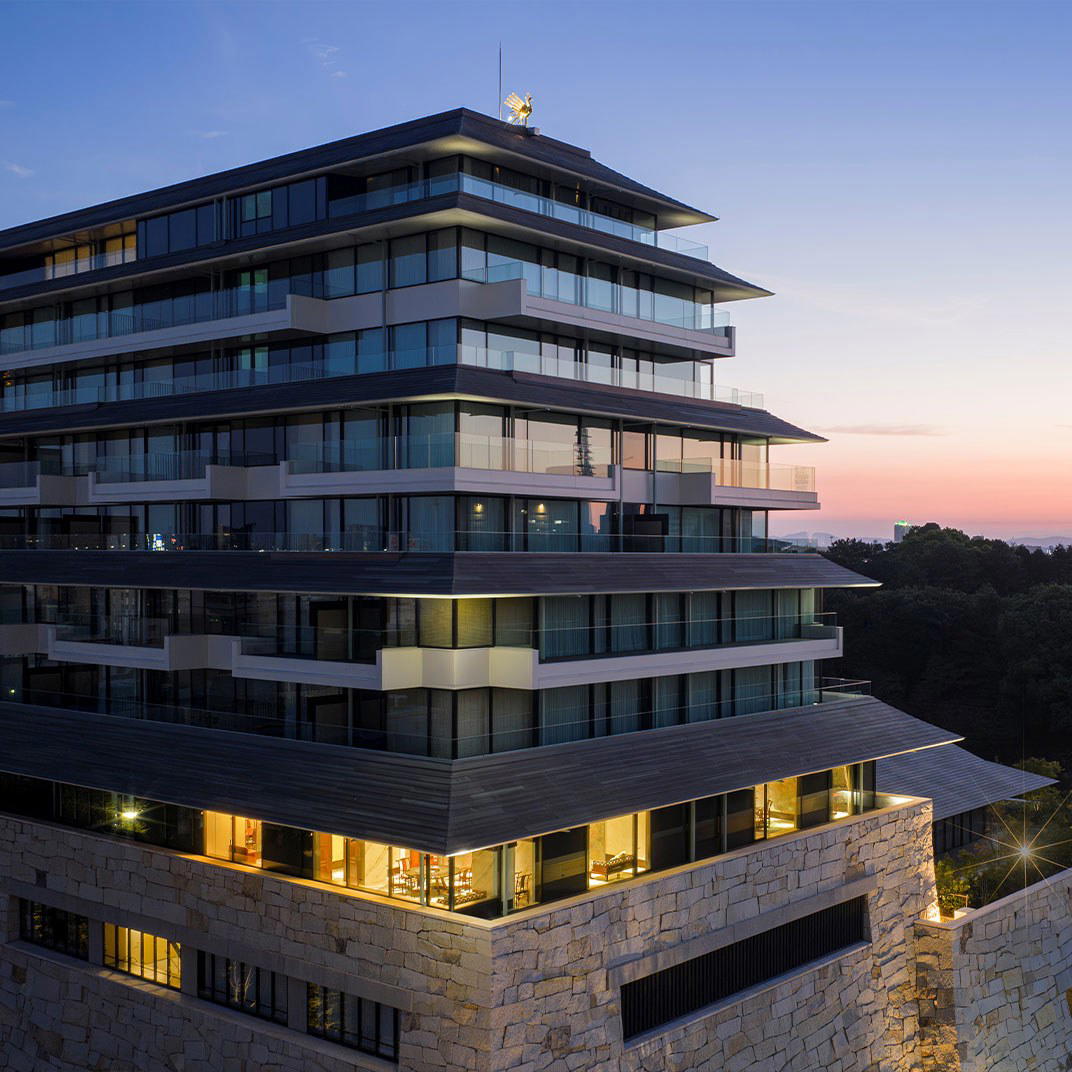
Tabelog 100 #35
Our verdict
Hikobae brings modern Spanish cooking into Nagoya’s quieter Higashi Ward dining circuit, with a fish-led kitchen, wine and sake interests, and recognition on the Tabelog 100 Spanish cuisine list for 2026. Its small-seat format and private-room flexibility make the value question less about spectacle and more about precision, pacing, and how much intimacy the meal delivers for the spend.

Pearl is the En Primeur Club membership app, where members save venues, book tables and use the concierge.
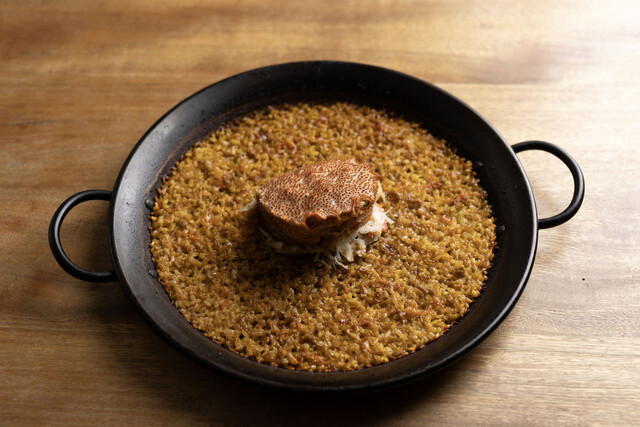
Nagoya is not short on loud dining moments, which is partly the point. Away from the most obvious station-front theatre, the city can trade in a calmer kind of restaurant-going, and that restraint suits the current Japanese reading of Spanish cooking: less cliché, more product focus, careful saucing, and a measured sense of occasion. Hikobae belongs to that smaller Nagoya category where European technique is judged by control rather than display.
Spanish cuisine in Japan has matured beyond paella shorthand. In cities such as Tokyo, Osaka, and Nagoya, the stronger rooms now read Spain through tasting-menu structure, local ingredients, and a service rhythm closer to contemporary Japanese fine dining than to a casual tapas bar. Hikobae’s public signals place it inside that shift: Spanish category recognition from Tabelog Hyakumeiten in 2026, a Tabelog score listed at 3.70, and published budgets of Dinner: JPY 15,000 - JPY 19,999; Lunch: JPY 6,000 - JPY 7,999.
Modern Spanish cooking measured by balance and restraint
The value proposition here sits in the middle ground between neighborhood European dining and ceremonial Japanese cuisine. Nagoya has plenty of lower-spend comfort options, including hamburger steak counters and everyday set-meal rooms, while its higher end moves quickly into kaiseki, sushi, and seafood-focused Japanese cooking. Against that spread, Hikobae asks to be read as a European fine-dining choice with Japanese product sensitivity rather than as a substitute for either tapas or kaiseki.
That distinction matters. A Spanish kitchen in Japan succeeds when it treats ingredients as the center of the meal rather than a supporting act. The better version of this format uses acidity, oil, heat, stock, and controlled seasoning to sharpen a course without burying it. The appeal is not imported orthodoxy; it is the way a Nagoya dining room can translate a Spanish category through local expectations of pacing, polish, and balance.
The Tabelog Hyakumeiten Spanish cuisine selection for 2026 is the page’s clearest trust signal. Tabelog’s Hyakumeiten lists are not Michelin stars, and they should not be read as the same thing, but in Japan they matter because they sit close to domestic dining behavior: reservations, repeat local custom, and category-specific reputation. For a restaurant in Nagoya, placement on the 2026 Spanish list gives the room credibility in a field that is still narrow outside Japan’s largest dining capitals.
Where the spend makes sense in Nagoya
Nagoya’s dining economy rewards specificity. A casual counter can be satisfying at a fraction of the cost, while the city’s Japanese fine-dining rooms can command a higher tariff through ceremony, seasonality, and inherited form. Hikobae’s case is different: it competes on intimacy, category scarcity, and the relative rarity of polished Spanish cooking in Nagoya. For diners choosing between another high-end Japanese meal and a European format, the argument is variety with seriousness, not novelty for its own sake.
The listed budget reinforces that calculation. Dinner at JPY 15,000 - JPY 19,999 and lunch at JPY 6,000 - JPY 7,999 put Hikobae above casual dining while keeping it distinct from the highest-tariff ceremonial meals in the city. That makes it a useful choice for diners who want a planned, category-specific meal rather than an open-ended night of grazing or a quick station-area dinner.
There is a practical caution embedded in that same positioning. Restaurants with this kind of reputation punish loose planning. The stronger play is to treat the meal as a planned anchor rather than a spontaneous add-on to a Nagoya itinerary. For travelers building a weekend around food, the smarter pairing is to keep lunch lighter, avoid stacking another long dinner nearby, and let this meal occupy the evening rather than trying to turn it into one stop among several.
A quieter Nagoya counterpoint to station dining
Location shapes expectation. Nagoya Station dining is built for movement: business travelers, shinkansen timing, department-store floors, and quick decisions. Elsewhere in Nagoya, the tempo can be different, with serious dining folded into a less hurried city rhythm. That makes Hikobae better suited to diners willing to leave the obvious circuit for a narrower, more intentional meal.
For city context, use Our full Nagoya restaurants guide before deciding whether this should be the European anchor of a trip, then map the rest of the stay through Our full Nagoya hotels guide, Our full Nagoya bars guide, Our full Nagoya wineries guide, and Our full Nagoya experiences guide. Other Nagoya restaurant references, from casual comfort rooms to more polished dining rooms, help frame how broad the city’s non-Japanese dining field has become.
The broader Japan file is useful for calibration rather than direct comparison: regional dining pages can stretch from everyday formats to specialist rooms, and overseas Japanese-adjacent references underline a separate point. Japanese dining literacy now travels both ways, shaping how non-Japanese cuisines are understood inside Japan and how Japanese formats are read abroad.
The editorial read is clear: choose Hikobae when the evening calls for a planned Spanish meal in Nagoya with enough recognition to justify building around it. Skip it if the goal is casual tapas energy, a station-adjacent quick dinner, or a maximalist luxury performance. Its strength lies in a narrower promise: controlled modern Spanish cooking in a city where that category remains selective.
Frequently asked questions
What days is Hikobae closed?
Current opening days and hours are not provided here. Check Hikobae’s official channels or call the restaurant before planning around a visit.
What does dinner at Hikobae typically cost?
Hikobae is listed with a dinner budget of JPY 15,000 - JPY 19,999 and a lunch budget of JPY 6,000 - JPY 7,999.
What's the address for Hikobae?
Nagoya.
What is Hikobae known for?
Hikobae is known for Spanish cuisine and its selection in Tabelog Hyakumeiten 2026 for the Spanish category. It is also listed with a Tabelog score of 3.70.
Can Hikobae adjust for dietary needs?
Those details are not provided here. Hikobae lists a phone number, +81-52-933-7807. Check the venue's official channels for the latest details.
Is Hikobae good for families?
Family suitability details are not provided here. Contact Hikobae directly before booking if you are visiting with children or need specific seating arrangements.
Same-City Peers
Comparable venues at a glance for context.
| Venue | Cuisine | Price | Awards | Notes |
|---|---|---|---|---|
| HikobaeThis venue (the venue you are viewing) | Modern Spanish | $100–150 | Tabelog 100 #35 | Not listed |
| Hamburger Steak Shokudo Enomoto Yoshihiro Shoten | Japanese Hamburger Steak / Yoshoku | Not listed | Tabelog 100 #15 | JPY 1,000 - JPY 1,999 |
| Shuanxi Linman | Not listed | Not listed | Tabelog 100 #32 | JPY 6,000 - JPY 7,999 |
| Innover | Creative French Bistro | $50–100 | Tabelog 100 #77 | JPY 8,000 - JPY 9,999 |
| Japanese cuisine Takamitsu | Japanese Cuisine | $100–150 | Tabelog Bronze #446 | Seafood, JPY 20,000 - JPY 29,999 JPY 20,000 - JPY 29,999 |
| rokuhachikyuujuuba | Modern Sichuan Chinese Tavern | Not listed | Tabelog 100 #54 | JPY 5,000 - JPY 5,999 JPY 1,000 - JPY 1,999 |
Recognition history
Dated appearances from independent guides and award organizations, with the underlying list record or original source where available.
Tabelog 100 #35 · No. 35
Tabelog · Tabelog 100 - Spanish cuisine - 2026