Henry's Hunan Restaurant
Henry's Hunan Restaurant on Natoma Street has served the SoMa neighborhood since the era when Hunan cooking was still a novelty in San Francisco's Chinese restaurant scene. Positioned between the Financial District and the city's evolving tech corridor, it occupies a particular niche: direct, ingredient-led Hunan cooking in a city more often associated with Cantonese tradition or high-concept tasting menus.
Pearl is the En Primeur Club membership app — saves, bookings, and concierge access live there. Same editors, same standards.
- Address
- 110 Natoma St, San Francisco, CA 94105
- Phone
- (415) 546-4999
- Website
- hhunannatoma.com
- Directions
- Get directions
 Saves & bookings on Pearl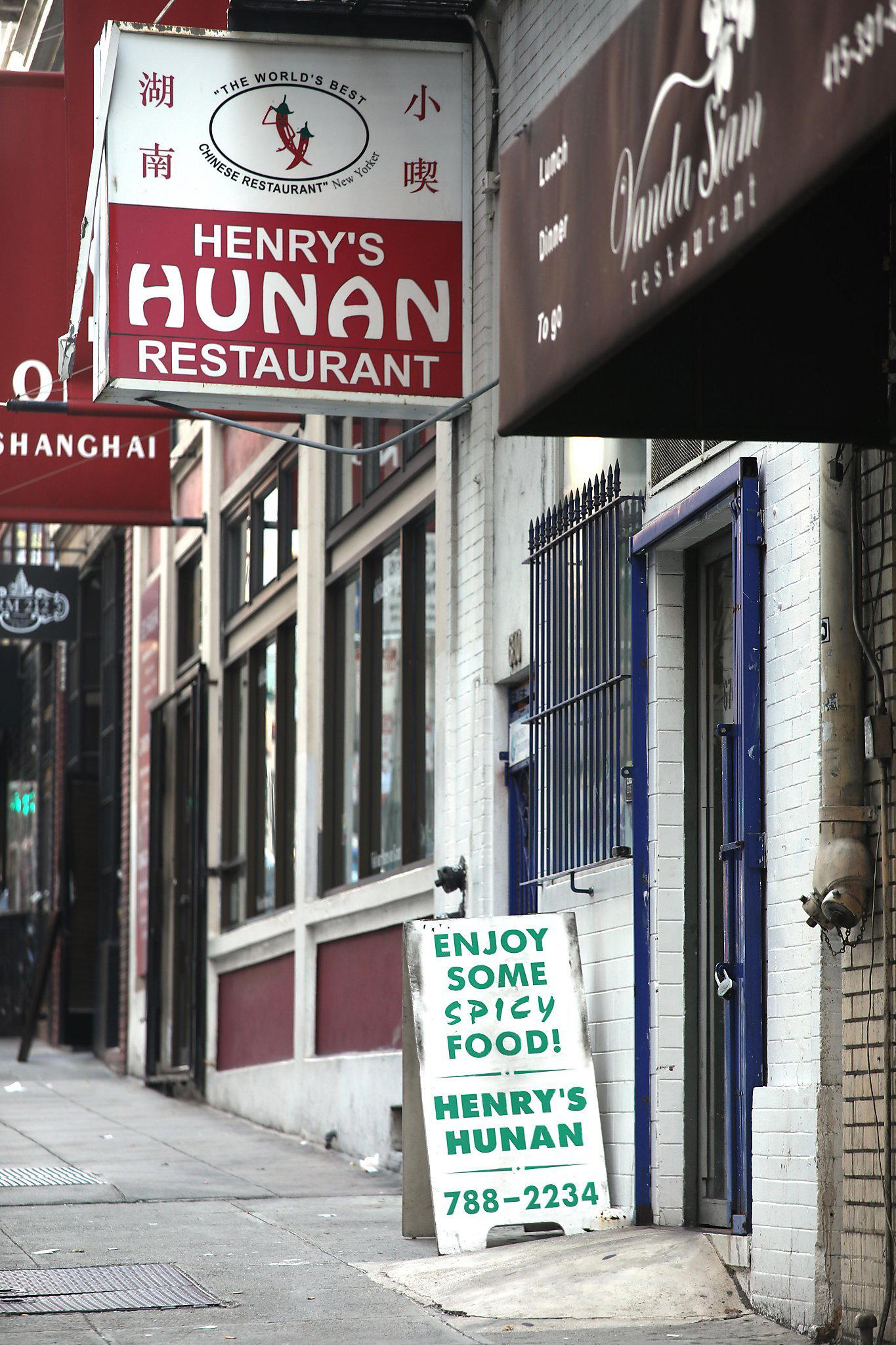
Hunan Cooking in a Cantonese City
San Francisco's Chinese restaurant identity was built on Cantonese cooking. The dim sum parlors of the Richmond, the roast-duck windows of the Sunset, the family-style banquet halls of Chinatown, for most of the twentieth century, that was the city's dominant Chinese dining register. Hunan cuisine entered a different way: bolder, more reliant on dried chilies, smoked ingredients, and fermented black beans, with a heat profile closer to Sichuan than to the gentle soy-and-ginger palate that defined much of the city's Chinese food tradition.
That address puts the restaurant firmly in the working lunch geography of the Financial District fringe. Natoma Street, running parallel to Mission between 1st and 2nd, is a service lane that has quietly hosted restaurants for decades while its surroundings cycled through boom and bust. It is not a dining destination in the way that Valencia Street or Hayes Valley have become, which means the restaurants that survive there do so on repeat visits from nearby workers and neighborhood regulars rather than tourist foot traffic or reservation-app discovery.
The Ingredient Logic Behind Hunan Cuisine
To understand what distinguishes Hunan cooking from the Chinese regional styles that preceded it in American cities, the ingredients are the place to start. Where Cantonese cuisine emphasizes freshness and subtlety, steamed fish, blanched greens, minimal seasoning that lets produce speak, Hunan cooking uses preservation and transformation as flavor-building tools. Smoked meats, particularly pork preserved by smoking rather than curing with salt alone, carry a depth that fresh proteins cannot replicate. Dried and pickled chilies add heat that is different in character from Sichuan's numbing mala combination: Hunan heat is more direct, less anesthetic, and it builds across a meal rather than arriving immediately.
Fermented black beans, douchi, appear frequently as a seasoning base, less a condiment than a structural element that adds umami and a slight funk to braised and stir-fried dishes. This is a flavor profile that requires specific sourcing: the quality of the fermented ingredient directly determines the depth of the finished dish, in the same way that aged fish sauce anchors Southeast Asian cooking. Restaurants that work in this tradition seriously maintain relationships with suppliers of quality dried and fermented goods, not simply fresh produce. The sourcing chain for Hunan cooking runs through different channels than the farm-to-table supply lines that define San Francisco's most-discussed contemporary restaurants.
That is worth noting in a city where ingredient provenance has become a dominant editorial frame for dining coverage. Establishments like Single Thread Farm in Healdsburg and Blue Hill at Stone Barns in Tarrytown have made farm sourcing the explicit narrative of their menus. At the other end of the spectrum, the sourcing that matters for Henry's Hunan is less photogenic but no less considered: the dried chili supply, the quality of smoked pork, the fermented black bean producer. These are invisible inputs that shape flavor at a foundational level.
SoMa's Dining Position and the Hunan Niche
The neighborhood context shapes who actually eats here. SoMa's lunch crowd has historically included a mix of financial workers from the Embarcadero corridor and, more recently, tech employees from the mid-Market stretch. Neither demographic is the primary audience for San Francisco's high-concept tasting menu circuit. The city's prestige dining tier, Benu, Atelier Crenn, Lazy Bear, Quince, Saison, occupies a separate category entirely, both in format and price point. Henry's Hunan sits in a different competitive set: neighborhood Chinese restaurants with a defined regional identity and a loyal, geographically specific clientele.
That niche is not a small one nationally. Across American cities, Hunan restaurants that predate the current wave of regional Chinese cooking interest, which has brought Sichuan hot pot, Shanghainese soup dumplings, and Yunnan mushroom dishes into mainstream dining conversation, represent an earlier generation of regional differentiation. Restaurants like Henry's Hunan arrived before the framework for discussing Chinese regional cuisine was widely established in English-language food media. They built their audience through word of mouth rather than critical attention, which gives them a durability that newer, trendier openings often lack. The same pattern applies to celebrated American restaurants in other cities: Emeril's in New Orleans and Bacchanalia in Atlanta both built sustained audiences through consistency and local loyalty rather than continuous critical reinvention.
What to Order and When to Go
Hunan menus in American restaurants tend to anchor around a core set of dishes that showcase the cuisine's defining techniques: smoked and cured pork preparations, dry-fried green beans, cumin-forward lamb, and whole fish preparations that use the direct heat of a wok rather than the steaming approach dominant in Cantonese cooking. At Henry's Hunan, regulars have historically gravitated toward the smoked meat dishes and the chili-heavy preparations that differentiate Hunan cooking from its better-known neighbors in the Chinese regional spectrum.
The Natoma Street location makes Henry's Hunan a lunch-viable option for anyone working in the Financial District or the lower SoMa tech corridor. The dinner trade in this block is quieter than on nearby Mission or Folsom Streets, which means evenings are typically calmer than the midday rush. For visitors staying near Union Square or the Embarcadero, the address is walkable, a few blocks south of Market Street places it within range of the central hotel district without requiring a rideshare.
For comparison across the broader American dining spectrum, Henry's Hunan operates at a register that bears no relation to the tasting-menu formats that dominate critical attention. Alinea in Chicago, Le Bernardin in New York City, The French Laundry in Napa, Providence in Los Angeles, Addison in San Diego, The Inn at Little Washington, and Atomix in New York City represent the highest-investment dining format in their respective cities. Henry's Hunan represents something different: a neighborhood institution with regional specificity and a clientele that measures its loyalty in years. Both are valid axes of quality; they just serve entirely different reader decisions.
Planning Your Visit
Address: 110 Natoma St (at 2nd St), San Francisco, CA 94105. Reservations: walk-in friendly. Budget: about $20 per person. Getting there: Walking distance from the Embarcadero BART station and a short walk south of Market Street from the Montgomery Street station.
Style and Standing
Comparable venues nearby, for context on price, style, and recognition.
| Venue | Cuisine | Price | Notes |
|---|---|---|---|
| Henry's Hunan RestaurantThis venue — the venue you are viewing | Authentic Hunan Chinese | $$ | Not listed |
| Quack House | Cantonese Roast Meats | $$ | Nob Hill |
| Dragon Well | Authentic Chinese | $$ | Marina |
| House of Nanking | Shanghainese Home Cooking | $$ | Chinatown |
| Hon's Wun Tun House | Cantonese Wonton Noodle House | $ | Chinatown |
| Yuanbao Jiaozi | Handmade Chinese Dumpling House | $ | Outer Sunset |
Continue exploring
More in San Francisco
Restaurants in San Francisco
Browse all →
Bars in San Francisco
Browse all →
Hotels in San Francisco
Browse all →
At a Glance
- Classic
- Business Dinner
- Casual Hangout
- Open Kitchen
Current opening hours
- Monday
- 11 AM–3 PM, 5:30–9 PM
- Tuesday
- 11 AM–3 PM, 5:30–9 PM
- Wednesday
- 11 AM–3 PM, 5:30–9 PM
- Thursday
- 11 AM–3 PM, 5:30–9 PM
- Friday
- 11 AM–3 PM, 5:30–9 PM
- Saturday
- Closed
- Sunday
- Closed
Hours can change for holidays and private events. Last verified .
Quiet, low-key atmosphere with open kitchen and friendly service.