
Tabelog 100 #88
Our verdict
Tokyo’s Thai and curry circuit has grown beyond late-night utility into a serious category for diners who care about sequencing, spice control, and value. Hasu no Sato Shin okachimachi honten brings that conversation to Taito, with Thai, curry, and ramen listed under one roof and selection for Tabelog’s Asian cuisine / Ethnic cuisine Tokyo 100 in 2022, 2023, and 2024.

Pearl is the En Primeur Club membership app, where members save venues, book tables and use the concierge.
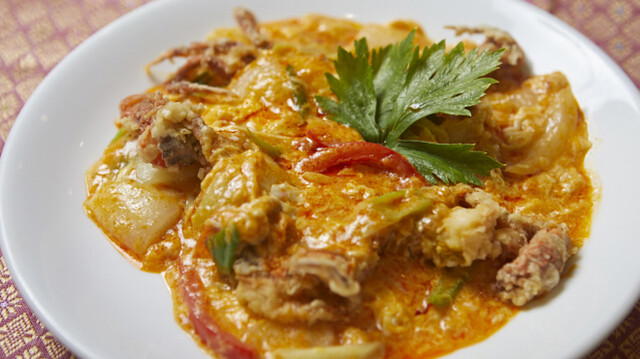
The menu
What to order
- Poonim Pad Pong Curry (soft-shell crab curry)
- Phu Nim Pha Phong Curry
- Thai ramen
- Thai curries
Tokyo is not only grand hotel dining rooms or polished counters. The city also works at street level: station exits, apartment blocks, small offices, family errands, and restaurants that need to make sense on a weeknight as much as on a planned dinner. In that setting, Thai cooking reads differently. It is less about spectacle than about rhythm: heat, acid, sweetness, herbs, rice, curry, noodles, and the cooling interval between them.
That rhythm is the reason Hasu no Sato Shin okachimachi honten matters in Tokyo’s Asian and ethnic dining tier. The restaurant is listed for Thai, curry, and ramen, a combination that would look scattered in a more rigid dining culture but makes sense in Tokyo, where genre boundaries often soften around lunch demand, regular customers, and compact kitchens. Its 2024 Tabelog Hyakumeiten recognition, with a listed score of 3.65, places it in a vetted group rather than the anonymous field of casual dining rooms across the city.
Thai, curry, and ramen as a Tokyo sequence rather than a single-lane menu
Tokyo diners often read Thai restaurants through individual cravings: curry at lunch, stir-fry at dinner, noodles after work, shared plates with drinks. The more interesting rooms hold those uses together without turning the meal into a checklist. Here, the listed categories point toward a progression built around contrast. Curry gives the meal its weight, Thai plates bring sharpness and fragrance, and ramen signals the city’s habit of absorbing outside flavors into local eating patterns rather than preserving them behind glass.
That mix is useful evidence of the restaurant’s middle ground. A Thai, curry, and ramen listing is not a quiet proposition, and in Tokyo it can function as a bridge between familiar everyday eating and the richer textures of Thai cooking. The point is not fusion as a slogan. It is translation through appetite: a meal that can anchor the table while surrounding plates handle sourness, greens, heat, rice, or noodles.
Compared with other Tokyo curry specialists, the appeal here is breadth rather than single-category focus. Against value-driven Asian rooms such as VEG KITCHEN or raffles curry, the 2024 Tabelog Hyakumeiten selection gives the restaurant a stronger recognition signal. It also sits below the spend of more special-occasion formats such as KOTARO Hasegawa DOWNTOWN CUISINE or Fakalo pizza gallery, which makes the meal’s progression feel practical rather than ceremonial.
Tokyo gives the meal its pace
Tokyo has many dining tempos, from polished destination rooms to everyday restaurants built around repeat use. In the city’s more practical dining lanes, utility and quality need to coexist. A place can attract serious diners, but it also has to make sense for lunches, dinners, groups, and the kind of repeat custom that exposes weak kitchens quickly.
That pressure explains the restaurant’s objective appeal. Its listed categories are broad without being random, and its recognition gives diners a clearer reason to treat it as more than another casual stop. The format reads closer to an everyday Tokyo dining room than a formal occasion restaurant, which is part of the attraction: the meal can be planned, but it does not need ceremony to justify itself.
The drinking and social side also matters in this kind of restaurant. A Thai, curry, and ramen room in Tokyo can serve many purposes: a focused lunch, a casual dinner, a table of shared dishes, or a lower-key meal between larger itinerary commitments. None of this makes the room less serious; in Tokyo, utility is often the proof that a restaurant belongs to its city.
Know Before You Go
- Recognition: Listed with 2024 Tabelog Hyakumeiten recognition and a score of 3.65.
- Category: Thai, curry, and ramen.
- Format: An everyday Tokyo dining room rather than a high-formality tasting-counter format.
- Meal planning: Dinner is listed at JPY 4,000 - JPY 4,999; lunch is listed at JPY 1,000 - JPY 1,999.
- Payment: Check current payment details directly with the restaurant before visiting.
- Access pattern: Plan around Tokyo and confirm the most convenient route before you go.
- House rules: Confirm reservations, group policies, and any ordering requirements directly with the restaurant.
- Family note: Confirm current family and stroller policies directly before visiting.
- Smoking: Confirm the current smoking policy directly with the restaurant.
The editorial case is clear: Hasu no Sato Shin okachimachi honten is not trying to compete with Tokyo’s high-formality tasting counters. It belongs to the stronger end of the city’s everyday ethnic dining scene, where a meal can move from curry to noodles without feeling padded. For travelers building a Tokyo food itinerary, it works as a corrective to the idea that serious eating in the city always means omakase, kaiseki, or French technique.
For broader planning, compare it with other Tokyo restaurant formats and with the city’s wider mix of casual, value-driven, and special-occasion dining rooms. Citywide context sits in Our full Tokyo restaurants guide, with adjacent planning in Our full Tokyo hotels guide, Our full Tokyo bars guide, Our full Tokyo wineries guide, and Our full Tokyo experiences guide.
Readers mapping Japanese dining beyond the capital can also compare regional formats through other unnamed restaurants in Japan. For overseas Japanese-leaning casual formats, use broader city guides and current local listings rather than treating any single comparison as a direct peer.
Frequently asked questions
Where is Hasu no Sato Shin okachimachi honten located?
Tokyo.
What are Hasu no Sato Shin okachimachi honten's hours?
Confirm current hours for Hasu no Sato Shin okachimachi honten directly with the restaurant before visiting.
What's the price range at Hasu no Sato Shin okachimachi honten?
Pricing at Hasu no Sato Shin okachimachi honten is listed as Dinner: JPY 4,000 - JPY 4,999; Lunch: JPY 1,000 - JPY 1,999.
What is Hasu no Sato Shin okachimachi honten known for?
Hasu no Sato Shin okachimachi honten is listed for Thai, curry, and ramen, with 2024 Tabelog Hyakumeiten recognition.
The Minimal Set
Nearby venues at a similar price tier for orientation.
| Venue | Cuisine | Price | Awards | Notes |
|---|---|---|---|---|
| Hasu no Sato Shin okachimachi hontenThis venue (the venue you are viewing) | Authentic Thai & Curry House | $30–50 | Tabelog 100 #88 | Not listed |
| KOTARO Hasegawa DOWNTOWN CUISINE | French Fine Dining | $100–150 | Michelin Plate · Tabelog 100 #90 | French |
| VEG KITCHEN | Vegetarian Indian (South & North Indian, Indo-Chinese) | $10–20 | Tabelog 100 #85 | JPY 1,000 - JPY 1,999 JPY 1,000 - JPY 1,999 |
| raffles curry | Indian Curry | $10–20 | Tabelog 100 #37 | JPY 1,000 - JPY 1,999 JPY 1,000 - JPY 1,999 View spending breakdown |
| Fakalo pizza gallery | Neapolitan-style Pizza & Seasonal Course Menu | $50–100 | Tabelog 100 #56 | JPY 8,000 - JPY 9,999 JPY 6,000 - JPY 7,999 |
Recognition history
Dated appearances from independent guides and award organizations, with the underlying list record or original source where available.
Tabelog 100 #88 · No. 88
Tabelog · Tabelog 100 - Asian cuisine / Ethnic cuisine - TOKYO - 2024
Continue exploring
More in Tokyo
Restaurants in Tokyo
All restaurants in Tokyo →












Details
- Modern
- Cozy
- Lively
- Group Dining
- Casual Hangout
- After Work
- Date Night
- Solo
- Standalone
- Beer Program
- A La Carte
- Set Menu
- Beer
- Spirits
- Cocktails
- Vegetarian Friendly
Current opening hours
- Monday
- 11:30 AM–2 PM, 5:30–10 PM
- Tuesday
- Closed
- Wednesday
- 11:30 AM–2 PM, 5:30–10 PM
- Thursday
- 11:30 AM–2 PM, 5:30–10 PM
- Friday
- 11:30 AM–2 PM, 5:30–10 PM
- Saturday
- 5:30–10 PM
- Sunday
- 5:30–10 PM
Hours can change for holidays and private events. Hours as of .
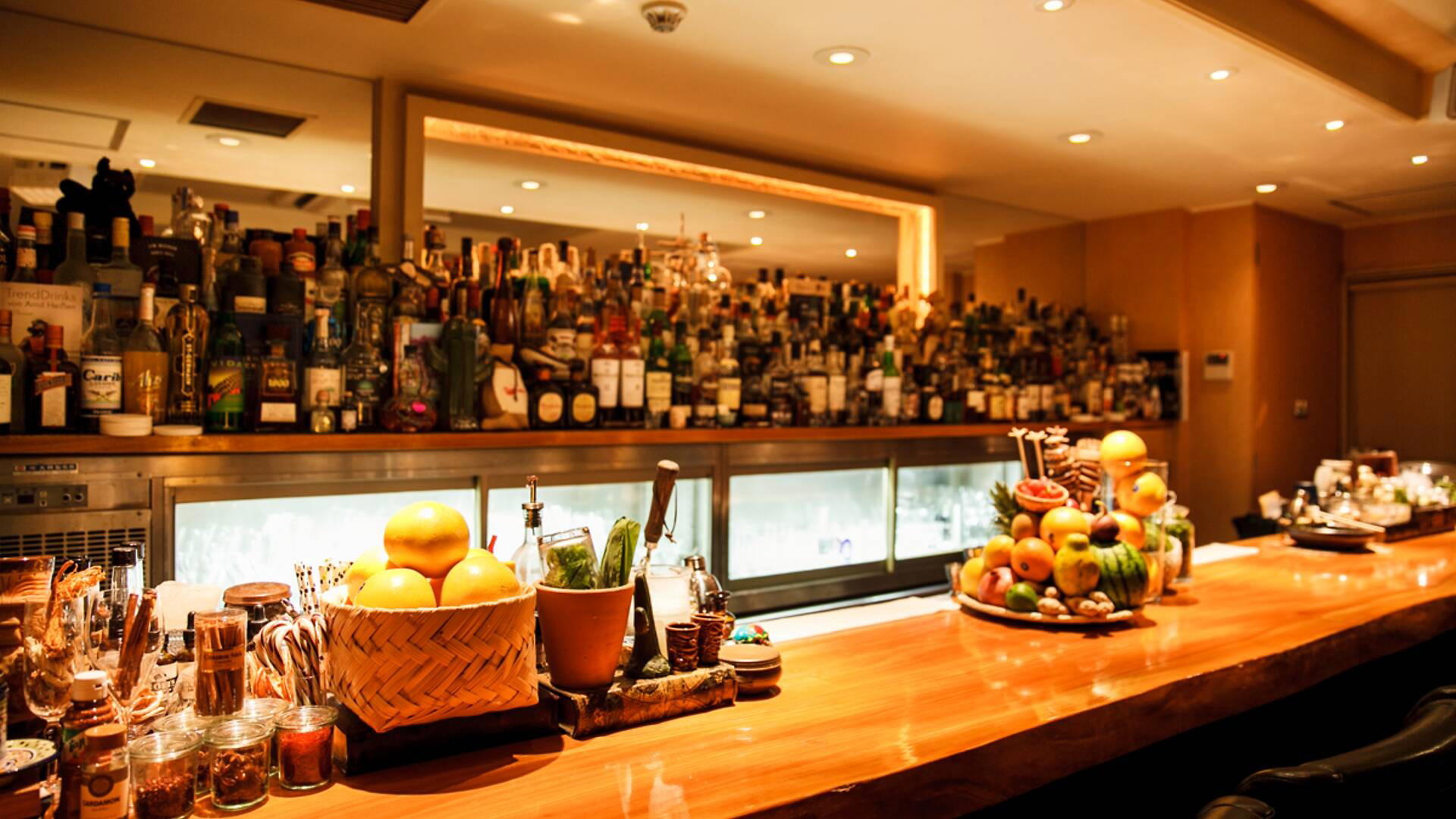
A bright, white-based modern interior with a casual, lively atmosphere that still feels like a cozy hidden spot off a back alley, popular for parties and casual gatherings.