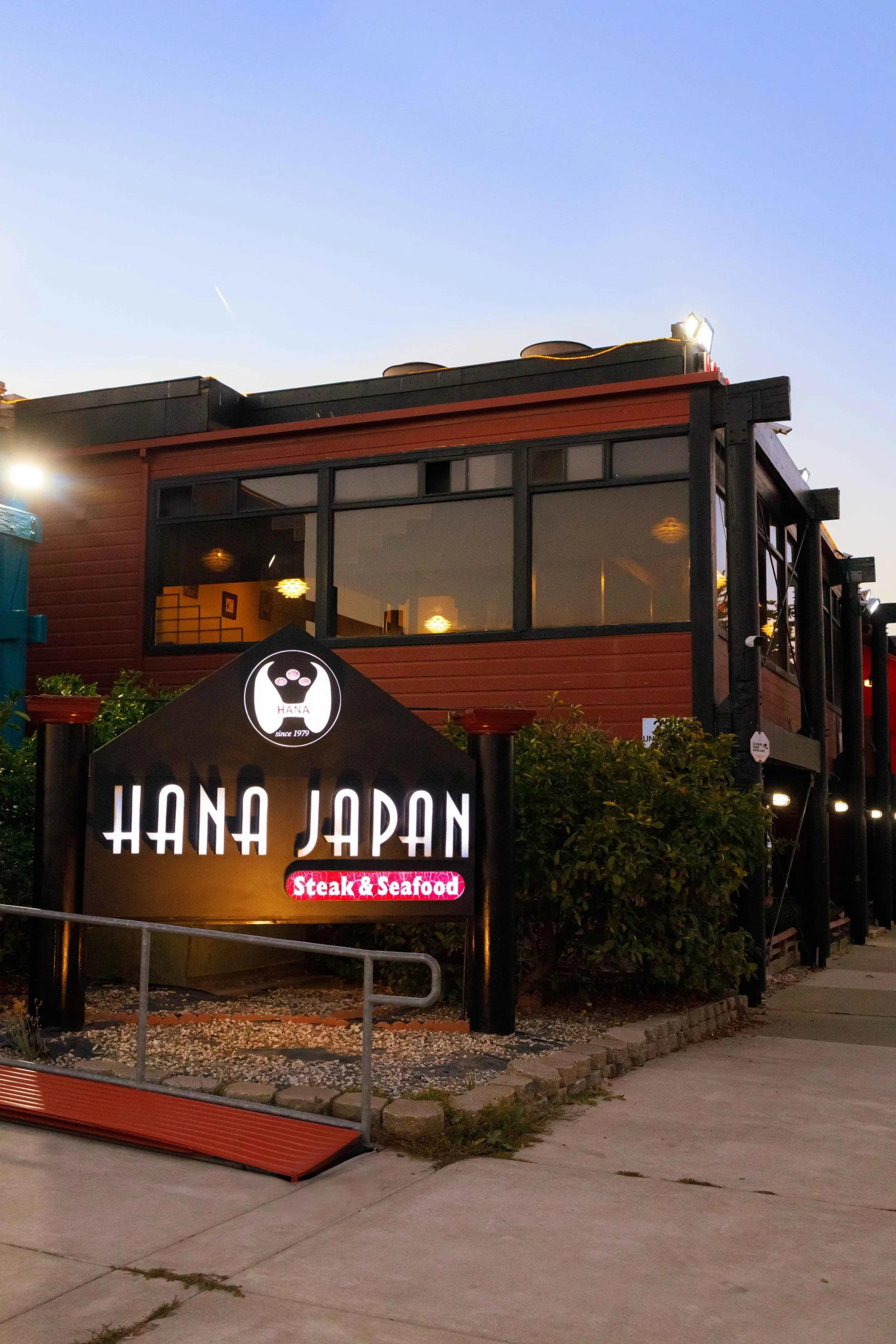
Hana Japan Steak and Seafood
Our verdict
A Japanese steakhouse and seafood restaurant on University Avenue in Berkeley, Hana Japan sits in a dining corridor where teppanyaki tradition and California's seafood-forward appetite meet. The format draws on the theatrical tableside cooking style that defined American-Japanese dining from the 1960s onward, placing it within a specific and durable genre. Booking logistics and expectations are covered here.

Pearl is the En Primeur Club membership app — saves, bookings, and concierge access live there. Same editors, same standards.
- Address
- 235 University Ave, Berkeley, CA 94710
- Phone
- (510) 848-8515
- Hours
- Daily 4–9 PM
- Website
- hanajapan.com
- Directions
- Get directions
- Booking
- Book on OpenTable
The menu
What to order
- New York Steak
- Hibachi Salmon
- Pineapple Boat
University Avenue and the Teppanyaki Tradition
University Avenue in Berkeley runs west from campus toward the bay, picking up a cross-section of the city's dining habits along the way: counter-service staples, long-running neighborhood institutions, and a handful of mid-century dining formats that have outlasted several waves of culinary fashion. Hana Japan Steak and Seafood, at 235 University Ave, sits in that last category. The Japanese steakhouse format it occupies — teppanyaki grills, tableside cooking, steak and seafood combinations — arrived in the United States in the early 1960s and took root in cities where Japanese-American communities and American appetite for theatrical dining intersected. The East Bay has been one of those cities for decades.
The teppanyaki format is worth understanding before you book. Guests typically share large flat-iron grill tables with other diners, meals are cooked in front of you by a line cook working the grill surface, and the pacing is set by the kitchen rather than the table. This is not the format for a quiet two-person conversation dinner. It is, however, a reliable format for groups, celebrations, and diners who want their meal to arrive with some spectacle attached. Among Berkeley's broader restaurant options, ranging from the masa-forward work at places like Cafe Bolita to the neighborhood breakfast institution at 900 Grayson, Hana Japan occupies a distinct and durable niche.
What the Format Delivers
American teppanyaki restaurants occupy a particular position in the dining spectrum: they are rarely the subject of Michelin attention or 50 Best lists, but they generate consistent loyalty from a specific audience. That audience tends to prioritize the experience of the meal, the fire, the timing, the shared table, over the kind of ingredient sourcing or chef-driven narrative that drives coverage at places like Lazy Bear in San Francisco or Single Thread Farm in Healdsburg. Both categories serve real needs; they simply serve different ones.
The steak-and-seafood pairing at the core of Hana Japan's menu reflects the American steakhouse tradition filtered through Japanese technique. Teppanyaki cooking is faster and higher-heat than conventional Western grilling, with soy-based sauces and sesame oil inflecting the flavor profile in ways that distinguish it from a direct chophouse. California's proximity to Pacific seafood supply lines, the same geography that shapes the menus at places like Providence in Los Angeles and Le Bernardin in New York City, albeit at very different price points, means that the seafood side of the menu draws on a strong regional supply chain.
Planning Your Visit
This matters more for teppanyaki venues than for many other formats: shared grill tables mean the restaurant often manages seating in blocks, and walk-in availability on weekend evenings at similarly formatted restaurants in comparable cities tends to be limited. If you are planning around a group or a celebration, which is the core use case for this kind of dining, a reservation made several days in advance is the practical baseline.
235 University Ave places the restaurant on the western stretch of University, accessible from the Downtown Berkeley BART station by a direct westward walk, and within a short drive of the I-80 corridor for those coming from Oakland or San Francisco. Street parking on University can be tight on weekday evenings and weekend nights; side streets off University tend to have more availability. Berkeley's dining corridor along this stretch also includes Ajanta and Angeline's Louisiana Kitchen, so the area rewards an early arrival if you want to walk the block before sitting down.
Where Hana Japan Sits in the Berkeley Scene
Berkeley's restaurant identity has always been shaped by two competing forces: the farm-to-table and ingredient-forward tradition that the city helped establish in the 1970s, and a pragmatic, diverse neighborhood eating culture that values longevity and value alongside provenance. Long-running Japanese restaurants in the East Bay, a category that includes everything from omakase counters in the hills to ramen shops on Telegraph, have generally held their audience by being consistent rather than chasing trend cycles.
Hana Japan fits the consistency model. The teppanyaki format does not lend itself to reinvention in the way that, say, the tasting-menu format does at places like Alinea in Chicago or Atomix in New York City. Its competitive set is other Japanese steakhouses and mid-range Berkeley dining options rather than destination restaurants. Within that set, the relevant comparisons are about execution, consistency, and the reliability of the group-dining format rather than ingredient innovation or chef credentials. For the broader Berkeley restaurant picture, our full Berkeley restaurants guide maps the range from neighborhood staples through to the city's more ambitious tables, including AKEMI and Agrodolce.
For diners calibrating expectations against higher-end California fine dining, the kind of commitment and advance planning required for The French Laundry in Napa, Addison in San Diego, Blue Hill at Stone Barns in Tarrytown, or The Inn at Little Washington, Hana Japan operates in a deliberately different register. The planning effort is lower, the format is more casual, and the payoff is a specific kind of communal, theatrical meal that those destination restaurants do not offer and are not trying to. Recognizing that distinction is the most useful thing a diner can do before choosing which kind of evening they want. Similarly, Emeril's in New Orleans and 8 1/2 Otto e Mezzo Bombana in Hong Kong represent the fine-dining end of the celebrity-chef steakhouse-adjacent spectrum; Hana Japan is not competing in that space.
Frequently asked questions
Is Hana Japan Steak and Seafood okay with children?
The teppanyaki format, where chefs cook at a shared griddle table, tends to hold the attention of younger diners, making it a reasonable choice for families. The communal table setup at 235 University Ave in Berkeley means guests sit together regardless of group size, which some families find engaging. That said, confirm current seating policy and hours directly before visiting, as EP Club does not have verified operational details on file.
What's the overall feel of Hana Japan Steak and Seafood?
Hana Japan occupies a section of University Avenue that mixes everyday Berkeley dining with sit-down restaurants serving the area around campus and the bay-side neighborhoods. The teppanyaki format is inherently social: shared tables, open grills, and the rhythm of a chef working in front of you shape the atmosphere more than décor alone. It reads as casual rather than formal, though the steak-and-seafood menu signals a step above counter-service.
How does Hana Japan Steak and Seafood compare to other Japanese steakhouses on the Berkeley and East Bay dining circuit?
American-style teppanyaki restaurants, including Hana Japan on University Avenue, sit in a category that prioritizes the live-cooking format and shared-table experience over the ingredient-sourcing credentials that define much of Berkeley's farm-forward dining scene. In the East Bay, this positions Hana Japan alongside a small cluster of Japanese steakhouses rather than the farm-to-table restaurants the city is better known for.
What's the signature dish at Hana Japan Steak and Seafood?
EP Club does not have confirmed menu data for Hana Japan, so naming a single signature dish with confidence is not possible here. What the teppanyaki format typically foregrounds, across comparable Berkeley and Bay Area Japanese steakhouses, is the combination plate pairing a grilled protein (steak or lobster) with fried rice cooked on the same griddle surface. Contact the restaurant at 235 University Ave, Berkeley, for current menu details.
Where do I go for Hana Japan Steak and Seafood?
Hana Japan Steak and Seafood is located at 235 University Ave, Berkeley, CA 94710, Berkeley.
Comparable Spots, Quickly
Comparable venues nearby, for context on price, style, and recognition.
| Venue | Cuisine | Price | Notes |
|---|---|---|---|
| Hana Japan Steak and SeafoodThis venue — the venue you are viewing | Japanese Teppanyaki Hibachi Steakhouse | $30–50 | Not listed |
| Champion's Curry | Japanese Curry House | $10–20 | Southside |
| Ramen House Ryowa | Japanese Ramen | Not listed | Downtown Berkeley |
| AKEMI | Modern Japanese Fusion & Sushi | $20–30 | East Solano Avenue |
| Norikonoko Japanese Restaurant | Homestyle Japanese | Not listed | Telegraph |
| Take. Eat. Easy | Hong Kong Dim Sum & Rice Bowls | $10–20 | South Berkeley |
Continue exploring
More in Berkeley
Restaurants in Berkeley
Browse all →
Bars in Berkeley
Browse all →
Hotels in Berkeley
Browse all →

Details
- Lively
- Energetic
- Family
- Group Dining
- Celebration
- Open Kitchen
- Sake Program
- Waterfront
- A La Carte
- Vegetarian Friendly
Current opening hours
- Monday
- 4–9 PM
- Tuesday
- 4–9 PM
- Wednesday
- 4–9 PM
- Thursday
- 4–9 PM
- Friday
- 4–9 PM
- Saturday
- 4–9 PM
- Sunday
- 4–9 PM
Hours can change for holidays and private events. Last verified .
Fun and energetic atmosphere with table-side chef performances, waterfront views, and traditional kimono-clad waitstaff.