
Gu Yuan sits in Guangzhou's Liwan District, where the menu cuts across vegetarian cooking and Sichuan-inflected dishes with equal seriousness. The signature is a chicken stock casserole built over twelve hours, but Sichuan standbys like Kung Pao chicken and dry-fried French beans fill the rest of the card. At a mid-range price point and consistent crowds, early reservations are worth making.
Pearl is the En Primeur Club membership app — saves, bookings, and concierge access live there. Same editors, same standards.
- Address
- Room 103, 665 Huacheng Avenue, Tianhe, Guangzhou, Guangdong Province, CHN
- Phone
- +86 153 0223 2093
- Website
- guide.michelin.com
- Directions
- Get directions
 Saves & bookings on Pearl
Where Liwan's Pace Meets a Twelve-Hour Kitchen
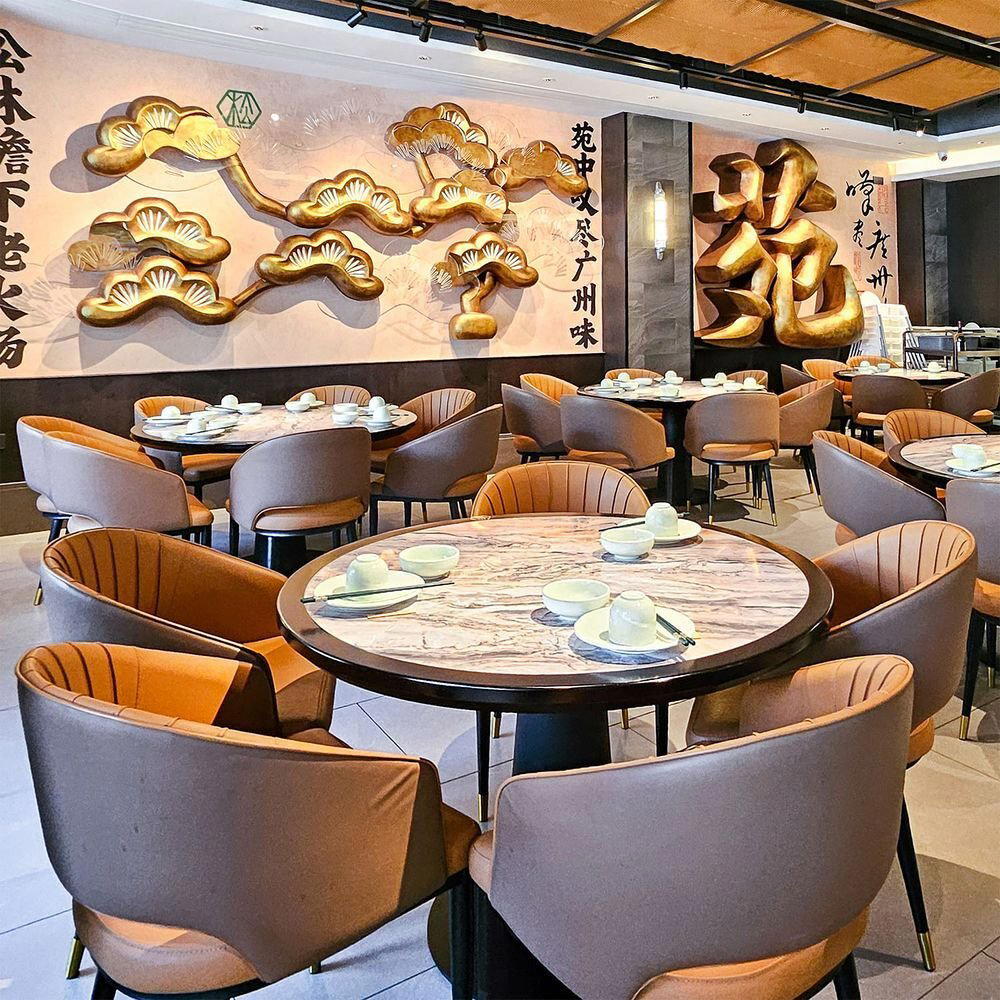
Liwan District carries a different energy from the gleaming towers of Tianhe. The streets around Lizhiwan Road move at the speed of wet markets and morning tea, with covered arcades and canal-side paths that date the neighbourhood in the leading sense. Gu Yuan occupies this older Guangzhou, where the cooking logic runs on patience rather than novelty. You notice it before you even order: the dining room is busy in the way that genuinely popular neighbourhood restaurants are busy, not because anyone marketed it that way, but because regulars keep returning.
That kind of sustained local draw is a more reliable signal than a plaque on the wall. China's vegetarian dining scene has grown considerably across its major cities, from Fu He Hui in Shanghai to Lamdre in Beijing, and across that range the more convincing rooms are those where the menu earns repeat visits rather than curiosity visits. Gu Yuan sits in that category.
The Protein Question: Richness Without the Standard Shortcuts
Vegetarian cooking in a Cantonese context faces a specific challenge. Cantonese cuisine is, at its core, built around extracting depth from animal proteins: the long-simmered stocks, the salt fish bases, the roasted meats that anchor a meal. A vegetarian menu in this city either retreats into tofu-led plainness or finds another route to satiety. What makes Gu Yuan's approach worth examining is how it handles the richness question through technique rather than substitution.
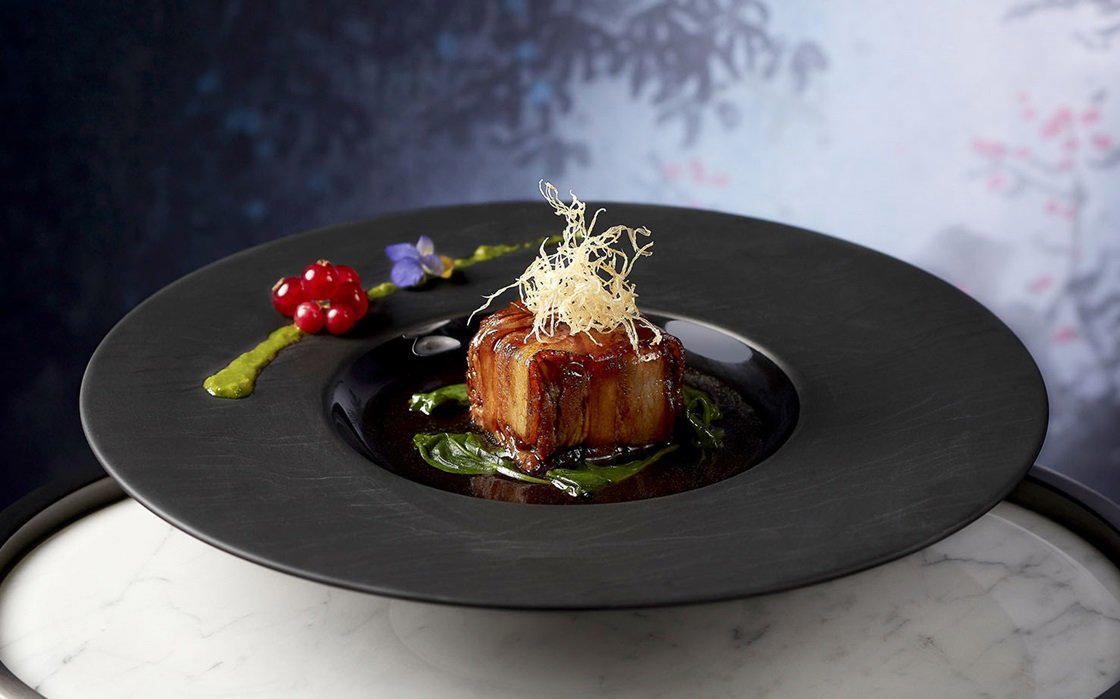
The clearest example is the signature chicken stock casserole. The process starts ten hours before service, with a milky white stock that has been cooked long enough to extract richness into suspension, producing a broth that coats rather than rinses. Free-range chicken, ham, dried scallops, and pork trotters are then introduced and cooked for a further two hours. The result is dense and savoury in a way that short-cut stocks cannot replicate, and it functions as the meal's anchor in the same way a long-braised centrepiece might in a more conventional menu.
This matters because it illustrates a broader truth about how Chinese vegetarian cooking achieves satisfaction: the investment is front-loaded into technique and time. Across the spectrum from temple cooking traditions to urban vegetarian restaurants like Plant-Based Kitchen elsewhere in the city, the kitchens that manage real satiety tend to be those that treat the stock or the base sauce as the real work, not an afterthought.
Sichuan Threads in a Cantonese Room
The menu does not stay within Cantonese registers. Several Sichuan preparations appear alongside the casserole, including dry-fried French beans and Kung Pao seitan. This kind of regional blending is not unusual in Guangzhou's mid-range dining scene, where a large migrant population and decades of internal migration have made menus genuinely cross-regional rather than artificially fusion. The Sichuan dishes here function as contrasts in texture and heat to the quieter Cantonese preparations, the charred, slightly bitter skin of dry-fried beans against the collagen-rich broth of the casserole is a complete meal in compositional terms.
What the Sichuan additions do for the protein question is provide satisfying bitterness and umami depth through vegetable-forward cooking. Dry-fried French beans, done properly, carry enough Maillard character to read as substantial rather than incidental. They belong in the same conversation as the heavier preparations, which is what mid-range vegetarian menus in China's tier-one cities increasingly have to achieve. At the ¥¥¥ price point, that kind of compositional range is harder to pull off than it sounds.
For comparison, Guangzhou's higher-end Cantonese addresses like Imperial Treasure Fine Chinese Cuisine operate in the ¥¥¥ bracket with Michelin recognition, while the city's most technically ambitious rooms push into ¥¥¥¥ territory. Gu Yuan's ¥¥¥ positioning places it in a bracket shared with accessible neighbourhood specialists across the city, including Jia Yuan, Soodle, and Tian Shui, each of which takes a different angle on accessible, serious cooking in the city.
Customisation and the Condiment Logic
Some dishes can be adjusted with condiments of your choice, a detail that points to how the kitchen thinks about the diner's role in the meal. This is not an unusual practice in Sichuan-inflected restaurants, where chili oil, vinegar, and fermented black bean paste are understood as finishing tools rather than concessions. It also matters for how the menu addresses the heat question: Sichuan spice profiles are not universally embraced, and giving the diner control over the final level of intensity extends the menu's reach to those who want the flavour architecture without the full heat load.
Across China's growing vegetarian dining tier, this kind of interactivity has become a mild differentiator. The more thoughtful rooms in Shanghai and Beijing, including 102 House in Shanghai and properties like Ru Yuan in Hangzhou, have moved toward personalisation at the table as a way of extending the cooking conversation beyond the kitchen. The restaurant's approach is less elaborate but points in the same direction.
Guangzhou's Vegetarian Tier in Context
Vegetarian dining in Guangzhou does not receive the same critical attention as the city's Cantonese fine dining, but the category has quietly deepened over the past decade. Temple kitchens, Buddhist vegetarian traditions, and a younger diner cohort looking for lighter mid-week meals have collectively pushed the offer forward. Zen Tea approaches the same territory from a tea-ceremony angle, while plant-based formats have pushed into more explicitly Western-influenced presentations. The restaurant sits in the more grounded middle of this range: the technique is traditional, the reference points are recognisably Chinese, and the crowd is local rather than tourist-facing.
For context on how China's vegetarian category looks at higher price points, Fu He Hui in Shanghai operates a tasting menu format with significant national recognition, while Lamdre in Beijing brings a Tibetan-influenced perspective to the same question of plant-forward richness. These are different instruments playing in the same key: the question of how Chinese cooking achieves depth and satisfaction without relying on the standard protein scaffolding. The restaurant's answer is quieter than either of those rooms, but it is given with confidence.
Planning a Visit
The restaurant is located on Lizhiwan Road in the Liwan District, an area that rewards an afternoon of walking before dinner: the canal paths and Qilou arcades make it one of the more atmospheric parts of the old city. The restaurant draws a consistent crowd, and early reservations are recommended rather than optional given the volume of regulars. Reservations are essential, particularly for those arriving without Mandarin. The price point sits at ¥¥, making it accessible relative to Guangzhou's full dining range.
For comparable vegetarian or Chinese cooking elsewhere in the country, Xin Rong Ji in Beijing, Xin Rong Ji in Chengdu, Chef Tam's Seasons in Macau, and Dai Yuet Heen in Nanjing each provide a distinct angle on how regional Chinese traditions handle the same foundational questions.
Cuisine Lens
Comparable venues nearby, for context on price, style, and recognition.
| Venue | Cuisine | Price | Awards | Notes |
|---|---|---|---|---|
| Gu YuanThis venue — the venue you are viewing | Plant-Based Chinese Tasting Menu | $$$ | Michelin Plate | Not listed |
| Delightful House | Refined Cantonese Dim Sum and Classics | $$$ | Michelin Plate | Guangzhoushi |
| Xin Cuo | Chaozhou Fine Dining | $$$ | Michelin Plate | Guangzhoushi |
| Yushan Soup (Liede Xipu Street) | Cantonese Soup Specialist | $$ | Michelin Plate | Guangzhoushi |
| BingSheng Pin Wei (Dongxiao Road) | Refined Cantonese with Live Seafood | $$$ | Michelin Plate | Guangzhoushi |
| Grand Hyatt Guangzhou The Penthouse | Upscale Cantonese with skyline views | $$$ | Not listed | Tianhe |
Recognition history
Dated appearances from independent guides and award organizations, with the underlying list record or original source where available.
Michelin Plate
Michelin
Michelin Plate
Michelin
Continue exploring
More in Guangzhou
Restaurants in Guangzhou
Browse all →
Bars in Guangzhou
Browse all →



At a Glance
- Quiet
- Elegant
- Intimate
- Solo
- Special Occasion
Current opening hours
- Monday
- 10 AM–10:30 PM
- Tuesday
- 10 AM–10:30 PM
- Wednesday
- 10 AM–10:30 PM
- Thursday
- 10 AM–10:30 PM
- Friday
- 10 AM–10:30 PM
- Saturday
- 10 AM–10:30 PM
- Sunday
- 10 AM–10:30 PM
Hours can change for holidays and private events. Last verified .
Slat wood panels, precise bonsai, and a soundtrack of a flowing river create a Zen-like sanctuary.