Gostilna Pri Stričku serves Traditional Slovenian dishes in a historic building on Kodrova ulica 8 in Ljubljana, with local sourcing and a conversational pace.
Pearl is the En Primeur Club membership app — saves, bookings, and concierge access live there. Same editors, same standards.
- Address
- Kodrova ulica 8, 1000 Ljubljana, Slovenia
- Phone
- +38615416171
- Website
- facebook.com
- Directions
- Get directions
 Saves & bookings on Pearl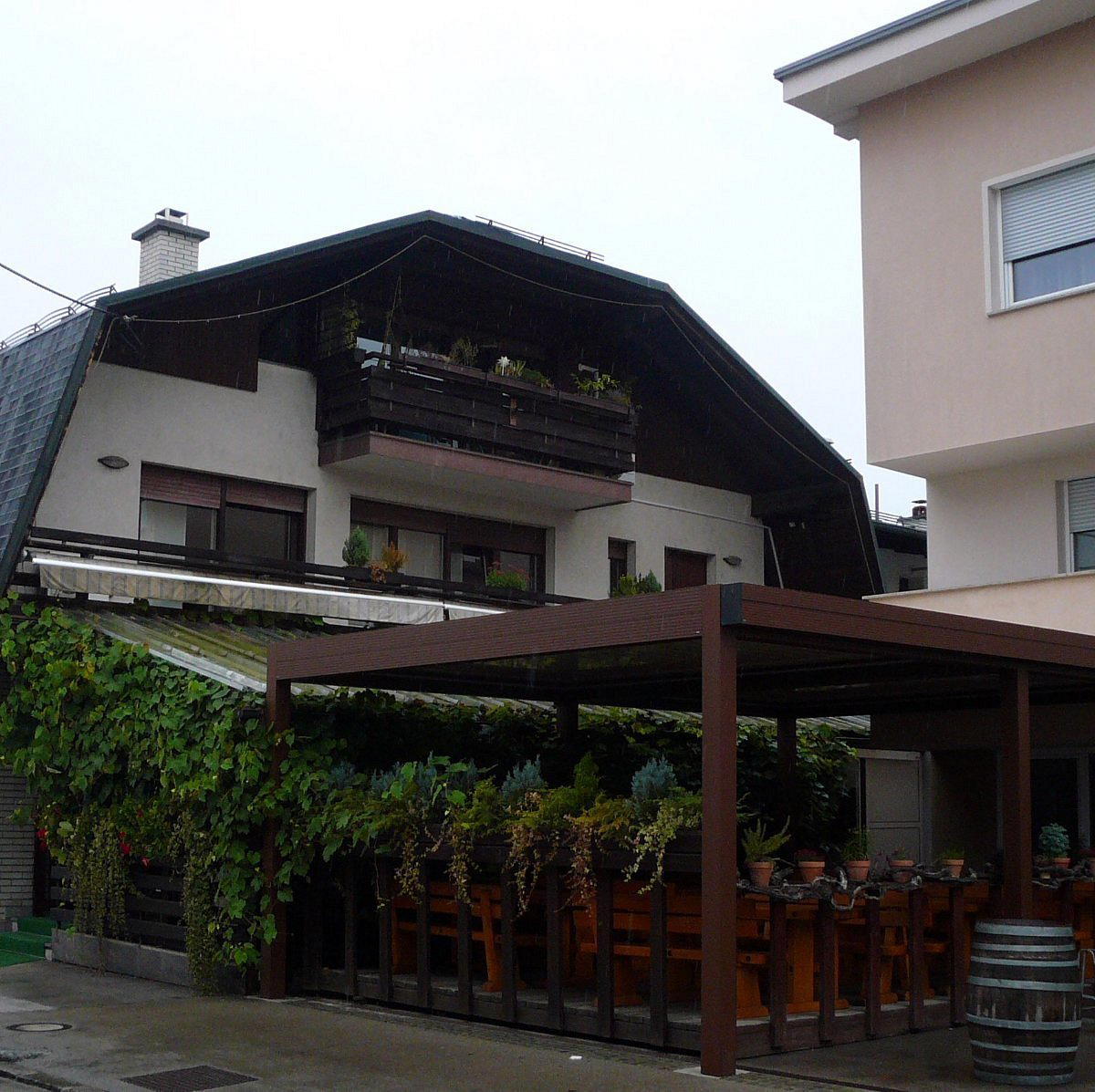
A Street in Šiška Where the Room Does the Talking
Kodrova ulica is not a street that appears on Ljubljana tourist maps, and that is partly the point. The residential folds of Šiška, northwest of the city center, hold a category of dining room that Ljubljana has always maintained quietly alongside its more photographed riverbank terraces: the neighbourhood gostilna. These are spaces built around function before atmosphere, where the design language is accumulated rather than commissioned, mismatched chairs that have simply outlasted trends, walls that have absorbed decades of cigarette smoke and laughter in roughly equal measure, and a communal logic that places the long table at the centre of the room rather than tucked into a corner for privacy. Gostilna Pri Stričku sits inside that tradition.
The physical container here matters as much as anything on the plate. In a city where the premium dining tier, represented by addresses like Restavracija Strelec with its castle-wall drama and tasting-menu architecture, or the sharper contemporary edge of AFTR, has moved decisively toward designed spaces with a deliberate aesthetic program, the gostilna format holds a different position. It is not design by default, it is design by continuity. The rooms at a place like Pri Stričku communicate something specific: that the people eating here have been eating here for years, and that the room was never meant to impress a first-time visitor so much as to accommodate a regular one.
The Architecture of the Everyday
Ljubljana's dining scene divides, in practical terms, into several distinct spatial registers. At one end sit the tasting-menu rooms, intimate, hushed, frequently candlelit, where the spatial experience is curated to support a particular kind of focused attention. At the other end sit the gostilne, whose spatial logic is almost the reverse: expansive rather than intimate, audible rather than hushed, and organized around the idea that a meal is a social occasion with a centrifugal rather than centripetal energy. The room pulls people in different directions at once. You hear conversations from neighboring tables. The kitchen is not hidden. The rhythms are those of a lunch service that has been running since well before noon.
This is the spatial register that Pri Stričku inhabits. The address on Kodrova ulica places it in a part of Ljubljana that long-term residents know by instinct and visitors rarely encounter unless they are eating with someone local. That locational logic is itself a form of editorial curation: the room selects for a particular kind of guest, and that selection shapes the atmosphere more than any interior design choice could. Compare this to the approach at Allegria or Altrokè, both of which operate in registers that are more legible to visiting diners, and the positioning of a neighbourhood gostilna becomes clearer by contrast.
What the Gostilna Format Means in Practice
Slovenia's gostilna tradition is older than the country's current national identity and more geographically specific than its surface resemblance to the Austrian Gasthaus or the Croatian konoba might suggest. The format emerged from a particular mountain-and-valley geography where communities needed places that could function simultaneously as eating house, meeting room, and social infrastructure. The food was always secondary to the room, in the sense that the room came first and the kitchen organized itself around what the room required: dishes that could be held, reheated, served in quantity, and shared without ceremony.
In Ljubljana, the gostilna has survived not by becoming nostalgic spectacle but by continuing to do the thing it always did. This is different from the revival model visible at Slovenia's destination restaurants outside the capital: places like Hiša Franko in Kobarid or Gostilna Pri Lojzetu in Vipava, which have taken gostilna-adjacent formats and reframed them through fine-dining technique and international recognition. The Ljubljana neighbourhood gostilna is not interested in that reframing. It operates as an institution rather than a concept, and Pri Stričku falls into that category.
For comparison, the kind of technical ambition visible at Milka in Kranjska Gora, Hiša Denk in Zgornja Kungota, or Hiša Linhart in Radovljica belongs to a different category of Slovenian dining entirely: one where the chef's hand is the editorial voice and the room has been redesigned to support that voice. Gostilne like Pri Stričku invert that hierarchy. The room is the editorial voice, and the kitchen supports the room.
Ljubljana's Neighbourhood Table and Where It Fits
Visitors arriving in Ljubljana with a restaurant list drawn from international food media will find the city's gostilna circuit largely invisible to them, because it does not present itself through the channels that food media monitors. There are no tasting menus to photograph or chef interviews to republish. The equivalent gap exists in most European capitals: the places that locals eat at regularly are structurally different from the places that earn international recognition. Ljubljana is no exception.
The city's more visible dining addresses, Abi Falafel for the casual end of the international-influence spectrum, or the Slovenian-sourced contemporary cooking at AFTR, operate in a media-legible register. The gostilna circuit runs parallel to that register, not in competition with it. At the extreme end of global reference points, a restaurant like Le Bernardin in New York City or Atomix exemplifies how far the designed-experience model can be taken. The neighbourhood gostilna is the structural opposite of that model, and its value is precisely in that opposition.
For anyone building an itinerary around Ljubljana's food culture, a gostilna like Pri Stričku represents the ground-floor register that sits beneath everything else. It is the format that the city's more ambitious restaurants are implicitly in conversation with, even when they are explicitly moving away from it.
Planning a Visit
Gostilna Pri Stričku is at Kodrova ulica 8 in the Šiška district. Lunch is the main service, with a menu organized around hearty, portion-led cooking rather than composed courses. Reservations are recommended, and the price point sits around $15 per person. For Slovenia's higher-investment dining experiences outside Ljubljana, addresses like Dam in Nova Gorica, Grič in Šentjošt nad Horjulom, Pavus in Lasko, and Gostilna Mlinar in Idrija or Gostišče Karavla 297 in Trzic represent the range of what the country's regional restaurant circuit holds beyond the capital.
Cuisine and Credentials
Comparable venues nearby, for context on price, style, and recognition.
| Venue | Cuisine | Price | Notes |
|---|---|---|---|
| Gostilna Pri StričkuThis venue — the venue you are viewing | Traditional Slovenian | $$ | Not listed |
| Odprta Kuhna | Slovenian Street Food Market | $$ | Pogačarjev trg |
| Gostilna Dubočica | Serbian Leskovac Grill | $$ | Moste |
| Gostilna in pizzerija Jurman | Slovenian Gostilna & Pizzeria | $$ | Zaloška cesta |
| Kodila Gourmet & Bistro Market | Traditional Slovenian Bistro | $$ | Central Market |
| Kletvica | Natural Wine Bar with Small Plates | $ | Center |
Continue exploring
More in Ljubljana
Restaurants in Ljubljana
Browse all →
Bars in Ljubljana
Browse all →
Hotels in Ljubljana
Browse all →
Wineries in Ljubljana
Browse all →
At a Glance
- Rustic
- Cozy
- Classic
- Family
- Business Dinner
- Historic Building
- Local Sourcing
Current opening hours
- Monday
- 7 AM–5 PM
- Tuesday
- 7 AM–5 PM
- Wednesday
- 7 AM–5 PM
- Thursday
- 7 AM–5 PM
- Friday
- 7 AM–4 PM
- Saturday
- Closed
- Sunday
- Closed
Hours can change for holidays and private events. Last verified .
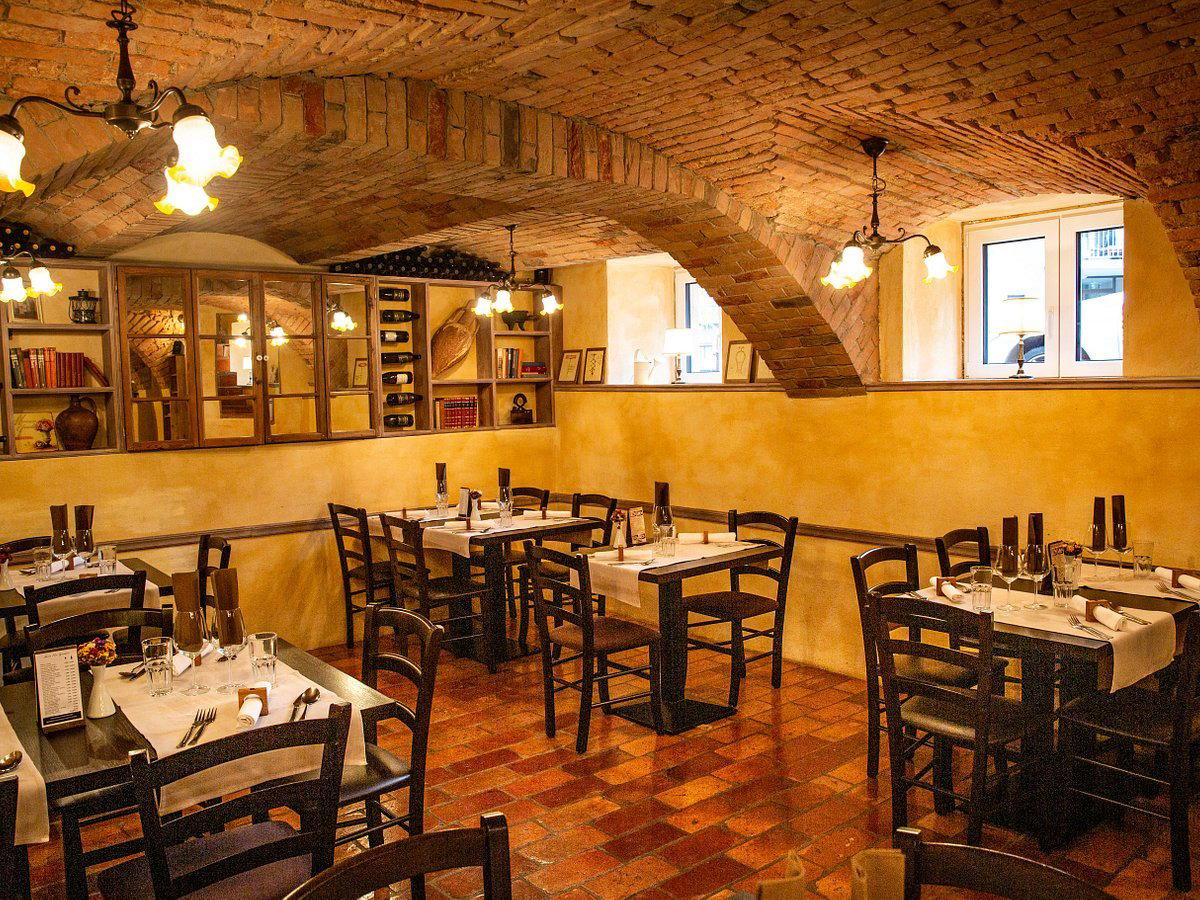
Cozy, vintage ambiance reminiscent of a traditional Slovenian home with simple decor.