On Nazorjeva ulica in Ljubljana's old town, Allegria occupies a stretch of the city where café culture and sit-down dining overlap. The address places it within walking distance of the Ljubljanica riverbank, where the capital's dining scene has grown increasingly layered over the past decade. For visitors mapping the city's mid-range restaurant options, it represents one point in a broader, evolving picture.
Pearl is the En Primeur Club membership app — saves, bookings, and concierge access live there. Same editors, same standards.
- Address
- Nazorjeva ulica 8, 1000 Ljubljana, Slovenia
- Phone
- +38614267402
- Website
- allegria.si
- Directions
- Get directions
 Saves & bookings on Pearl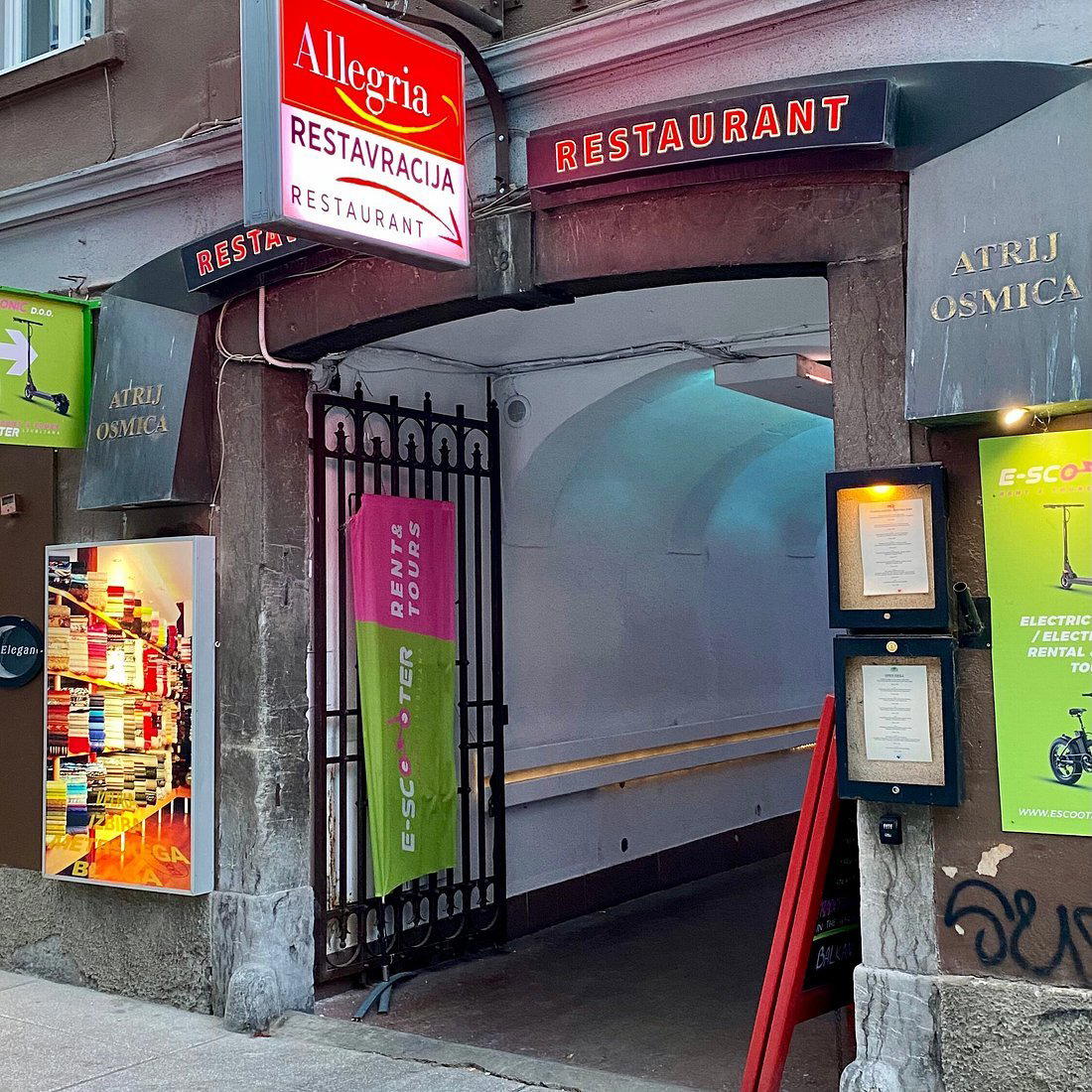
A Street, a Setting, a City in Motion
Nazorjeva ulica is a short residential-leaning street in Ljubljana's old town, close enough to the Ljubljanica riverbank that the ambient sounds of outdoor terraces drift in from surrounding blocks. The old town's character is defined less by a single monument than by the accumulated texture of its streets: cobblestones, low facades, and a pedestrian pace that slows most visitors down within minutes of arriving. Restaurants on these streets operate in a particular atmospheric register, one where the boundary between interior dining room and the city itself tends to dissolve in warmer months, and where the walk to and from a meal is often as memorable as what arrives at the table. Allegria is a restaurant serving Slovenian & Mediterranean cuisine at Nazorjeva ulica 8, 1000 Ljubljana, Slovenia. Allegria, at number 8 on that street, sits inside that broader spatial logic. Its address alone situates it in a part of Ljubljana where dining is woven into the rhythm of moving through the city rather than constituting a destination in isolation.
Ljubljana's Dining Tier Structure
To place Allegria accurately, it helps to understand how Ljubljana's restaurant scene is currently stratified. At the upper end, Restavracija Strelec (Modern Cuisine) operates from within Ljubljana Castle at the €€€ tier, combining setting and contemporary technique in a format aimed at visitors and locals who treat dinner as an occasion. Below that, places like AFTR (Modern Cuisine) and Breg work the €€ bracket with contemporary formats that lean into ingredient focus and shorter, rotating menus. At the more accessible end, Altrokè (Regional Cuisine) holds the single-euro tier with a regional focus that keeps prices low without sacrificing local specificity. This spread matters because Ljubljana, for its size, supports a wider range of serious dining formats than many comparable Central European capitals, and a restaurant's position within that spread tells you almost as much as a description of any individual dish.
What the address and context do suggest is a venue embedded in the old town's social fabric, an area where footfall is consistent across lunch and dinner and where the competition for a diner's attention on any given evening is genuinely plural. That context tends to select for restaurants that offer something reliable rather than something speculative: in high-footfall old town settings across European cities, it is the places with a consistent kitchen and a readable offer that accumulate a regular following over time.
The Sensory Register of the Old Town
Ljubljana's old town operates on a scale that rewards the senses in specific ways. The streets are narrow enough that cooking smells from open kitchen windows or ground-floor dining rooms reach the pavement. The Ljubljanica, a ten-minute walk at most from Nazorjeva ulica, carries its own sensory note in summer, a mix of river air and the ambient noise of outdoor bars that runs along both banks. Evenings here, particularly between May and September, have a density of pedestrian life that recalls the riverfront dining scenes of cities several times Ljubljana's size. A restaurant on or adjacent to these streets benefits from that energy without having to manufacture it.
For comparison, Ljubljana's dining scene in the old town shares a structural similarity with the better-understood riverfront districts of cities like Prague or Zagreb: the setting does work that the kitchen alone cannot, and venues that understand how to use the exterior as part of the experience tend to outlast those that treat the indoor dining room as the whole picture. Ljubljana's particular version of this is quieter and less self-conscious than many, which gives it a quality that heavy tourist infrastructure can erode but which, as of the early 2020s, the city has largely preserved.
Slovenia's Broader Restaurant Context
Any serious engagement with Slovenian dining eventually moves beyond Ljubljana to the villages and valleys where the country's most documented kitchens operate. Hiša Franko in Kobarid has become the internationally known reference point for what Slovenian cuisine can do at its most ambitious, while Gostilna Pri Lojzetu in Vipava and Hiša Linhart in Radovljica represent the strength of the country's rural-rooted fine dining tradition. Closer to Ljubljana, Gostilna Skaručna in Vodice and Grič in Šentjošt nad Horjulom demonstrate that serious cooking is distributed across the region, not concentrated only in the capital. Hiša Denk in Zgornja Kungota, Pavus in Lasko, and Dam in Nova Gorica extend that pattern further across the country's varied geography. For visitors spending more than a day or two, the argument for day trips out of Ljubljana to these kitchens is strong. Milka in Kranjska Gora and Grič in Dobrova Polhov Gradec are both reachable within an hour and represent formats distinct from anything available inside the city limits.
Within Ljubljana itself, the supporting cast around Allegria's neighbourhood includes Abi Falafel for a fast, affordable meal and B-Restaurant for a different format again. The city's old town, in other words, does not require you to plan far in advance to eat well: the density of options across price points is sufficient that most evenings can be navigated by preference and availability.
Planning a Visit
Allegria's location on Nazorjeva ulica 8 in the 1000 Ljubljana postcode places it within the old town's walkable core, reachable on foot from the main bus and train stations in under twenty minutes or by taxi in under five. Ljubljana's old town is largely pedestrianised at its centre, so approaching on foot is both practical and the more atmospheric option. Allegria is walk-in friendly and serves a casual lunch and dinner schedule: Mon to Fri 11 AM to 10 PM, Sat 12 to 10 PM, and Sun 12 to 5 PM. The price per person is about $15. For the city's wider restaurant context, particularly if this visit is part of a longer stay in Slovenia, the regional kitchens listed above are worth building into the itinerary alongside whatever old-town dining the capital offers.
Nearby-ish Comparables
Comparable venues nearby, for context on price, style, and recognition.
| Venue | Cuisine | Price | Notes |
|---|---|---|---|
| AllegriaThis venue — the venue you are viewing | Slovenian & Mediterranean | $$ | Not listed |
| Švicarija | Traditional Slovenian Bistro | $$ | Tivoli |
| Robin restaurant | Modern Grill & Mediterranean | $$ | western edge |
| JB Restaurant | Modern Slovenian Fine Dining | $$$ | Downtown Ljubljana |
| Restaurant Manna | Slovenian-Mediterranean Fine Dining | $$$ | Trnovo |
| Ošterija Pr'Noni | Modern Slovenian-Mediterranean | $$ | Vič |
Continue exploring
More in Ljubljana
Restaurants in Ljubljana
Browse all →
Bars in Ljubljana
Browse all →
Hotels in Ljubljana
Browse all →
Wineries in Ljubljana
Browse all →
At a Glance
- Rustic
- Cozy
- Casual Hangout
- Group Dining
- Courtyard
- Terrace
- Beer Program
- Local Sourcing
Current opening hours
- Monday
- 11 AM–10 PM
- Tuesday
- 11 AM–10 PM
- Wednesday
- 11 AM–10 PM
- Thursday
- 11 AM–10 PM
- Friday
- 11 AM–10 PM
- Saturday
- 12–10 PM
- Sunday
- 12–5 PM
Hours can change for holidays and private events. Last verified .