
Grand Hotel Union Eurostars holds a Michelin Selected distinction in Ljubljana's hotel scene, positioning it among the city's most recognised addresses. Occupying a historic building on Miklosiceva, steps from the pedestrian core, it places guests at the centre of the Slovenian capital without sacrificing the architectural character that defines the street.
Pearl is the En Primeur Club membership app — saves, bookings, and concierge access live there. Same editors, same standards.
- Address
- Miklošičeva cesta 1, 1000 Ljubljana, Slovenia
- Phone
- +386 1 308 12 70
- Website
- eurostarshotels.co.uk
- Directions
- Get directions
 Saves & bookings on Pearl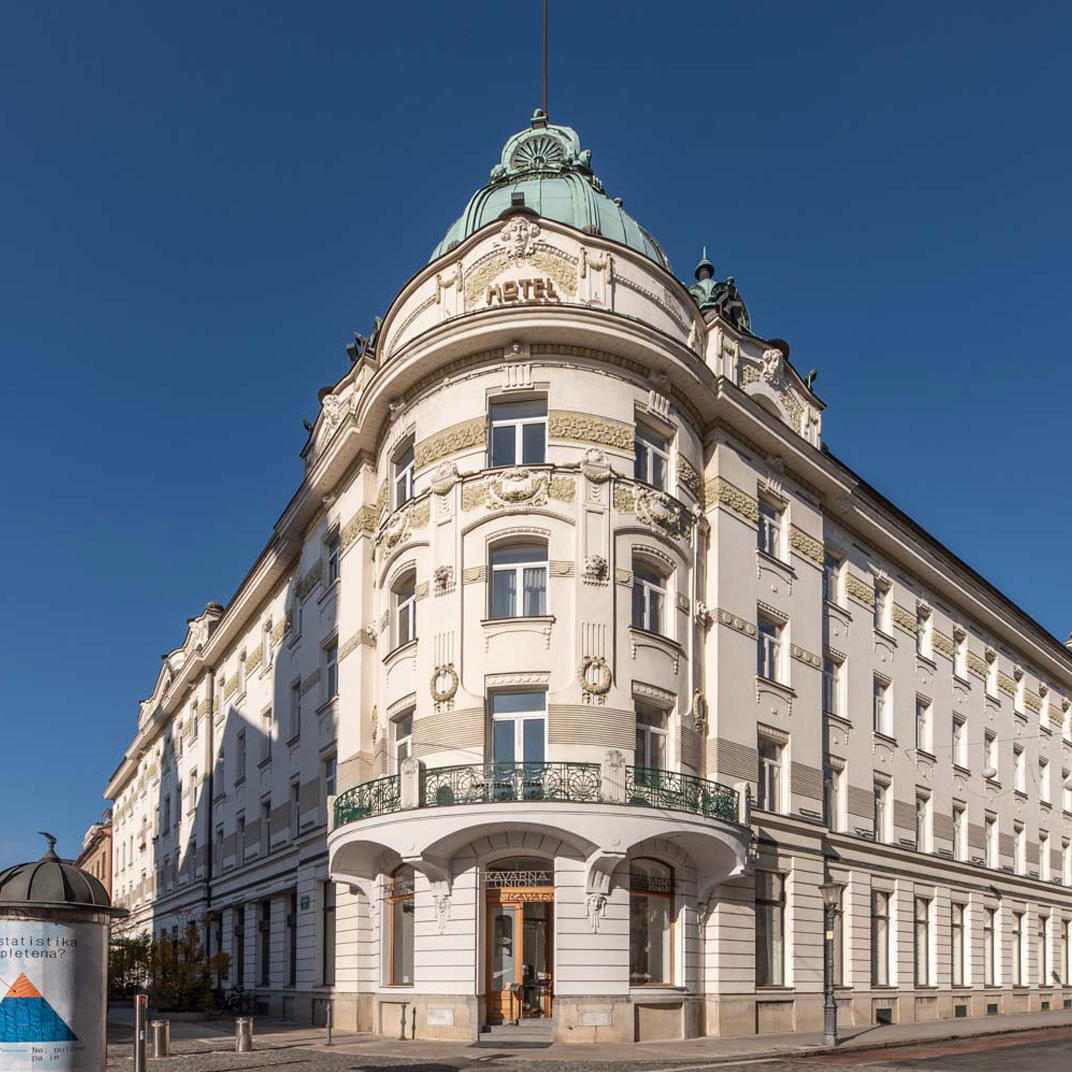
A Historic Address at the Heart of Ljubljana's Pedestrian City
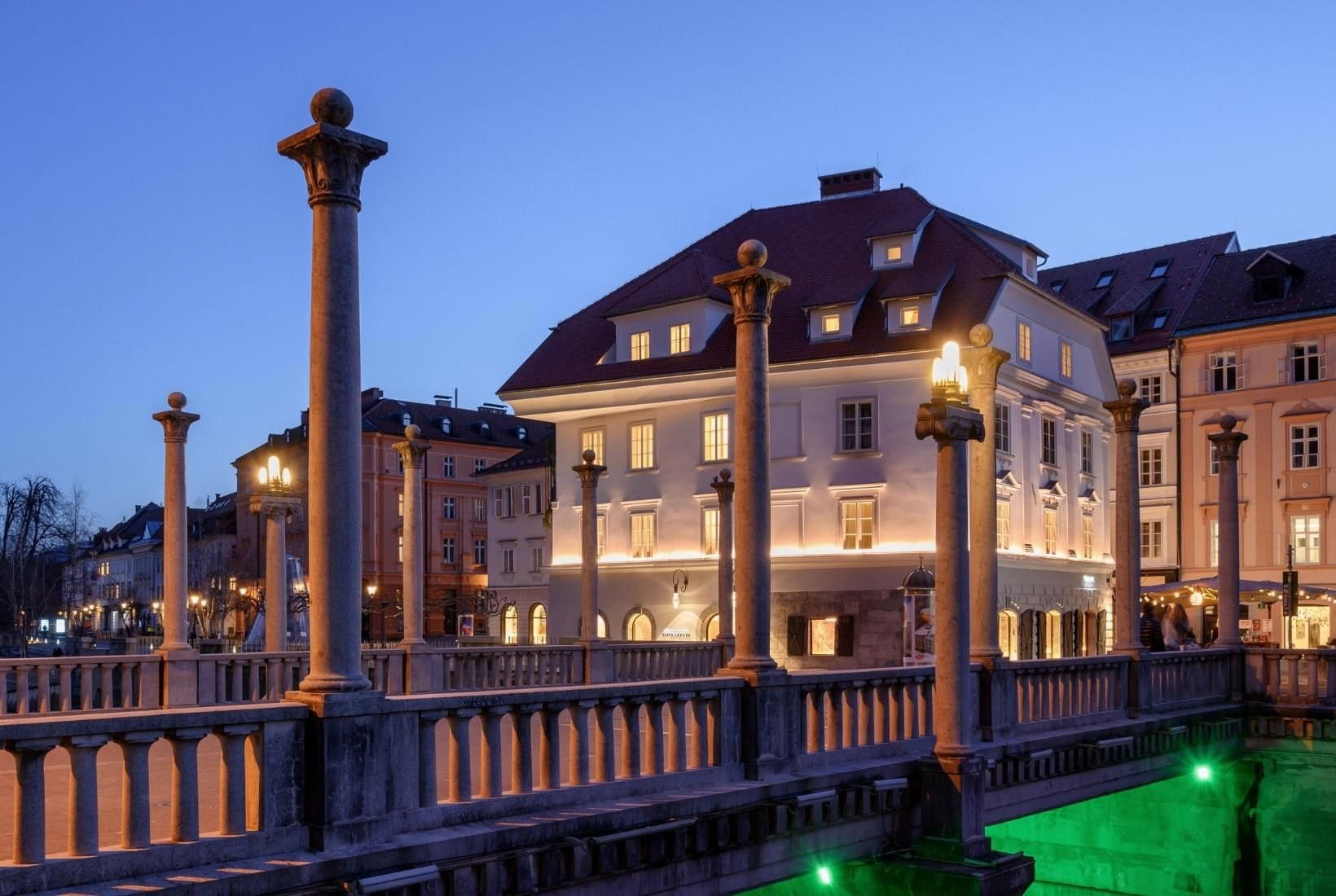
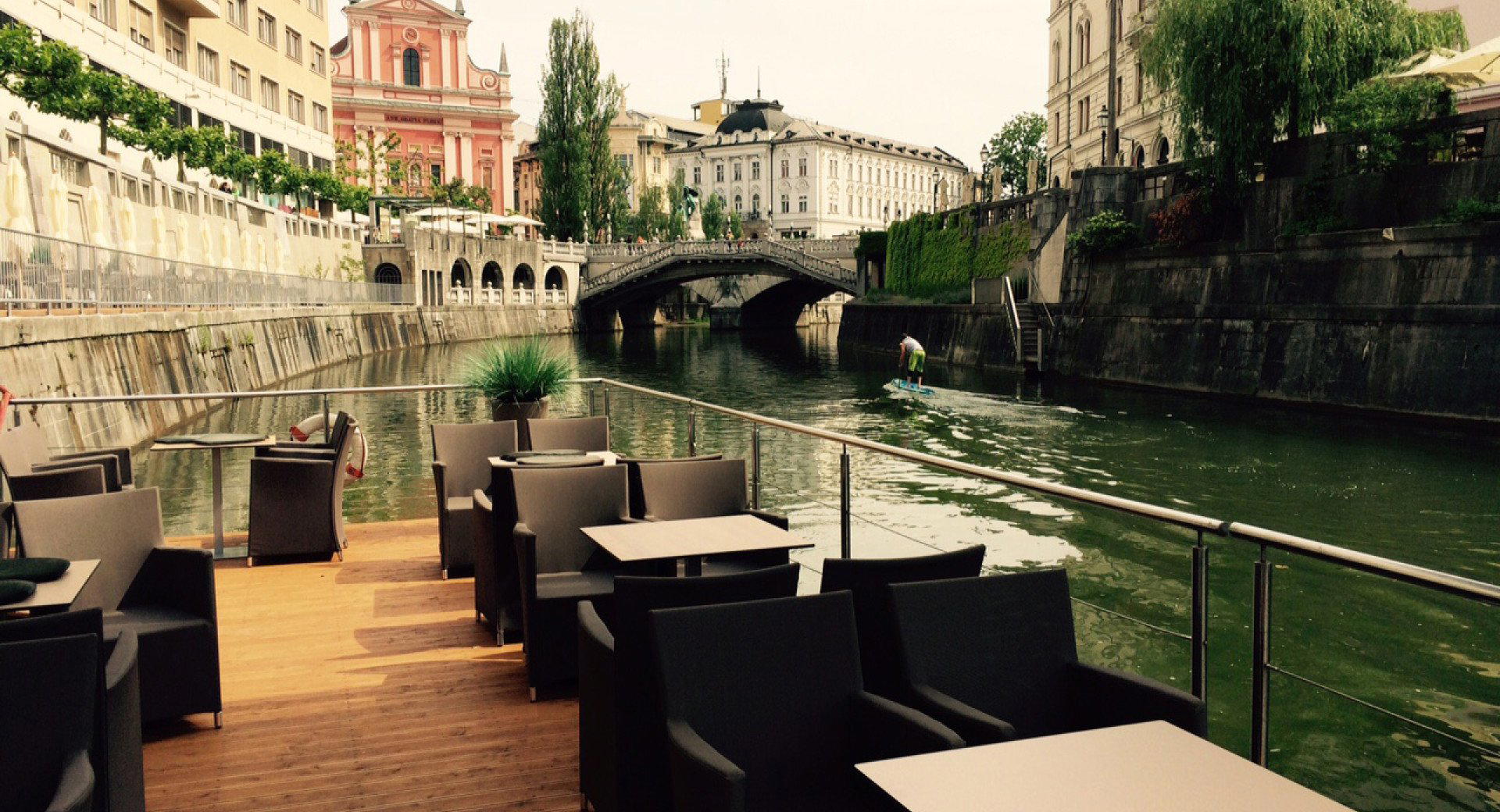
Miklosiceva is not a street where hotels blend into the background. The avenue running north from Prešeren Square forms the spine of Ljubljana's Secession-era urban fabric, lined with ornate facades that date to the early twentieth century and survive in unusually complete condition for a central European capital of this size. Grand Hotel Union Eurostars sits at number one on that street, which means arrivals happen within a short walk of the Triple Bridge, the riverside market, and the covered arcade of the Old Town. In a city built for pedestrians rather than cars, that address is a practical advantage that most accommodation in Ljubljana cannot replicate.
Ljubljana has split its hotel offer in recent years between a handful of historically grounded properties in the pedestrian core and a growing cluster of design-led boutique options scattered across the wider centre. Grand Hotel Union Eurostars belongs to the former category: a building with architectural identity that predates the modern hotel industry, carrying a 4-star hotel with,281 reviews, which places it among Ljubljana's stronger central stays. For travellers whose priority is access to the city on foot, the Eurostars location compresses the Ljubljana itinerary in ways that properties further from the centre cannot.
What the Address Actually Delivers
The practical geometry of the Grand Hotel Union Eurostars position deserves spelling out. Prešeren Square, which functions as Ljubljana's social and geographic centrepoint, is within two minutes on foot. The Castle Hill funicular, the covered market designed by Jože Plečnik, and the concentration of restaurants along the Ljubljanica riverbank are all reachable in under ten minutes without crossing a major road. The Ljubljana train station, which connects to Bled, Maribor, and the coast, is approximately a ten-minute walk north along Miklosiceva itself. That combination of cultural proximity and transport access makes the hotel's position useful across different types of visit, whether that is a weekend centred on the Old Town or a longer trip using Ljubljana as a base for regional day travel.
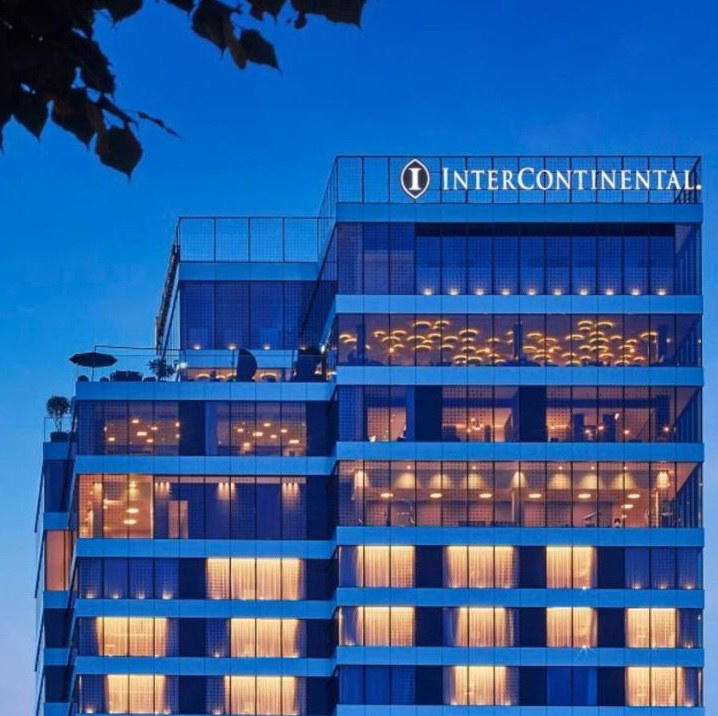
For context, several of the city's newer design properties, including Hotel Cubo and ONE66 Hotel, occupy positions that require more deliberate navigation to reach the pedestrian core. The InterContinental Ljubljana, an IHG Hotel offers a different value proposition entirely, with scale and international brand infrastructure that places it in a separate competitive tier. The Grand Hotel Union Eurostars, by contrast, reads as the heritage-anchored option in the central bracket, a category that Ljubljana, unlike Vienna or Prague, still has only a few genuine representatives of.
The Building as Context
Central European cities built their grand hotels at the turn of the twentieth century as civic statements as much as commercial enterprises. The grand hotel typology, with its high ceilings, ornate public spaces, and monumental street presence, was an assertion of urban sophistication in cities competing for recognition on the European circuit. Ljubljana's version of this story is compressed but coherent. The Secession and Vienna Succession architectural influence visible along Miklosiceva reflects the city's position within the Austro-Hungarian sphere before 1918, and several of the buildings on the street retain their original decorative programmes. Staying inside one of them rather than in a purpose-built contemporary hotel gives guests a different relationship to the city's architectural history.
That relationship has real value for a certain type of traveller: one who reads cities through their built environment and wants accommodation that participates in the urban fabric rather than simply existing alongside it. Ljubljana is a city where that kind of attention pays off. Plečnik's interventions across the centre, the Dragon Bridge, the National and University Library, and the covered market all reward the kind of slow, exploratory walking that staying on Miklosiceva facilitates. Michelin's selection of the hotel in its 2025 hotel guide is a signal that the property meets a threshold of quality consistent with that editorial register.
Planning Your Stay
Guests travelling to Ljubljana by air arrive via Ljubljana Jože Pučnik Airport, approximately 26 kilometres north of the city centre. A shuttle bus service connects the airport to the city and terminates near the train station, itself a short walk from the hotel on Miklosiceva. For travellers arriving by rail from Vienna, Venice, or Zagreb, the proximity of the station to the hotel makes the hotel a particularly logical first stop without the need for onward transfer. Booking in advance is advisable. Those looking for alternatives within the same pedestrian radius should also consider AS Boutique Hotel, Bloom Hotel, and Hotel Nox. The creatively converted Hostel Celica represents a markedly different format for budget-conscious travellers.
Ljubljana Within a Wider Slovenian Itinerary
The hotel's central Ljubljana position also makes it a natural anchor for a Slovenia circuit. The country's accommodation offer extends across a range of formats and settings that contrast sharply with the urban capital. In the Alpine northwest, Grand Hotel Toplice in Bled and ALPIK Chalets in Bohinj offer lake and mountain settings within day-trip or short-transfer distance. For travellers drawn to the Soča Valley, Nebesa Chalets in Kobarid and Vila Planinka in Zgornje Jezersko represent the country's growing premium rural offer. In the Karst and wine country to the west, Peterc Vineyard Estate in Kojsko and Kendov Dvorec in Spodnja Idrija anchor a different kind of itinerary. The Hotel Grad Otočec in Otočec and Hotel Palace Portoroz in Portorož serve the southeast and the Adriatic coast respectively. For high-mountain access from the Triglav region, Chalet Sofija in Kranjska Gora is the relevant reference. The hotel, sitting at the centre of this geography in terms of road and rail connections, is the logical first or last night of any itinerary that covers the country in depth.
For travellers calibrating Ljubljana against other European city-centre grand hotel experiences, reference points include Mandarin Oriental Ritz in Madrid, Hôtel de Paris Monte-Carlo, and Badrutt's Palace Hotel in St. Moritz, all of which operate within the same historical grand-hotel typology at higher price points and in more internationally established markets. Ljubljana offers the same architectural register at a scale and cost that those cities no longer can.
A Minimal comparable set
Comparable venues nearby, for context on price, style, and recognition.
| Venue | Price | Notes |
|---|---|---|
| Grand Hotel Union EurostarsThis venue — the venue you are viewing | $$$ | Not listed |
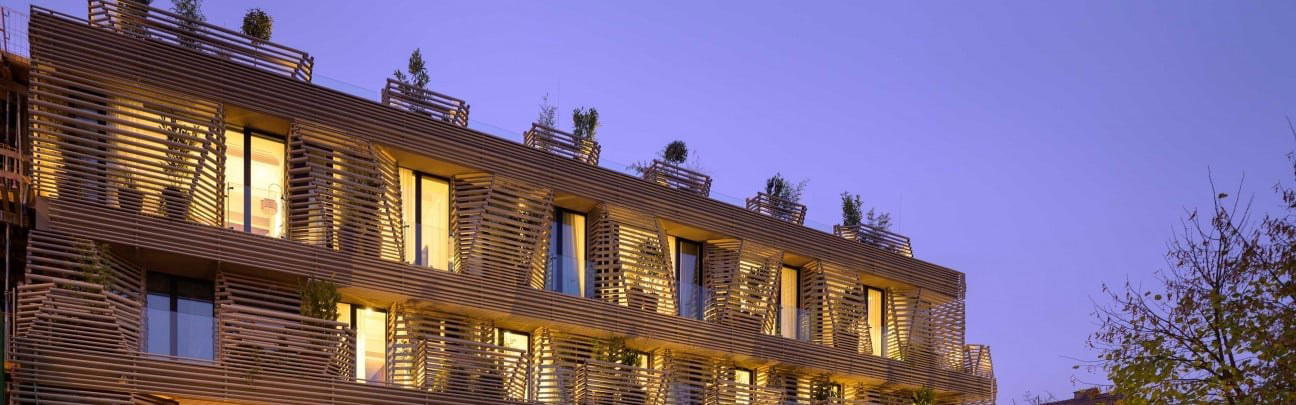
| Hotel Nox | $$$ | northern edge of Ljubljana, Contemporary Slovenian design boutique hotel managed by an interior design company specializing in hospitality. |
| ONE66 Hotel | $$ | Siska District, Lifestyle hotel in converted industrial building |
| Tivoli Boutique Inn | $$$ | Tivoli Park, Modern boutique inn with sleek minimalist architecture next to Tivoli Park |
| Hotel Cubo | $$$ | Ljubljana City Centre, Luxury boutique hotel in a historic Art Deco building with contemporary renovations. |
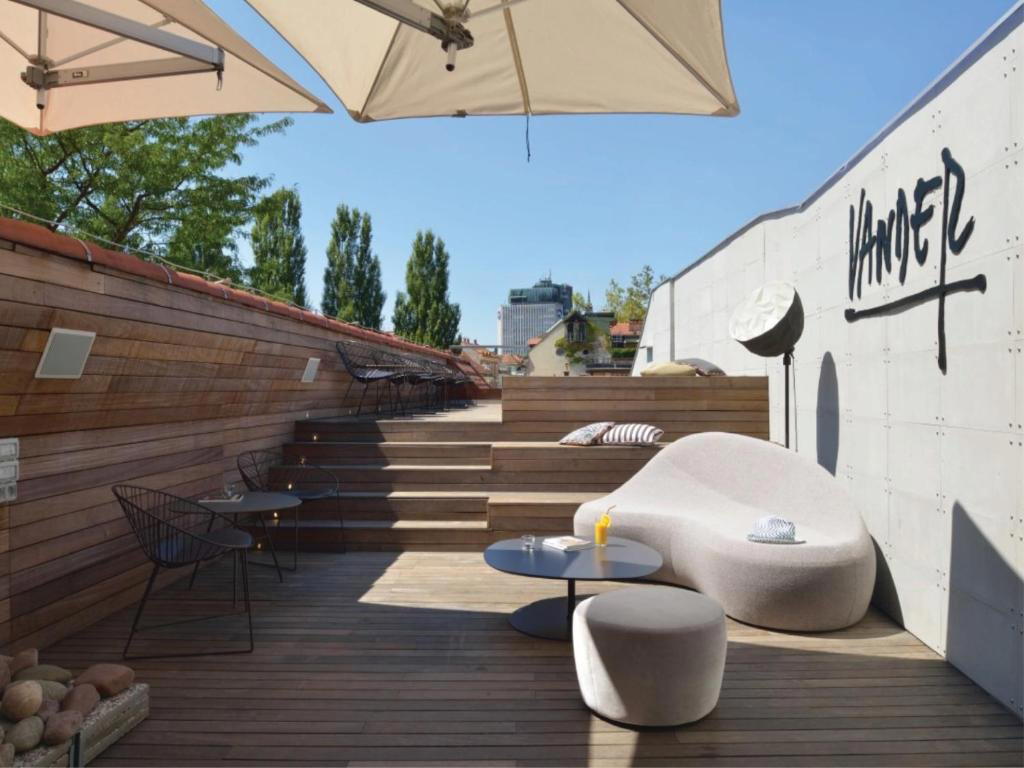
| Vander Urbani Resort | $$$$ | Old Town, Boutique design hotel in renovated medieval townhouses with flowing minimalist architecture. |
Recognition history
Dated appearances from independent guides and award organizations, with the underlying list record or original source where available.
Michelin Selected
Michelin
At a Glance
- Classic
- Elegant
- Historic
- Sophisticated
- Business Trip
- Anniversary
- Weekend Escape
- Historic Building
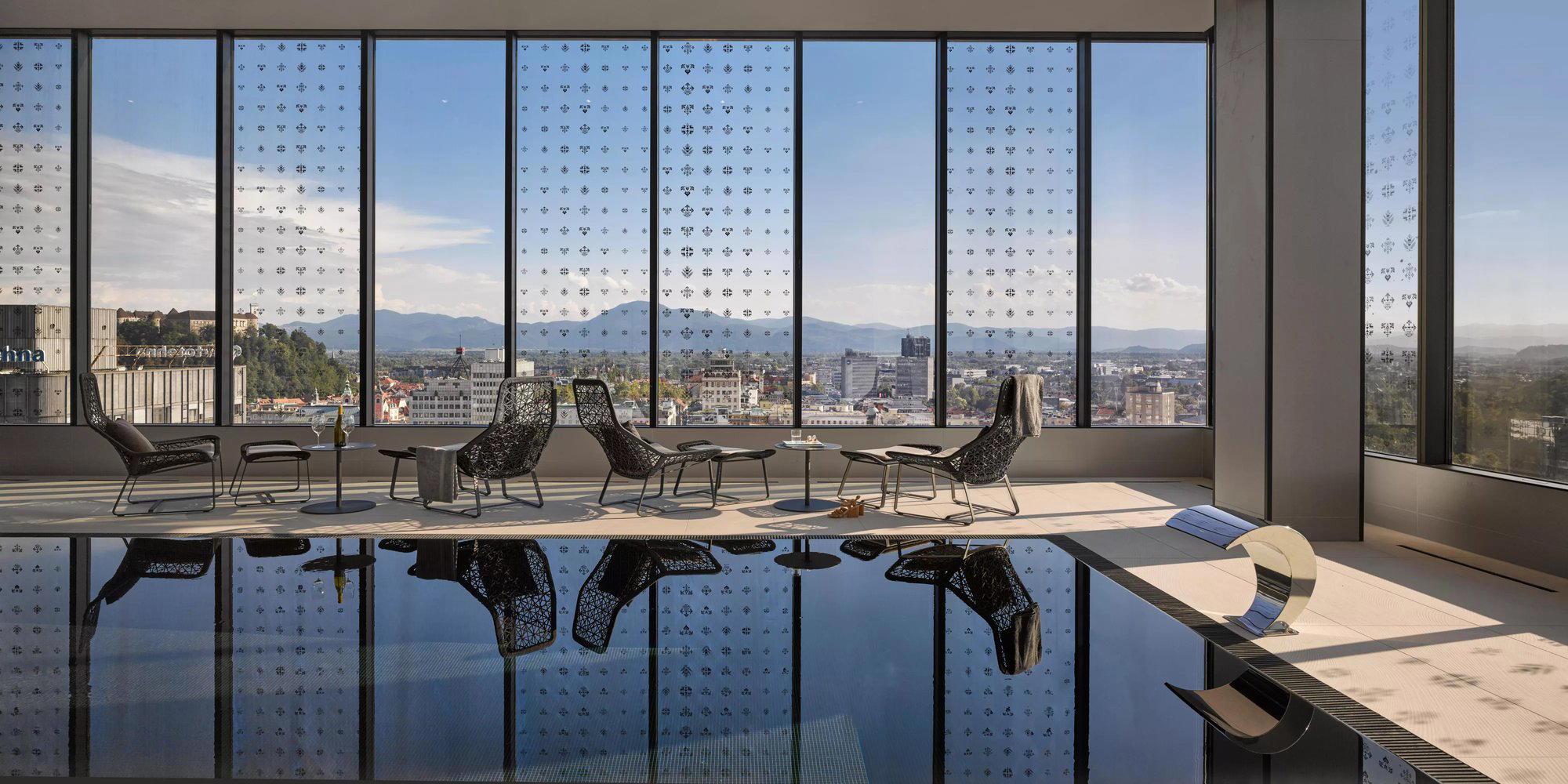
- Panoramic View
- Wi Fi
- Pool
- Spa
- Fitness Center
- Room Service
- Concierge
- Business Center
- Skyline
- Wi Fi
- Pool
- Spa
- Fitness Center
- Room Service
- Concierge
- Business Center
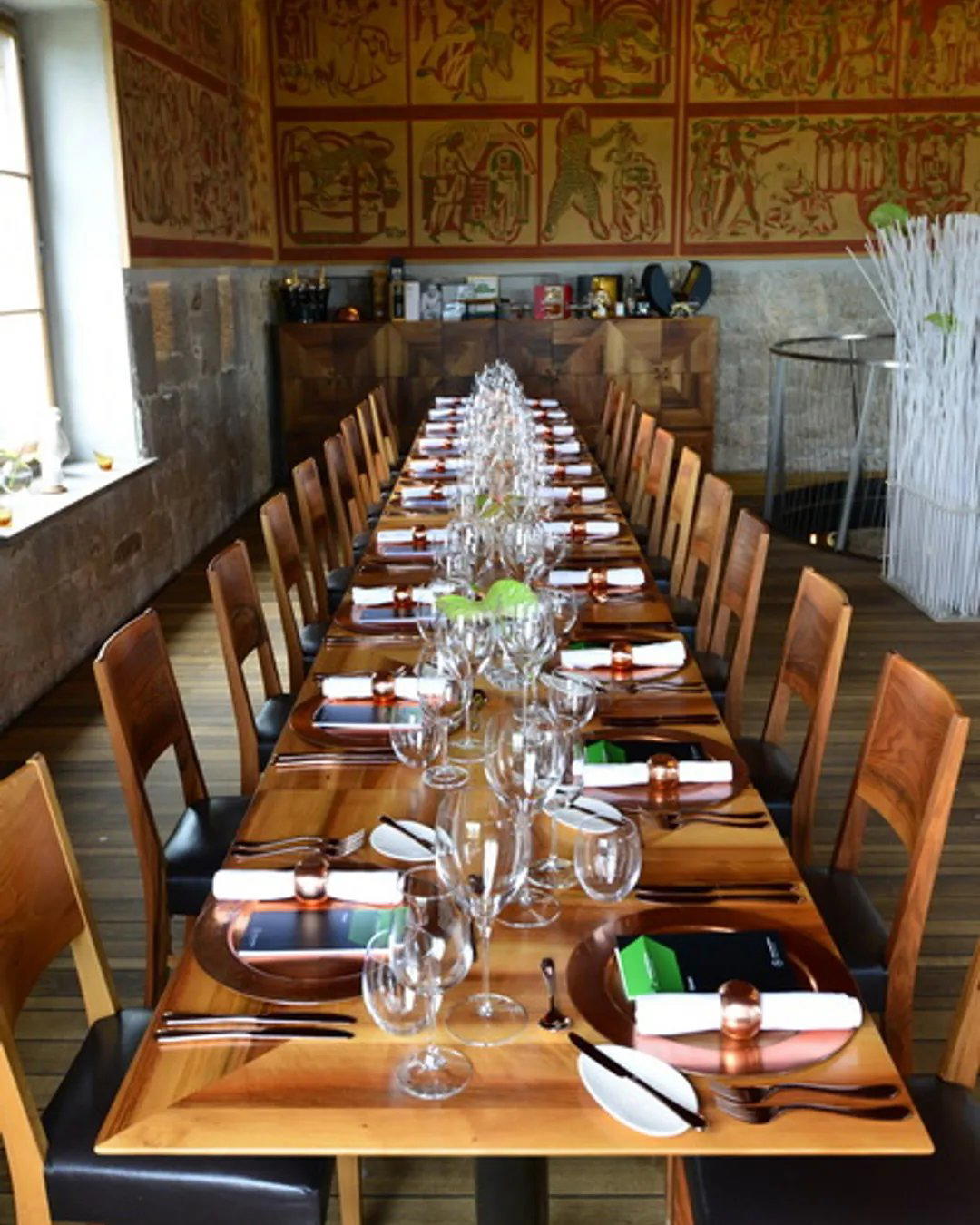
Elegant historic atmosphere with Art Nouveau details, lavish furnishings, and a sense of timeless glamour.