Our verdict
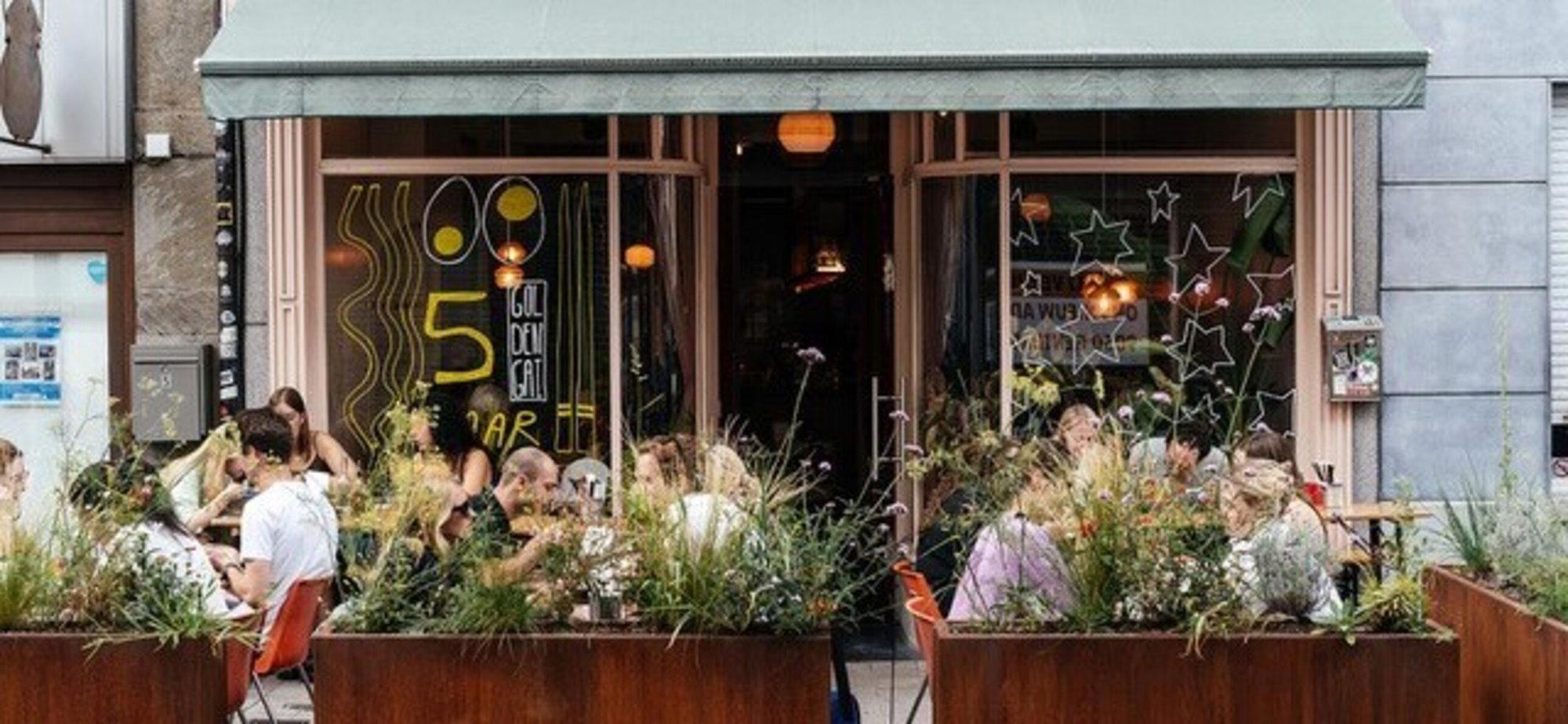
Golden Gai occupies a streetside address on Dampoortstraat in Ghent's eastern corridor, where the city's dining scene runs less curated and more instinctive than the medieval centre. With sparse public data on record, this venue sits at the intriguing edge of Ghent's independently operated restaurant circuit, a category that rewards those willing to arrive without a roadmap.

Pearl is the En Primeur Club membership app, where members save venues, book tables and use the concierge.
The menu
What to order
- Tantan Ramen
- Miso Ramen
- Miso Teriyaki Chicken Wings
- Matcha Cheesecake
Dampoortstraat and the East Ghent Dining Habit
There is a particular rhythm to eating on the eastern edge of Ghent that the canal-facing restaurants of the Graslei do not share. Dampoortstraat runs through a neighbourhood shaped more by residents than by tourism, and the venues that persist here tend to do so on repeat custom rather than walk-in traffic. Golden Gai, at number 11, occupies that kind of address: a spot where arrival feels deliberate, not accidental. The street itself carries the texture of a working neighbourhood, functional rather than dressed for visitors, which filters the clientele before the door has even opened.
This is a meaningful distinction in Ghent's restaurant geography. The city's most discussed tables, places like Vrijmoed in Gent, operate closer to the historic core and attract diners from across Belgium and beyond. The Dampoortstraat corridor plays a different role: it serves the city's own appetite, and venues here are measured against a local standard that has little patience for pretence. Within that context, a name borrowed from Tokyo's most famous drinking-and-eating alley carries its own signal, an orientation toward Japan's informal dining culture, with its emphasis on counter sitting, small-format service, and a meal structured around the logic of the host rather than the preference of the guest.
The Ritual of the Small Counter
Japan's Golden Gai district in Shinjuku established a template that has influenced independent bar and dining culture across the world: tiny rooms, a handful of seats, menus that may or may not be written down, and a relationship between host and guest that assumes at least some shared understanding of how the evening will unfold. What the address and the name together suggest is a lean, focused operation, the kind of place where the ritual of sitting down, ordering, and eating carries more weight than the setting in which it happens.
In Belgium's independent dining circuit, this format has found genuine traction. Across the country, the most interesting rooms are often the smallest: BIJ DEN WIJZEN EN DEN ZOT BVBA in Ghent operates in that spirit, as does the tightly edited programming at Astro Boy. The value in these formats lies not in what is offered but in how decisively it is offered. A short menu executed with clarity is a different proposition from a long menu that spreads effort thin. Belgium's dining culture has absorbed this logic, and the venues that apply it most consistently tend to outlast those chasing broader appeal.
For diners arriving at Golden Gai, the appropriate approach is one of openness to the house's pace. Small-format venues in this mould do not perform well under the pressure of the fixed agenda. The meal unfolds as the kitchen intends, and guests who allow that tend to eat better, and understand more, than those who arrive with a checklist.
Ghent's Independent Restaurant Ecology
Ghent has developed one of Belgium's more coherent independent restaurant scenes over the past decade, distinct from both Brussels's scale and Antwerp's design-driven swagger. The city's culinary identity sits somewhere between Flemish directness and an openness to outside influence that its student population and creative industries encourage. This has produced a circuit where venues like Arbane, BABÚ, and Beiruti each occupy a distinct lane without competing directly. The city is large enough to sustain plurality and small enough that word travels quickly. A venue that does not deliver consistently does not recover easily.
At the fine-dining end of the Belgian spectrum, benchmark operators are well established: Hof van Cleve - Floris Van Der Veken in Kruishoutem, Boury in Roeselare, and Zilte in Antwerp represent a tier of ambition and technique that sets the standard for the country's recognised dining. Golden Gai, by contrast, operates at the informal end of that same national conversation, the place where the ideas are tested without the infrastructure of white tablecloths or multi-course architecture. This is not a lesser position. It is a different one, and in many cities, it is the more durable one.
Internationally, the template for intimate, host-led dining at this scale has been refined at venues as different as Lazy Bear in San Francisco, with its communal format and deliberately paced service, and the more technically rigorous model at Le Bernardin in New York City. Both demonstrate that the ritual of the meal, how it begins, how it moves, how it ends, is as much a product of intention as of ingredient. Golden Gai, whatever its specific format, sits in a lineage that takes that intention seriously.
Planning a Visit
Golden Gai is located at Dampoortstraat 11, 9000 Gent, in Ghent's eastern residential stretch, reachable by tram from the city centre in under ten minutes or on foot from the Dampoort rail station in a matter of minutes. Because no website or phone number is publicly registered against this address, contact and reservation information is leading sought through the venue directly in person or through Ghent dining community channels. This is not unusual for independently operated rooms of this type: the absence of a digital booking architecture is sometimes itself a signal about how the venue operates and who it is designed to serve. Diners accustomed to reserving weeks in advance at venues like Willem Hiele in Oudenburg or La Durée in Izegem should adjust their expectations accordingly. For context on what else the city offers, the full Ghent restaurants guide maps the broader scene across neighbourhoods and price points.
Frequently asked questions
What kind of setting is Golden Gai?
Golden Gai at Dampoortstraat 11 operates on the model of Japan's Golden Gai district in Shinjuku: a compact, counter-led space built for proximity between guests and whoever is running the room. The format privileges conversation over ceremony, and the east Ghent location places it squarely within a residential stretch rather than the tourist corridor along the Graslei.
Where do I go for Golden Gai?
Golden Gai is located at Dampoortstraat 11, 9000 Gent, Belgium, Ghent.
How does Golden Gai in Ghent relate to the original Golden Gai in Tokyo?
The name references Shinjuku's Golden Gai district, a cluster of bars in Tokyo that established the template for the intimate, counter-led independent drinking and dining room, typically seating under a dozen people, run by a single operator, and built on regulars rather than footfall. The Ghent venue at Dampoortstraat 11 applies that philosophy to east Ghent's residential neighbourhood, which has developed a distinct independent scene over the past decade separate from Belgium's larger urban dining centres.
What's the best thing to order at Golden Gai?
Small-counter venues in this format typically turn on a tight, rotating selection rather than a fixed card, the staff at Dampoortstraat 11 are the most reliable guide.
Is Golden Gai reservation-only?
Booking policy for Golden Gai has not been confirmed in published sources. Given the counter format and the size typical of venues drawing on the Shinjuku Golden Gai template, capacity is limited, contacting the venue directly before visiting is advisable, particularly on weekends.
What's the defining dish or idea at Golden Gai?
The defining idea is structural rather than culinary: the small-counter format itself, borrowed from Tokyo's Golden Gai district, where rooms seat a handful of people and the experience is shaped by the room's intimacy rather than a fixed menu concept. In Ghent's east-side context, that format sits within one of Belgium's more coherent independent dining ecosystems, separate from both Antwerp and Brussels in character.
What if I have allergies at Golden Gai?
No allergen information or menu detail for Golden Gai is documented publicly. For venues operating at counter scale on Dampoortstraat, the practical approach is to contact the venue ahead of your visit and discuss requirements directly, small operations at this format can often accommodate, but only with advance notice.
Budget and Context
Comparable venues nearby, for context on price, style, and recognition.
| Venue | Cuisine | Price | Notes |
|---|---|---|---|
| Golden GaiThis venue (the venue you are viewing) | Japanese Ramen & Cocktails | $30–50 | Not listed |
| Il Mezzogiorno | Authentic Sicilian Italian | $30–50 | Sluizeken - Tolhuis - Ham, Authentic Sicilian Italian |
| Sakas | Refined Japanese Omakase | $100–150 | Binnenstad, Refined Japanese Omakase |
| Zuru Zuru Ramen | Authentic Japanese Ramen | $20–30 | Stationsbuurt-Noord, Authentic Japanese Ramen |
| Lubbi | Modern French-Belgian Bistro | $50–100 | Oud Gentbrugge, Modern French-Belgian Bistro |
| Onglet | Modern Belgian Brasserie | $30–50 | Drongen, Modern Belgian Brasserie |