
A neo-Gothic former post office on Ghent's medieval Graslei waterfront, 1898 The Post converts 37 rooms across a preserved historic shell into dark, textured accommodation with a personality closer to a film set than a conventional boutique hotel. The Cobbler cocktail bar and The Kitchen for breakfast and afternoon tea round out a property that earns its address rather than just occupying it.
Pearl is the En Primeur Club membership app — saves, bookings, and concierge access live there. Same editors, same standards.
- Address
- Graslei 16, 9000 Gent
- Phone
- +32 9 391 53 79
- Website
- 1898thepost.com
- Directions
- Get directions
 Saves & bookings on Pearl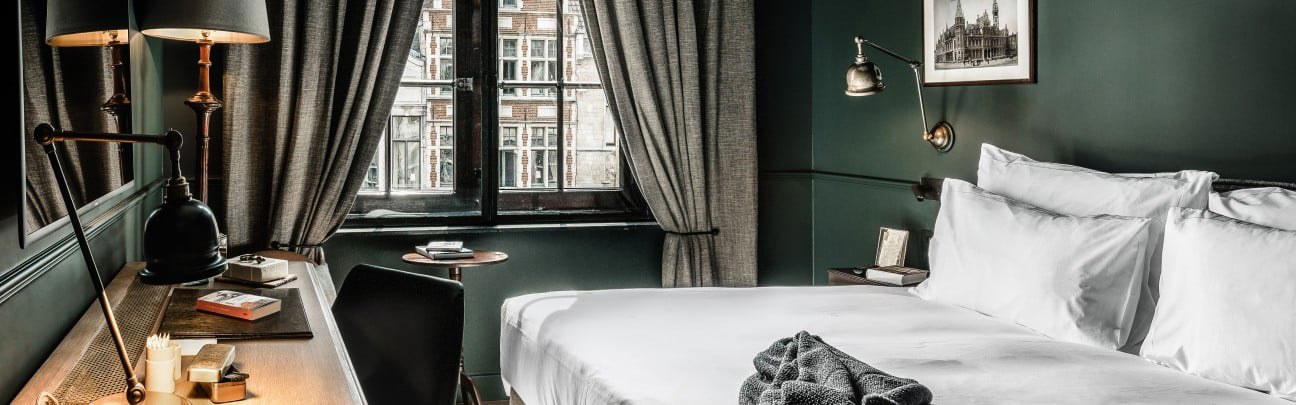
A Building That Earns Its Address
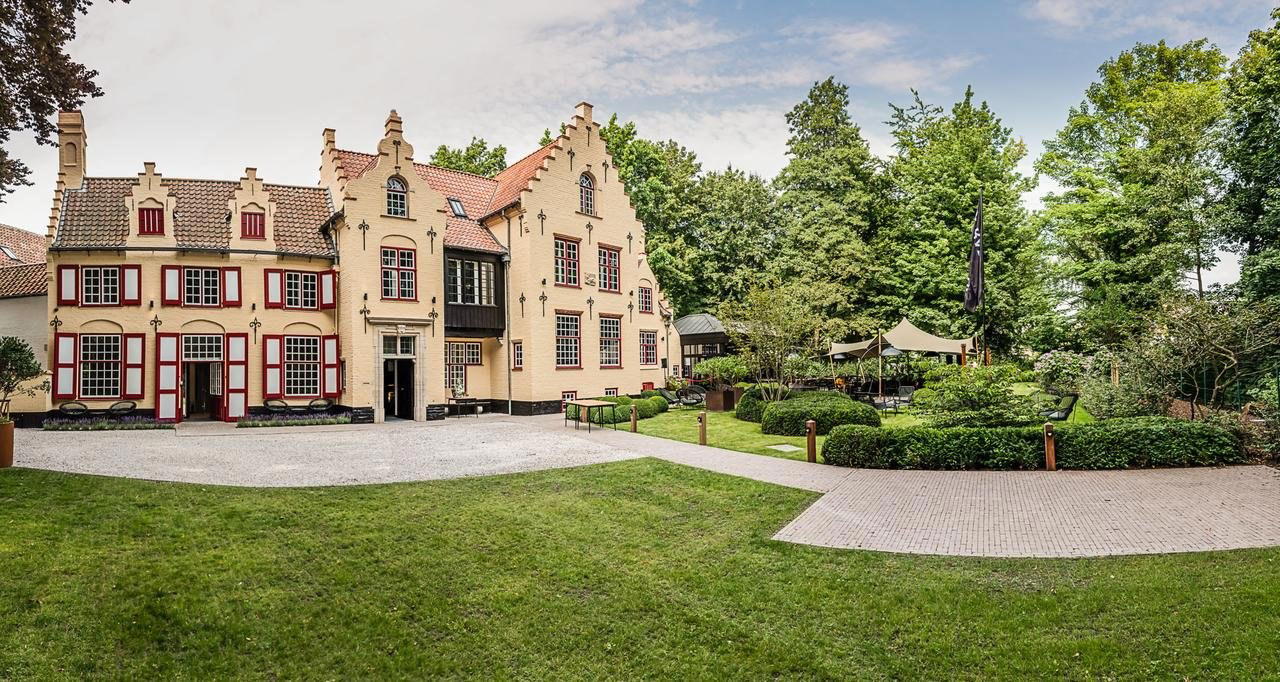
Approach Graslei 16 from the canal side and the building announces itself before you reach the door. Ghent's old Central Post Office presents a neo-Gothic facade so convincingly medieval in its stonework, arched windows, and vertical ambition that most visitors assume it predates the twentieth century by several hundred years. It does not. Completed around the turn of the last century, the structure was designed in a historicist style that placed it in visual conversation with the genuinely ancient guild houses lining the Graslei waterfront. That context matters when considering what kind of hotel 1898 The Post has become: one whose physical setting sets an expectation that its interior has to meet, and largely does.
Ghent occupies a specific position in Belgium's travel hierarchy. It draws visitors who have graduated past Brussels's bureaucratic centre and Bruges's postcard density, arriving instead for a city that wears its medieval bones without quite so much performative effort. The Graslei and Korenlei canal streets are the concentrated expression of that character, and a hotel at Graslei 16 is as centrally placed within the city's historic identity as an address gets. For comparison, properties operating at a remove from this core, including Pillows Grand Boutique Hotel Reylof Ghent and B&B; The Verhaegen, make different spatial trade-offs. The Ghent Marriott Hotel anchors the opposite end of the scale entirely, bringing chain infrastructure to a city that rewards independent character. 1898 The Post operates in the independent, design-led tier, where the building itself is the primary credential.
Inside the Shell: Atmosphere as Design Strategy
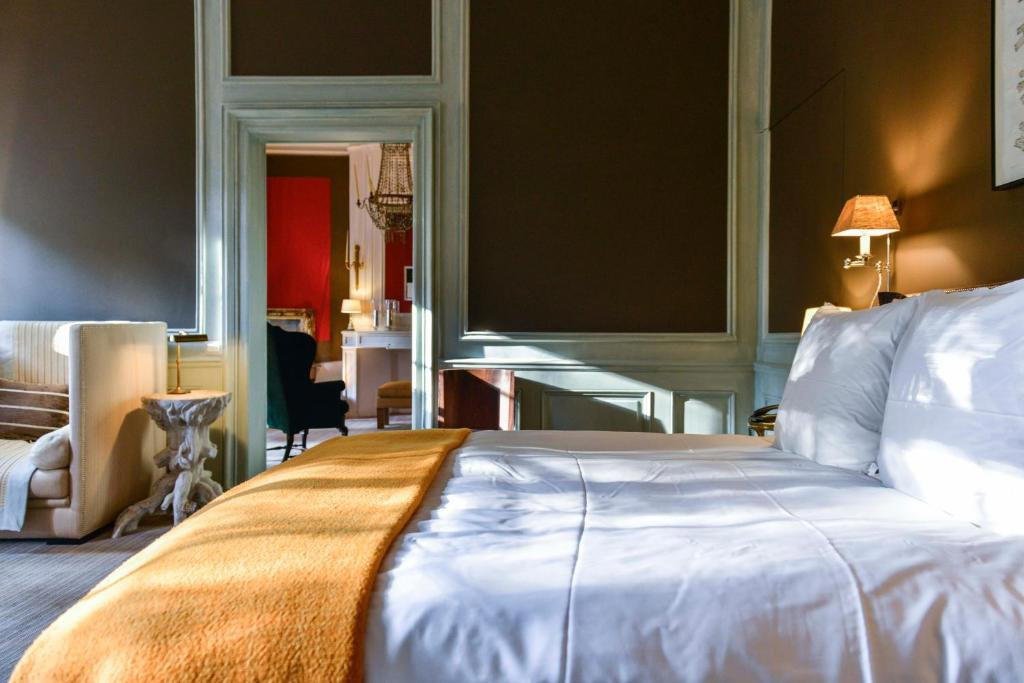
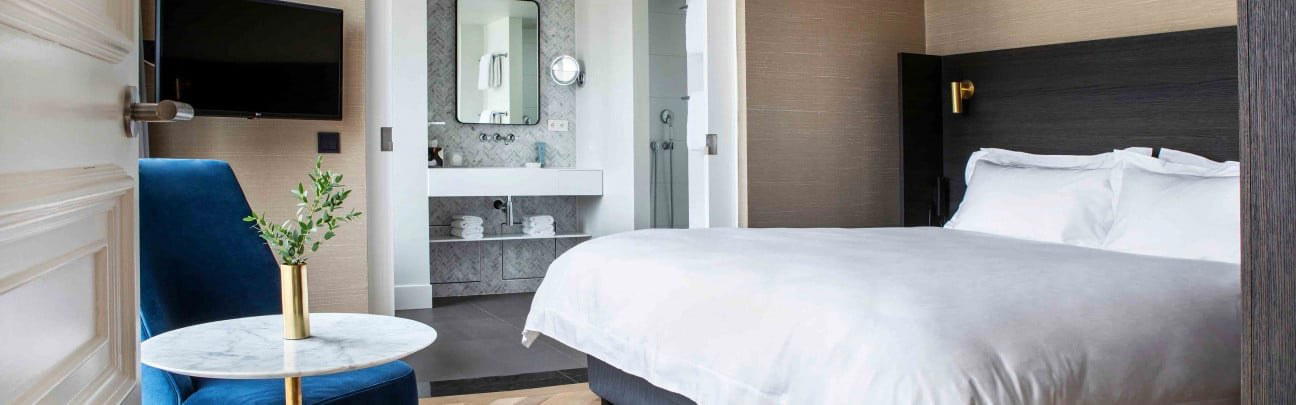
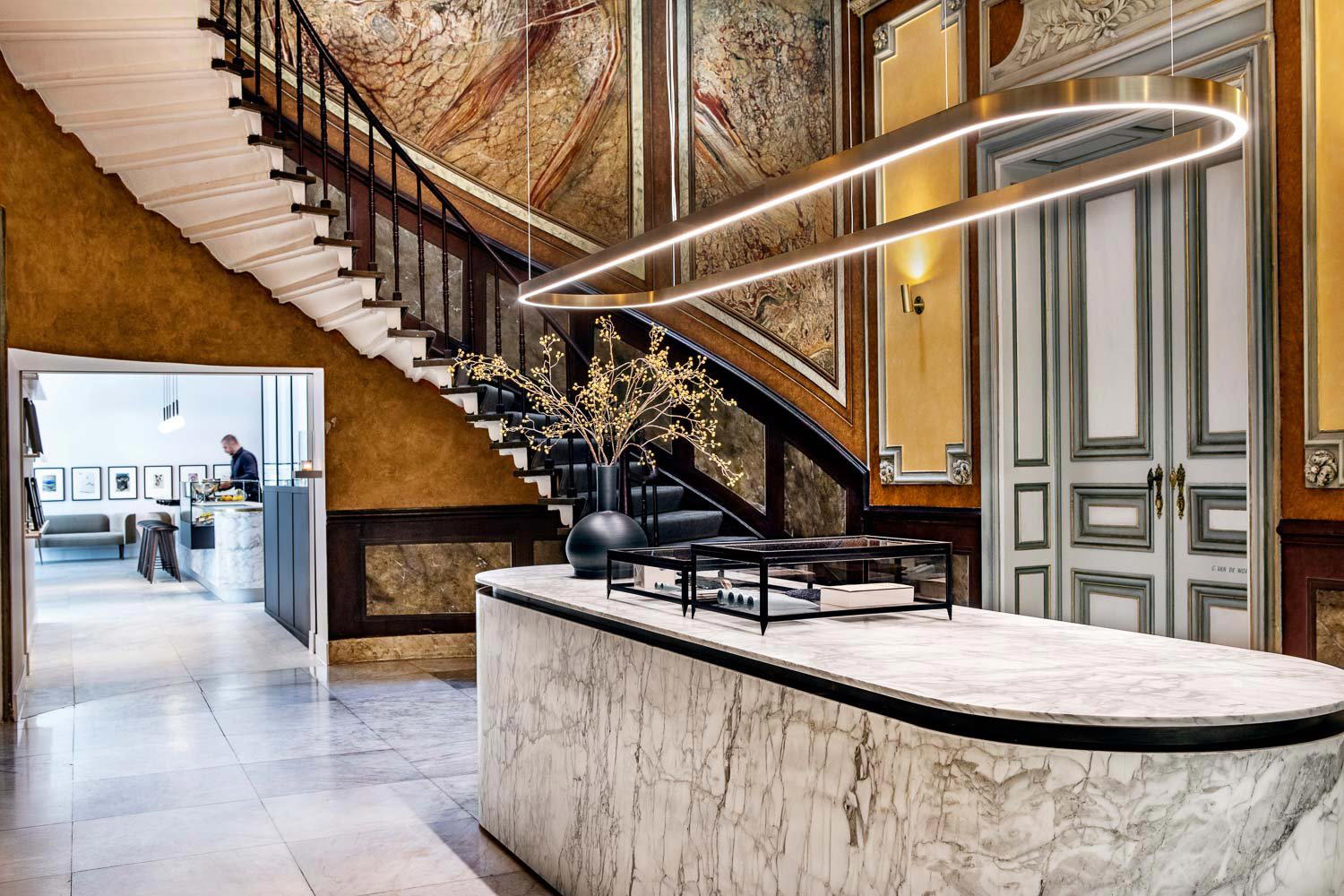
The renovation does not attempt a uniform period reconstruction, and that decision is the property's most interesting design choice. Public areas lean into the medieval atmosphere that the stone walls and winding stairways generate almost without effort. Guest rooms move in a different direction: darker, more saturated in colour and texture, with a sensibility that sits closer to early modernism than Gothic revival. The result is a property with visual layers rather than a single declared aesthetic, which suits a building that has accumulated meaning across multiple eras.
The room category naming scheme adds a note of wit that the rest of the design keeps largely under wraps. Categories run from Stamp and Postcard at the entry level through Envelope, Letter, and Carriage at the upper end, a postal taxonomy applied to accommodation tiers with enough self-awareness to land as charm rather than gimmick. Across all 37 rooms, the mood reads consistently dark and deliberate, less concerned with conventional hotel brightness than with creating spaces that feel inhabited rather than staged for a photography brief.
The Cobbler and The Kitchen: How the Property Functions Day-to-Day
Two in-house spaces define the daily rhythm at 1898 The Post. The Kitchen handles breakfast and afternoon tea under a name that strips away any pretension about what it is or intends to be. The restraint in naming signals something about the property's broader service register: it is not trying to present its food and beverage operation as a destination in itself, which is a reasonable editorial position for a hotel whose building already does the heavy lifting on atmosphere.
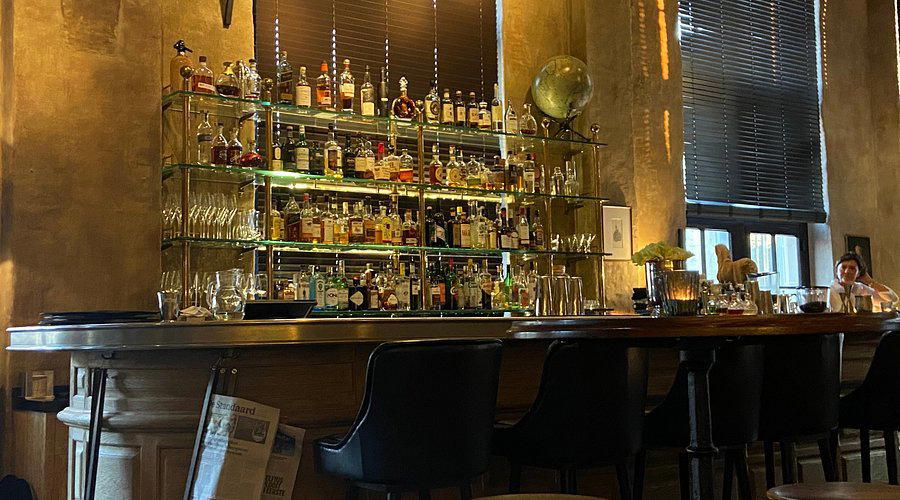
The Cobbler is the more characterful proposition. Housed in what is described as a particularly atmospheric space within the building, it functions as a cocktail bar operating under a name that manages to be both evocative and slightly absurd given its actual purpose. In Belgium's broader bar culture, where both Brussels and Antwerp have established strong cocktail identities, a well-placed hotel bar in a historic Ghent building occupies a specific niche: it serves guests who want to stay in the neighbourhood after dinner, and locals drawn by the setting as much as the drinks list. The property sits on Graslei, which means the immediate walking radius includes some of Ghent's most concentrated dining and drinking options, reducing any pressure on the hotel's own food and beverage spaces to function as complete substitutes.
Service Register and Guest Experience
Boutique properties operating at this scale, 37 rooms in a converted historic building, tend to generate a particular kind of guest interaction. The physical complexity of the building, its winding stairways and varied floor plates, means that navigating the property requires some orientation, and how staff handle that orientation tells you a great deal about the broader service culture. At properties of this type, the quality of first contact and the willingness to provide genuine local knowledge rather than laminated restaurant lists tends to correlate strongly with overall guest satisfaction. The Graslei address itself provides natural material: a hotel this close to the canal and the historic centre should, in principle, be able to offer walking context that most city maps cannot.
The room category structure, running from smaller Stamp and Postcard formats to the larger Carriage tier, creates a clear upsell logic without requiring aggressive in-stay sales. Guests who want more space book higher; those comfortable with a compact atmospheric room at the entry level get the same building and the same address for less. That kind of category transparency, where the names themselves communicate relative scale, tends to function well in boutique properties where the architectural variety between rooms is substantial anyway.
Planning a Stay: What to Know
1898 The Post sits at Graslei 16, on the canal-facing street that forms one side of Ghent's most photographed medieval waterfront. The 37-room property occupies a converted neo-Gothic post office completed around 1898, a structure that was built to impress and has not stopped doing so. Rooms are categorised by ascending scale from Stamp through to Carriage, and the upper categories in particular are worth the premium for anyone planning more than a single night, given that the building's spatial drama is best appreciated from rooms with room to appreciate it from.
The Cobbler cocktail bar and The Kitchen for breakfast and afternoon tea are both on-site. Ghent's restaurant and bar scene is dense within walking distance of Graslei, so the hotel's food and beverage offering functions as a complement to the neighbourhood rather than a replacement for it.
Hotel Julien in Antwerp, which operates a similar design-led model in a different architectural shell, or Boutiquehotel 't Fraeyhuis in Bruges for the Flemish city that most directly competes with Ghent for this category of visitor. In Brussels, options across different tiers range from Hotel Agora Brussels Grand Place to Le Louise Hotel Brussels and the grand-scale Corinthia Grand Hotel Astoria Brussels. For those whose Belgium visit sits within a wider European itinerary, reference points in the upper luxury tier include Cheval Blanc Paris, Aman Venice, and Castello di Reschio in Lisciano Niccone, each of
Style and Standing
Comparable venues nearby, for context on price, style, and recognition.
| Venue | Cuisine | Price | Awards | Notes |
|---|---|---|---|---|
| 1898 The PostThis venue — the venue you are viewing | Neo-Gothic heritage boutique | $$$$ | Michelin 1 Key | Not listed |
| Pillows Grand Boutique Hotel Reylof Ghent | Historic boutique mansion with contemporary updates | $$$$ | Michelin 1 Key | Elisabethbegijnhof - Prinsenhof - Papegaai - Sint-Michiels |
| Yalo Urban Boutique Hotel Gent | Urban boutique with retro-chic design | $$$ | 4-Star | Binnenstad |
| Hotel Harmony | Intimate atmospheric hotel in restored historic town mansions. | $$$ | 4-Star | Binnenstad |
| Ghent Marriott Hotel | Contemporary luxury in historic setting | $$$ | 4-Star | Elisabethbegijnhof - Prinsenhof - Papegaai - Sint-Michiels |
| Ganda Rooms & Suites | Historic townhouse with contemporary boutique charm | $$ | 3-Star | Binnenstad |
Recognition history
Dated appearances from independent guides and award organizations, with the underlying list record or original source where available.
Mr & Mrs Smith Smith Seal of Approval
Mr & Mrs Smith
Michelin 1 Key
Michelin


At a Glance
- Romantic
- Elegant
- Historic
- Cozy
- Sophisticated
- Romantic Getaway
- Anniversary
- Weekend Escape
- Historic Building
- Terrace
- Panoramic View
- Wi Fi
- Garden
- Bar
- Room Service
- Concierge
- Laundry Service
- Fitness Center
- Waterfront
- Street Scene
- Wi Fi
- Garden
- Bar
- Room Service
- Concierge
- Laundry Service
- Fitness Center
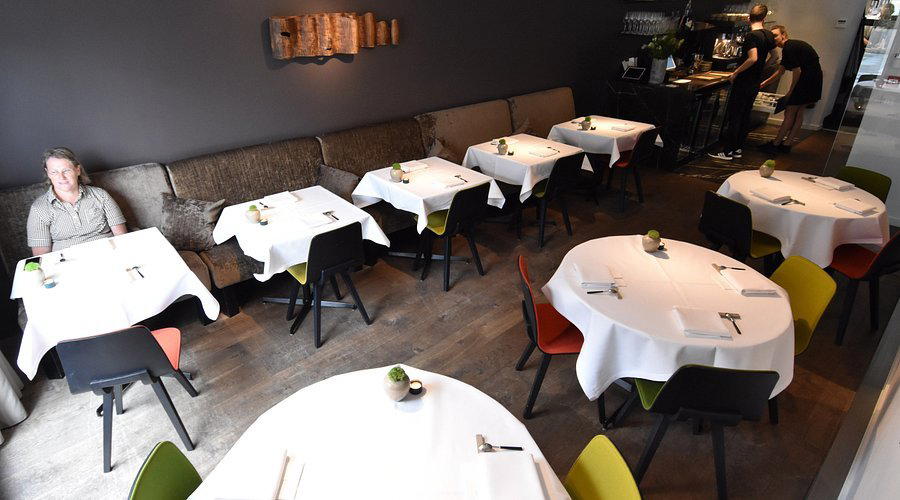
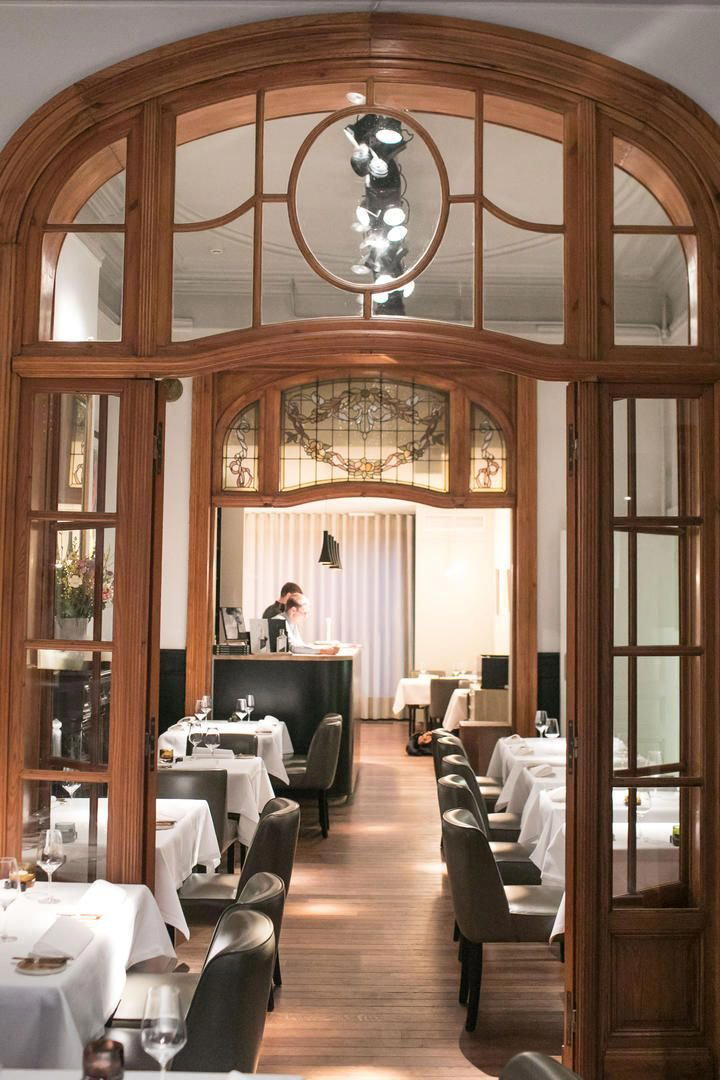
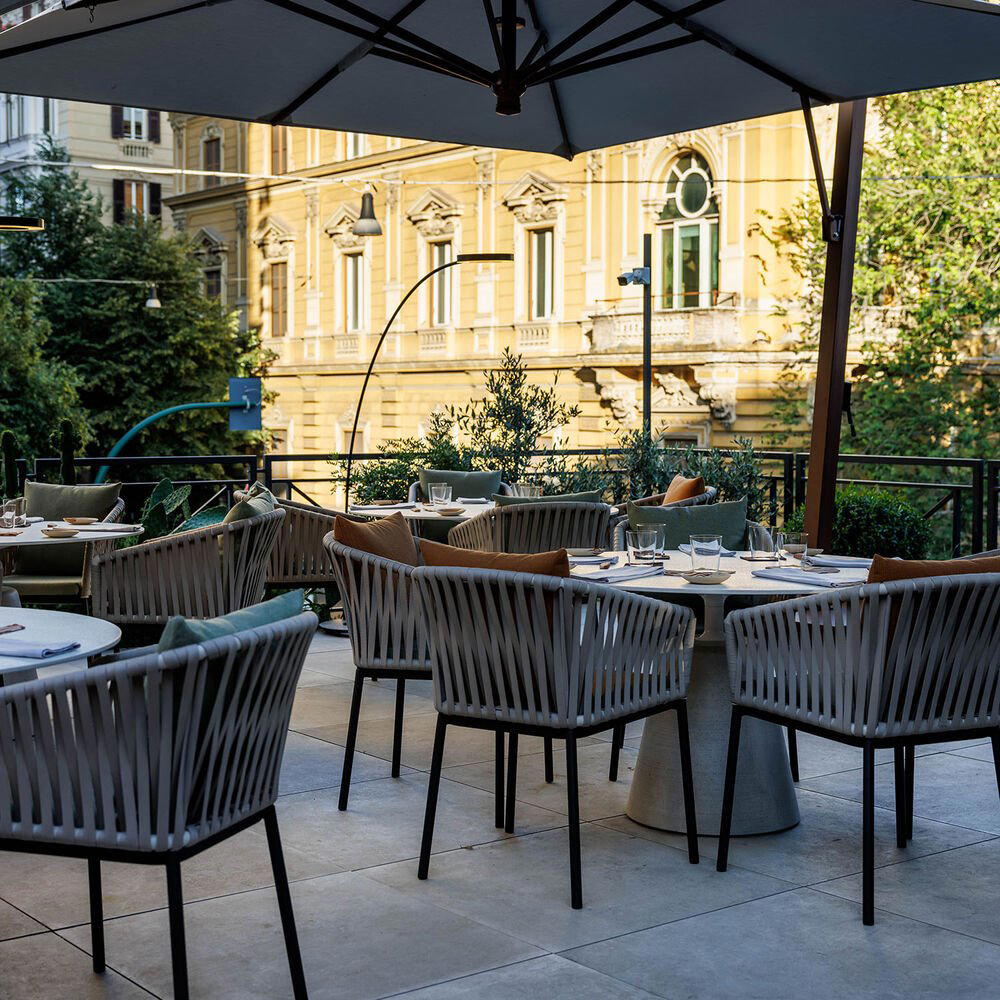
Cozy atmosphere with indirect lighting, dark earth tones, restored wood, and a romantic historic feel enhanced by modern luxury touches.