
Tokyo’s curry culture has a serious low-cost tier, and Gin Cock sits in the Kanda-Awajicho pocket where office lunch, counter dining, and Indian curry technique overlap. Its Tabelog Curry TOKYO 100 selection in 2024, following selections in 2023 and 2022, places it among the city’s more closely watched curry addresses rather than casual background noise.
Pearl is the En Primeur Club membership app — saves, bookings, and concierge access live there. Same editors, same standards.
- Address
- 東京都千代田区神田須田町1-2-3 山勝ビル 1F
- Phone
- +81332511795
- Website
- tabelog.com
 Saves & bookings on Pearl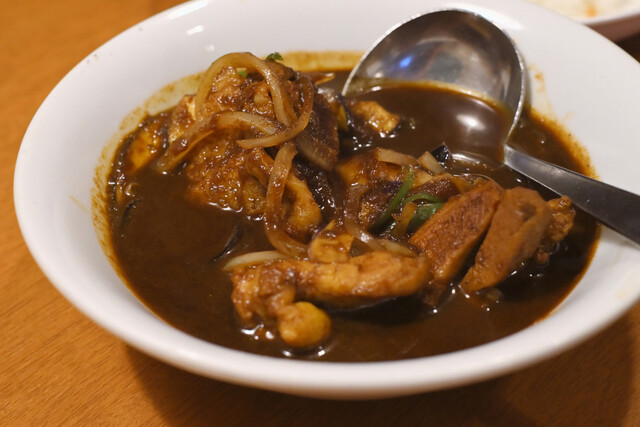
Approaching a small curry room in Kanda Sudacho is a different Tokyo ritual from walking into a hotel dining room or a Ginza counter. The scale is tighter, the pace is set by lunch rather than ceremony, and the room has to work hard: counter seats, table turnover, and a menu category that Tokyo diners judge with unusual precision. Gin Cock belongs to that compact urban format, where imported curry technique is folded into the rhythms of a Japanese weekday meal.
Kanda curry culture runs on compression, not spectacle
Tokyo curry is often discussed too broadly, as if it were a single comfort-food lane. In practice, the city’s serious curry scene splits into distinct schools: Japanese yoshoku-style curry, spice-driven South Asian cooking, soup curry, and hybrid counters that borrow technique across borders without turning the meal into a lecture. Kanda and nearby Awajicho have long suited that last category. The district has dense office traffic, older commercial streets, and enough specialist lunch rooms to reward diners who read small differences in sauce texture, spice structure, rice handling, and service tempo.
Gin Cock is categorized as curry and Indian curry, a pairing that matters in Tokyo. It signals a kitchen working inside the city’s everyday curry economy while drawing from imported spice logic rather than relying only on Japanese curry-house nostalgia. The point is not fusion as a slogan. It is the way Tokyo absorbs outside methods, reduces them to a fast, affordable format, and asks whether the result can survive repeat weekday eating.
Recognition sharpens that context. Selection for Tabelog Curry TOKYO 100 in 2024, with prior selections in 2023 and 2022, places the restaurant inside a competitive curry conversation that is broader than tourist dining and more granular than general restaurant rankings. In the same neighbourhood orbit, Topca Kanda honten occupies a similar low-price curry bracket, while Tonkatsu Yamaichi and THE GRABBER hamburger pub show how Kanda’s casual dining set can range from specialist Japanese frying to pub-style comfort food without leaving the everyday spend tier. That comparison is useful: curry here is not a fallback meal. It competes with other tightly focused lunch formats for repeat local attention.
The room tells you how to use it
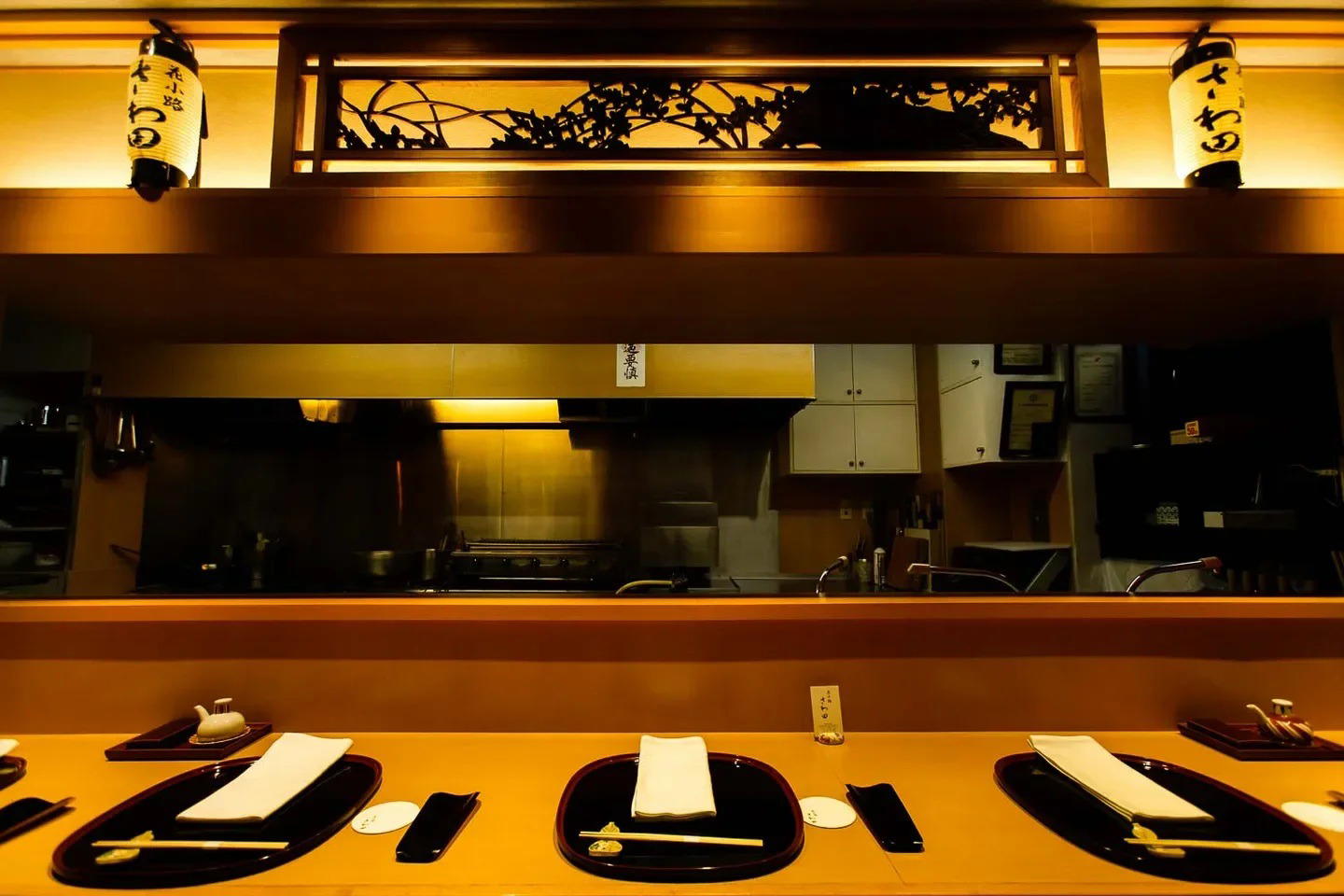
Small Tokyo restaurants often reveal their editorial position through seating before a plate arrives. A 15-seat layout, with seven counter seats and two four-seat tables, puts Gin Cock in the category of restaurants built for short decisions and solo meals as much as small groups. Counter seating changes the energy of curry: it makes the meal feel closer to a specialist workshop than a lingering dining room, and it suits dishes that depend on timing, heat, and quick service rather than tableside explanation.
The no-smoking policy also places the room in a more contemporary Tokyo lunch register. Older curry and coffee spaces around central Tokyo have not always separated food from smoke, but the current expectation among office diners and younger regulars is cleaner and more functional. That shift matters in curry because aroma is the category’s central currency. A room shaped around counter seating and no smoking keeps the focus on spice, steam, and pace without turning the experience into a formal tasting format.
There is a practical intelligence to choosing this kind of restaurant in Tokyo. The city’s famous meals often demand advance planning, but its strongest everyday dining can be found in compact specialist rooms near transit nodes. The restaurant sits near Awajicho, Ogawamachi, and Kanda, which means it fits naturally into a Chiyoda day rather than requiring a dedicated evening plan. For readers mapping a broader Tokyo itinerary, the nearby dining field can be extended through . 鮪と炭火焼き うお炭 秋葉原店, 12/10 Shinjuku ten, 124. KAGURAZAKA (Yakitori), 2D Cafe, and 3 Chome no Curry Ya San.
Why this matters beyond one curry counter
The larger story is Tokyo’s ability to treat global technique as local infrastructure. Indian curry methods, Japanese lunch discipline, and Kanda’s compact commercial geography meet in a format that is neither a destination tasting room nor a generic chain meal. That is where much of Tokyo’s food intelligence lives: in restaurants that keep prices accessible, focus their category, and earn recognition from diners who eat comparatively.
The restaurant’s appeal is strongest for travellers who want Tokyo’s dining culture without the theatre attached to luxury reservations. The evidence is concrete rather than decorative: repeated Tabelog Curry 100 selection, a narrow curry identity, a small room, counter seating, and a location in one of central Tokyo’s stronger everyday eating zones. Those signals describe a restaurant that should be read through category discipline. It is not trying to be a grand night out; it belongs to the city’s more exacting culture of specialist meals that fit into the working day.
Use it as a reference point for how Tokyo ranks casual food seriousness. The same itinerary can then widen into Our full Tokyo restaurants guide, Our full Tokyo hotels guide, Our full Tokyo bars guide, Our full Tokyo wineries guide, and Our full Tokyo experiences guide. For a wider Japan and diaspora food map, compare the format against -Grilled beef Sukiyaki- KAMAKURA TANUKIAN 鎌倉 たぬき庵 in Kamakura.cafe in Osaka.know in Kumamoto, (Shoku) Vietnam in Kawasaki, [Curry Senmon Ten] Maruyama Kyoju. in Sapporo, [ki:] in Kyoto, Jōdo Saké Bar in Los Angeles, and Onigiri Time in Pasadena.
The Short List
Comparable venues side-by-side for orientation.
| Venue | Cuisine | Price | Notes |
|---|---|---|---|
| Gin CockThis venue — the venue you are viewing | Chiyoda, Indian-style curry house | $ | Not listed |
| Tokyo Bombay Ebisu honten | Shibuya, Indian Curry House | $ | Not listed |
| Tandoor Bar Kamal 2 Go | Not listed | $$ | Kōtō, Creative Indian curry & tandoor bar |
| Ooiwa Shokudo | Not listed | $$ | Suginami, South Indian curry & Sri Lankan-style spice dishes |
| Andhra Dhaba Katana | Chiyoda, Authentic Andhra Indian | $$ | Not listed |
| Rahi Punjabi Kitchen | Not listed | $$ | Suginami, Traditional Pakistani & North Indian Curry House |
Recognition history
Dated appearances from independent guides and award organizations, with the underlying list record or original source where available.
Tabelog 100 #79 · No. 79
Tabelog · Tabelog 100 - Curry - TOKYO - 2024






At a Glance
- Cozy
- Intimate
- Solo
- Casual Hangout
- After Work
- Standalone
A compact, counter-focused curry shop with simple interiors and closely spaced seats, creating a casual, efficient atmosphere that is busiest at weekday lunchtime and suited to solo or quick friend meetups rather than lingering meals.