Gilda by Belgious occupies a Ciutat Vella address on Carrer Ample, placing it within reach of Barcelona's most historically layered dining neighbourhood. The name references one of the Basque Country's most enduring pintxos, a signal of where the kitchen's loyalties lie. For visitors working through Barcelona's broader creative dining scene, it sits in a different register than the city's tasting-menu flagships.
Pearl is the En Primeur Club membership app — saves, bookings, and concierge access live there. Same editors, same standards.
- Address
- Carrer Ample, 34-38, Ciutat Vella, 08002 Barcelona, Spain
- Phone
- +34933103492
- Website
- gildabybelgious.com
- Directions
- Get directions
 Saves & bookings on Pearl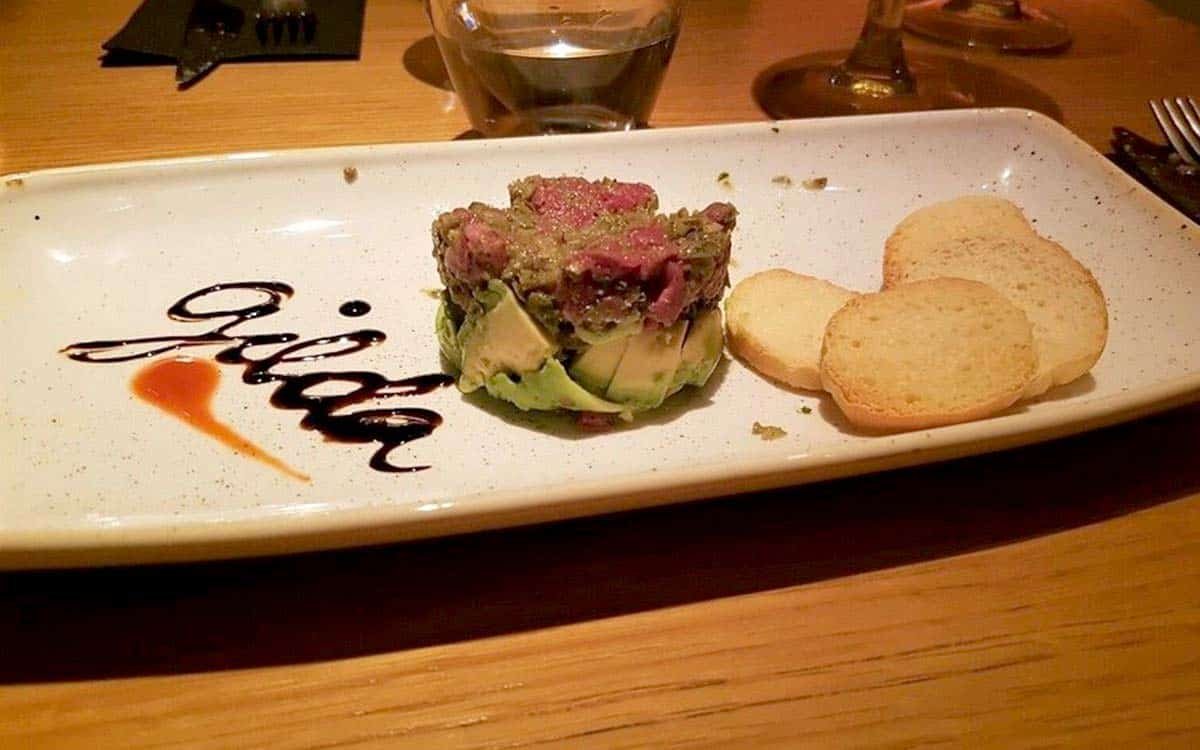
Carrer Ample and the Weight of the Old City
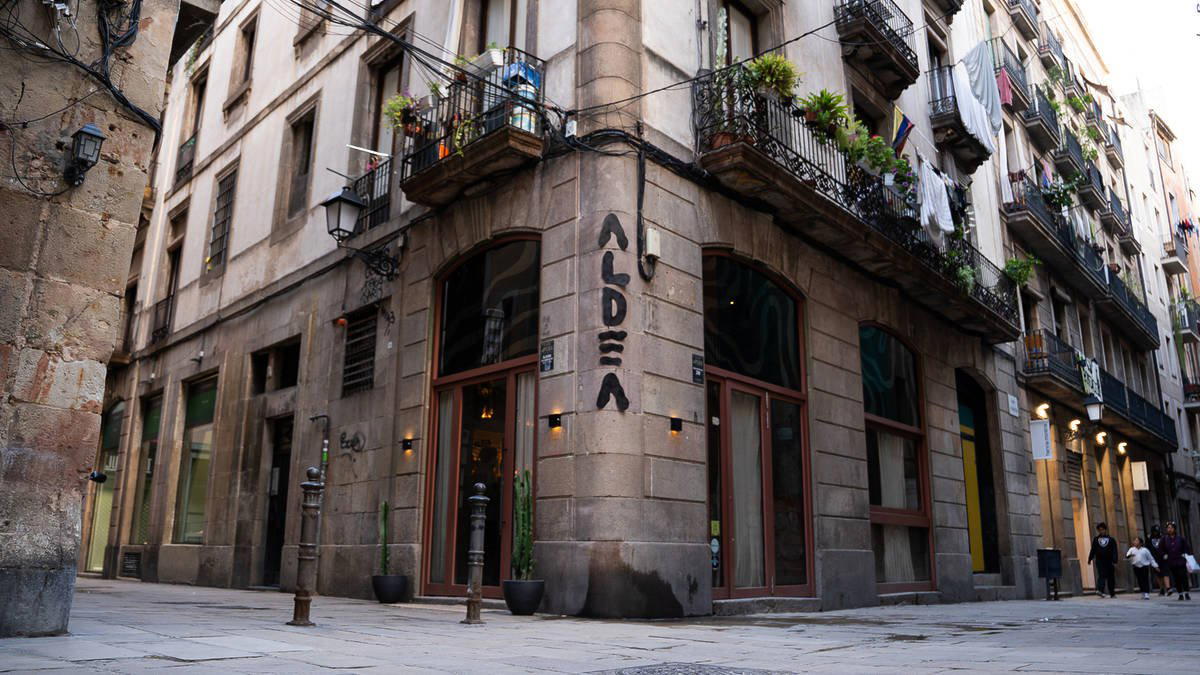
Gilda by Belgious is a restaurant in Barcelona's Ciutat Vella serving Mediterranean-Belgian Fusion Tapas and priced around $35 per person. Carrer Ample runs parallel to the waterfront in the Gothic Quarter, a street that has cycled through merchants, residences, and restaurants across centuries without ever quite losing its compressed, stone-corridor character. Arriving here at dusk, with the ambient noise of the Barri Gòtic filtering in from adjacent lanes, already tells you something about the register of the meal ahead: this is not the sleek, purpose-built dining room of Barcelona's northern creative tier, but something older in its bones.
The name Gilda anchors the venue to a specific culinary tradition. The gilda, the pintxo of guindilla pepper, olive, and anchovy skewered together, is especially discussed single item in Basque bar culture, a preparation that has remained almost unchanged since it emerged in San Sebastián in the 1940s. That the name appears here, in a Belgian-backed concept in the Gothic Quarter, is itself a positioning statement about where the kitchen draws its reference points. The Basque-meets-Belgian framing (Belgious is the Belgian connection embedded in the name) places this venue in a small but growing category of Barcelona restaurants that build their identity around cross-cultural precision rather than Catalan or Spanish tradition alone.
Evolution and Reinvention in a Competitive City
Barcelona's restaurant scene has shifted considerably over the past decade. The city built its international reputation on the back of radical creativity, the kind that produces venues like Disfrutar, Enigma, and Cocina Hermanos Torres, but the mid-tier has also evolved in response. Where a decade ago the conversation centred almost entirely on Catalan identity or the legacy of elBulli's graduates, the current moment is more pluralistic. Concepts that synthesise European craft traditions with Iberian produce have found a viable position, and the appetite for informal precision, serious food in rooms that don't require a dress rehearsal, has grown substantially.
Gilda by Belgious sits in that evolving middle register. The Belgian connection brings a particular sensibility: Belgium has produced some of Europe's more technically demanding kitchen cultures, and the integration of that rigour with Basque pintxo culture as a conceptual anchor is a layered bet. It is not the approach of a venue trying to disrupt Barcelona's creative tier, places like ABaC or Lasarte operate in a different bracket entirely, but rather a concept that has found a specific niche by taking a beloved Basque preparation as its emblematic starting point and building outward from it.
This kind of positioning is not distinctive to Barcelona. Across Spain's creative dining scene, venues have increasingly used a single strong culinary idea as an anchor rather than a broad menu proposition. Aponiente in El Puerto de Santa María built its identity around marine products beyond the conventional. Ricard Camarena in València has anchored his work in the produce and broths of the Valencian interior. The single-idea restaurant, executed with depth, is a credible model.
What the Gilda Reference Signals
The gilda as a conceptual reference does more than name a dish. In Basque bar culture, the pintxo occupies a specific social and culinary role: it is something consumed standing, in conversation, as part of an extended social ritual that moves from bar to bar across an evening. The precision of the preparation matters, the quality of the anchovy, the heat of the guindilla, the fat of the olive, but it is never separated from its social function. Venues that invoke this tradition carry an implicit promise about hospitality register: that technique exists in service of pleasure rather than the other way around.
That framing places Gilda by Belgious in a different competitive conversation than the tasting-menu houses of the Eixample. For context, El Celler de Can Roca in Girona or Mugaritz in Errenteria represent one pole of Spanish fine dining, cerebral, structured, lengthy. The Basque pintxo tradition represents something closer to the other pole, where the leading single bite is the point and the atmosphere of the bar is inseparable from what you're eating. A Barcelona concept that takes the latter as its anchor is making a deliberate choice about what kind of experience it wants to deliver.
How It Fits the Neighbourhood
The Ciutat Vella address is worth noting for practical and contextual reasons. This is one of Barcelona's most visited districts, which means footfall is high but return custom among serious diners is harder to earn. Restaurants in the Gothic Quarter and El Born have historically faced a tension between tourist volume and local credibility. The venues that have built lasting reputations here, and the list is shorter than in the Eixample or Gràcia, have done so by offering something specific enough that it is sought out rather than stumbled upon. A Basque-Belgian pintxo concept with a clear culinary reference point is better positioned for that kind of deliberate discovery than a generalist menu.
For visitors building a broader Barcelona itinerary that extends into Spain's wider creative scene, the context is useful: Quique Dacosta in Dénia, Arzak in San Sebastián, Azurmendi in Larrabetzu, Martin Berasategui in Lasarte-Oria, and DiverXO in Madrid each represent the kind of flagship commitment that requires dedicated travel. The restaurant is a different proposition, a neighbourhood-scale concept with a specific cultural reference, and should be evaluated accordingly. Internationally, comparisons to the precision-casual format are visible at venues like Lazy Bear in San Francisco or the seafood rigour of Le Bernardin in New York City, though the register and price tier differ considerably.
Cuisine Context
Comparable venues nearby, for context on price, style, and recognition.
| Venue | Cuisine | Price | Notes |
|---|---|---|---|
| Gilda by BelgiousThis venue — the venue you are viewing | Mediterranean-Belgian Fusion Tapas | $$$ | Not listed |
| Restaurant Brisa | Mediterranean Seafood & Tapas | $$$ | la Barceloneta |
| Público | Modern Mediterranean Market Grill | $$$ | l'Antiga Esquerra de l'Eixample |
| Petit Hipica | Rustic Catalan Grill | $$$ | el Poble Sec |
| Restaurant Babou | Modern Mediterranean with Italian influences | $$$ | la Dreta de l'Eixample |
| GUZZO | Modern Mediterranean Tapas | $$$ | Sant Pere, Santa Caterina i la Ribera |
Continue exploring
More in Barcelona
Restaurants in Barcelona
Browse all →
Bars in Barcelona
Browse all →
Hotels in Barcelona
Browse all →
At a Glance
- Cozy
- Intimate
- Trendy
- Date Night
- Casual Hangout
- Open Kitchen
- Craft Cocktails
Current opening hours
- Monday
- 6 PM–1 AM
- Tuesday
- 6 PM–1 AM
- Wednesday
- 6 PM–1 AM
- Thursday
- 6 PM–1 AM
- Friday
- 6 PM–1 AM
- Saturday
- 1 PM–1 AM
- Sunday
- 1 PM–1 AM
Hours can change for holidays and private events. Last verified .
Cozy and welcoming atmosphere in the heart of the Gothic Quarter, feeling like dining at a friend's home with friendly service.