Giano
Giano occupies a narrow East Village address on East 7th Street, sitting in a neighbourhood where Italian-inflected dining rooms compete against a dense field of ambitious independents. The room's physical character positions it closer to the design-conscious, low-key tier of New York dining than to the Midtown formal circuit anchored by venues like Le Bernardin or Per Se.
Pearl is the En Primeur Club membership app — saves, bookings, and concierge access live there. Same editors, same standards.
- Address
- 126 E 7th St, New York, NY 10009
- Phone
- +12126737200
- Website
- gianonyc.com
- Directions
- Get directions
 Saves & bookings on Pearl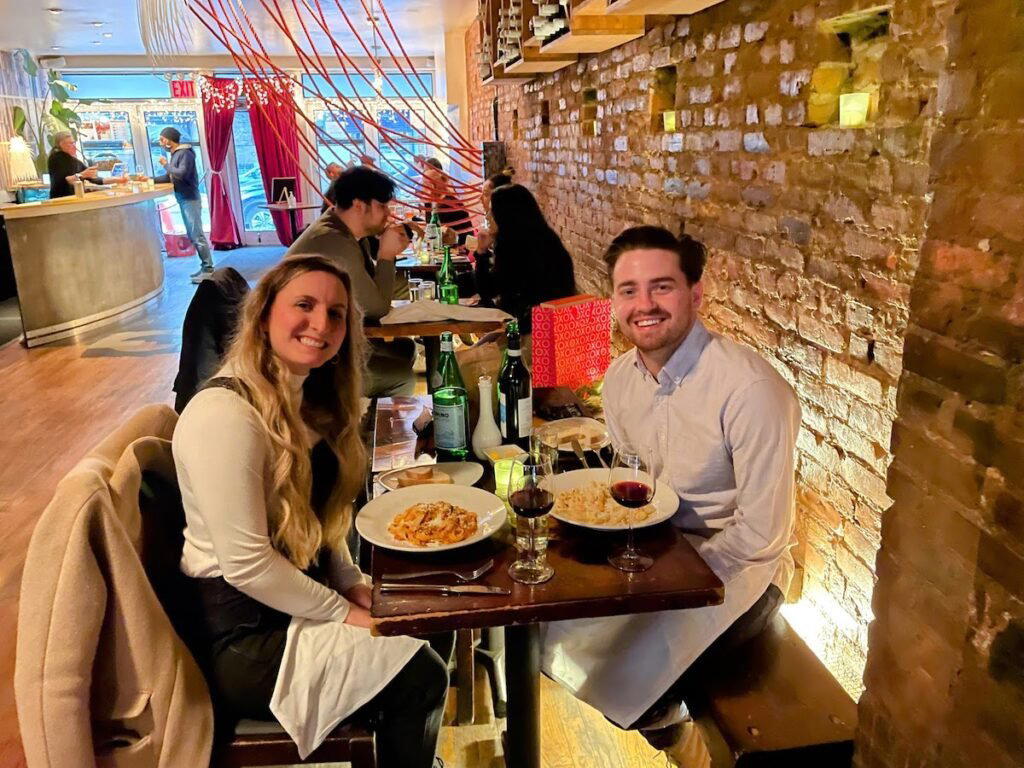
East Village, Italian Roots, and the Architecture of a Neighbourhood Room
East 7th Street between Avenues A and B is not where New York's formal dining establishment plants its flags. The blocks around Tompkins Square Park have historically absorbed the city's more restless, independent dining energy, the kind that doesn't require a Midtown address or a hotel lobby to validate itself. Giano, at 126 East 7th Street, sits inside that tradition: a neighbourhood room in a neighbourhood that has always preferred substance to spectacle.
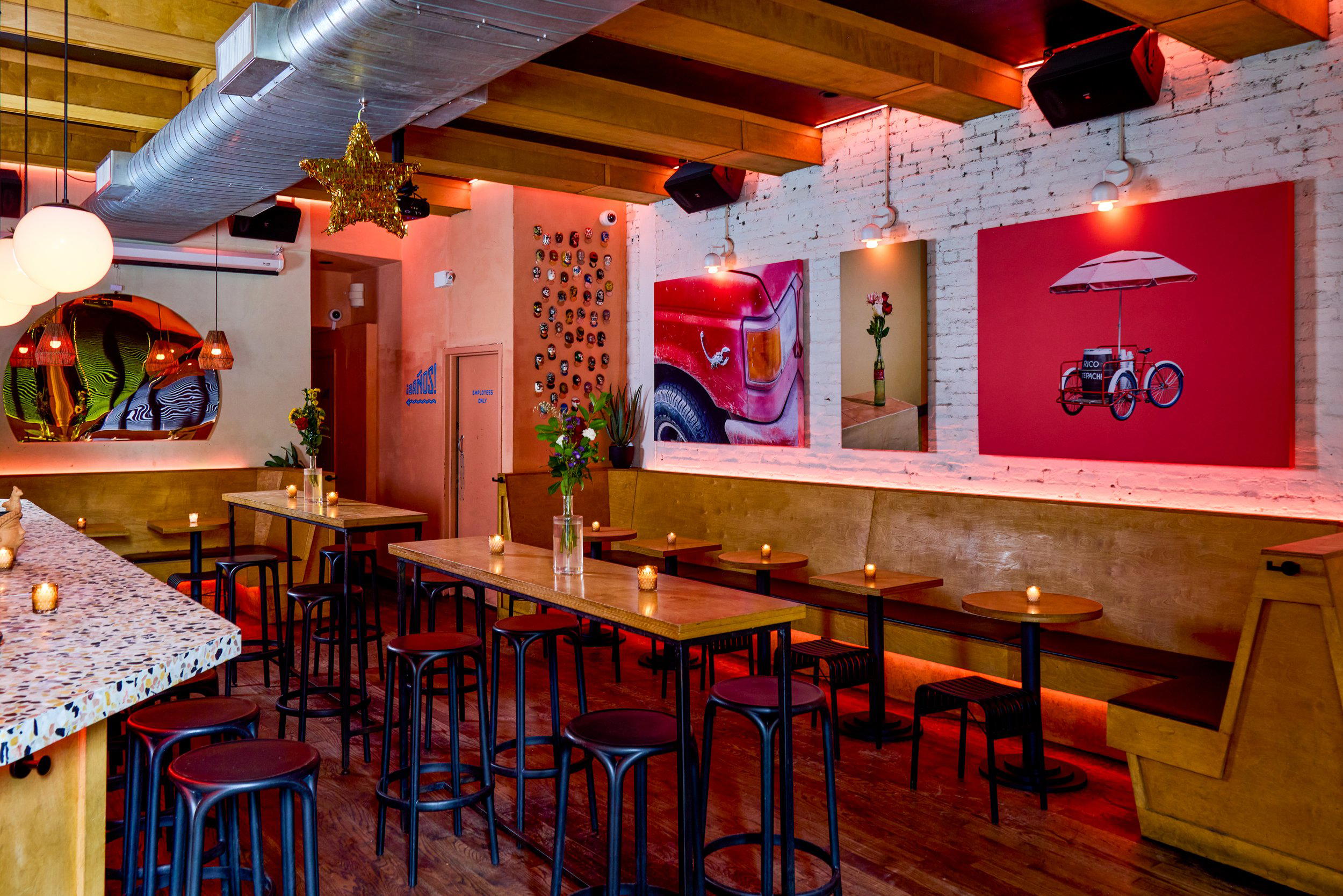
The distinction matters because it shapes how you read the space before a single plate arrives. New York's dining rooms broadly divide into two registers: those designed to announce themselves, and those designed to recede. The former category includes the formal Midtown tier, where venues like Le Bernardin, Per Se, and Eleven Madison Park use scale, height, and considered distance between tables to signal occasion. The latter category, where Giano operates, uses compression and material texture to create intimacy rather than grandeur. Neither approach is more serious than the other; they serve different social contracts between room and diner.
The Physical Container: Space as Editorial Statement
East Village Italian restaurants have a particular spatial grammar that developed partly out of necessity and partly out of character. The ground-floor footprints on these streets are narrow by Manhattan standards, which pushes designers and operators toward verticality, layered materials, and the kind of deliberate lighting that turns constraint into atmosphere. Where a Midtown room might use square footage to create breathing room between tables, a well-executed East Village room uses proximity to create a specific kind of social warmth.
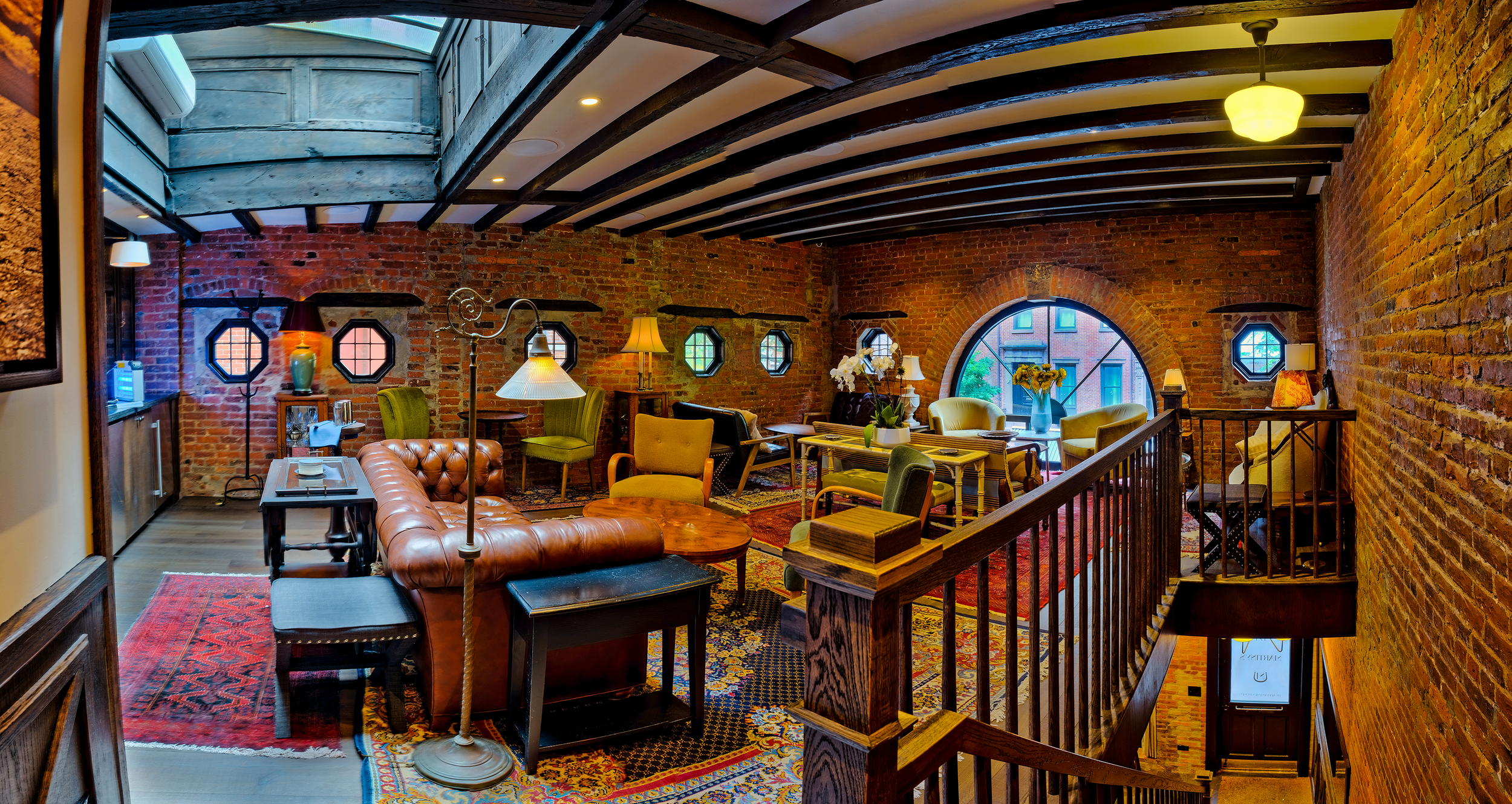
This spatial logic places Giano in a competitive set that has less to do with its price point or cuisine category and more to do with the physical register it inhabits. Across American cities, particularly compelling neighbourhood Italian rooms tend to share certain formal qualities: exposed brick or plaster walls that absorb rather than reflect light, wooden surfaces that warm acoustically, and a bar presence that anchors the room rather than existing as an afterthought. Smyth in Chicago occupies a structurally different category, but illustrates how a considered interior can carry a room's identity as meaningfully as its menu. Similarly, Frasca Food and Wine in Boulder demonstrates how Italian-inflected dining rooms can build a coherent sense of place through design choices that reinforce rather than contradict the cuisine's regional character.
The East Village Dining Scene: Context Over Category
What survived that negotiation is a block-by-block mix of longstanding independents, newer ambitious kitchens, and the kind of casual Italian room that the East Village has always done well. The area does not produce the kind of formal tasting-menu dining that Atomix or Masa represent in other parts of the city. What it produces instead is a more durational dining culture, where restaurants earn loyalty through consistency and neighbourhood fit rather than through award cycles.
That dynamic shapes the competitive set for a room like Giano more than any cuisine comparison would. The relevant peer group is not the Midtown four-star circuit but the cluster of East Village and Lower East Side Italian rooms that have built genuine neighbourhood presence over time. In this context, the room's design and its ability to function across different occasions, a Tuesday dinner for two versus a full table on a Friday, matters as much as any single dish.
Italian Dining in New York: The Regional Reference Points
Italian cooking in New York has never operated as a monolith. The city's Italian restaurant culture spans from the red-sauce institutions of the outer boroughs to the northern Italian formalism that influenced a generation of American fine dining, to the more recent wave of regional specificity, rooms that commit to a particular Italian region's grammar rather than a composite Italian-American idiom. Giano's address and neighbourhood character place it in the latter wave's orbit.
What the East Village Italian room tradition does reliably well is pasta. The neighbourhood has historically drawn kitchen talent that treats housemade pasta as a baseline rather than a distinction. This is worth noting because pasta quality in New York's Italian rooms varies more than price point alone would predict. Particularly technically careful pasta work in the city happens in rooms where a main course clears thirty dollars rather than fifty. The regional Italian rooms that have aged leading across American cities share this characteristic: they treat the fundamentals of the cuisine with the same seriousness that a tasting-menu kitchen brings to its centerpiece dishes.
Comparable commitments to Italian regional cooking appear in differently scaled contexts across the country. Single Thread Farm in Healdsburg applies a comparable precision to local-ingredient sourcing that Italian regional cooking demands at its most rigorous. Atelier Moessmer Norbert Niederkofler in Brunico and Dal Pescatore in Runate represent the Italian source tradition that American regional Italian rooms draw from, knowingly or not.
Planning Your Visit
Giano is located at 126 East 7th Street in the East Village, accessible from the L train at First Avenue or the 6 train at Astor Place. The East Village dining corridor on and around 7th Street is walkable and dense, making it practical to arrive early and take stock of the neighbourhood before sitting down. East Village restaurants across this price tier tend to fill quickly on weekends, and the more compact rooms in particular absorb their capacity faster than the numbers alone suggest. Booking ahead is the reliable approach for Friday and Saturday evenings; midweek visits tend to offer more flexibility and often a quieter room.
Comparable neighbourhood-rooted dining at different scales across the country includes Lazy Bear in San Francisco, Providence in Los Angeles, Emeril's in New Orleans, Addison in San Diego, Blue Hill at Stone Barns in Tarrytown, and The French Laundry in Napa each illustrate how a room's physical and neighbourhood identity shapes the dining experience before the menu is even read. The Inn at Little Washington offers another point of comparison for how a specific address can anchor a restaurant's entire identity over time.
A Lean Comparison
Comparable venues nearby, for context on price, style, and recognition.
| Venue | Cuisine | Price | Notes |
|---|---|---|---|
| GianoThis venue — the venue you are viewing | East Village, Modern Italian Trattoria | $$ | Not listed |
| Lil' Frankie's | East Village, Neapolitan Pizza and Pasta | $$ | Not listed |
| Fiat Cafe | Not listed | $$ | SoHo-Little Italy-Hudson Square, Authentic Italian Cafe |
| Arturo's | Not listed | $$ | Greenwich Village, Classic Italian Coal-Oven Pizza |
| Don Giovanni Ristorante | Not listed | $$ | Hell's Kitchen, Traditional Neapolitan Pizza |
| BarDough | Not listed | $$ | Hell's Kitchen, Brick Oven Pizza & Craft Cocktails |
Continue exploring
More in New York City
Restaurants in New York City
Browse all →
Bars in New York City
Browse all →
Hotels in New York City
Browse all →




At a Glance
- Cozy
- Rustic
- Modern
- Romantic
- Intimate
- Date Night
- Group Dining
- Special Occasion
- Casual Hangout
- Garden
- Standalone
- Extensive Wine List
- Local Sourcing
- Organic
Current opening hours
- Monday
- Closed
- Tuesday
- 5–10 PM
- Wednesday
- 5–10 PM
- Thursday
- 5–10 PM
- Friday
- 5–10 PM
- Saturday
- 5–10 PM
- Sunday
- 5–10 PM
Hours can change for holidays and private events. Last verified .
Rustic and modern blend with a traditional Italian feel at the back and contemporary design in front; warm, inviting atmosphere with table service.