Gargiulo's
A Coney Island institution since 1907, Gargiulo's occupies a specific place in Brooklyn's Italian-American dining history that few restaurants in New York can match. Located at 2911 W 15th St, the restaurant has operated across multiple generations, making it one of the borough's longest-running Italian dining rooms. For visitors seeking the cultural weight of red-sauce tradition over contemporary tasting menus, it represents a particular strand of New York eating that exists almost nowhere else at this scale.
Pearl is the En Primeur Club membership app — saves, bookings, and concierge access live there. Same editors, same standards.
- Address
- 2911 W 15th St, Brooklyn, NY 11224
- Phone
- +17182664891
- Website
- gargiulos.com
- Directions
- Get directions
 Saves & bookings on Pearl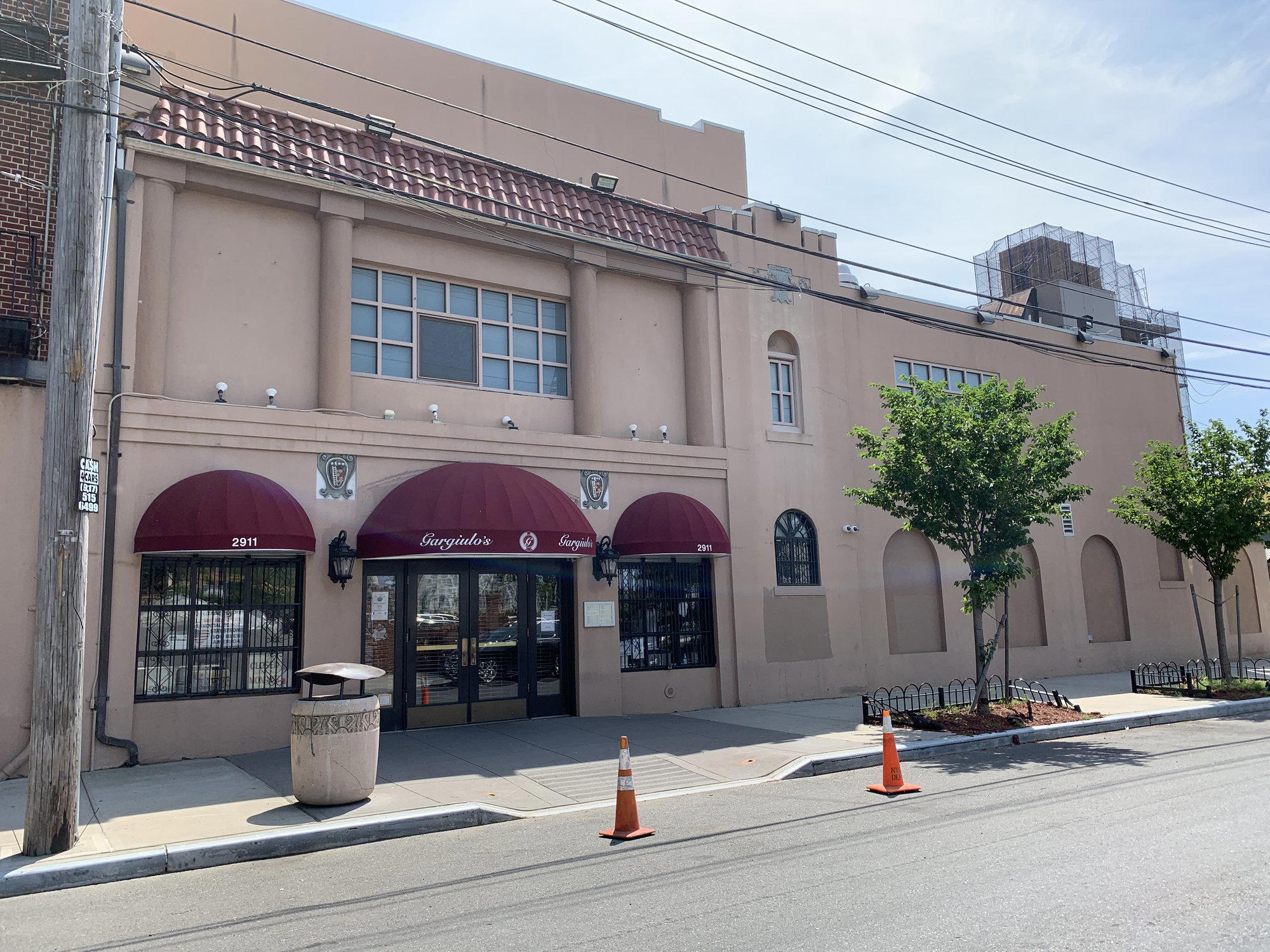
Coney Island's Italian Table: A Century of Red-Sauce Brooklyn
New York's Italian-American dining tradition runs deeper than any single neighborhood, but Coney Island holds a specific chapter that Manhattan largely erased. When the city's fine-dining conversation moved toward tasting menus and modernist technique, the borough's older Italian rooms either closed, scaled down, or quietly kept doing what they had always done. Gargiulo's, operating from its address at 2911 W 15th St in Brooklyn since 1907, belongs to the third category. It is one of the last large-format Italian-American dining rooms in New York that has survived more than a century without repositioning itself as something else. With, it remains an accessible choice for group meals.
That kind of longevity places Gargiulo's in a different conversation from the high-concept Italian restaurants that now occupy the city's upper tiers. Where Le Bernardin or Eleven Madison Park represent the formalized, award-tracked end of New York dining, Gargiulo's represents something older and more sociological: the neighborhood banquet hall that became a civic institution, where multiple generations of the same families have marked their occasions across the same tables.
What Red-Sauce Tradition Actually Means at This Scale
The phrase "red-sauce Italian" has been both celebrated and condescended to, often by people who misread what it represents. Italian-American cooking, which crystallized in New York's immigrant communities from the late nineteenth century onward, was never simply a degraded version of Italian regional cuisine. It was a distinct cuisine in its own right, shaped by the ingredients available in New York markets, the cooking traditions of southern Italy, and the economic realities of immigrant households. Garlic, tomato, olive oil, and pasta built a culinary vocabulary that was honest about where it came from.
By the time Gargiulo's was already several decades old, this style of cooking had spread across the country and spawned hundreds of imitators. But few of those imitators maintained the format of the large, occasion-oriented dining room, where the food is secondary only to the social function of the meal itself. That format is what the restaurant has preserved, and it is worth understanding as a cultural artifact rather than simply a restaurant category.
For comparison, Italian-American restaurants of genuine historical weight appear across American cities with Italian immigrant histories. Emeril's in New Orleans operates in a different register entirely, as does Frasca Food & Wine in Boulder, which draws on northern Italian tradition through a contemporary lens. The closest European analog for the kind of generational continuity the restaurant represents might be found in something like Dal Pescatore in Runate, a family-run Italian restaurant that has operated across generations with a similarly unwavering commitment to its own tradition.
Brooklyn as Context: Why Coney Island Specifically
Coney Island's Italian community was substantial through much of the twentieth century, concentrated in and around the neighborhoods that now include Brighton Beach and Bensonhurst. That geography explains why a restaurant of the restaurant scale took root here rather than in Manhattan's Little Italy, which was always smaller and more transient than its reputation suggested. The Brooklyn Italian-American community had the population density, the cultural cohesion, and the appetite for large-format family dining that a room of this size required to survive.
What Coney Island offers today that it could not offer in the 1950s is distance, in the sense that the neighborhood sits far enough from the city's restaurant-industry center of gravity that it has not been reshaped by the same pressures affecting Williamsburg or Carroll Gardens. The restaurants that have survived in this part of Brooklyn survived on local loyalty, not on press cycles or destination dining traffic. That makes the restaurant a genuinely different kind of New York restaurant than the ones tracked in the Michelin Guide or the 50 Best lists, which tend to cluster in Manhattan and the hipper precincts of north Brooklyn.
New York's current headline dining conversation centers on spots like Atomix, Masa, and Per Se, all of which operate at price points and with a kind of programmatic intentionality that has nothing to do with what the restaurant offers. Neither is a substitute for the other. They represent separate dining traditions serving separate social functions, and understanding that distinction is part of reading New York's restaurant scene accurately.
The Experience: Format and Function
Large Italian-American dining rooms operate on a logic that differs from tasting-menu restaurants or chef-driven neighborhood spots. The measure of success is not precision or innovation but abundance and occasion. The room itself matters as much as the food, because the room is where the event happens. Banquets, celebrations, and large-table dinners define the format, and the kitchen is calibrated accordingly, producing dishes in volume without sacrificing the kind of consistency that keeps multi-generational families returning.
This is a format that has largely disappeared from American dining. The equivalent in other cities tends toward either the high-end Italian restaurant, which has absorbed modernist influence and priced itself into a different tier, or the casual trattoria, which has shed the banquet-hall ambition entirely. The mid-century Italian-American dining room at this scale, capable of handling large groups for significant occasions, is a category with few surviving examples in New York.
For travelers who have spent time with farm-to-table tasting rooms like Blue Hill at Stone Barns or coastal fine-dining formats like Providence in Los Angeles, the restaurant will read as a deliberate step back from the current grammar of serious restaurants. That is entirely the point. The value here is historical and cultural rather than technically progressive.
Planning Your Visit
The restaurant sits in the Coney Island section of Brooklyn, reachable by subway on the D, F, N, and Q lines to the Coney Island-Stillwell Avenue station. The restaurant has operated since 1907, which places it among the longest-running Italian restaurants not just in New York but in the United States. Given its history and format, the restaurant functions leading as a group dining destination or a deliberate choice for occasion meals, where the scale of the room and the tradition of the cuisine are the primary draws.
Visitors who make a point of seeking out historically significant American restaurants alongside contemporary fine dining, in the way one might pair a visit to The Inn at Little Washington or The French Laundry with older institutional restaurants in their respective regions, will find the restaurant worth the trip to south Brooklyn.
Quick reference: 2911 W 15th St, Brooklyn, NY 11224. Subway: D/F/N/Q to Coney Island-Stillwell Ave. Open Mon: 12-9 PM; Tue: Closed; Wed: 12-9:30 PM; Thu: 12-9:30 PM; Fri: 12-10:30 PM; Sat: 12-10:30 PM; Sun: 12-9 PM. Reservations are recommended.
Price and Recognition
Comparable venues nearby, for context on price, style, and recognition.
| Venue | Cuisine | Price | Notes |
|---|---|---|---|
| Gargiulo'sThis venue — the venue you are viewing | Not listed | $$$ | Not listed |
| Giardino D'Oro | Not listed | $$$ | Financial District-Battery Park City, Fine Dining Italian |
| Sardi's | Not listed | $$$ | Midtown-Times Square, Classic Italian-American Continental |
| Wayward Fare | Not listed | $$$ | Prospect Heights, Italian Trattoria with Mediterranean Influences |
| Joseph's Restaurant | Not listed | $$$ | Financial District-Battery Park City, Northern Italian |
| da Toscano | West Village, Modern Italian | $$$ | Not listed |
Continue exploring
More in New York City
Restaurants in New York City
Browse all →

Bars in New York City
Browse all →

Hotels in New York City
Browse all →







At a Glance
- Classic
- Elegant
- Romantic
- Well Known
- Family
- Celebration
- Special Occasion
- Group Dining
- Historic Building
- Private Dining
Current opening hours
- Monday
- 12–9 PM
- Tuesday
- Closed
- Wednesday
- 12–9:30 PM
- Thursday
- 12–9:30 PM
- Friday
- 12–10:30 PM
- Saturday
- 12–10:30 PM
- Sunday
- 12–9 PM
Hours can change for holidays and private events. Last verified .
Elegant old-world dining rooms with warm family atmosphere, beautifully decorated for holidays, and nostalgic charm.