da Toscano
On Minetta Lane in Greenwich Village, da Toscano occupies one of downtown Manhattan's more storied side streets, bringing Tuscan culinary tradition to a neighbourhood that has long supported serious Italian cooking. The kitchen's emphasis on sourcing integrity and seasonal restraint places it within a growing tier of New York restaurants that treat supply-chain decisions as editorial choices, not afterthoughts.
Pearl is the En Primeur Club membership app — saves, bookings, and concierge access live there. Same editors, same standards.
- Address
- 24 Minetta Ln, New York, NY 10012
- Phone
- +12126064054
- Website
- datoscano.com
- Directions
- Get directions
 Saves & bookings on Pearl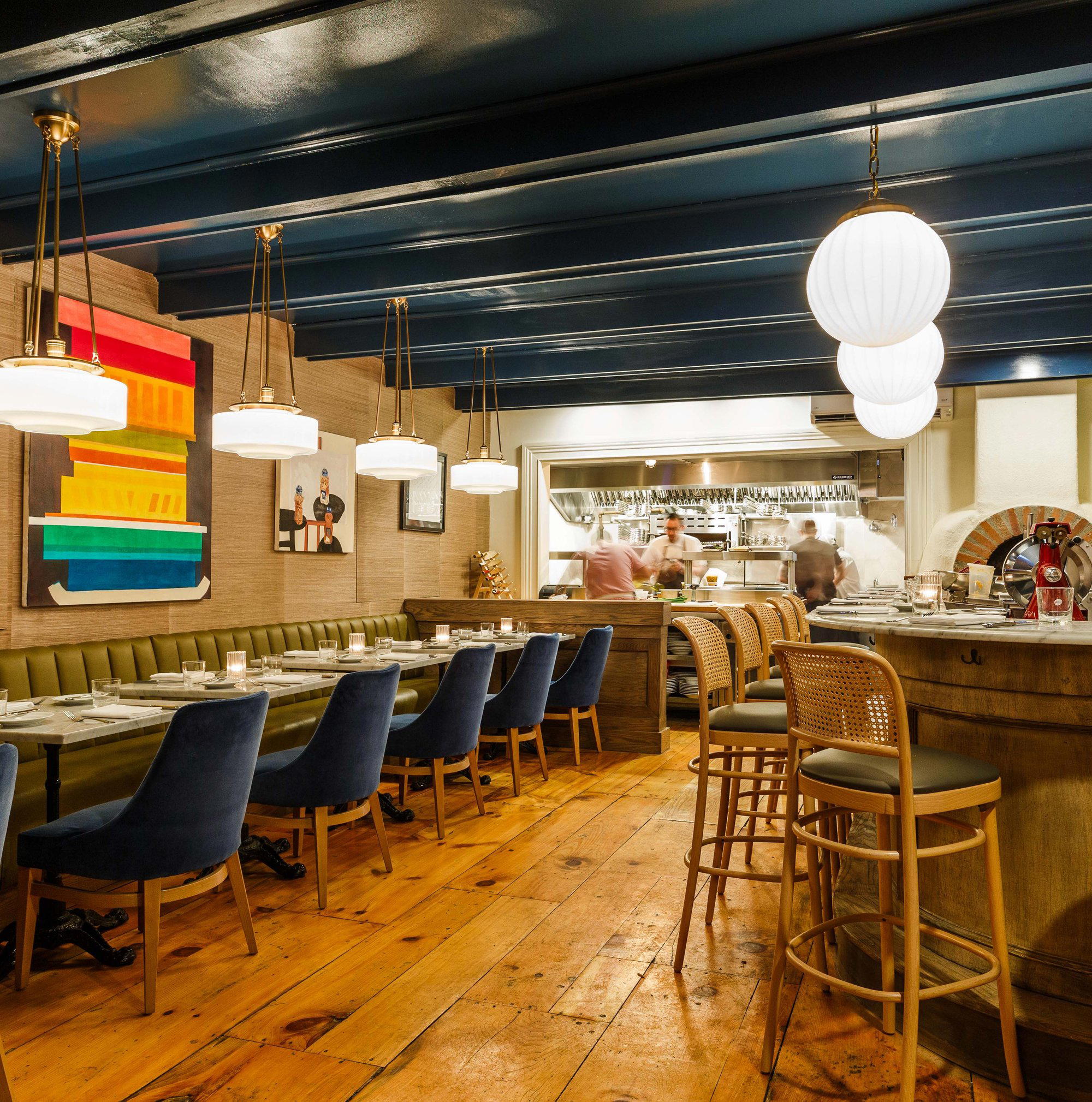
da Toscano is a Modern Italian restaurant at 24 Minetta Ln, New York, NY 10012. Minetta Lane is one of those Greenwich Village addresses that carries weight before you even open the door. The crooked, lantern-lit block between Sixth Avenue and MacDougal Street has housed serious restaurants for decades, and the presence of da Toscano at number 24 fits a pattern the street has long established: cooking that takes its reference points seriously and trusts the neighbourhood's appetite for it.
Tuscan Cooking in a City That Has Seen Everything
New York's Italian restaurant tier has fractured considerably over the past decade. At one end sit the red-sauce institutions, trading on nostalgia and volume. At the other, a smaller cohort of kitchens that treat regional Italian cooking as a discipline with strict parameters, sourcing Umbrian lentils by name, specifying which Chianti sub-zone their wine comes from, and treating pasta as a technical exercise rather than a backdrop. Da Toscano positions itself in that second group, with a focus on Tuscany's canon: bean soups with the density of a winter coat, hand-cut pasta that carries the texture of the grain, and proteins cooked with the directness that central Italian cooking demands.
That kind of regional specificity is harder to execute in New York than it sounds. Ingredient provenance is everything in Tuscan cooking, where the flavour of a bistecca depends on the breed of cattle, the altitude of the pasture, and the age of the animal as much as any technique applied at the stove. Translating that to a Greenwich Village address means making sourcing decisions that are as much philosophical as logistical, and the city's dining public has grown attentive enough to notice when those decisions are made carefully.
The Sustainability Frame: Sourcing as Editorial Stance
Across American fine dining, the conversation around ethical sourcing has moved from marketing language to kitchen infrastructure. Restaurants like Blue Hill at Stone Barns in Tarrytown built their entire model around farm-to-table accountability at a level that makes the phrase meaningful rather than decorative. Single Thread Farm in Healdsburg extends that logic into a multi-day farming and hospitality operation. These are the reference points that have reset expectations for what sourcing rigor looks like in practice.
The restaurant operates within that broader shift, in a format appropriate to a Greenwich Village trattoria rather than a destination farmstead. Tuscan cooking already has strong built-in logic for waste reduction: lard renders into cooking fat, yesterday's bread becomes ribollita, offal cuts find their place in weekly rotation. The tradition was low-waste before the term existed. A kitchen working faithfully within that tradition is, almost by definition, working against the disposability that characterises less thoughtful operations.
For comparison, consider what the same commitment looks like at different price points and scales across the country. Smyth in Chicago operates a root cellar and fermentation program that runs parallel to its tasting menu. Lazy Bear in San Francisco built its format around communal eating and whole-animal thinking. Providence in Los Angeles holds Marine Stewardship Council certification for its seafood program. Each of these represents a different translation of the same underlying commitment. The restaurant's version is quieter and more vernacular, rooted in a regional tradition that has always treated economy of ingredients as a form of respect.
Greenwich Village Context
The Village has always been a more forgiving neighbourhood for serious Italian cooking than Midtown, where the $$$$ tier is dominated by French-lineage kitchens like Le Bernardin and Per Se, and where expense-account logic shapes what gets ordered and at what price. Downtown's dining public tends to be more ingredient-curious and less format-driven. They will sit at a small table on a Tuesday and eat a bowl of farrotto without expecting it to arrive under a cloche. That cultural difference matters enormously to what a kitchen like da Toscano can cook and who it can cook for.
The address on Minetta Lane also places the restaurant in a specific pedestrian geography. Guests are not stumbling in from a broader retail or theatre circuit; they chose this street. That self-selecting audience tends to be more patient with cooking that takes its time and less demanding of the theatrical pacing that defines the higher-end tasting menu format found at restaurants like Atomix or Eleven Madison Park.
Italian Regional Cooking in the American Context
Challenge for any Italian regional kitchen operating outside Italy is that the reference point is invisible to most guests. A diner who knows Florentine cooking will immediately recognise what is being attempted and what is being sacrificed by geography; a diner who does not will evaluate the meal against a more generalised idea of Italian-American food. The leading regional Italian restaurants in the United States manage to work across both audiences without compromising for either.
That dual accountability connects the restaurant to a broader tradition of Italian-American restaurants that have maintained regional fidelity across decades. Outside New York, places like Frasca Food and Wine in Boulder have built serious reputations around Friulian specificity in a market where most diners have never visited Friuli. Within Italy, ancestral kitchens like Dal Pescatore in Runate and Atelier Moessmer Norbert Niederkofler in Brunico represent the kind of deep regional rootedness that functions as the standard against which diaspora cooking is ultimately measured.
The restaurant is not claiming that standard. What it is doing is working within a tradition that has clear internal logic, on a block that has space for that kind of cooking, in a city large enough to find the audience for it.
Know Before You Go
- Address: 24 Minetta Lane, New York, NY 10012
- Neighbourhood: Greenwich Village, Manhattan
- Getting There:
Recognition, Side-by-Side
Comparable venues nearby, for context on price, style, and recognition.
| Venue | Cuisine | Price | Notes |
|---|---|---|---|
| da ToscanoThis venue — the venue you are viewing | Modern Italian | $$$ | Not listed |
| Morandi | Rustic Italian Trattoria | $$$ | West Village |
| Orso | Regional Italian Trattoria | $$$ | Hell's Kitchen |
| San Carlo Osteria Piemonte | Piedmontese Italian Osteria | $$$ | SoHo-Little Italy-Hudson Square |
| Serafina Always | Northern Italian Trattoria | $$$ | Upper East Side-Carnegie Hill |
| Mariella | Modern Italian | $$$ | Park Slope |
Continue exploring
More in New York City
Restaurants in New York City
Browse all →
Bars in New York City
Browse all →
Hotels in New York City
Browse all →





At a Glance
- Elegant
- Intimate
- Cozy
- Sophisticated
- Date Night
- Special Occasion
- Celebration
- Business Dinner
- Open Kitchen
- Standalone
- Historic Building
- Extensive Wine List
Current opening hours
- Monday
- 5–10:30 PM
- Tuesday
- 5–10:30 PM
- Wednesday
- 5–10:30 PM
- Thursday
- 5–10:30 PM
- Friday
- 5–10:30 PM
- Saturday
- 5–10:30 PM
- Sunday
- 5–10:30 PM
Hours can change for holidays and private events. Last verified .
Cozy and comfortable intimate space with warm, welcoming atmosphere designed for special occasions and fine dining experiences.