

1 Michelin Star · We're Smart World 3 Radishes
Our verdict
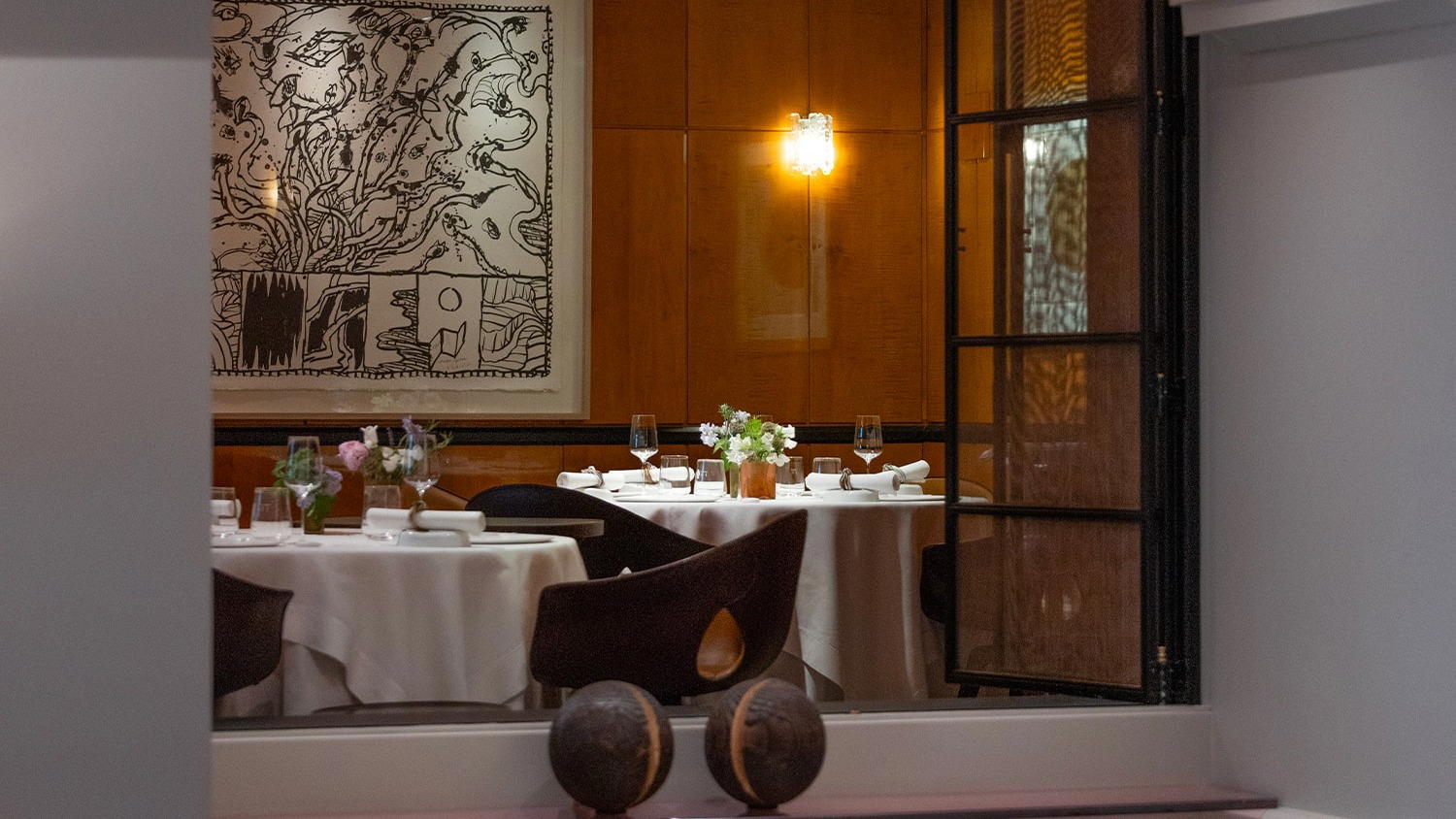
Inside the Art Deco Monsieur George hotel on Rue Washington, Galanga operates at the intersection of classical French technique and a produce-first philosophy championed by chef Thomas Danigo. The €€€€ price tier places it among the 8th arrondissement's most considered fine dining addresses, where vegetables lead the menu architecture and Michelin-recognised craft shapes every plate.

Pearl is the En Primeur Club membership app, where members save venues, book tables and use the concierge.
Art Deco Setting, Produce-Led Thinking
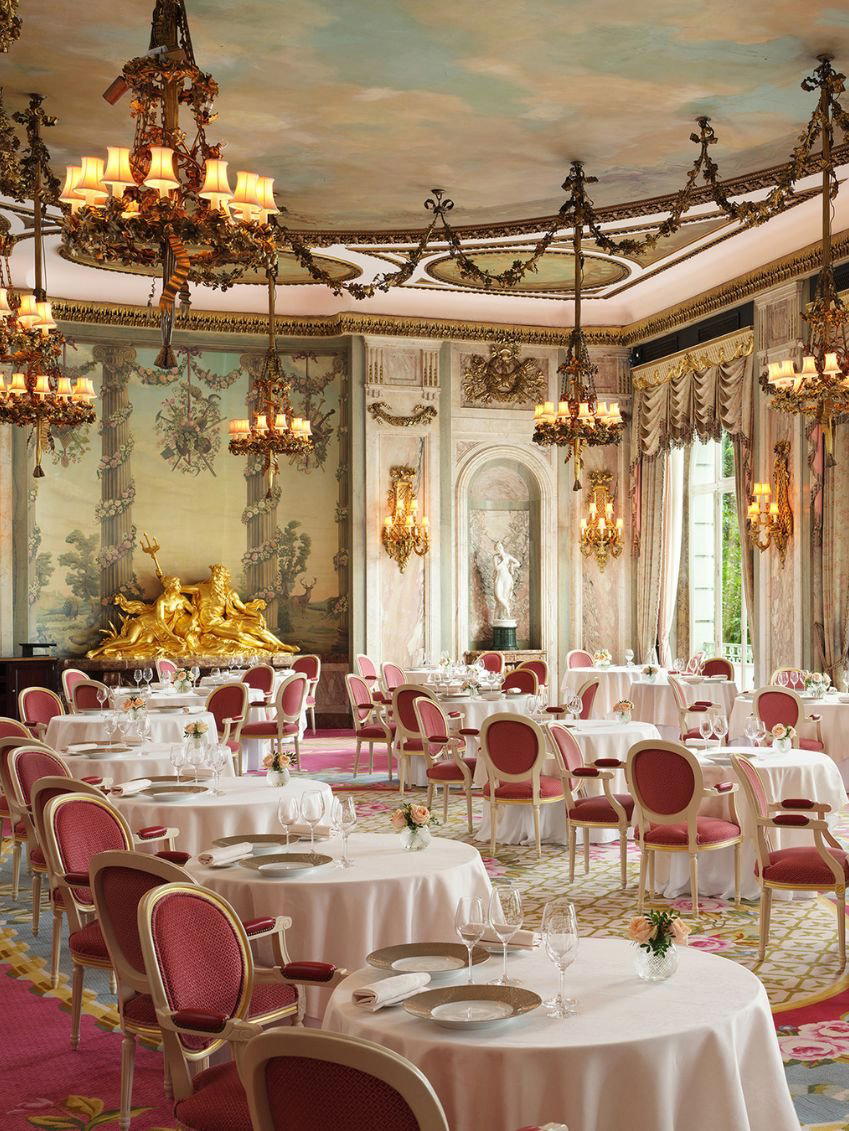
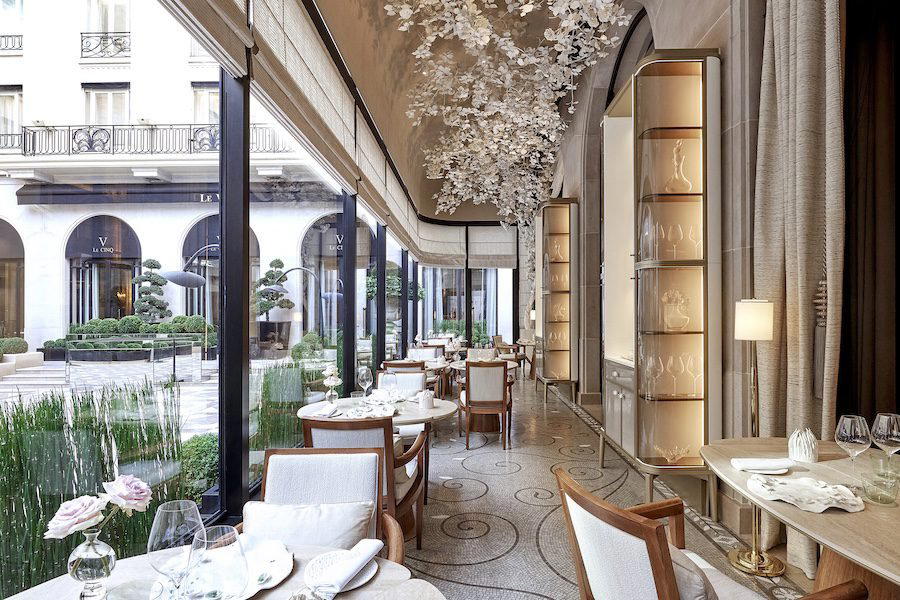
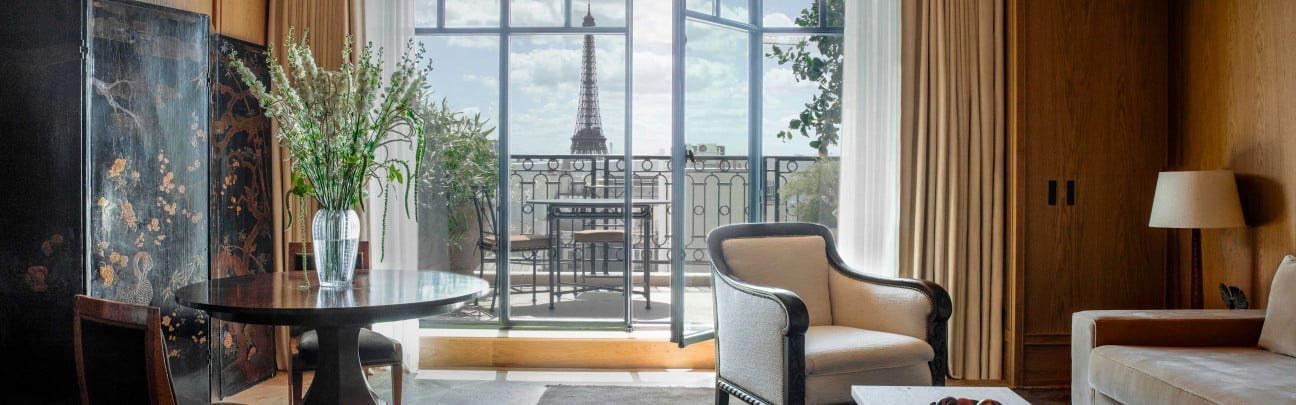
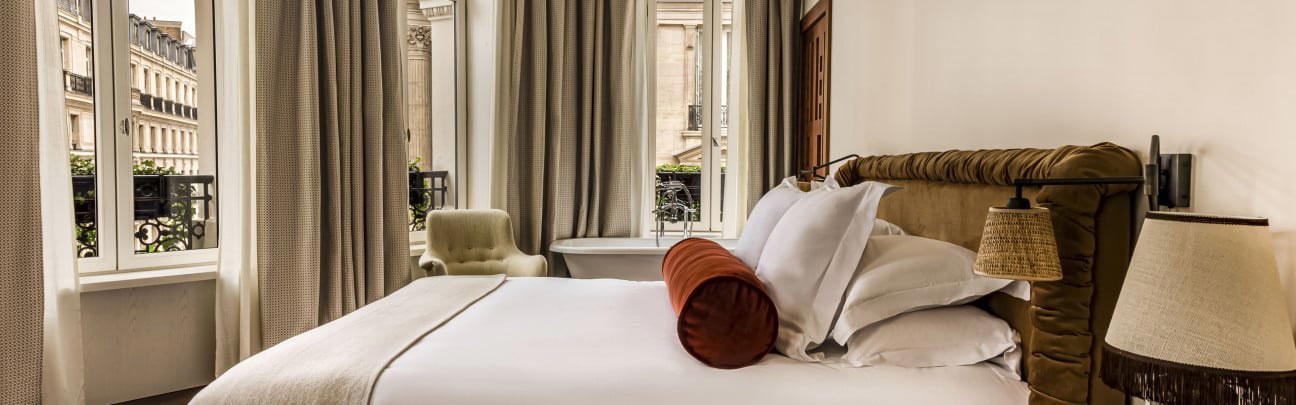
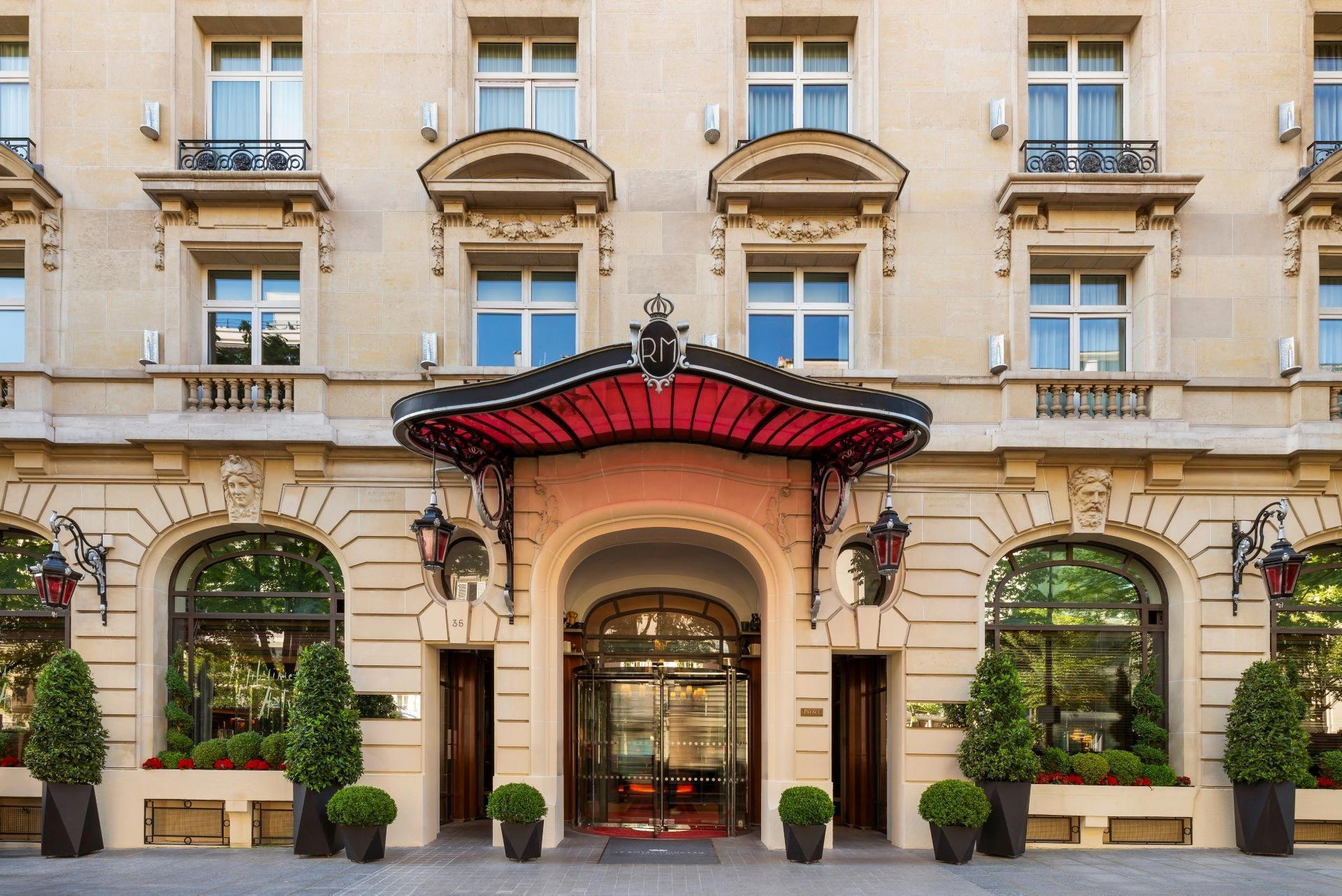
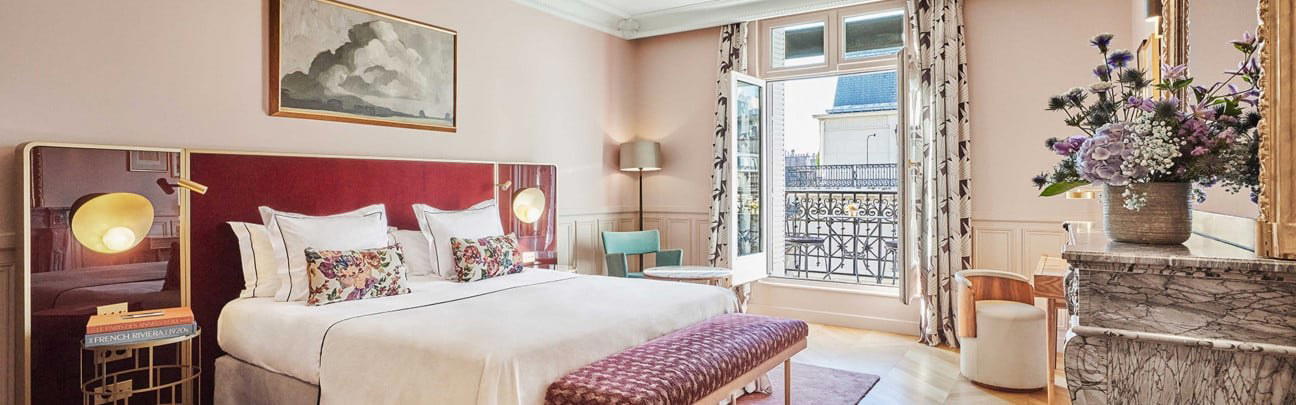
The 8th arrondissement has long anchored Paris's highest-tier dining, from the grand hotel restaurants around the Champs-Élysées to the more intimate addresses pressed between Haussmann boulevards. Rue Washington sits in that latter category: a quieter side street where the Monsieur George hotel operates as a bijou alternative to the neighbourhood's larger flagships. The hotel's Art Deco interiors carry their period references without tipping into museum stiffness, and the dining room reads as plush without the starched formality that still marks some comparable addresses in the arrondissement. For a district where rooms like Le Cinq at the Four Seasons George V set one register of hotel dining, Galanga represents a quieter, more intimate counterpoint at the same price tier.
The Philosophy Behind the Menu
Across French fine dining, the tension between classicism and contemporary produce thinking has become one of the defining editorial lines of the last decade. Houses like Bras in Laguiole established the intellectual ground for vegetable-centred tasting menus long before plant-forward cooking became a broader trend, and that lineage now runs through a number of Parisian kitchens at the leading price tier. Galanga operates within that tradition, with Danigo's kitchen working under the Think Vegetables Think Fruit philosophy, a structured framework that places vegetable ingredients at the head of each dish's conception, with meat or fish appearing as secondary elements where they appear at all. The restaurant has been recognised as a We're Smart Restaurant for this approach, a certification framework that evaluates how seriously a kitchen embeds vegetable intelligence into its programme.
What separates the more technically accomplished expressions of this philosophy from its imitators is the degree to which the produce-first logic actually governs flavour architecture rather than just menu description. The recognition Galanga has received from Michelin-aligned commentary points to technically flawless execution, with Danigo's dishes described in terms of aromatic precision and harmonious construction. A Lozère lamb preparation served with quinoa tabbouleh, lamb stock, and house-made harissa illustrates the kitchen's approach: a couscous-inspired structure where the grain component carries as much weight as the protein, and the spice work reflects influences that reach beyond metropolitan French cooking. This is the intersection of imported method and indigenous product that defines the most interesting tier of contemporary Paris dining.
Global Technique, Local Sourcing
The editorial angle most relevant to understanding Galanga's position in Paris dining sits at the intersection of imported methods and local produce networks. French fine dining has historically been protective of its regional sourcing, and that instinct remains strong at the top tier. What has changed since roughly the mid-2010s is the degree to which technique itself can carry international reference points without reading as fusion compromise. Kitchens like Accents Table Bourse have demonstrated that Japanese precision applied to French ingredients can produce a distinct and coherent identity, while addresses like Kei formalised that dialogue into a Michelin-recognised format. Galanga's approach, routing North African spice logic through fine dining construction, follows a similar cross-cultural discipline.
The harissa preparation in Danigo's lamb dish is a useful lens here. In a lesser kitchen, harissa is a condiment. Applied with the craft signals that Michelin commentary attributes to this kitchen, it becomes a structural flavour component, one that connects Lozère terroir to a broader Mediterranean ingredient vocabulary. That kind of move requires confidence in sourcing and technique in equal measure. It also requires a kitchen that understands when to apply restraint, a quality that the Michelin-adjacent commentary on Galanga specifically identifies in its description of the kitchen's flavour combinations.
For context on what this tier of produce-led French cooking looks like outside Paris, the references worth consulting are Flocons de Sel in Megève and Mirazur in Menton, both of which have built Michelin-recognised programmes around proximity to specific ingredient ecosystems. The Paris version of this discipline, operating without the geographical advantage of an alpine garden or a Mediterranean coastyard, tends to work harder at the sourcing and supply chain level. What reaches the plate at Galanga is the product of that logistical commitment as much as the cooking itself.
Where It Sits in the Paris Fine Dining Map
The €€€€ price tier in Paris covers a wide spread of kitchens, from multi-starred institutions like Amâlia and Anona to hotel dining rooms that trade partly on setting. Galanga occupies a specific sub-category within that tier: the small hotel restaurant where the kitchen programme carries genuine critical weight rather than serving primarily as a hotel amenity. Comparable addresses in Paris that operate this way include 114, Faubourg at Le Bristol, though the scale and institutional weight there differs considerably from the Monsieur George's more intimate proposition.
The dessert programme at Galanga receives specific mention in available critical commentary, identified as entirely the chef's own conception and described in terms that match the savoury kitchen's standards. In fine dining at this price point, a house where the pastry direction is fully integrated with the savoury philosophy rather than contracted out or treated as a separate discipline is worth noting. It suggests a coherent kitchen with enough creative ownership to manage both halves of the menu without stylistic fracture.
For readers building a Paris itinerary that takes in the broader fine dining field, Auberge de Montfleury and the legacy context of houses like Troisgros and Paul Bocuse illustrate how far French cooking has moved from the purely classical tradition that Galanga's kitchen is, in part, responding to. The same produce-intelligence conversation shows up in Nordic contexts too: Frantzén in Stockholm and FZN by Björn Frantzén in Dubai represent how that discipline has travelled internationally, though the French version carries its own sourcing logic and regional ingredient vocabulary. The historical weight of Auberge de l'Ill in Alsace provides another reference point for how French fine dining has long balanced regional terroir with technical refinement.
Planning Your Visit
Galanga is located at 17 Rue Washington in the 8th arrondissement, within the Monsieur George hotel.Address: 17 Rue Washington, 75008 Paris. Price range: €€€€. Reservations: Advance booking is advised given the small size of the room; the intimate format means tables are limited and demand at this recognition level runs ahead of capacity. Dress: Smart attire is consistent with the hotel setting and price tier. Occasion: The room is specifically noted as suited to dinner occasions where atmosphere matters as much as the food programme.
For broader Paris planning, see our full Paris restaurants guide, our full Paris hotels guide, our full Paris bars guide, our full Paris wineries guide, and our full Paris experiences guide.
Frequently asked questions
What kind of recognition has Galanga received?
Galanga has received recognition including: Chef Thomas Danigo cooks entirely from the Think Vegetables! Think Fruit! ® philosophy. The name of each dish starts with the vegetable ingredients and possibly meat or fish is added. It is also important that there are enough 100% plant-ba….
Who is the chef or culinary lead at Galanga?
The chef associated with Galanga is Alois Neuschmid.
What do people recommend at Galanga?
Michelin documentation singles out the Lozère lamb prepared with couscous, quinoa tabouleh, lamb stock, and house-made harissa as a signature example of how chef Thomas Danigo aligns technique with the Think Vegetables! Think Fruit! philosophy. Desserts, designed entirely in-house, have drawn equal attention. The €€€€ price tier signals a full tasting experience rather than à la carte grazing.
What's the price range at Galanga?
Pricing at Galanga is listed as €€€€.
Where do I go for Galanga?
Galanga is located at 17 Rue Washington, 75008 Paris, France, Paris.
How far ahead should I plan for Galanga?
Galanga occupies a small dining room inside the Monsieur George hotel at 17 Rue Washington, and compact hotel restaurants at this price point in the 8th arrondissement typically fill up weeks in advance, particularly for weekend dinner. Contacting the hotel directly is the most reliable route to securing a table. For Friday or Saturday evenings, allow at least three to four weeks.
Cuisine-First Comparison
| Venue | Cuisine | Price | Awards | Notes |
|---|---|---|---|---|
| GalangaThis venue (the venue you are viewing) | Modern French Fusion with Asian Influences | $150–200 | 1 Michelin Star · We're Smart World 3 Radishes | Not listed |
| Alléno Paris au Pavillon Ledoyen | Modern French Fine Dining | $150–200 | 3 Michelin Stars · World's 50 Best #79 | Creative |
| Kei | Modern French with Japanese Influences | $300–500 | 3 Michelin Stars · World's 50 Best #93 | Contemporary French, Modern Cuisine |
| L'Ambroisie | Classic French Haute Cuisine | $300–500 | 2 Michelin Stars · World's 50 Best #23 | French, Classic Cuisine |
| Le Cinq - Four Seasons Hôtel George V | Modern French Fine Dining | $300–500 | 3 Michelin Stars · World's 50 Best #24 | French, Modern Cuisine |
| Plénitude | Modern French Sauce-Led Fine Dining | $300–500 | 3 Michelin Stars · World's 50 Best #14 | Contemporary French |
Recognition history
Dated appearances from independent guides and award organizations, with the underlying list record or original source where available.
Michelin 1 Star
Michelin
We're Smart World 3 Radishes
We're Smart World
Full recognition history (4 entries)
Michelin 1 Star
Michelin
Michelin 1 Star
Michelin
Continue exploring
More in Paris
Restaurants in Paris
All restaurants in Paris →
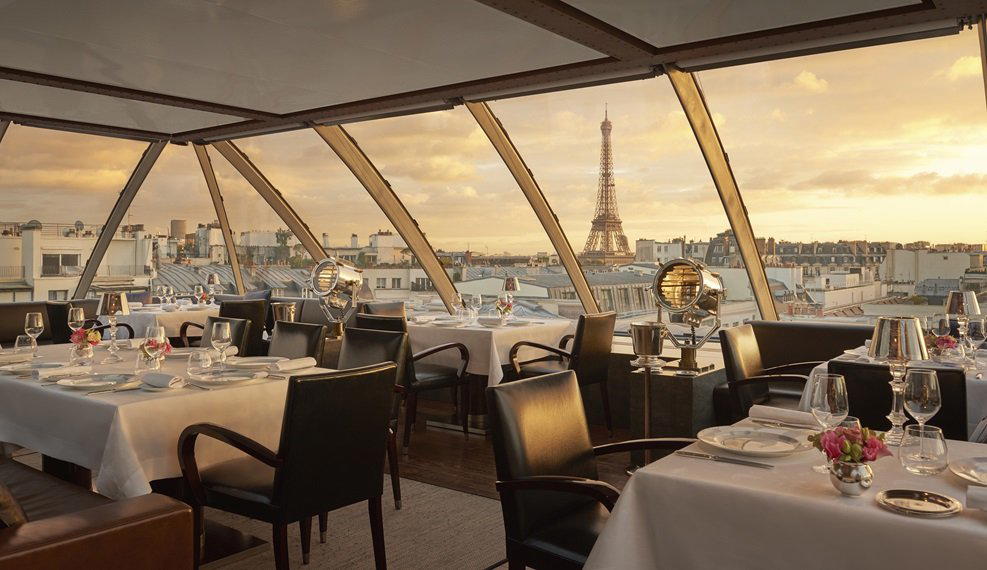
Bars in Paris
All bars in Paris →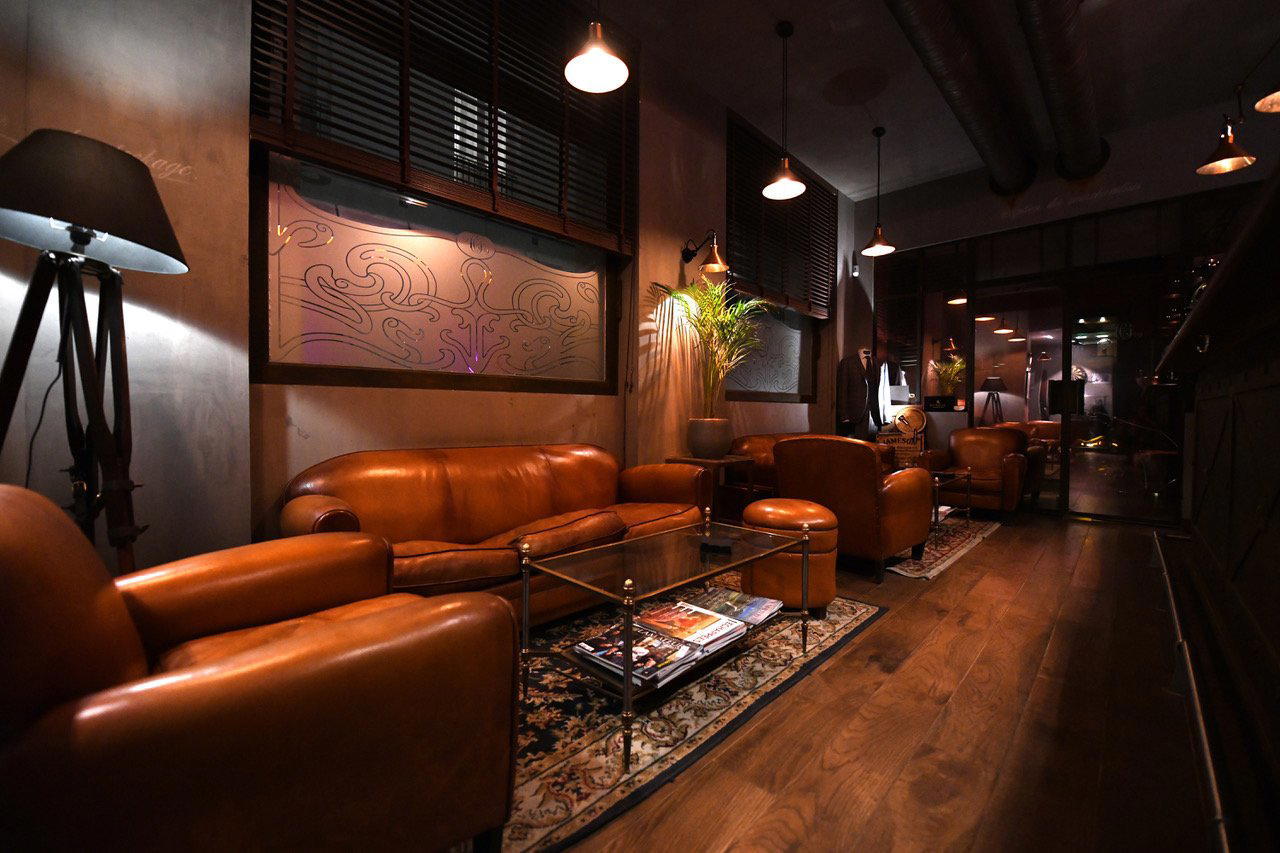
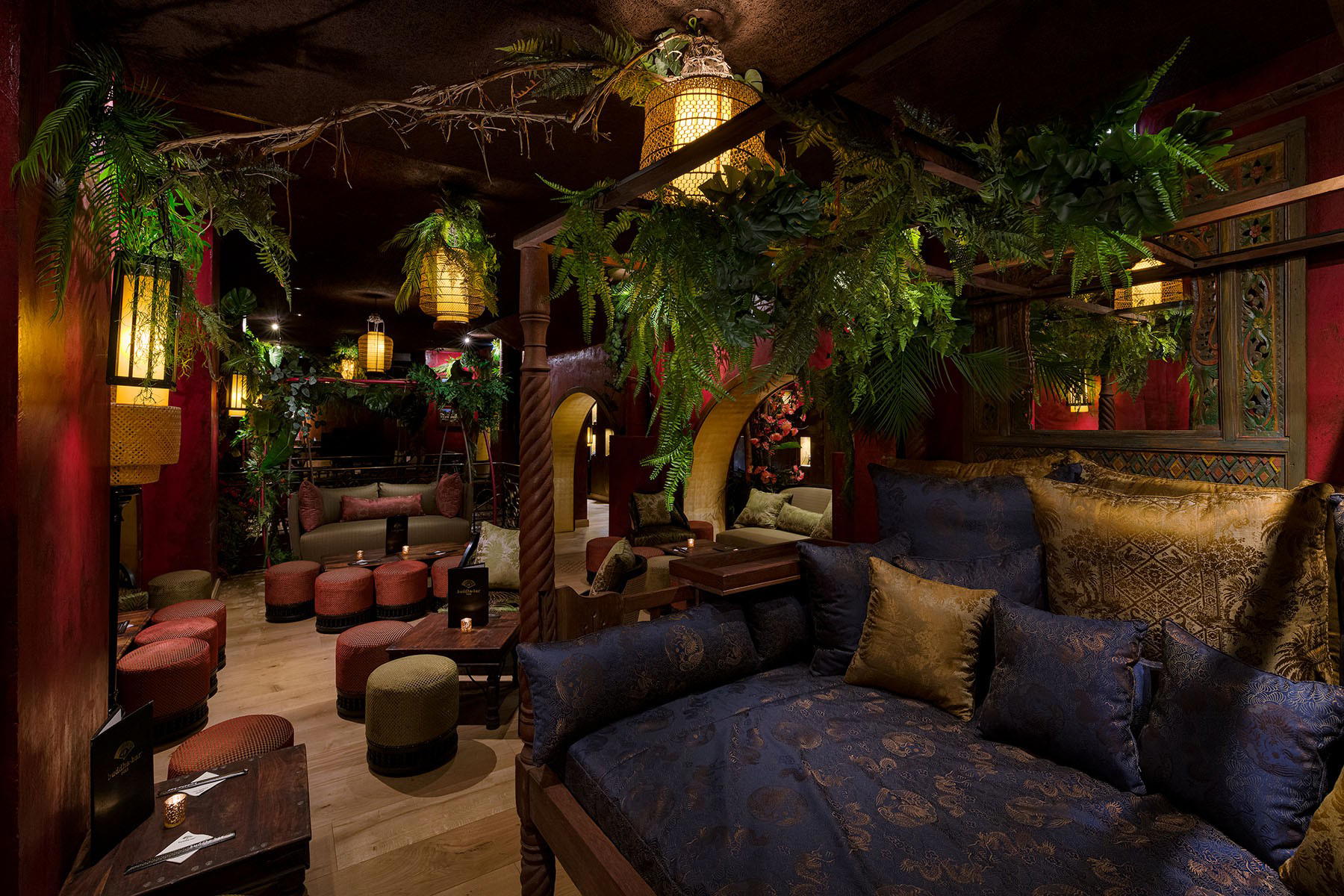
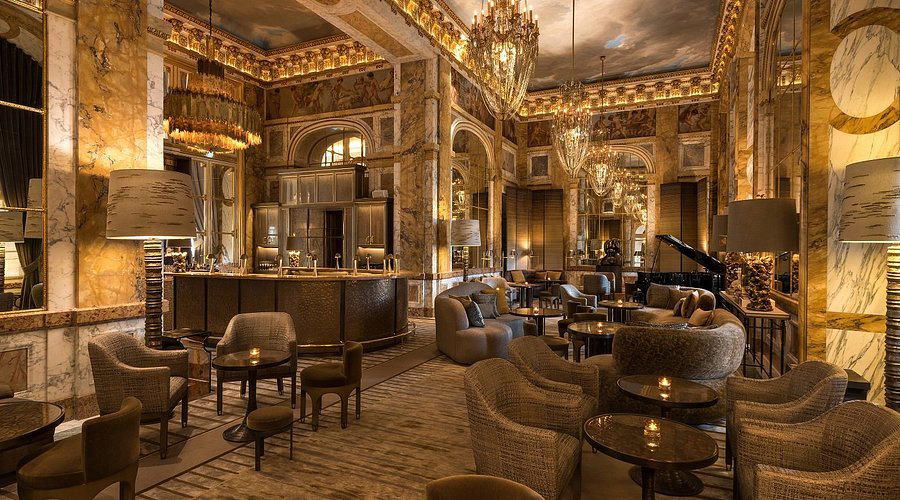



Details
- Elegant
- Intimate
- Sophisticated
- Cozy
- Date Night
- Special Occasion
- Celebration
- Hotel Restaurant
- Extensive Wine List
- Local Sourcing
- Tasting Menu
- Prix Fixe
Current opening hours
- Monday
- Closed
- Tuesday
- 7–9:30 PM
- Wednesday
- 7–9:30 PM
- Thursday
- 7–9:30 PM
- Friday
- 7–9:30 PM
- Saturday
- 7–9:30 PM
- Sunday
- Closed
Hours can change for holidays and private events. Hours as of .
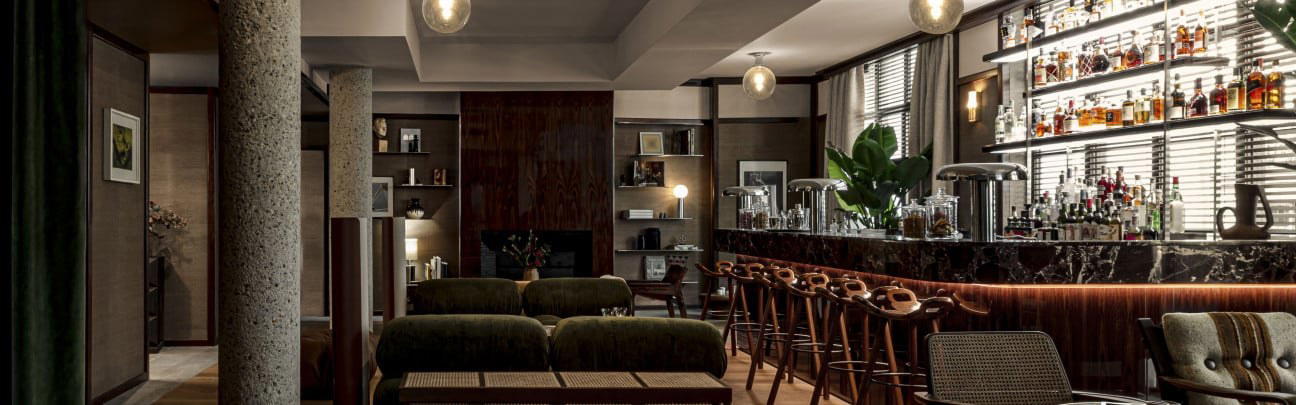
Deep dark green decor creating an elegant, intimate, and hushed atmosphere with polished service.