A plant-forward tasting counter in Changning, FuHeHui occupies a stone and wood interior where Zen aesthetics and seasonal menus converge. The kitchen draws on humble ingredients and traditional technique, pairing dishes with a considered tea program. It sits at the quieter, more contemplative end of Shanghai's high-end dining scene, where the meal's pacing is as deliberate as its sourcing.
 Discover on Pearl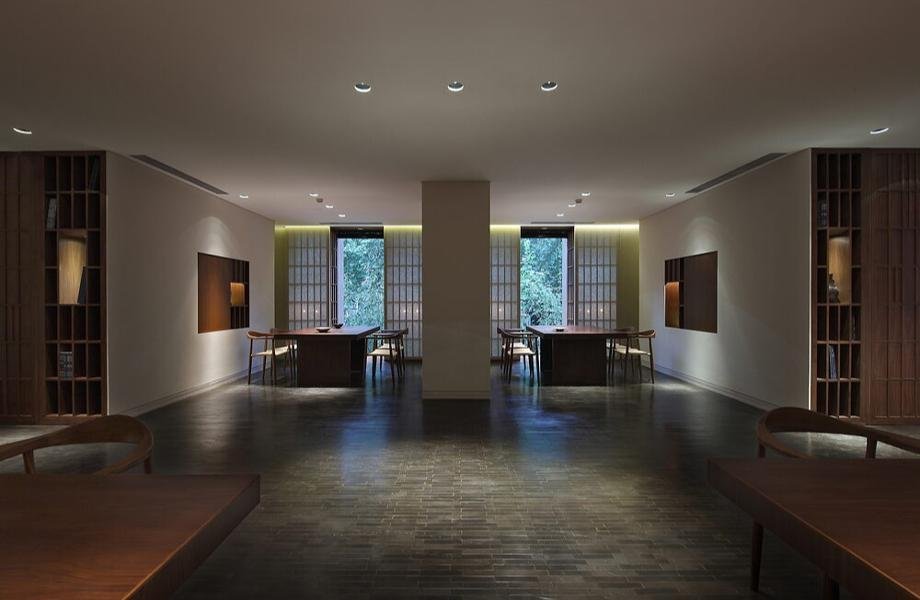
Stone, Wood, and the Ritual of Restraint
Shanghai's premium dining scene has bifurcated sharply over the past decade. One branch runs toward theatrical omakase formats, imported European technique, and wine lists priced for corporate accounts. The other moves in the opposite direction: stripped back, plant-forward, anchored in Chinese culinary tradition, and paced for contemplation rather than spectacle. FuHeHui, on Yuyuan Road in Changning District, belongs decisively to that second branch. The space itself signals the intention before a single dish arrives. Stone and wood dominate the interior; the atmosphere is calibrated for quiet. This is not an accident of aesthetic preference but an operational stance about what a meal should do to the person eating it.
Within Shanghai's high-end vegetarian category, FuHeHui occupies the upper tier alongside Fu He Hui, both drawing on Zen influence and sophisticated tea pairings to position themselves apart from the city's broader fine-dining market. Where venues like Taian Table apply modern European frameworks to Chinese ingredients, and 8 1/2 Otto e Mezzo Bombana imports Italian craft wholesale, FuHeHui works from a fundamentally different premise: that refinement emerges from subtraction, and that the plant kingdom, handled with serious technique, requires no supplementation from meat or luxury protein to hold its own at the highest level of the format.
The shortlist, unlocked.
Hard-to-book tables, cellar releases, and concierge-planned trips.
Get Exclusive Access →How the Meal Moves
The structure here is tasting menu, and the pacing follows Zen hospitality principles rather than the brisk turnover logic of many high-volume Shanghai addresses. Courses evolve with the season, meaning the menu available in spring differs materially from what arrives in autumn. This seasonality is not a marketing device but a culinary commitment: ingredients sourced at their correct moment, prepared in ways that honour rather than override their natural character.
The tea pairing program is worth treating with the same seriousness as a wine pairing at any comparable address. In Chinese dining tradition, tea service at this level is a parallel discipline to the food itself, with specific teas chosen to complement, contrast, or cleanse across the arc of a long meal. At FuHeHui, that pairing is sophisticated enough to serve as a genuine lens on the kitchen's decisions, not merely an accompaniment. For visitors accustomed to European tasting menu formats where wine is the default counterpoint, arriving with openness to the tea program changes the experience substantially.
Service operates at a tempo that rewards patience. The quiet atmosphere is maintained through deliberate design: the space absorbs sound, sight lines are managed, and the service team moves without urgency. This is a dining ritual that asks something of the guest in return for what it offers. Coming in expecting the pace of a business lunch will produce friction. Coming in prepared to follow the kitchen's timeline produces something closer to the intended effect.
Technique and the Weight of Humble Ingredients
The kitchen's reference points are drawn from traditional Chinese recipes and ingredients that carry no inherent luxury status. Porcini mushrooms with grape vine smoke represent the kind of preparation that anchors this approach: a humble fungal ingredient transformed through applied technique and aromatic layering into something with genuine complexity. The flower pot dessert, a visually considered creation that renders a familiar form in edible terms, demonstrates the kitchen's willingness to work theatrically within a broader framework of restraint.
These dishes function as evidence for a broader point about plant-based fine dining in China. The European model for vegetarian haute cuisine tends to reach for cream, truffle, and imported luxury produce to justify its price point. The Chinese vegetarian tradition, particularly in its Zen and Buddhist expressions, works from the opposite assumption: that mastery shows itself in what the cook does with an ingredient that carries no inherent prestige. The sophistication is in the transformation, not the raw material.
Comparable formats in the wider region reflect similar logic. Ru Yuan in Hangzhou and Chef Tam's Seasons in Macau both work within Chinese culinary lineages that prize technique over provenance. FuHeHui's position within that broader map is that of a Shanghai address where urban sophistication and contemplative tradition are held in deliberate tension.
Changning as Context
Changning District sits west of the more commercially dense Jing'an and Huangpu corridors. The neighbourhood has a residential character that most of Shanghai's marquee dining addresses lack, and Yuyuan Road carries some of that quieter quality. A restaurant committed to retreat-like atmosphere is better served by this context than it would be by a Bund-facing position where the surrounding energy runs counter to what the kitchen is trying to produce. The location is a considered choice, not a compromise.
For visitors building a broader Shanghai dining itinerary, FuHeHui occupies a category that sits apart from the city's Cantonese tradition (well-represented at venues like 102 House), its Taizhou cooking (see Xin Rong Ji on West Nanjing Road), and its international imports. It is the kind of address that functions as a counterweight in a multi-night dining schedule, the meal that provides stillness against a backdrop of more kinetic experiences.
Planning logistics: the address is 1037 Yuyuan Road in Changning, accessible by metro via Jiangsu Road station on Line 2. Given the format and price tier, advance booking is strongly advised. The sustainable practices emphasis and the kitchen's sourcing philosophy suggest that the kitchen takes its provenance seriously, which in practical terms means the menu changes and availability of specific courses cannot be guaranteed across visits. Our full guides to Shanghai restaurants, hotels, bars, and experiences provide broader context for planning a stay around a meal here. For dining at comparable standards in other Chinese cities, Xin Rong Ji in Beijing, Xin Rong Ji in Chengdu, Imperial Treasure in Guangzhou, and Dai Yuet Heen in Nanjing each offer distinct regional reference points.
Frequently Asked Questions
- What should I order at FuHeHui?
- The kitchen operates on a seasonally evolving tasting menu format, so ordering à la carte is not the framework here. The full menu is the intended experience, and the tea pairing program is worth taking seriously alongside it. Dishes like the porcini with grape vine smoke and the flower pot dessert have been cited as representative of the kitchen's approach, but the menu changes with the season and specific dishes rotate accordingly.
- Is FuHeHui reservation-only?
- Given the tasting menu format, the premium price tier, and the intimate atmosphere this address operates within, advance booking is strongly advisable. Walk-in availability at this level of Shanghai dining is not reliable, and the kitchen's sourcing and preparation model assumes a known cover count. Contact details are not confirmed in our current database, so booking through a hotel concierge or third-party reservation platform is the practical route for most visitors.
- What's the defining dish or idea at FuHeHui?
- The defining idea is that plant-based fine dining, rooted in Chinese Zen culinary tradition, can carry the same structural seriousness as any meat-centred tasting format. The porcini with grape vine smoke is a frequently referenced preparation that captures the kitchen's method: humble ingredient, applied technique, genuine aromatic complexity. The flower pot dessert reflects the same logic applied to the pastry course. Both are expressions of a broader commitment to transformation over provenance.
- Can FuHeHui handle vegetarian requests?
- The entire menu is plant-forward by design, so vegetarians are not accommodating an exception here but eating within the kitchen's primary framework. Vegan requirements or specific allergies are a different question: the tea program and some preparations may use animal-derived products in ways that are not immediately visible. Given that phone and website details are not confirmed in our current data, confirming specific dietary requirements directly with the venue before arrival, via a concierge or reservation platform, is the practical approach for anyone with strict needs.
Style and Standing
A compact peer snapshot based on similar venues we track.
| Venue | Cuisine | Awards | Notes |
|---|---|---|---|
| FuHeHui | Fu He Hui sits as a stone and wood sanctuary where the plant kingdom takes cente… | This venue | |
| Fu He Hui | Vegetarian | Michelin 2 Star | Vegetarian, ¥¥¥¥ |
| Ming Court | Cantonese | Michelin 1 Star | Cantonese, ¥¥¥ |
| Polux | French | French, ¥¥ | |
| Royal China Club | Chinese, Cantonese | Chinese, Cantonese, ¥¥¥ | |
| Scarpetta | Italian | Italian, ¥¥¥ |
Need a table?
Our members enjoy priority alerts and concierge-led booking support for the world's most difficult tables.
Get Exclusive AccessThe shortlist, unlocked.
Hard-to-book tables, cellar releases, and concierge-planned trips.
Get Exclusive Access →