Michelin Bib Gourmand
Our verdict
It represents the lineage-driven, neighbourhood-rooted food culture that distinguishes Tainan from every other city in Taiwan.

Pearl is the En Primeur Club membership app, where members save venues, book tables and use the concierge.
The menu
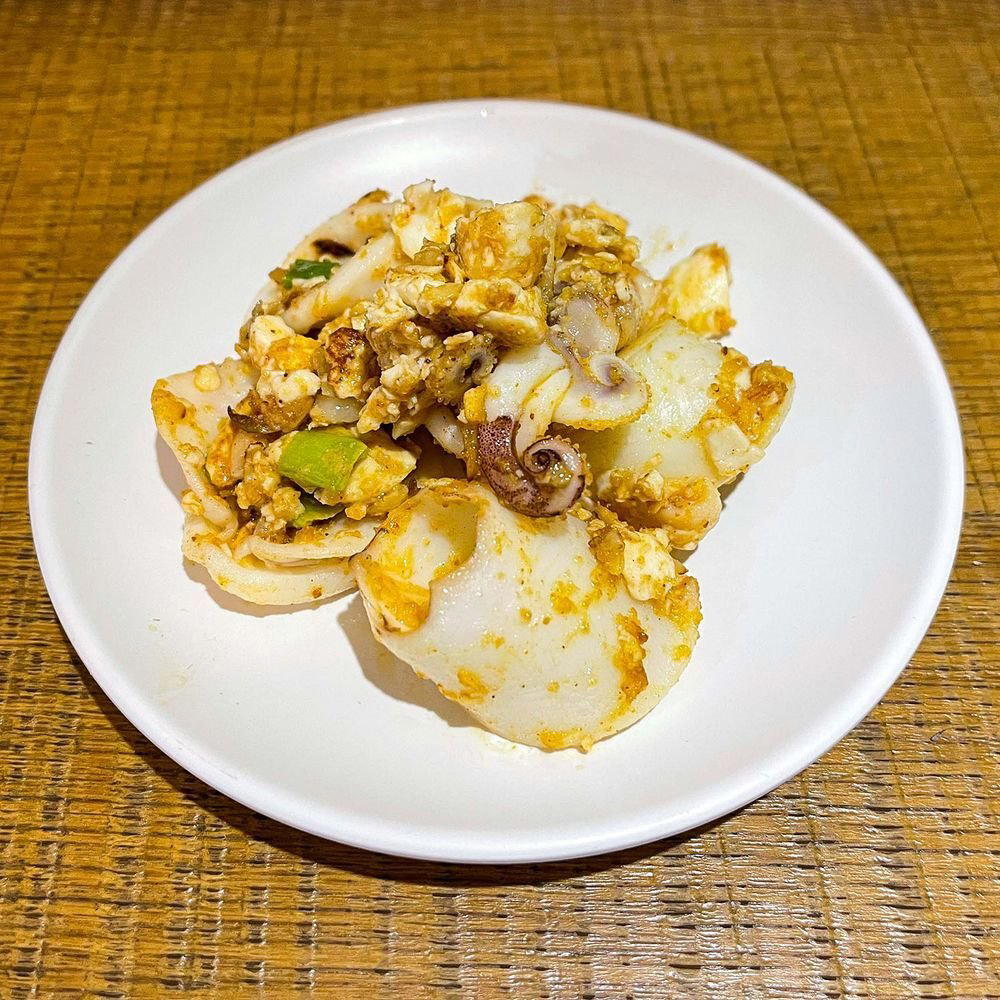
What to order
- Braised pork rice
- Fried milkfish fillet
- Fish skin soup
Tainan occupies a specific position in Taiwan's food conversation. While Taipei concentrates its energy on imported fine-dining formats and Taichung builds a reputation around contemporary interpretation (see JL Studio in Taichung), Tainan's authority rests on depth of tradition. The city is frequently cited as Taiwan's culinary capital precisely because its food culture is not aspirational in the usual sense. It does not reach for international validation. It maintains internal standards set by decades of repetition, community use, and generational handover. A third-generation stall is evidence of that standard being met continuously.
The Michelin Bib Gourmand Signal
The Michelin Bib Gourmand designation, awarded to Fu Tai Table Third Generation in both 2024 and 2025, carries a specific meaning in this context. Two consecutive years of recognition matters here. A single award can reflect novelty or a particularly attentive inspection cycle. A second confirmation suggests the kitchen's consistency is holding. For context, Taiwan's Michelin-starred operations tend toward refined or contemporary formats; logy and GEN represent that tier. Fu Tai Table Third Generation operates at the opposite end of the formality spectrum and earns its credential on entirely different terms.
The Cultural Logic of Third-Generation Food
In Tainan's neighbourhood stall culture, generational continuity is not a marketing position. It is a quality indicator. When a stall name explicitly signals its generation, it is making a claim about fidelity to a founding standard, not celebrating longevity for its own sake.
This model is common across Tainan and appears in comparable cities across the region. Neighbourhood eating cultures in Bangkok and Kaohsiung operate by similar logic: see Arunwan in Bangkok, Bokkia Tha Din Daeng in Bangkok, and Bei Gang Tsai Rice Tube in Kaohsiung. The through-line is that the food's authority derives from duration and community rootedness rather than from chef credentials or seasonal menus. A Xing Shi Mu Yu, A Cun Beef Soup on Baoan Road, A Hai Taiwanese Oden, A Ming Zhu Xing on Baoan Road, and A Wen Rice Cake form a loose constellation of neighbourhood operations, each with its own following. Eating across this cluster in a single afternoon is how Tainan's food culture is properly understood: not as a sequence of restaurants but as a neighbourhood-scale system of complementary small formats. Arrive when service is in full swing rather than at the edges of the day.
For more on the city, explore the Tainan experiences guide.
Frequently asked questions
Which chef is Fu Tai Table Third Generation associated with?
The chef associated with Fu Tai Table Third Generation is Tim Flores.
What should I budget for a meal at Fu Tai Table Third Generation?
Pricing at Fu Tai Table Third Generation is about $5 per person.
What should I eat at Fu Tai Table Third Generation?
Fu Tai Table operates within Tainan's small-eats tradition, a format built on a tight, focused menu rather than broad variety. The Michelin Bib Gourmand recognition in both 2024 and 2025 points to consistency in the kitchen's core offerings, which reflect recipes sustained across three generations at the same Minzu Road address. The price range sits at the budget end of the spectrum, so ordering widely is practical. Arrive with an appetite for the house staples rather than seasonal specials.
What type of food is Fu Tai Table Third Generation known for?
Fu Tai Table Third Generation serves Traditional Taiwanese Fan Zhuozai.
Where do I go for Fu Tai Table Third Generation?
Fu Tai Table Third Generation is located at No. 219號, Section 2, Minzu Rd, West Central District, Tainan City, Taiwan 700.
Awards and Standing
| Venue | Cuisine | Price | Awards |
|---|---|---|---|
| Fu Tai Table Third GenerationThis venue (the venue you are viewing) | Traditional Taiwanese Fan Zhuozai | $1–10 | Michelin Bib Gourmand |
| A Xing Shi Mu Yu | Taiwanese Milkfish Specialist | $10–20 | Michelin Bib Gourmand |
| Amei | Traditional Taiwanese Banquet | $20–30 | Michelin Bib Gourmand |
| Jai Mi Ba | Taiwanese-French Fusion Noodles | $1–10 | Michelin Bib Gourmand |
| L'herbe | Contemporary French with Taiwanese Fusion | $50–100 | Michelin Plate |
| Principe | Modern Taiwanese-French Fusion | $100–150 | Michelin Plate |
Recognition history
Dated appearances from independent guides and award organizations, with the underlying list record or original source where available.
Michelin Bib Gourmand
Michelin
Full recognition history (3 entries)
Michelin Bib Gourmand
Michelin
Michelin Bib Gourmand
Michelin