
A third-generation Kaohsiung institution operating since 1956, Bei Gang Tsai earns its 2025 Michelin Bib Gourmand recognition through one defining preparation: sticky rice steamed with braised ground pork in a metal tub, plated and finished with gravy. The soy-marinated iron egg is the essential side.
Pearl is the En Primeur Club membership app — saves, bookings, and concierge access live there. Same editors, same standards.
- Address
- No. 167號, Hexi Rd, Yancheng District, Kaohsiung City, Taiwan 803
- Phone
- +886 7 551 7443
- Directions
- Get directions
 Saves & bookings on Pearl
Hexi Road in the Morning: What Kaohsiung Actually Eats
On Hexi Road in Yancheng District, the rhythm of a Kaohsiung morning runs on bowls, not reservations. Stalls and small shops open early, locals pull up on scooters, and the transaction is quick: order, sit, eat, leave. Bei Gang Tsai Rice Tube is a restaurant in Kaohsiung's Yancheng District serving Traditional Taiwanese Tube Sticky Rice at a $ price point. The setting is spare, with the focus on the food and the people eating it.
That context matters before anything else. Kaohsiung's small-eats scene runs parallel to, and largely independent of, the city's restaurant tier. Where spots like the Michelin-starred Caizong Li or the upscale Cantonese room at GEN sit at higher price points, the Bib Gourmand category documents something different: places where culinary discipline is exercised at prices almost anyone can manage. Bei Gang Tsai holds a 2025 Michelin Bib Gourmand, which signals quality at a price point marked by a single dollar sign.
The Rice Tube: What It Is and Why It Persists
The name describes the method. Sticky rice is packed with braised ground pork into a metal tube or tub, steamed together until the fat from the pork works into the rice, and then turned out onto a plate. Gravy goes over the leading. The result is dense, cohesive, and deeply savoury, a preparation that trades the looseness of plain steamed rice for something closer to a slow-cooked, pork-suffused cake. It is distinctly Taiwanese in its economy: a small amount of protein, properly treated, stretches across the whole dish.
This format has fed Kaohsiung for decades. Many residents of the city grew up eating here, which gives Bei Gang Tsai a cultural weight that sits apart from its price or its square footage. Third-generation family businesses of this type are relatively rare in Taiwan's small-eats sector, where turnover can be high and inheritance of a working food business is not guaranteed. The formula has held across generations, which says something about the consistency of execution rather than the novelty of the concept.
For comparison, Cianjin Braised Pork Rice and Cheng Tsung Duck Rice represent adjacent points in Kaohsiung's rice-and-protein small-eats tradition, each with a specific protein treatment at the centre. Bei Gang Tsai's steamed sticky rice with braised pork is a slightly different preparation from braised pork rice (lu rou fan), where the pork is typically minced or fatty and served over separate steamed rice. The tube method produces a different texture and a different ratio of grain to meat.
What to Order
The rice tube is the anchor. Order it, and then add a soy-marinated iron egg on the side. Iron eggs are a Taiwanese preparation in which eggs are repeatedly braised in soy and spice, then air-dried, over multiple cycles until the white becomes firm and almost rubbery and the flavour concentrates sharply. The contrast with the soft, fatty rice is deliberate and effective.
Beyond the signature preparation, the menu extends to soups, including a steamed egg custard soup. The custard here is described as sponge-like, a texture that allows the surrounding stock to be absorbed into the custard itself. This is a different eating experience from a smooth, set custard: the stock becomes part of every bite rather than sitting around the edges. These are dishes built around technique applied to inexpensive ingredients.
Across Taiwan's small-eats category, this approach is well-represented. In Tainan, A Hai Taiwanese Oden, A Ming Zhu Xing (Baoan Road), and A Wen Rice Cake each hold a similar position: technically precise, narrow in focus, priced for daily eating. Chun Lan Gua Bao and Ciao Zai Tou Huang's Braised Pork Rice (Ciaotou) extend the Kaohsiung end of that same tradition. The pattern across all of them is a short menu, a preparation refined over many years, and prices that assume eating here is a regular event rather than a special occasion.
The Value Argument, Made Plainly
Taiwan's Michelin coverage has consistently used the Bib Gourmand tier to document the island's small-eats culture in a way that the starred restaurant tier, by definition, cannot. At the starred level, Taiwan has entries like logy in Taipei and JL Studio in Taichung, where the price point and format are entirely different propositions. At the Bib level, the question is whether a meal that costs little delivers quality that punches past its price. Bei Gang Tsai's 2025 recognition answers that in the affirmative.
That volume of reviews across what is, by any measure, a low-cost neighbourhood spot is significant. It means Bei Gang Tsai draws visitors alongside regulars, and that both groups leave satisfied often enough to push the average above 4.0 at scale. For reference, the kind of recognition attached to Kaohsiung's higher-end restaurants, such as the Michelin-starred spots in the city's restaurant tier, comes with far fewer but often more polarised reviews. At the small-eats level, consensus tends to be more stable because the expectations are clear.
This is Yancheng District eating as it has existed for decades: a short walk or scooter ride, a known quantity, a specific preparation done consistently, and a bill that leaves change from a few hundred New Taiwan Dollars. For visitors building a full picture of what Kaohsiung eats, this is the kind of stop that puts the higher-end restaurant tier into proper proportion.
Planning Your Visit
Bei Gang Tsai Rice Tube sits at No. 167 Hexi Road in Yancheng District, a southern Kaohsiung neighbourhood accessible from the city's MRT network. Yancheng is also home to the Liuhe Night Market area, so the district is well within the standard tourist radius. No booking system applies to a shop of this type: arrive, queue if needed, order at the counter. Mornings and lunch hours tend to draw the densest local crowds at spots like this across Taiwan's small-eats circuit. No dress code, no reservation required, and no meaningful language barrier for pointing at a menu item and holding up fingers.
Recognition, Side-by-Side
Comparable venues nearby, for context on price, style, and recognition.
| Venue | Cuisine | Price | Awards | Notes |
|---|---|---|---|---|
| Bei Gang Tsai Rice Tube (Yancheng)This venue — the venue you are viewing | Traditional Taiwanese Tube Sticky Rice | $ | Bib Gourmand | Not listed |
| Old New Taiwanese Cuisine (Jiuru 2nd Road) | Modern Taiwanese Omakase | $$ | Bib Gourmand | Sanmin |
| Caizong Li | Traditional Taiwanese Vegetarian Zongzi | $ | Bib Gourmand | Lingya District |
| Ciao Zai Tou Huang's Braised Pork Rice (Ciaotou) | Taiwanese Braised Pork Rice | $ | Bib Gourmand | Ciaotou District |
| Hung Chi Rice Shop | Taiwanese Braised Pork Rice | $ | Bib Gourmand | Zuoying District |
| Chao Ming | Authentic Taiwanese Home-Style Cooking | $$ | Bib Gourmand | Qianjin District |
Recognition history
Dated appearances from independent guides and award organizations, with the underlying list record or original source where available.
Michelin Bib Gourmand
Michelin
Michelin Bib Gourmand
Michelin
Michelin Bib Gourmand
Michelin
Continue exploring
More in Kaohsiung
Restaurants in Kaohsiung
Browse all →
Bars in Kaohsiung
Browse all →


At a Glance
- Lively
- Cozy
- Casual Hangout
- Family
- Waterfront
- Waterfront
- Street Scene
Current opening hours
- Monday
- 1:30–9:30 PM
- Tuesday
- 1:30–9:30 PM
- Wednesday
- Closed
- Thursday
- 1:30–9:30 PM
- Friday
- 1:30–9:30 PM
- Saturday
- 1:30–9:30 PM
- Sunday
- 1:30–9:30 PM
Hours can change for holidays and private events. Last verified .
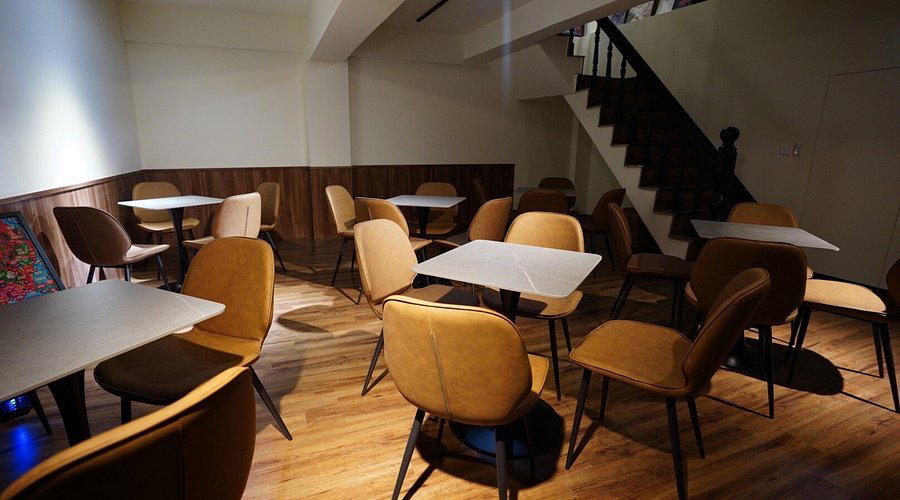
Casual lively atmosphere with savory aromas, hot indoor space without AC, and riverside outdoor seating.