
A Michelin Plate recipient for 2024 and 2025, Arunwan has been serving its family-recipe pork offal and pickled cabbage soup from Ekkamai for over six decades. Now run by the founder's children, the stall-style kitchen keeps prices at the lowest Bangkok tier while producing a broth that draws both neighbourhood regulars and Michelin inspectors.
Pearl is the En Primeur Club membership app — saves, bookings, and concierge access live there. Same editors, same standards.
- Address
- 295 อาคาร, PARK X ปาก, Ekkamai 15 Alley, Khlong Tan Nuea, Watthana, Bangkok 10110, Thailand
- Phone
- +66 80 994 2299
- Website
- web.facebook.com
- Directions
- Get directions
 Saves & bookings on Pearl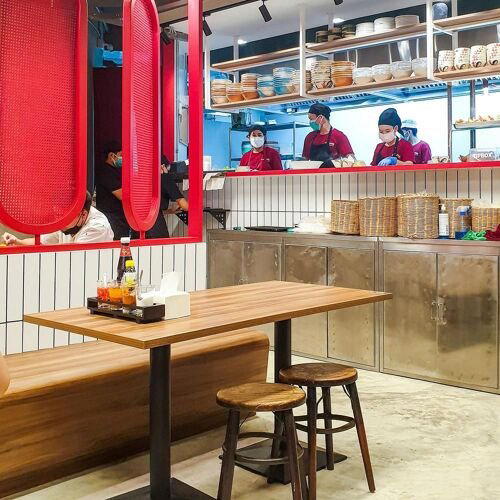
Sixty Years of Soup on Ekkamai 15
Bangkok's street-food and hawker scene operates on a logic that fine-dining cities rarely replicate: longevity is the credential, and a decades-old recipe, unchanged and unmarketed, carries more authority than any tasting menu. Ekkamai 15 Alley, a residential soi in Watthana that sits well east of the tourist-facing restaurants of Sukhumvit's lower numbers, holds several of these generational spots. Arunwan is a restaurant in Bangkok serving traditional Thai pork offal noodle soup. Opened more than sixty years ago and now operated by the founder's children, it has earned consecutive Michelin Plate recognition in 2024 and 2025.
The Atmosphere of a Working Kitchen
The physical experience of Arunwan is shaped by the rhythms of a kitchen that has never needed to perform for outsiders. The address, 295, Park X building, Ekkamai 15 Alley, Khlong Tan Nuea, puts it inside a low-rise pocket of Bangkok where the sightlines are residential and the sounds are ordinary: motorbikes passing, the clatter of bowls, the low hiss of broth that has been simmering since early morning. There is no ambient music calibrated to a demographic, no interior design borrowed from a hospitality consultancy. What you encounter instead is the sensory atmosphere of a family kitchen operating at scale: the smell of slow-cooked pork stock and fermented cabbage arriving before anything else, the sight of a kitchen that is visibly well-practised, and the particular calm that comes from a team who have made the same dish thousands of times and know exactly what they are doing. At Bangkok's lowest price tier, a single baht symbol, the experience asks nothing of the visitor except presence and patience.
What the Kitchen Produces
The anchor dish is a pork offal and pickled cabbage soup built on a pork consommé. Offal-forward soups of this kind belong to a Chinese-Thai culinary tradition that runs deep through Bangkok's older shophouse and market districts, the same lineage that connects spots like Bokkia Tha Din Daeng and Hia Wan Khao Tom Pla to generations of cooks who treated offal as one flavourful part of the animal rather than a secondary cut. The soup at Arunwan is described as fresh-tasting, which in this context means the broth reads clean and light rather than heavy or muddied, an outcome that takes more control to achieve than a richer, less disciplined stock. The pickled cabbage introduces acidity that keeps the sweetness of the consommé from becoming cloying, and the offal itself is the structural core of the bowl. While waiting for the soup, the crispy pork wontons served with sweet black sauce are the recommended order, they function as a complementary texture against the liquid dish to follow, the fried exterior providing contrast to the broth's clarity.
Where Arunwan Sits in Bangkok's Hawker Tier
Bangkok's Michelin-recognised eating spans a price range that few cities match. At the leading, multi-starred restaurants like Sorn (three stars, Southern Thai) and Baan Tepa (two stars, contemporary Thai) operate at the ฿฿฿฿ tier where a meal runs into the thousands of baht per head. Below that, the Michelin Bib Gourmand and Plate categories increasingly document what Bangkok's hawker culture has always known: that technically consistent cooking in the city often costs less than a hundred baht a bowl. Arunwan's consecutive Plate recognitions place it in a cohort of single-dish specialists, venues like Sae Phun and Ten Suns, where the kitchen's authority comes entirely from mastery of a narrow repertoire rather than from breadth or innovation. For context across Bangkok's wider eating scene, the EP Club Bangkok restaurants guide maps the full range from hawker tier through to fine dining.
The Ekkamai neighbourhood is itself worth understanding as a context. It functions as a residential district with a working-local dining culture, distinct from the higher-profile restaurant corridors of Silom or the tourist-facing density around Sukhumvit Soi 11. Spots like Thai Tham represent similar neighbourhood-embedded cooking in Bangkok's broader geography. Eating at Arunwan requires coming to Ekkamai on its own terms, which means the experience is not packaged for convenience but is more coherent for it.
Planning Your Visit
Arunwan sits at the lowest price point in Bangkok's dining spectrum, which makes it accessible without advance financial planning, but the practical logistics reward preparation of a different kind. Ekkamai 15 Alley is reachable from Ekkamai BTS station, one stop east of Thong Lo on the Sukhumvit line. Arriving earlier in a sitting is more reliable than arriving late. Walk-ins are the standard mode of service at venues in this category, reservation infrastructure is not a feature of the format.
Aeeen in Chiang Mai and AKKEE in Pak Kret represent that tier in their respective cities. For a sense of how Michelin recognition maps across Thailand's fine-dining end, PRU in Phuket and Angeum in Phra Nakhon Si Ayutthaya offer instructive contrasts in format and price. For international comparisons in the small-eats category, A Cun Beef Soup in Tainan and A Hai Taiwanese Oden show how the single-dish specialist model operates in a different hawker tradition. The Bangkok wineries guide and Agave in Ubon Ratchathani extend the EP Club coverage further if the trip warrants it.
Fast Comparison
Comparable venues nearby, for context on price, style, and recognition.
| Venue | Cuisine | Price | Awards | Notes |
|---|---|---|---|---|
| ArunwanThis venue — the venue you are viewing | Traditional Thai Pork Offal Noodle Soup | $ | Michelin Plate | Not listed |
| Charoen Saeng Silom | Thai-Chinese Braised Pork Leg | $ | Michelin Plate | Khanna Yao |
| Thai Tham | Thai Offal Specialties | $ | Bib Gourmand | Sanam |
| Sawang Noodles | Thai Bamee Wonton Noodles | $ | Michelin Plate | Maha Phruetharam |
| Somboon Seafood (Bang Rak) | Thai Seafood with Fried Curry Crab | $$ | Michelin Plate | Surawong |
| Rongros | Traditional Thai with Riverside Views | $$ | Michelin Plate | Sanam Luang |
Recognition history
Dated appearances from independent guides and award organizations, with the underlying list record or original source where available.
Michelin Plate
Michelin
Michelin Plate
Michelin
Michelin Plate
Michelin


At a Glance
- Cozy
- Casual Hangout
- Standalone
Current opening hours
- Monday
- 9 AM–7 PM
- Tuesday
- 9 AM–7 PM
- Wednesday
- 9 AM–7 PM
- Thursday
- 9 AM–7 PM
- Friday
- 9 AM–7 PM
- Saturday
- 9 AM–7 PM
- Sunday
- 9 AM–7 PM
Hours can change for holidays and private events. Last verified .
Bustling street food atmosphere in a shophouse setting with a focus on hearty, authentic Thai flavors.