
Set in an 18th-century villa in the Bergamo foothills, Frosio has been run by the Frosio family for over 30 years, earning consecutive Michelin Plate recognition in 2024 and 2025. The kitchen balances classic-modern technique across meat and fish, with a wine cellar of more than 1,000 labels housed in a 13th-century tower. At the €€€ price point, it occupies the serious end of Lombardy's provincial dining scene.
Pearl is the En Primeur Club membership app — saves, bookings, and concierge access live there. Same editors, same standards.
- Address
- Piazza Lemine, 1, 24011 Almè BG, Italy
- Phone
- +39 035 541633
- Website
- frosioristoranti.it
- Directions
- Get directions
 Saves & bookings on Pearl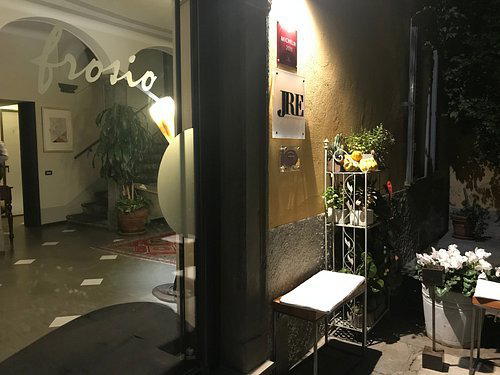
A Villa in the Bergamo Foothills
Arriving at Piazza Lemine in Almè, the transition from the A4 motorway corridor to Bergamo's quieter residential piedmont is sharper than the short drive suggests. The village square is the kind of place that Italian towns preserve without ceremony: a proper piazza, not a tourist set-piece. The building itself, an 18th-century villa that functioned as a family inn before the Frosio family took permanent ownership of its identity, carries that history without staging it. The facade is composed, the dining room decorated with what Michelin's own inspectors describe as austere elegance, a phrase that holds up. This is not the polished industrial chic of Milan's dining scene, nor the theatrical rusticity sometimes deployed in agritourism contexts. It occupies a more precise register: formal without being stiff, historical without being museological.
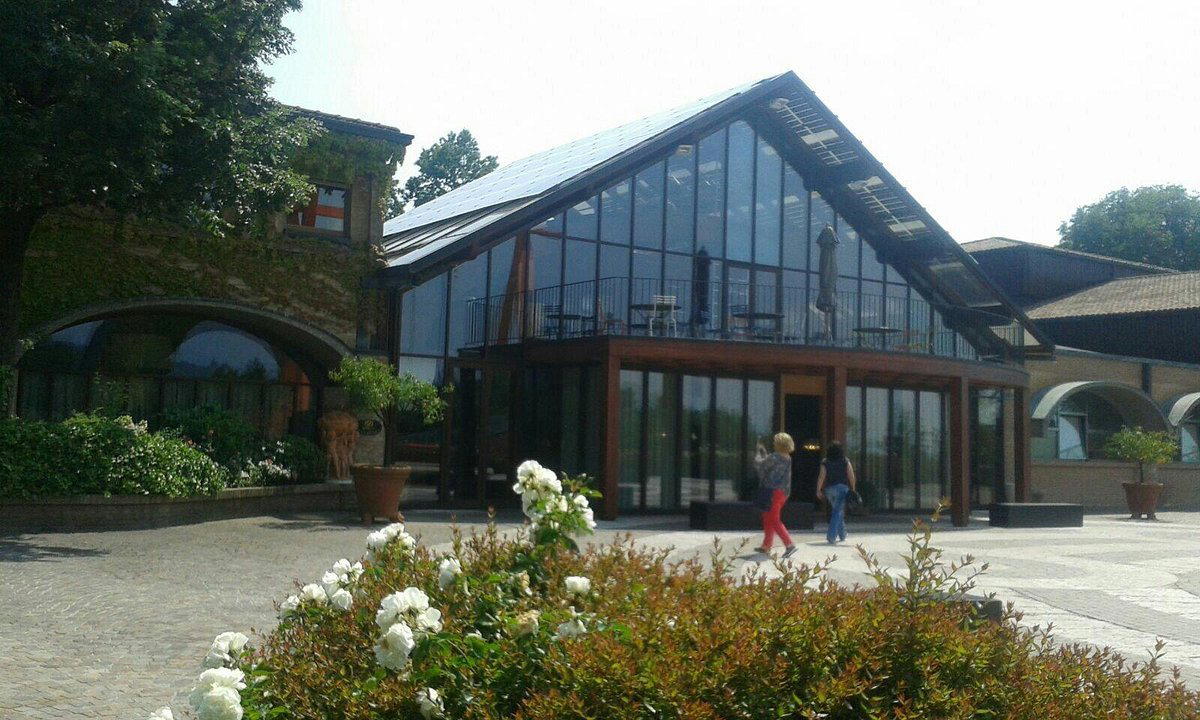
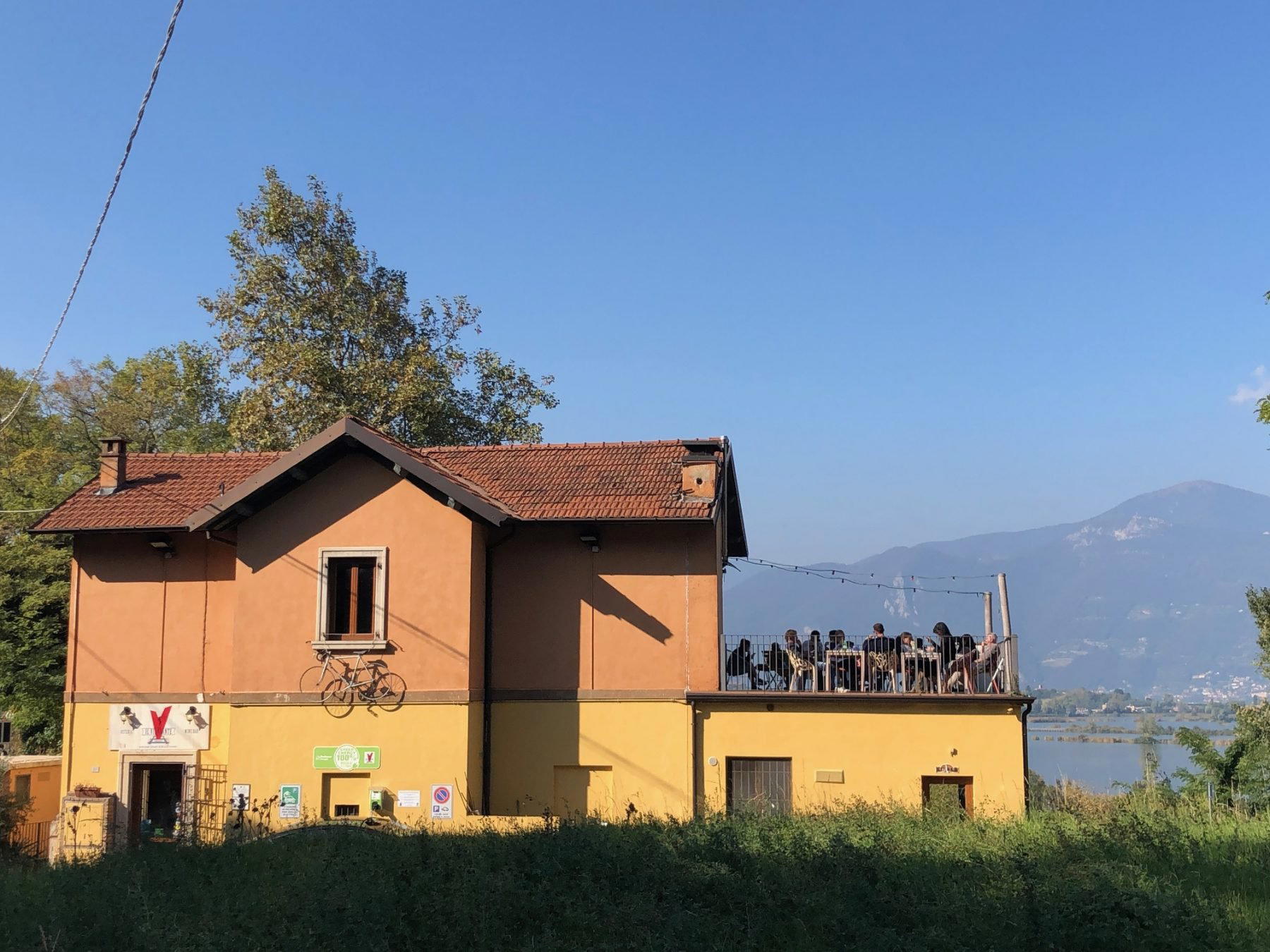
The outdoor terrace opens for summer dining and, in the warmer months, gives the meal a different tempo entirely, slower, more contingent on light and air, the kind of dining that provincial Italy does better than almost anywhere in Europe.
Ingredients as Argument
In northern Italian cooking, the question of ingredient sourcing is rarely framed as philosophy. It is more often simply practice: you use what is good, you handle it with as little intervention as the product demands, and you let the result speak. What marks Frosio's kitchen as deliberate rather than habitual is its equal and consistent commitment to both land and sea, an unusual balance this far inland from any coastline.
The ingredient list that Michelin's inspectors note reads like a map of premium European sourcing: scampi, lobster, foie gras, pigeon, caviar. These are not ingredients deployed for symbolic luxury. In a kitchen operating at this level of classic-modern discipline, they each carry specific technical expectations. Scampi must be handled at low temperature and short timing to preserve texture. Foie gras needs precision in both preparation and pairing to avoid richness becoming opacity. Pigeon, long a marker of serious French-adjacent cooking, demands a kitchen confident enough in its own voice to use it without referencing its classical lineage too loudly.
The classic-modern framework that Frosio operates within is worth understanding on its own terms. It is not the progressive Italian cuisine associated with houses like Osteria Francescana in Modena or Piazza Duomo in Alba, which use Italian identity as material for conceptual exploration. It is also not the maximalist three-Michelin-star register of Dal Pescatore in Runate or Enoteca Pinchiorri in Florence, where the ceiling is set by institutional ambition. Frosio sits in a different and more difficult position: the serious provincial restaurant that answers to local regulars and informed travellers simultaneously, without collapsing the two into a compromise.
Across Italy's northern dining scene, this tier, call it the committed regional table, often produces consistent cooking. It lacks the volatility of restaurants chasing trophy recognition and the complacency of those coasting on historical reputation. Thirty years of family operation suggests Frosio has found a functional and durable version of that register.
The Wine Cellar in the Tower
The wine program at Frosio is organized around a structural split that mirrors the kitchen's own duality: one section dedicated to Italian producers, another to the rest of the world. This is not uncommon in Italian fine dining, but the depth here is worth noting. More than 1,000 labels are housed in the 13th-century tower attached to the property, the oldest surviving part of the building, which provides natural temperature stability that many purpose-built cellars attempt to replicate mechanically.
For context on what a wine list at this level means in the regional Italian dining ecosystem, it is worth considering that particularly serious Italian cellars, like those at Le Calandre in Rubano or Reale in Castel di Sangro, treat the cellar as a parallel editorial statement to the menu. A list of this scale, organized with clear geographic intention, suggests a similar seriousness at Frosio, even at a price tier below those three-star houses. For guests arriving with specific regional interests, Bergamo sits between Franciacorta and the Valtellina, both areas of genuine distinction, the list is worth discussing with front-of-house before committing to a bottle.
Front of House as Infrastructure
Italian fine dining outside the major cities sometimes struggles with service consistency. The gap between kitchen ambition and dining room execution is a known friction point, and it is often where provincial restaurants lose ground with more experienced diners. At Frosio, the service model is family-run in both structure and practice: Camillo Frosio manages front of house, and the 30-plus years of combined experience shows in how the room is held.
This kind of continuity is not simply a warm story about family business. It is a structural advantage. Regular staff who know a menu deeply, understand their regulars, and have absorbed decades of service feedback produce a different kind of dining experience than rosters built on hospitality industry churn. The family is described as dynamic and professional, and Camillo is specifically named for the front-of-house operation.
For restaurants in this part of Lombardy, Frosio is worth comparing against a wider Italian comparable set: Quattro Passi in Marina del Cantone, Uliassi in Senigallia, and Casa Perbellini 12 Apostoli in Verona all operate at different price points and within distinct regional identities, but share the same commitment to sustained family-driven quality that defines this tier of Italian dining. Further afield, the technically serious modern cooking at Atelier Moessmer Norbert Niederkofler in Brunico or the creative frameworks at Enrico Bartolini in Milan represent different endpoints on the northern Italian fine dining spectrum.
Planning Your Visit
Almè sits north of Bergamo, accessible from the city in under 20 minutes by car, a manageable side trip for anyone based in Bergamo or transiting between Milan and the Dolomites. The €€€ price point positions Frosio as a serious dinner, not a casual lunch stop, though the outdoor terrace in summer makes the longer midday meal a reasonable option for those with flexible timing. Reservations are advisable given the consistent reputation the restaurant holds locally; walk-in availability at this level of recognition is never guaranteed.
Comparison Snapshot
Comparable venues nearby, for context on price, style, and recognition.
| Venue | Cuisine | Price | Awards | Notes |
|---|---|---|---|---|
| FrosioThis venue — the venue you are viewing | Classic-Modern Italian Fine Dining | $$$$ | Michelin Plate | Not listed |
| Metodo | Modern Italian Fine Dining | $$$$ | Michelin Plate | Marne |
| Antica Osteria Magenes | Modern Lombard Italian | $$$$ | Michelin Plate | Barate |
| Soul Restaurant | Modern Italian Creative | $$$$ | Michelin Plate | Legnano |
| Visteria | Modern Italian Fine Dining | $$$$ | Michelin Plate | Varenna |
| Posta | Modern Regional Italian | $$$ | Michelin Plate | Sant'Omobono Terme |
Recognition history
Dated appearances from independent guides and award organizations, with the underlying list record or original source where available.
Michelin Plate
Michelin
Michelin Plate
Michelin
Michelin Plate
Michelin
Continue exploring
More in Almè
Restaurants in Almè
Browse all →
Bars in Almè
Browse all →
Hotels in Almè
Browse all →
At a Glance
- Elegant
- Romantic
- Classic
- Sophisticated
- Date Night
- Special Occasion
- Celebration
- Business Dinner
- Historic Building
- Garden
- Wine Cellar
- Private Dining
- Terrace
- Extensive Wine List
- Sommelier Led
- Local Sourcing
- Garden
Current opening hours
- Monday
- 12–3 PM, 7–10 PM
- Tuesday
- 7–10 PM
- Wednesday
- Closed
- Thursday
- 7–10 PM
- Friday
- 7–10 PM
- Saturday
- 12–3 PM, 7–11 PM
- Sunday
- 12–3 PM, 7–11 PM
Hours can change for holidays and private events. Last verified .
Austere elegance with classic-modern décor in period villa rooms; candlelit and refined with an attractive outdoor terrace for summer dining.