Fonda
On 9th Avenue in Chelsea, Fonda sits within one of New York's most contested mid-tier dining corridors, where Mexican cooking ranges from taqueria staples to refined regional menus. The restaurant occupies the more considered end of that range, drawing a neighbourhood crowd that returns with regularity. For visitors mapping the city's broader dining scene, it offers a readable entry point into Chelsea's residential dining character.
Pearl is the En Primeur Club membership app — saves, bookings, and concierge access live there. Same editors, same standards.
- Address
- 189 9th Ave, New York, NY 10011
- Phone
- +19175255252
- Website
- fondarestaurant.com
- Directions
- Get directions
 Saves & bookings on Pearl
Chelsea's Mexican Dining Tier and Where Fonda Sits
New York's Mexican restaurant category has split more clearly over the past decade than almost any other cuisine in the city. At one end, fast-casual operations have proliferated across every borough. At the other, a smaller group of restaurants has built menus around regional Mexican specificity, Oaxacan moles, Yucatecan preparations, Veracruz seafood traditions, that push well past the burrito-and-margarita template. Chelsea, with its dense residential population and a dining culture shaped by gallery workers, long-term neighbourhood residents, and a consistent flow of visitors from the High Line, has produced a mid-market dining scene that rewards return visits over single-occasion splashes. Fonda, at 189 9th Ave, sits in that residential-neighbourhood tier: not positioned against the $$$$ tasting-menu rooms that define New York's upper register, places like Eleven Madison Park, Le Bernardin, or Per Se, but occupying the neighbourhood-anchor role that sustains a city's daily dining culture.
The Wine Approach in Mexican Restaurants: A Wider Pattern
Wine programs at Mexican restaurants across the United States have historically been an afterthought, subordinated to tequila and mezcal lists that do most of the heavy lifting. That pattern has shifted in the more serious tier of the category. Restaurants working with complex mole preparations, lard-braised proteins, and acid-forward salsas have begun building wine lists that treat the pairing problem honestly: high-acid whites from Galicia or the Loire, lighter-bodied reds from Beaujolais or the Jura, and increasingly, natural and low-intervention bottles that match the fermentation logic running through much of Mexican cooking. The-curated lists in this tier avoid the obvious California Chardonnay reflex and instead source bottles that can hold up to dried chili heat and compete with the brightness of fresh lime and tomatillo. Nationally, restaurants like Frasca Food and Wine in Boulder have demonstrated that regional American dining can sustain genuinely ambitious wine programs, and that model has influenced how neighbourhood restaurants in cities like New York think about their cellar depth, even at more accessible price points. For anyone cross-referencing wine-forward dining more broadly, the full New York City restaurants guide maps the city's range across price tiers and cuisines.
What a Neighbourhood Anchor Looks Like in Practice
The neighbourhood-anchor restaurant fulfils a different function from the destination dining room. It does not require a reservation made three months ahead, as the eight-seat counters at the city's leading omakase operations demand. It does not compete on the terms that drive booking decisions at Atomix or Masa. Its currency is reliability: a menu that doesn't overcomplicate the kitchen's actual strengths, a room that reads the same on a Tuesday as it does on a Friday, and a drinks list that gives regulars something to explore across multiple visits. In Chelsea specifically, 9th Avenue has become a corridor where that kind of reliability concentrates, the street runs through a residential density that rewards exactly this format. Fonda's address at 189 9th Ave places it within easy reach of the gallery district to the north and the Hudson River Park to the west, a geography that draws a mixed weekday-weekend crowd rather than the purely occasion-driven traffic that clusters around larger destination rooms.
Comparing the Regional Context: Mexican Cooking in American Dining Cities
Across American dining cities, Mexican cuisine occupies markedly different positions depending on the city's demographic history and the depth of its restaurant infrastructure. In Los Angeles, where Providence anchors a fine-dining corridor built partly on California's Pacific Coast access, Mexican cooking has its own multi-generational institutional depth. In New Orleans, where Emeril's helped codify a particular vision of American regional cooking, the Mexican category remains thinner. San Francisco, home to Lazy Bear and a dense infrastructure of considered neighbourhood restaurants, has produced a Mission District tradition that gave Mexican cooking serious critical attention decades before New York caught up. New York arrived later to regional Mexican specificity, and its current mid-market tier, restaurants like Fonda, reflects a city still building institutional depth in a cuisine it underserved for a long time. That context matters for how a place like Fonda should be read: less as a finished product and more as part of a category in active development.
Drink-First Dining and the Agave Question
Any serious assessment of a Mexican restaurant's drinks program has to deal with the agave question before it gets to wine. Tequila and mezcal have undergone the same premiumisation cycle that hit whiskey a decade earlier: small-batch expressions, single-village mezcals, and aged añejos now command price points that rival premium wine. A well-run Mexican restaurant in 2024 is expected to stock bottles from producers that didn't exist in the mainstream market five years ago, and the mezcal list has become as much a credentialing signal as the wine list. Restaurants in the farm-to-table and ingredient-sourcing tradition, from Blue Hill at Stone Barns to Single Thread Farm in Healdsburg, have demonstrated that sourcing stories translate directly into drinks program depth, and that pattern applies to agave spirits as clearly as it does to biodynamic wine. For Mexican restaurants specifically, the agave program often does more work than the wine list in communicating seriousness, and Chelsea's dining crowd, which skews toward the kind of food literacy that tracks spirits trends, is a receptive audience for that approach.
Budget: Fonda is a casual Contemporary Mexican restaurant with a price tier of about $30 per person, well below the $$$$ tier occupied by rooms like Addison in San Diego or The Inn at Little Washington.
Cuisine Context
Comparable venues nearby, for context on price, style, and recognition.
| Venue | Cuisine | Price | Notes |
|---|---|---|---|
| FondaThis venue — the venue you are viewing | Contemporary Mexican | $$ | Not listed |
| Ruta Oaxaca - Brooklyn | Oaxacan Mexican Cuisine | $$ | Downtown Brooklyn-DUMBO-Boerum Hill |
| Tequila Chito's | Traditional Mexican Grill | $$ | Chelsea-Hudson Yards |
| Unnamed Mexico City taco counter | Michelin-Starred Mexico City Taqueria | $$ | Flatiron |
| Spanglish NYC Astoria | Modern Mexican Taqueria | $$ | Astoria (North)-Ditmars-Steinway |
| Empellon Taqueria | Modern Mexican Taqueria | $$ | West Village |
Continue exploring
More in New York City
Restaurants in New York City
Browse all →
Bars in New York City
Browse all →
Hotels in New York City
Browse all →





At a Glance
- Cozy
- Trendy
- Lively
- Date Night
- Casual Hangout
- Brunch
- Open Kitchen
- Craft Cocktails
Current opening hours
- Monday
- 4–10 PM
- Tuesday
- 4–10 PM
- Wednesday
- 4–10 PM
- Thursday
- 4–10 PM
- Friday
- 4–10 PM
- Saturday
- 12–10 PM
- Sunday
- 12–9 PM
Hours can change for holidays and private events. Last verified .
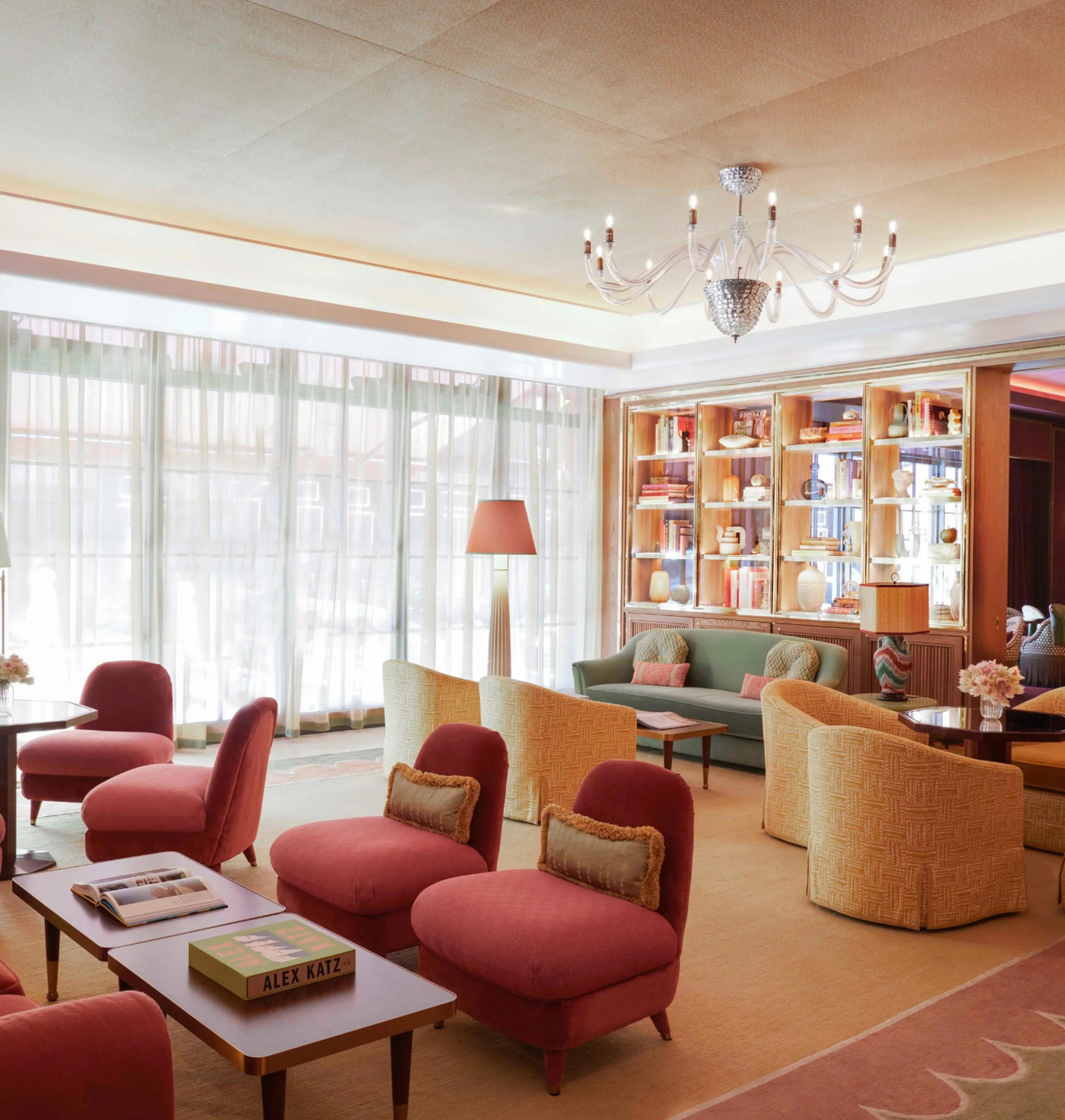
Comfortable, festive atmosphere with friendly, efficient service in a two-story neighborhood setting.