
Flying pig Matsudo Honten puts Matsudo’s yoshoku scene in sharper focus: small-room hamburger steak cooking with a sourcing hook, selected for Tabelog 100 Yoshoku EAST 2025 and earlier listed in 2023. The draw is not luxury dining but a compact, ingredient-led format that treats the Japanese Western plate as a serious craft category rather than a nostalgia exercise.
Pearl is the En Primeur Club membership app — saves, bookings, and concierge access live there. Same editors, same standards.
- Address
- Japan, 〒271-0073 Chiba, Matsudo, Konemoto, 2-9 吉ビル
- Phone
- +81 47-710-5242
- Website
- tabelog.com
 Saves & bookings on Pearl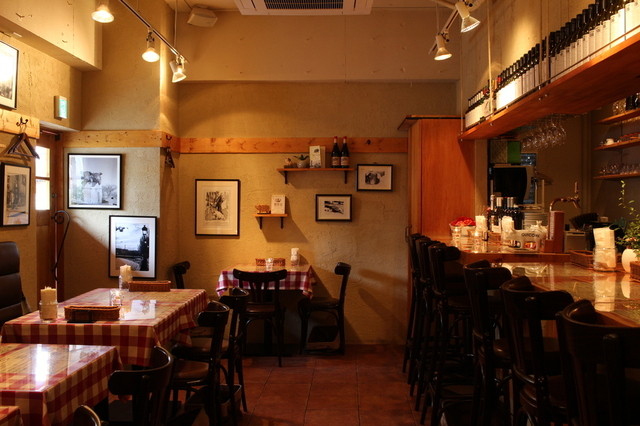
Approaching a small yoshoku room in Matsudo is unlike chasing Tokyo tasting-menu counters. The cues are quieter: a station-side rhythm, a compact dining room, and a plate built around hamburger steak rather than ceremony. In Japan, yoshoku works by translation: Western forms absorbed, adapted, sauced, and folded into everyday dining until they became their own grammar. Hamburger steak sits at its center, less about novelty than grind, fat, heat, sauce, and rice.
Flying pig Matsudo Honten belongs to the serious end of that tradition. Its selection for Tabelog 100 Yoshoku EAST 2025, after a Tabelog 100 Yoshoku listing in 2023, matters in a category where praise often goes to restaurants refining familiar comfort food rather than disguising it. A Tabelog score of 3.64 places it in a crowded field where sourcing and consistency carry weight. Matsudo is not trying to be Ginza; its stronger food addresses usually work in narrower formats, with a clearer local audience and less theatre.
Hamburger steak as sourcing argument, not retro comfort
The defining idea is hamburger steak, but the useful lens is the patty’s origin. The stated specialty combines duck with Kagoshima Sakurajima Buta, shifting the dish away from the standard beef-heavy or pork-beef blends of many yoshoku shops. That sourcing choice is the editorial point: Japanese Western cooking can seem simple until the meat blend changes the plate’s economics and texture. Duck brings a different fat profile; Kagoshima pork carries regional identity in a dish often treated as generic.
This is why the restaurant fits Matsudo’s better dining map. The city has strong, tightly focused rooms rather than one dominant luxury corridor. For fish-led Japanese cooking, Ajitokoro Musashino points to another local specialization, while Chuka Soba Maruki and Chuka Soba Yanagi show how ramen shops anchor daily eating culture at lower spend. The comparison is useful because Flying pig Matsudo Honten occupies another tier: not a fast noodle stop, not an occasion-only French or Italian room, but a yoshoku address where the main plate justifies a more deliberate meal.
Within Matsudo’s peer group, pricing reinforces that middle position. Tonikaku Matsudo honten and Curry House MUMBAI Matsudo ten sit closer to everyday casual budgets; Tonkatsu Tomita overlaps at dinner but follows a different fried-cutlet logic; Trattoria Il Regalo pushes higher for dinner in an Italian frame. Flying pig Matsudo Honten sits between these impulses, with a recognizable comfort-food format and award signals beyond the merely convenient.
A 20-seat room changes how yoshoku feels
Scale matters in yoshoku because the food depends on timing. A 20-seat room, split between counter and table seating, keeps the format intimate without becoming chef-counter performance. Counter seats suit solo diners and pairs wanting a compact-kitchen rhythm; tables work for families and small groups. That balance helps explain why hamburger steak travels across generations in Japan: children understand it, adults can be exacting, and the kitchen’s craft is visible without explanation.
The non-smoking policy, card and electronic payment acceptance, and take-out availability put it in contemporary casual dining rather than nostalgia. Wine and cocktails are listed, too, showing how yoshoku has matured. The category no longer has to behave like a lunch-only Westernized diner; it can hold dinner, drinks, anniversaries, and family meals without changing its core proposition.
For a broader Matsudo itinerary, place it alongside category specialists rather than generalist dining rooms. Bread obsessives look to Backstube Zopf; yoshoku comparisons can extend to baga tokidoki youshokutei. The city’s dining appeal is cumulative: focused addresses, each with a narrower promise than Tokyo’s broad-brush restaurant districts. For wider planning, Our full Matsudo restaurants guide gives the clearest read on how those formats sit together.
How to read it within a Japan dining trip
For travelers building a Japan itinerary, this stop’s value is not spectacle. It is a clear example of yoshoku as a living craft category outside central Tokyo, useful for diners who have booked sushi, tempura, or kaiseki and want another part of Japanese restaurant culture. Hamburger steak may sound modest beside a formal tasting menu, but in the right room it reveals the same Japanese concern with sourcing, repeatability, and calibration.
The 2015 opening gives the restaurant enough operating history to make later Tabelog 100 recognition meaningful rather than a launch-period burst. The award list also places it within eastern Japan’s yoshoku conversation, not merely Matsudo’s local circuit. That matters when deciding whether to leave the tighter Tokyo orbit: a focused Chiba address needs a reason to compete for time, and ingredient-led hamburger steak with recognized yoshoku standing is better than novelty.
Matsudo also works as a base or side trip when the day is planned around eastern Tokyo or Chiba rather than the hotel-heavy center. Readers mapping the city can pair the restaurant guide with Our full Matsudo hotels guide, Our full Matsudo bars guide, Our full Matsudo wineries guide, and Our full Matsudo experiences guide. For wider Japan and overseas comparison, EP Club also tracks formats as varied as -Grilled beef Sukiyaki- KAMAKURA TANUKIAN 鎌倉 たぬき庵 in Kamakura. 鮪と炭火焼き うお炭 秋葉原店 in Tokyo.cafe in Osaka.know in Kumamoto, (Shoku) Vietnam in Kawasaki, [Curry Senmon Ten] Maruyama Kyoju. in Sapporo, Jōdo Saké Bar in Los Angeles, and Onigiri Time in Pasadena.
The editorial call is simple: treat the restaurant as a precision yoshoku stop, not a novelty detour. The sourcing story gives the hamburger steak a reason to travel, and the recognition places the restaurant in a category where disciplined familiarity is the point.
How It Stacks Up
Comparable venues by cuisine and price in the same metro.
| Venue | Cuisine | Price | Notes |
|---|---|---|---|
| Flying pig Matsudo HontenThis venue — the venue you are viewing | Duck & Kagoshima pork hamburger steak (Yoshoku) | $$ | Not listed |
| Backstube Zopf | Japanese bakery & pastry shop | $ | Koganehara |
| Ramen Tomita | Traditional Japanese Tsukemen | $$ | Matsudo |
| Tonikaku Matsudo honten | Ramen, tsukemen & abura soba | $$ | Matsudo |
| baga tokidoki youshokutei | Hamburgers & Japanese-style Western cuisine in a Japanese tatami setting | $$ | Shin-Yahashira / Yabashira |
| Chuka Soba Maruki | Classic Japanese ramen (chuka soba & tsukemen) | $ | Matsudo |
Recognition history
Dated appearances from independent guides and award organizations, with the underlying list record or original source where available.
Tabelog 100 #89 · No. 89
Tabelog · Tabelog 100 - Yoshoku - EAST - 2025







At a Glance
- Cozy
- Lively
- Intimate
- Date Night
- Celebration
- Group Dining
- Casual Hangout
- Solo
- Standalone
- Extensive Wine List
- Sommelier Led
- Local Sourcing
Current opening hours
- Monday
- 11:30 AM–2 PM, 5:30–8:30 PM
- Tuesday
- 11:30 AM–2 PM, 5:30–8:30 PM
- Wednesday
- 11:30 AM–2 PM, 5:30–8:30 PM
- Thursday
- 11:30 AM–2 PM, 5:30–8:30 PM
- Friday
- 11:30 AM–2 PM, 5:30–8:30 PM
- Saturday
- 11:30 AM–2 PM, 5:30–8:30 PM
- Sunday
- 11:30 AM–2 PM, 5:30–8:30 PM
Hours can change for holidays and private events. Last verified .
A small, at-home style Western-style restaurant with a relaxed, cozy atmosphere suited to dates, girls’ nights, and casual celebrations, with a focus on comfortable sit-down dining rather than bar energy.