
Tabelog 100 #87
Our verdict
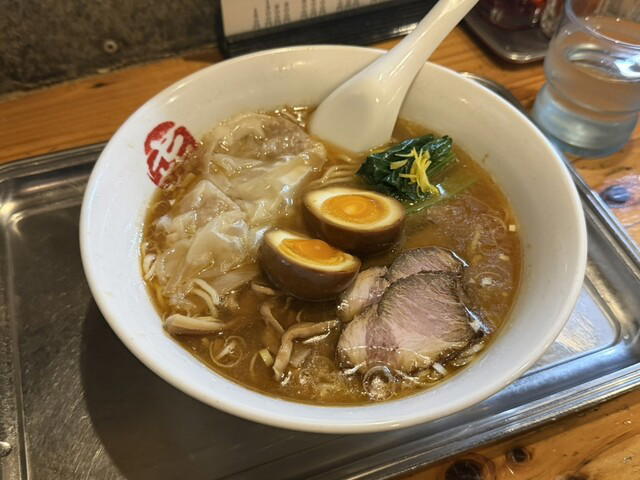
Chuka Soba Maruki belongs to Matsudo’s serious ramen circuit: a small counter shop recognized in Tabelog’s Ramen EAST 100 selection for 2024 and 2025. The appeal is not luxury but discipline, with ramen and tsukemen treated as source-led cooking rather than quick fuel, and a local price tier that keeps the focus on the bowl rather than the ceremony.

Pearl is the En Primeur Club membership app, where members save venues, book tables and use the concierge.
The menu
What to order
- Chuka soba (Chinese-style soy sauce ramen)
- Tsukemen (dipping noodles)
- Negi char siu ramen
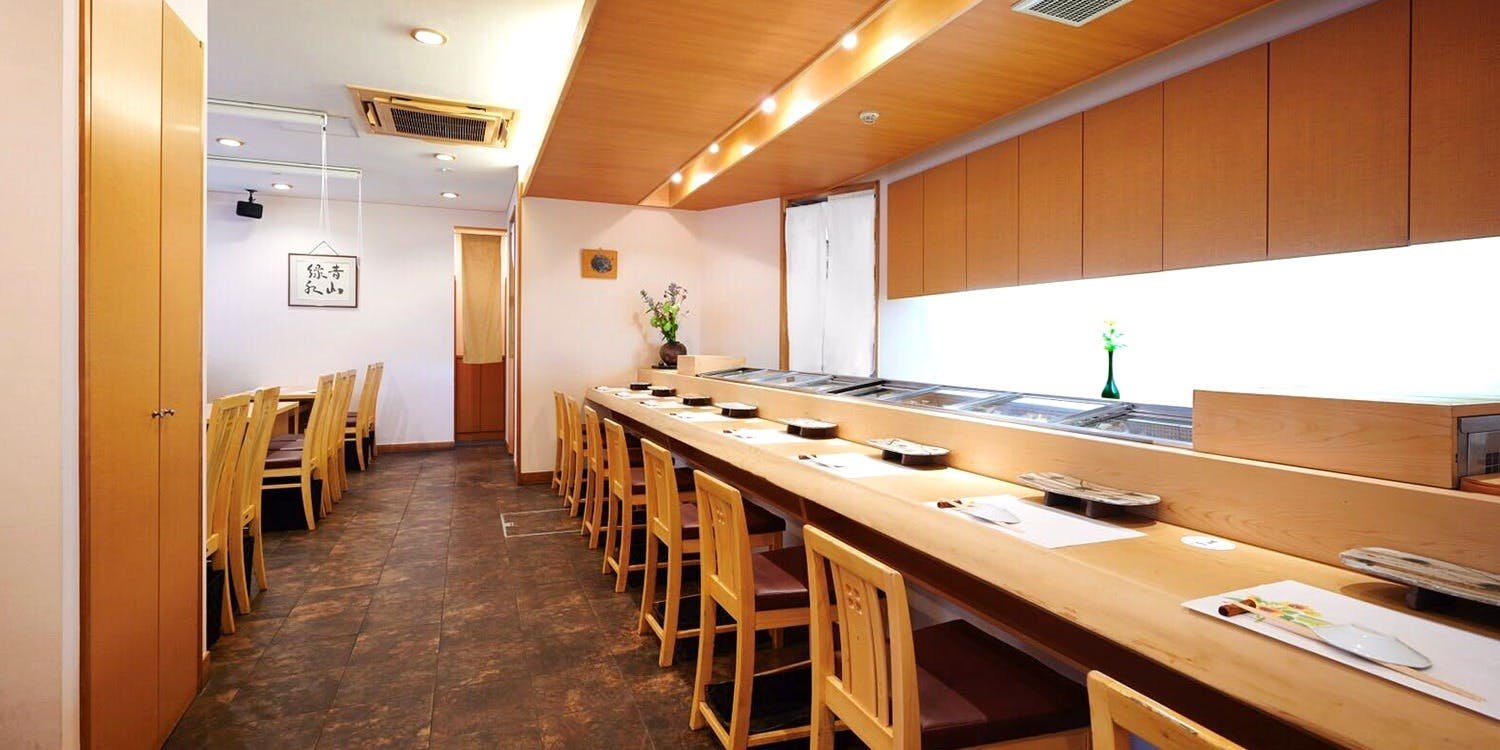
The room is built for concentration: counter seating, a short service rhythm, and the quiet choreography that defines serious suburban ramen in greater Tokyo. Matsudo has long rewarded noodle shops that can hold local loyalty without the theatre of central-city dining, and Chuka Soba Maruki fits that grammar. This is ramen as a compact craft format, where stock, noodles, tare and toppings have to make their argument quickly because there is little else to hide behind.
That matters in Chiba, where ramen culture is not a single style so much as a network of shop-level specialisms. Matsudo’s name already carries weight among noodle obsessives, but the city’s strength lies in range: rich dipping noodles, lighter chuka soba, curry, tonkatsu and bakery culture all sit within a commuter-city dining map rather than a tourist corridor. For a wider read on that map, Our full Matsudo restaurants guide places the ramen counters alongside neighbourhood addresses such as Ajitokoro Musashino, Backstube Zopf, baga tokidoki youshokutei, Chuka Soba Yanagi and Curry House MUMBAI Matsudo ten.
Matsudo ramen rewards stock work, not spectacle
The ingredient story here is less about luxury sourcing than extraction and balance. Chuka soba, by tradition, depends on the clarity of its components: broth structure, seasoning base, noodle texture and the restraint to stop before the bowl becomes heavy. Tsukemen changes the equation by separating noodles and dipping soup, putting more pressure on noodle quality and concentration. A shop serving both ramen and tsukemen is therefore judged across two related but different tests: one integrated, one modular.
Recognition in Tabelog’s Ramen EAST 100 selection in both 2024 and 2025 gives the address a useful external signal. Tabelog’s ramen lists are particularly meaningful in Japan because they sit inside a culture of obsessive user scrutiny, where small differences in soup density, noodle handling and consistency become public debate. A 3.75 score places the shop in a serious enthusiast tier rather than the casual convenience bracket. The point is not that a number can explain a bowl; it is that sustained selection in a regional ramen list usually reflects repeat credibility among diners who compare shops closely.
Against Matsudo peers, the positioning is lean. Flying pig Matsudo Honten and Tonkatsu Tomita occupy higher dinner spending bands, while Tonikaku Matsudo honten and Matsudo Chuka Soba Tomita Shokudo sit closer to the ramen and tsukemen comparison set. Curry House MUMBAI Matsudo ten adds another local-value counterpoint, with curry rather than noodles as the anchor. Chuka Soba Maruki’s low listed spend keeps it in the everyday ramen category, but the award history moves it into a more selective editorial frame.
A counter format that suits solo eaters and repeat locals
Counter-only ramen shops create a different kind of hospitality from full-service restaurants. The exchange is direct, turnover matters, and the guest’s role is to read the room: order decisively, eat while the noodles are at their intended texture, and leave space for the next diner. That format can feel abrupt to travelers expecting a long meal, but it is part of why ramen culture has remained technically sharp. The bowl is the service.
The small seating count also affects how to think about timing. This is not a sprawling dining room designed for lingering groups; it is better understood as a focused stop within Matsudo rather than the anchor for a long evening. The family-friendly and solo-friendly signals are useful because they cut against the assumption that serious ramen is only for lone enthusiasts. In suburban Japan, a respected noodle counter can serve commuters, regulars, parents with school-age children and ramen hunters in the same service window.
For visitors building a broader itinerary, Matsudo works as a compact food stop rather than a resort-style destination. The local guides to Matsudo hotels, Matsudo bars, Matsudo wineries and Matsudo experiences are better used as planning scaffolding than as a promise of a dense nightlife district. The strongest reason to come remains food at the neighbourhood scale.
How to read its place in Japan's noodle map
Ramen’s global image often flattens the category into richness, heat or visual excess. In Japan, the more interesting distinction is usually discipline: how a shop chooses its stock base, how much weight the tare carries, whether noodles are framed as support or protagonist, and how the bowl behaves after the first few bites. Chuka soba, in particular, has a memory of older Tokyo-style ramen even when modern shops adapt the form. That lineage makes restraint meaningful rather than plain.
Chuka Soba Maruki is worth reading inside that quieter tradition. Its public details point to a shop that has been operating since 2001, has remained within a compact counter format, and has earned repeat Tabelog Ramen EAST 100 recognition. Those are not decorative facts; they imply durability in a market where ramen fashion moves quickly and diners are quick to defect when execution slips.
The wider Japanese dining field gives useful contrast. A beef sukiyaki address such as -Grilled beef Sukiyaki- KAMAKURA TANUKIAN 鎌倉 たぬき庵 in Kamakura operates around a different ritual of ingredient handling, while. 鮪と炭火焼き うお炭 秋葉原店 in Tokyo.cafe in Osaka.know in Kumamoto, (Shoku) Vietnam in Kawasaki and [Curry Senmon Ten] Maruyama Kyoju. in Sapporo show how regional cities and commuter hubs sustain specialised formats outside luxury dining. Across the Pacific, Jōdo Saké Bar in Los Angeles and Onigiri Time in Pasadena illustrate how Japanese categories travel, but Matsudo ramen remains strongest on its home terms: short, exacting, local and measured by repeat bowls rather than spectacle.
The editorial read is clear. Choose this address for an efficient, source-conscious ramen stop in a city that takes noodles seriously, not for elaborate service or a long-form dining arc. The attraction is the pressure of a small format: a bowl has minutes to prove its sourcing choices, stock work and noodle handling. In Matsudo, that is enough.
Frequently asked questions
Where is Chuka Soba Maruki in Matsudo?
Chuka Soba Maruki is located in Matsudo.
How much does it cost to eat at Chuka Soba Maruki?
Pricing at Chuka Soba Maruki is listed as - JPY 999 - JPY 999.
What are the opening hours for Chuka Soba Maruki?
Hours at Chuka Soba Maruki: Mon: 11 AM–1:45 PM, 6–8:45 PM; Tue: Closed; Wed: Closed; Thu: 11 AM–1:45 PM, 6–8:45 PM; Fri: 11 AM–1:45 PM, 6–8:45 PM; Sat: 11 AM–1:45 PM, 6–8:45 PM; Sun: 11 AM–1:45 PM, 6–8:45 PM.
What is Chuka Soba Maruki known for?
Chuka Soba Maruki is primarily known for its core concept and execution in Matsudo.
Snapshot
Nearby venues at a similar price tier for orientation.
| Venue | Cuisine | Price | Awards | Notes |
|---|---|---|---|---|
| Chuka Soba MarukiThis venue (the venue you are viewing) | Classic Japanese ramen (chuka soba & tsukemen) | $1–10 | Tabelog 100 #87 | Not listed |
| Chuka Soba Yanagi | Ramen / Chuka Soba | $10–20 | Tabelog 100 #51 | Kita-Kogane |
| Tonikaku Matsudo honten | Ramen, tsukemen & abura soba | $10–20 | Tabelog 100 #42 | Matsudo |
| Ajitokoro Musashino | Ramen & Tsukemen Shop | $10–20 | Tabelog 100 #40 | Matsudo |
| R-S | Gourmet Hamburger & Cafe | $20–30 | Tabelog 100 #19 | Koganehara |
| Backstube Zopf | Japanese bakery & pastry shop | $10–20 | Tabelog 100 #65 | Koganehara |
Recognition history
Dated appearances from independent guides and award organizations, with the underlying list record or original source where available.
Tabelog 100 #87 · No. 87
Tabelog · Tabelog 100 - Ramen - EAST - 2025
Continue exploring
More in Matsudo
Restaurants in Matsudo
All restaurants in Matsudo →






Details
- Cozy
- Classic
- Intimate
- Solo
- Family
- Casual Hangout
- After Work
- Chefs Counter
- Standalone
- A La Carte
- Counter Dining
Current opening hours
- Monday
- 11 AM–1:45 PM, 6–8:45 PM
- Tuesday
- Closed
- Wednesday
- Closed
- Thursday
- 11 AM–1:45 PM, 6–8:45 PM
- Friday
- 11 AM–1:45 PM, 6–8:45 PM
- Saturday
- 11 AM–1:45 PM, 6–8:45 PM
- Sunday
- 11 AM–1:45 PM, 6–8:45 PM
Hours can change for holidays and private events. Hours as of .