Our verdict
Cudne Manowce on Bolesława Chrobrego in central Olsztyn sits within a city whose restaurant culture has quietly grown more serious in recent years, drawing on the agricultural depth of the Warmia-Masuria region. The name, roughly translating to 'wonderful wilderness', signals a kitchen oriented toward the foraged and the locally grown, placing it in a wider Polish movement that prizes provenance over pageantry.

Pearl is the En Primeur Club membership app, where members save venues, book tables and use the concierge.
Where Warmia's Fields Meet the Plate
Olsztyn is not a city that announces itself loudly on Poland's dining circuit. Kraków has its fine-dining ambitions, venues like Bottiglieria 1881 Restaurant in Kraków signal that city's appetite for Michelin-calibre precision, and Warsaw's hub.praga reflects the capital's restless reinvention. Olsztyn moves differently. The regional capital of Warmia-Masuria sits at the edge of one of Europe's most intact lake districts, and its better restaurants have long drawn on that geography rather than competing with the southern cities on their own terms. Cudne Manowce, at Bolesława Chrobrego 4A, sits inside that pattern.
The name matters here. Cudne manowce is a Polish phrase carrying the sense of a wonderful, wandering wilderness, the kind of language that signals intent as much as atmosphere. In a Polish dining culture that has increasingly divided between urban modernist kitchens and rural-rooted ingredient programs, the name locates this restaurant closer to the latter: interested in what grows, forages, or grazes nearby, and in presenting that without excessive mediation.
The Warmia-Masuria Ingredient Argument
The case for regional sourcing in northeastern Poland is not sentimental. Warmia-Masuria holds over 2,000 lakes, extensive forests, and some of the country's least industrialised farmland. That geography produces freshwater fish, particularly pike-perch, tench, and bream, alongside wild mushrooms, game, and dairy from small-scale producers whose output rarely reaches Warsaw supermarkets. For a kitchen that builds its identity around provenance, this region offers material that most Polish city restaurants cannot access without deliberate logistics.
This model has parallels elsewhere in Poland's more thoughtful dining rooms. Muga in Poznań works with regional producers in Greater Poland in a comparable spirit, and Sztuka Chleba i Wina in Białystok reflects the Podlaskie region's agricultural character in its approach. What differs in the Olsztyn context is the particular density of lake and forest resources available within a short radius, ingredients that carry genuine regional specificity rather than generic Polish-countryside signalling.
Internationally, the template for this kind of provenance-driven cooking has been well established: Lazy Bear in San Francisco built a programme around hyper-local and foraged ingredients at the fine-dining level, while Le Bernardin in New York City demonstrates how rigorously a kitchen can be organised around a single ingredient category, in that case, fish, when sourcing is treated as a structural commitment rather than a marketing claim. The Warmia approach is less codified, more seasonal in the loosest sense: what the region offers, the kitchen interprets.
Atmosphere and Physical Context
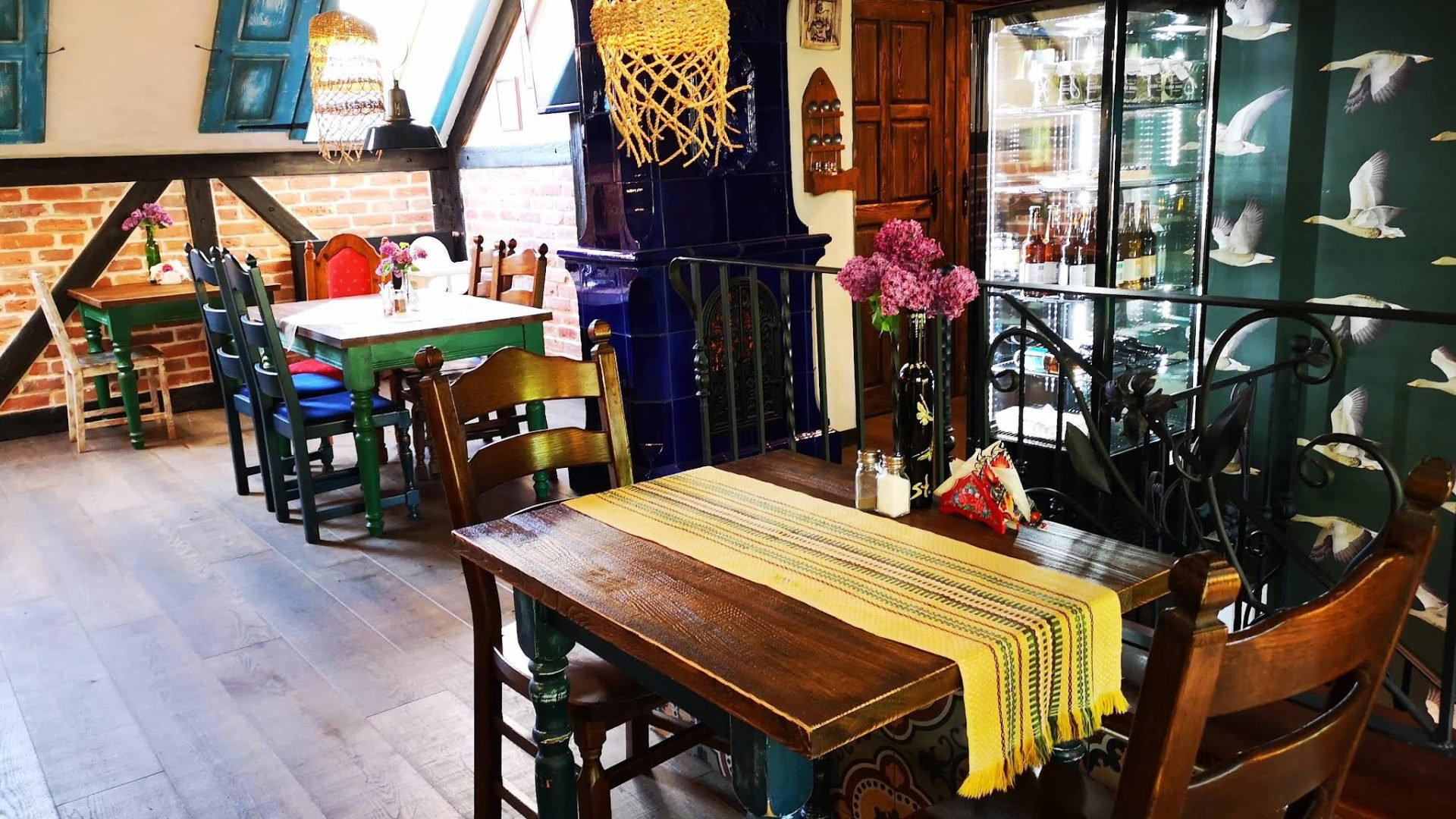
The address on Bolesława Chrobrego places Cudne Manowce in the older residential fabric of central Olsztyn, away from the Old Town tourist corridor but close enough to the city's core to attract a local rather than purely visitor clientele. Polish dining rooms in this register, not grand, not minimalist-clinical, tend toward a particular warmth: exposed brick or plaster, wooden furniture, a short but considered drinks list. The name's wilderness associations suggest an interior that references the natural world without costuming itself as a hunting lodge.
That tonal positioning is significant. Restaurants working with foraged and regional ingredients in Poland increasingly face a choice between rusticity-as-theatre and quieter, more assured presentations that let the sourcing speak without set dressing. The latter approach is harder to sustain, requiring confidence in the ingredients themselves and in a customer base willing to engage with what a lake region actually produces in November versus July.
Positioning Within Polish Regional Dining
Poland's restaurant culture in smaller cities has undergone a genuine shift over the past decade. The generation of kitchens that arrived in the 2010s, often led by cooks returning from stints in western Europe, introduced sourcing discipline and menu seasonality that had previously been concentrated in Warsaw and Kraków. In that context, Olsztyn's dining scene, while modest in scale, reflects a broader national trend toward provincial seriousness.
Comparison venues in the regional Polish context suggest a mid-to-upper price positioning for restaurants in this mode. Operations like Giewont in Kościelisko at the €€€ tier and Concordia Taste Poznań in Poznan illustrate how regionally anchored Polish kitchens tend to price: above the casual bistro tier, below the formal fine-dining ceiling.
For broader context on where Olsztyn's dining sits within Poland's regional restaurant geography, our full Olsztyn restaurants guide maps the city's options by category and neighbourhood. Other regional reference points for readers building a Polish itinerary include Kaktusy Kato Koncept Kulinarny in Katowice, Luneta & Lorneta Bistro Club in Ciekocinko, OK Wine Bar in Wrocław, Nare Sushi in Skórzewo, Bar Przystań in Sopot, La Cucina Ristorante in Gdansk, Arco by Paco Pérez in Gdańsk, Drukarnia Smaku Cristina in Zakopane, and Ariel in Krakow.
Planning Your Visit
Cudne Manowce is located at Bolesława Chrobrego 4A, 10-033 Olsztyn. Olsztyn is accessible by rail from Warsaw in under two and a half hours on direct intercity services, making it a practical day-trip or short-stay destination from the capital. The restaurant's central location makes it walkable from the Old Town and the main rail station.
Seasonality will shape what the kitchen is working with at any given time: winter menus in a region like Warmia-Masuria lean on preserved, cured, and root-based ingredients, while late spring and summer bring the freshwater fish and foraged material the region is known for. Visiting with awareness of that calendar is the most direct way to experience the kitchen's ingredient argument at its clearest.
Frequently asked questions
Is Cudne Manowce a family-friendly restaurant?
The address at Bolesława Chrobrego 4A places the restaurant in a quieter residential part of central Olsztyn rather than the busier Old Town tourist corridor, which tends to suit a more relaxed, mixed-age crowd. To confirm any specific arrangements for children, check the venue's official channels before visiting.
Is Cudne Manowce formal or casual?
The setting on Bolesława Chrobrego, away from Olsztyn's Old Town circuit, points toward a neighbourhood character rather than a formal dining room. Polish regional restaurants in smaller cities like Olsztyn have generally moved away from stiff, occasion-only formats over the past decade, favouring more relaxed environments built around ingredient-led cooking.
Does Cudne Manowce focus on ingredients from the Warmia-Masuria region?
The restaurant is located in Olsztyn, the regional capital of Warmia-Masuria, one of Poland's most ecologically intact provinces, with over 2,000 lakes and extensive forest cover that produce freshwater fish, game, mushrooms, and seasonal wild plants largely unavailable to kitchens further south. This geography makes a strong case for hyper-local sourcing that goes beyond sentiment into genuine ingredient quality.
What should I order at Cudne Manowce?
Regional Polish cooking in this part of the country tends to feature ingredients that don't travel far from source to plate.
What's the address for Cudne Manowce?
Cudne Manowce is located at Bolesława Chrobrego 4A, 10-033 Olsztyn, Poland, Olsztyn.
How hard is it to get a table at Cudne Manowce?
The restaurant sits in a residential stretch of central Olsztyn rather than a high-footfall tourist area, which can affect walk-in availability in either direction. The most reliable approach is to check the venue's official channels through local search listings to confirm current availability and reservation options.
In Context: Similar Options
Comparable venues nearby, for context on price, style, and recognition.
| Venue | Cuisine | Price | Notes |
|---|---|---|---|
| Cudne ManowceThis venue (the venue you are viewing) | Traditional Warmia and Masuria Polish | $20–30 | Not listed |
| Oberża pod Czerwonym Wieprzem | Traditional Polish Communist-Era Cuisine | $20–30 | Mirów |
| Żebra i Kości | Modern Polish Steakhouse and Barbecue | $30–50 | Srodmiescie |
| Baken | Artisanal Bakery & Breakfast | $10–20 | Srodmiescie |
| Tawerna Pod Łososiem | Traditional Polish & Seafood | $10–20 | Sobieszewska Island |
| Brunch SQUARE Restaurant | Modern Brunch | $10–20 | city center |
Continue exploring
More in Olsztyn
Restaurants in Olsztyn
All restaurants in Olsztyn →
Hotels in Olsztyn
Browse all →
Details
- Rustic
- Cozy
- Classic
- Intimate
- Date Night
- Family
- Casual Hangout
- Historic Building
- Terrace
- Local Sourcing
- Street Scene
- A La Carte
- Local Beer
- Vegetarian Friendly
- Gluten Free Options
Current opening hours
- Monday
- Closed
- Tuesday
- Closed
- Wednesday
- 12–8 PM
- Thursday
- 12–8 PM
- Friday
- 12–8 PM
- Saturday
- 12–8 PM
- Sunday
- 12–7 PM
Hours can change for holidays and private events. Hours as of .
Cozy and authentic with traditional Warmian architecture featuring timber framing, red brick, and tiled stoves, creating a warm, regional atmosphere.