Fisch Witte occupies a counter at Viktualienmarkt, Munich's open-air market that has anchored the city's food culture since 1807. Among the stalls of the Innenstadt, it represents the market's fish-trading tradition in concentrated form: a stand-up format, a short and seasonal roster, and proximity to the kind of customer who knows exactly what they came for.
Pearl is the En Primeur Club membership app — saves, bookings, and concierge access live there. Same editors, same standards.
- Address
- Viktualienmarkt 9, 80331 München, Germany
- Phone
- +49 89 222640
- Website
- fisch-witte.de
- Directions
- Get directions
 Saves & bookings on Pearl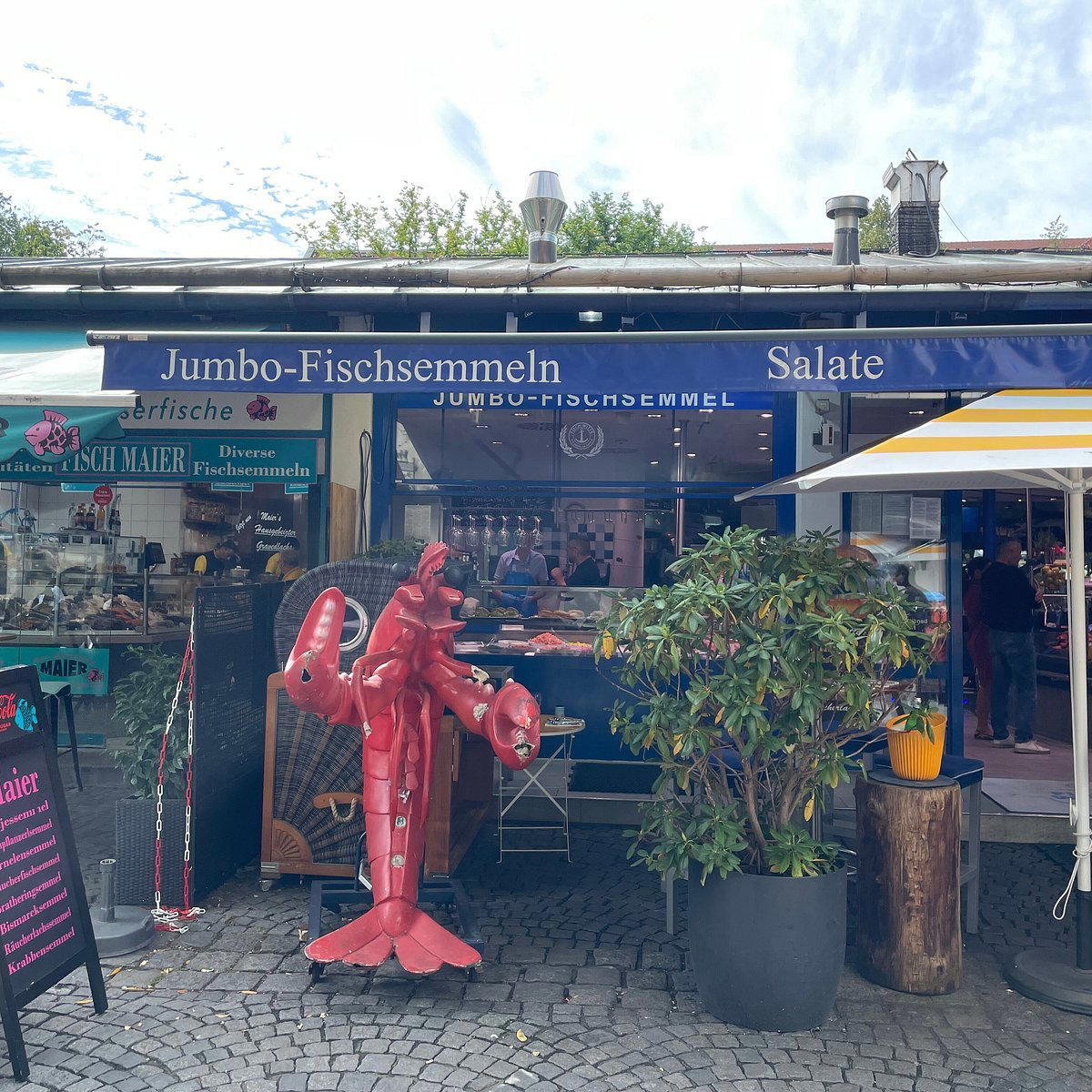
What the Market Says About a City
Viktualienmarkt does not operate like a tourist attraction that happens to sell food. It operates like a working market that happens to be surrounded by a city of 1.5 million. The distinction matters. The roughly 140 stalls spread across its southern Innenstadt site have supplied Munich's households and restaurant kitchens since the early nineteenth century, and the pressure to perform, on quality, on freshness, on price discipline, has never come from guidebook coverage. It has come from the daily vote of a local clientele who know exactly what the produce should look like and what it should cost. Fisch Witte sits inside that system, at Viktualienmarkt 9, occupying the fish-counter position that the market's overall logic demands: specialist, seasonal, and formatted for people who are buying or eating rather than browsing.
The Viktualienmarkt Context
To understand what a market fish counter in this location means, it helps to map where Viktualienmarkt sits in Munich's food geography. The market is a ten-minute walk from Marienplatz, technically central but functionally separate from the tourist-heavy restaurant circuit that surrounds the Rathaus. The stalls here sell to professional buyers in the early morning and to residents through the day. The beer garden at the market's centre, one of the few in Munich's inner city that operates on public ground, reinforces the social rather than performative character of the site. A fish stand in this context is not a destination concept. It is infrastructure, and it is evaluated accordingly.
That infrastructure model places Fisch Witte in a different comparable set from Munich's formal dining tier. Venues like Tantris, Atelier, Alois - Dallmayr Fine Dining, and JAN operate in the €€€€ bracket with tasting menus, reservation windows that stretch months ahead, and service teams built around ceremony. Tohru in der Schreiberei layers Japanese precision onto German ingredients in a formal setting. Fisch Witte's relevance is measured against none of those benchmarks. Its comparable set is the other specialist market counters at Viktualienmarkt, the cheese sellers, the butchers, the spice traders, all of whom operate under the same daily accountability to a regular, demanding customer base.
Bavaria and Fish: A Relationship Often Misread
Bavaria's culinary identity, as exported by its beer halls and festival season, centres on pork, pretzels, and wheat beer. That framing obscures a parallel tradition with deep regional roots. The state's lake system, the Ammersee, the Starnberger See, the Chiemsee, has produced freshwater fish for Bavarian tables for centuries. Carp, pike-perch, trout, and whitefish have long been embedded in the region's market culture, appearing at Viktualienmarkt stalls well before the city's restaurant scene developed into its current form. A fish counter at this market is not an anomaly in Bavarian food culture. It is, in structural terms, one of its more historically grounded expressions.
Germany's broader fish-focused fine dining, when it reaches the highest tiers, tends to congregate outside Munich. Aqua in Wolfsburg, Schwarzwaldstube in Baiersbronn, and Restaurant Haerlin in Hamburg all work with seafood at an award-acknowledged level. Internationally, Le Bernardin in New York City has set a long-held standard for what fish-forward fine dining can achieve. What those venues share is a formal structure built around the product. A market counter like Fisch Witte operates at the opposite end of the format spectrum, closer to the source and without the structural overhead, but connected to the same core argument: that fish, handled with knowledge and bought fresh, needs relatively little beyond competent preparation and honest presentation.
What to Order
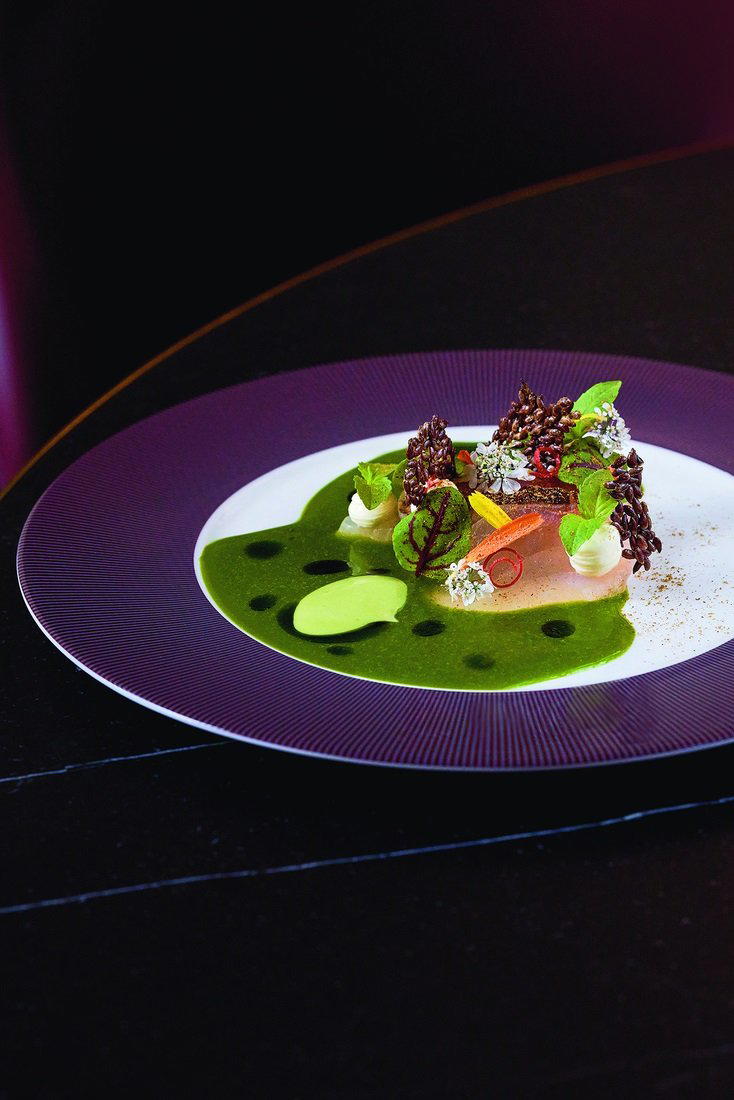
The restaurant's counter changes with the market, so specific recommendations are best made on the day. What the Viktualienmarkt context implies, however, is a roster that responds to season and supply rather than a fixed card. Bavarian freshwater fish, carp in autumn and winter, pike-perch through the warmer months, trout as a near-constant, tend to appear at market counters in forms suited to the stand-up format: smoked portions, fried fillets, or marinated preparations that travel. Visitors with a strong preference for a specific species should plan for the possibility that availability reflects the week's catch rather than a permanent menu commitment. That is not a limitation; it is the format's point.
Setting and Format
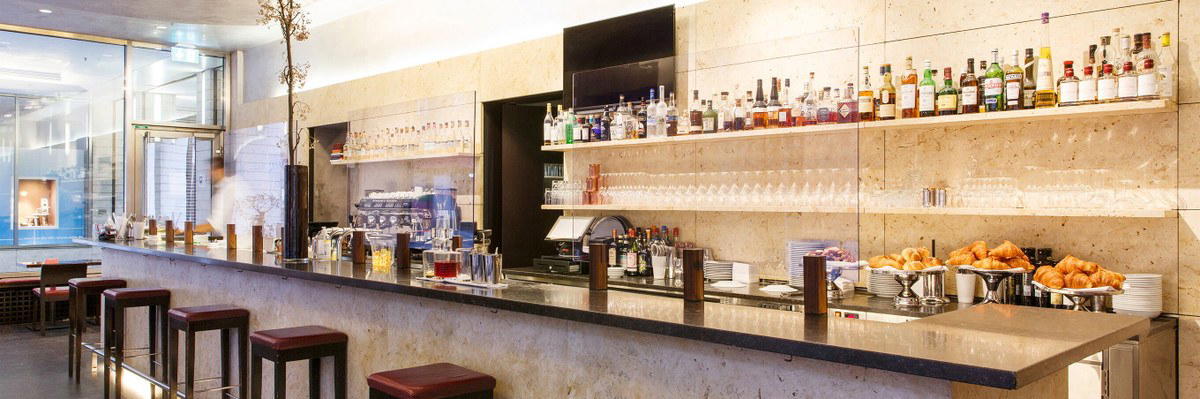
Market counters at Viktualienmarkt do not offer the kind of setting that features in interior design coverage. The experience is ambient in the market sense: stall sound, market smell, open air or partial shelter depending on the season, and the social texture of a space used daily by people who live nearby. For visitors accustomed to the controlled environments of Munich's formal dining rooms, the adjustment is significant. The trade-off is directness. There is no choreographed service sequence, no pacing between courses, and no room to linger over a wine list. What there is, at a fish counter in a functioning market, is a clarity of transaction that the formal tier tends to obscure.
Planning a Visit
Viktualienmarkt operates on market hours rather than restaurant hours, which typically means an early-to-afternoon window. Peak trading at the fish stalls tends to cluster in the morning, when supply is fullest and the regular customer base does its weekly buying. Visitors aiming to eat rather than simply purchase will find the late-morning window, roughly 10am to noon, a reasonable target, though market hours can shift seasonally and the stall's own schedule can vary seasonally. Reaching the market from central Munich is direct, with Marienplatz a short walk away. Walk-ins are the natural format for a market counter. Given that, the visit works well as part of a broader Viktualienmarkt hour rather than a standalone reservation-style event.
Just the Basics
Comparable venues nearby, for context on price, style, and recognition.
| Venue | Cuisine | Price | Notes |
|---|---|---|---|
| Fisch WitteThis venue — the venue you are viewing | Isarvorstadt, Fresh Seafood Bistro | $$ | Not listed |
| Moonlight | Not listed | $$ | Ludwigsvorstadt, Contemporary Asian Sushi & Fusion |
| Wirtshaus Hohenwart | Au, Traditional Bavarian | $$ | Not listed |
| NENI München | Not listed | $$ | Isarvorstadt, Levantine Fusion Sharing Plates |
| Khanittha Im Werksviertel | Haidhausen, Authentic Thai Street Food | $$ | Not listed |
| MIVU | Schwabing, Vietnamese, Thai & Lao Fusion | $$ | Not listed |
At a Glance
- Cozy
- Lively
- Casual Hangout
- Open Kitchen
- Street Scene
Current opening hours
- Monday
- 8:30 AM–6 PM
- Tuesday
- 8:30 AM–6 PM
- Wednesday
- 8:30 AM–6 PM
- Thursday
- 8:30 AM–6 PM
- Friday
- 8:30 AM–6 PM
- Saturday
- 8:30 AM–4 PM
- Sunday
- Closed
Hours can change for holidays and private events. Last verified .
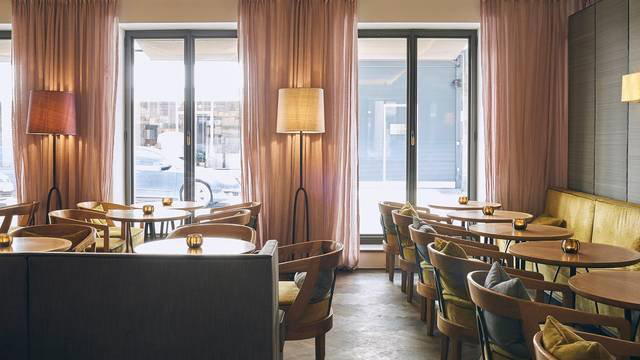
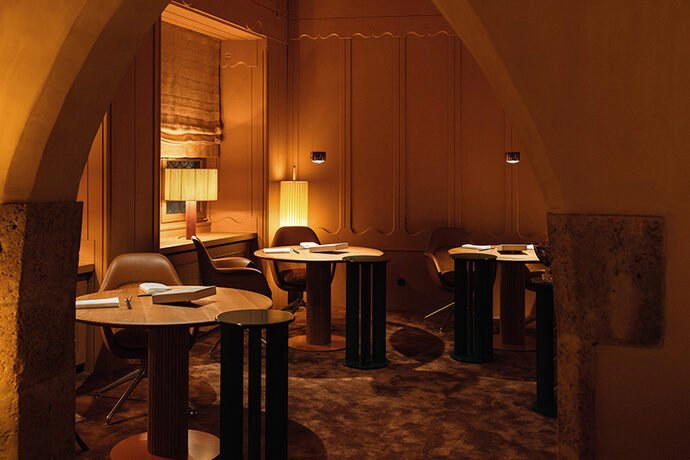
Cozy and small indoor seating with lively market atmosphere and warm hospitality.