




Michelin Plate · James Beard Award Outstanding Wine Program
Our verdict
Seasonal American mastery defines FIG + Charleston, where James Beard Award-winning chefs Mike Lata and Jason Stanhope transform daily-sourced Lowcountry ingredients into refined dishes like their legendary Ricotta Gnocchi and Chicken Liver Pâté, complemented by an award-winning wine program in an intimate bistro setting.

Pearl is the En Primeur Club membership app, where members save venues, book tables and use the concierge.
The menu
What to order
- Ricotta gnocchi
- Lowcountry bouillabaisse
- Triggerfish
Meeting Street After Dark
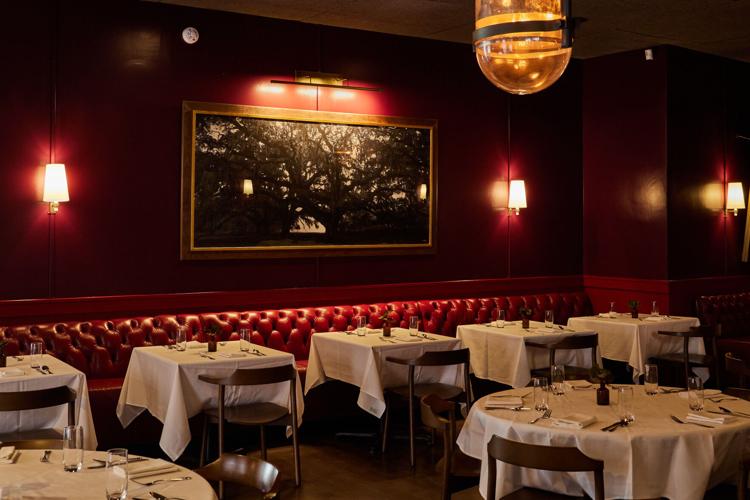
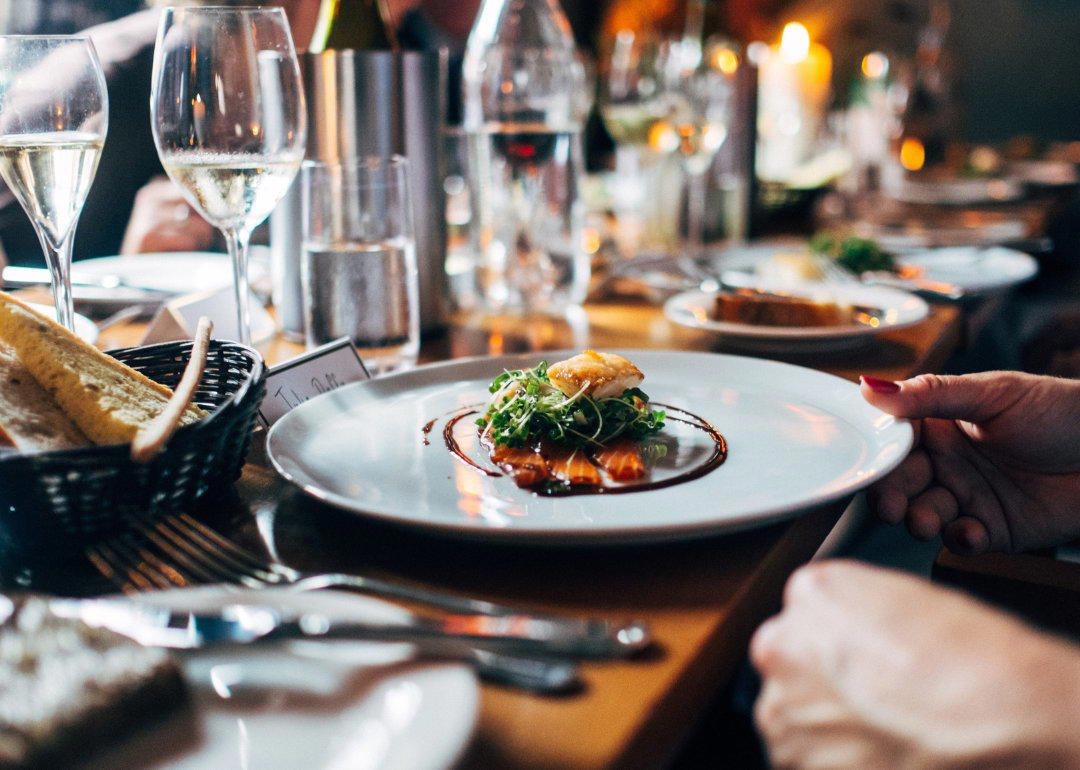
On a Tuesday evening in late spring, Meeting Street moves at the particular pace that distinguishes Charleston from every other Southern city claiming a dining identity: unhurried but purposeful, with enough foot traffic to feel alive and enough residential calm to feel like somewhere people actually live. FIG sits at 232 Meeting Street in that precise register. The facade signals nothing spectacular. Inside, the room reads as a neighborhood bistro operating at the high end of that category: closely spaced tables, warm light, the low-level din of a room that books consistently across the week. The acronym at the center of the concept, Food Is Good, is either disarming or perfectly calibrated depending on your tolerance for understatement. Either way, the room earns it.
Where FIG Fits in Charleston's Dining Arc
Charleston's restaurant scene has undergone a generational shift since the early 2000s. Against that field, FIG occupies a specific position: it helped build the architecture that the newer generation of Charleston restaurants inherited. The Lowcountry-grounded New American format, the seasonally rotated menu, the commitment to regional sourcing as a structural principle rather than a marketing footnote, these approaches were not obvious defaults in Charleston when FIG established them. They are closer to defaults now, and that is partly the point.
Chef Mike Lata trained through kitchens that treated classical French technique as a non-negotiable foundation, and that training is legible in the execution here. The category of New American cooking that FIG operates in has always been contested territory: at one end sits the maximalist fine-dining register represented nationally by Alinea in Chicago or The French Laundry in Napa; at the other, the kind of farm-sourced bistro format that risks becoming indistinct. FIG has sustained a legible identity between those poles for over two decades, which is a longer run than most restaurants of its ambition manage in any American city. Comparable regional anchors operating in that middle register include Bayona in New Orleans and, at a different price point, The Inn at Little Washington. Each of those examples has held a recognizable position in its city's dining map across decades, and each holds it through the quality of the cooking rather than through reinvention or expansion.
The Lowcountry as Culinary Framework
The Lowcountry offers a specific set of ingredients and traditions: rice agriculture with direct West African roots, shellfish abundance, slow-cooked pork preparation, and a vegetable culture shaped by long growing seasons and humid coastal conditions. How a Charleston restaurant handles that material tells you a great deal about its actual relationship to place. At FIG, the relationship is substantive. The menu reads as a genuine engagement with what the region produces rather than a surface deployment of local names for credibility. That places it in a different tier from restaurants that add a few regional ingredient callouts to otherwise generic New American menus.
For comparison within Charleston, Rodney Scott's BBQ operates in a completely different price and format category, but it represents the same principle: genuine technical command of a regional tradition rather than a decorative reference to one. FIG applies a similar rigor through a European bistro lens, which is the particular synthesis that Lata's training enabled. Spanish influences on Charleston's neighbor markets also show up in a different register at Malagón Mercado y Taperia, reinforcing how diverse Charleston's regional-ingredient conversations have become.
Recognition Record and What It Signals
Opinionated About Dining has ranked it across multiple consecutive cycles: #238 in the 2025 Casual North America list, #83 in 2024, and within the top 100 of both its Gourmet Casual and Casual North America lists for 2023. The OAD methodology weights expert user surveys heavily and is generally regarded as a credible independent signal alongside Michelin recognition. A restaurant that appears in both systems across multiple years occupies a position that reflects consistent kitchen performance rather than a single strong season.
The combination of critical recognition and high-volume public approval is not automatic, particularly in a city where dining expectations have risen sharply. For comparison, highly regarded New American kitchens at the national level, including Le Bernardin in New York City and Single Thread Farm in Healdsburg, operate in a different price register entirely, which underscores FIG's specific positioning: serious critical credibility at a casual bistro price tier.
The Chef's Formation and Its Consequences
The editorial angle on FIG runs through Mike Lata's training, but the more interesting point is what that training produced at a city-wide level rather than what it means for any single menu. Lata came through classical French kitchens before arriving in Charleston, and he applied that technical foundation to regional ingredients at a moment when very few Charleston restaurants were doing so with any rigor. The result, over two decades, is a restaurant that trained a generation of cooks who now operate across the city's dining scene. That kind of institutional influence is difficult to quantify, but it is visible in the technical seriousness of kitchens like Vern's and the sourcing discipline at Lowland. The analogy at a national scale would be the way Emeril's in New Orleans shaped the expectations of an entire city's cooking culture in the 1990s, or how Lazy Bear in San Francisco shifted what the Bay Area's communal-format dining conversation could look like. Long-running restaurants that anchor a city's self-understanding carry that weight whether or not their current menu is the most technically ambitious thing in town.
Planning Your Visit
FIG operates Tuesday through Saturday, opening at 5pm with last seating at 10:30pm. The restaurant is closed Sunday and Monday. Given the OAD rankings and consistent Michelin recognition, booking ahead is advisable, the room does not rely on walk-in volume to fill. The address at 232 Meeting Street places it in the heart of the Peninsula, accessible from most Charleston hotel concentrations.
Frequently asked questions
What should I order at FIG?
FIG's menu rotates seasonally and is grounded in Lowcountry regional sourcing, so the most reliable approach is to follow whatever the kitchen is currently emphasizing from local producers. The Michelin Plate recognition and multi-year OAD rankings both indicate consistent kitchen-wide execution rather than a handful of signature dishes carrying the rest of the menu. Chef Mike Lata's classical French training means technique is applied across the board, ordering broadly from the current menu, rather than hunting for specific dishes, is how this format is designed to be read. For pre-visit research, check the restaurant's current menu directly rather than relying on dish-level recommendations that may not reflect the seasonal rotation.
Category Peers
A short peer table to compare basics side-by-side.
| Venue | Cuisine | Price | Awards |
|---|---|---|---|
| FIGThis venue (the venue you are viewing) | Southern Farm-to-Table Bistro | Not listed | Michelin Plate · James Beard Award Outstanding Wine Program |
| Rodney Scott's BBQ | Whole-Hog South Carolina BBQ | $20–30 | Michelin Bib Gourmand · James Beard Award Best Chefs |
| 167 Raw | Modern Seafood Raw Bar | $50–100 | Not listed |
| Edmunds Oast | American Brewpub Gastropub | $30–50 | Not listed |
| Husk | Elevated Southern Farm-to-Table | Not listed | Wine Spectator Award of Excellence · Chef's Table Featured on Chef's Table |
| Leon’s Oyster Shop | Lowcountry Seafood & Fried Chicken | $30–50 | Not listed |
Recognition history
Dated appearances from independent guides and award organizations, with the underlying list record or original source where available.
Michelin Plate
Michelin
James Beard Award Outstanding Wine Program
James Beard Award
Conde Nast Selected for 2026 Condé Nast Traveler Best Restaurants in Charleston
Conde Nast
Opinionated About Dining Casual in North America Recommended
Opinionated About Dining
Robb Report 100 Greatest American Restaurants of the 21st Century #66
Robb Report
Full recognition history (11 entries)
Opinionated About Dining Casual in North America Ranked #238
Opinionated About Dining
Opinionated About Dining Casual in North America Ranked #83
Opinionated About Dining
Opinionated About Dining Casual in North America Ranked #67
Opinionated About Dining
Opinionated About Dining Gourmet Casual Dining in North America Ranked #71
Opinionated About Dining
James Beard Award Best Chefs
James Beard Award
James Beard Award Best Chefs
James Beard Award
Continue exploring
More in Charleston
Restaurants in Charleston
All restaurants in Charleston →
Bars in Charleston
All bars in Charleston →
Details
- Elegant
- Intimate
- Sophisticated
- Romantic
- Classic
- Date Night
- Special Occasion
- Business Dinner
- Open Kitchen
- Extensive Wine List
- Craft Cocktails
- Farm To Table
- Local Sourcing
- A La Carte
- Small Plates
- Wine
- Cocktails
- Vegetarian Friendly
Current opening hours
- Monday
- Closed
- Tuesday
- 5–10:30 PM
- Wednesday
- 5–10:30 PM
- Thursday
- 5–10:30 PM
- Friday
- 5–10:30 PM
- Saturday
- 5–10:30 PM
- Sunday
- Closed
Hours can change for holidays and private events. Hours as of .
Warm with burgundy tones, soft lighting, white tablecloths, and comfortable spacing for intimate dining.