Farmers Market
Our verdict
The Original Farmers Market at 3rd and Fairfax has anchored mid-city Los Angeles since 1934, functioning less as a single restaurant than as an open-air grid of stalls where Southern California produce, imported technique, and decades of accumulated habit converge. Where comparable food halls skew toward curation and concept, this one operates on sheer accumulated density — dozens of vendors, generations of regulars, and a daytime rhythm that resists trend cycles.

Pearl is the En Primeur Club membership app — saves, bookings, and concierge access live there. Same editors, same standards.
The menu
What to order
- Churrasco-style steak
- Empanadas
- Nutella-stuffed crepes
Where Mid-City Los Angeles Eats Without an Audience
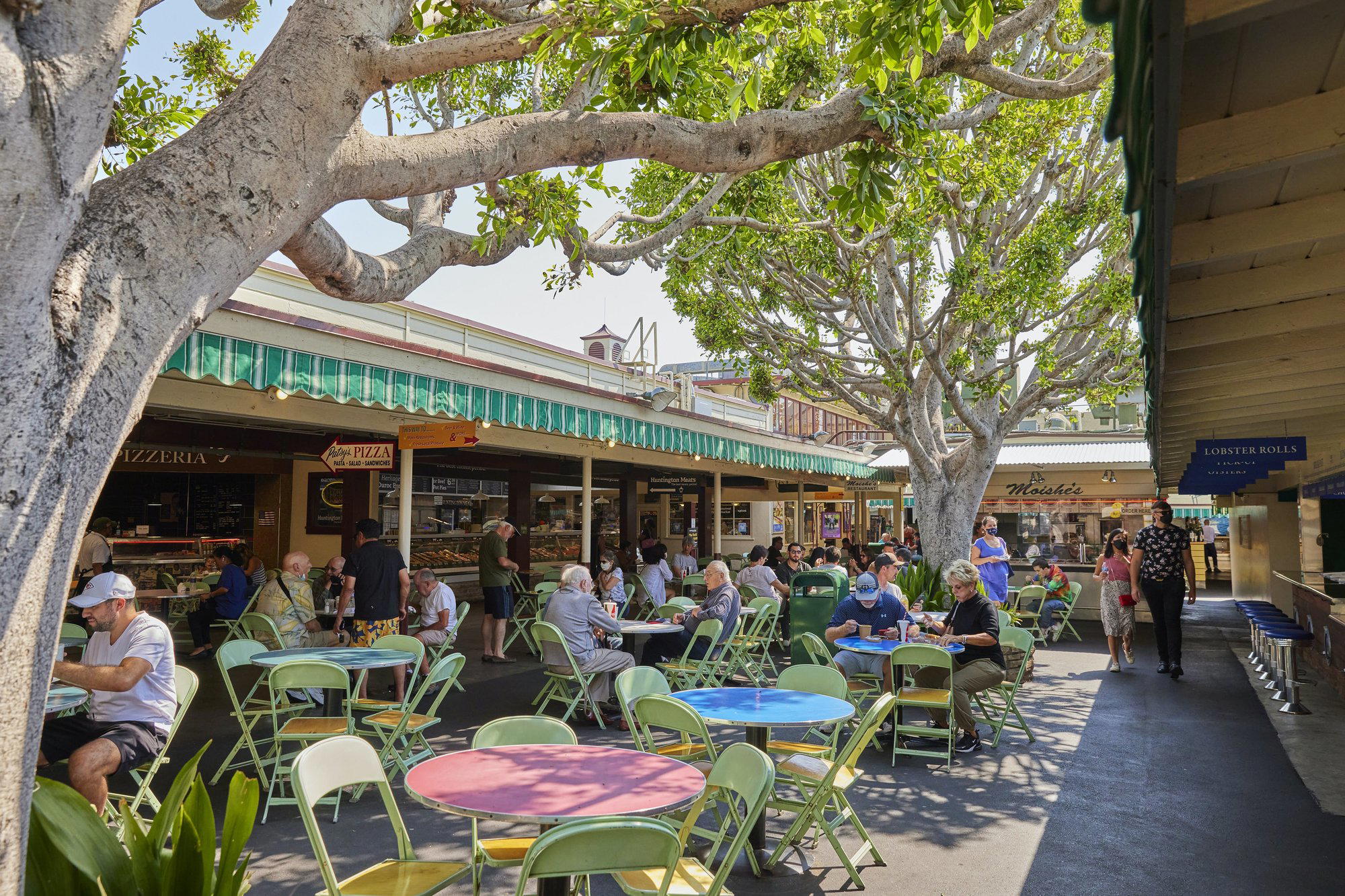
The intersection of 3rd Street and Fairfax Avenue has a particular quality in the mid-morning: the parking lot fills before the crowds arrive, vendors arrange produce and prep stations with practiced economy, and the ambient noise of an open-air market settles into something closer to a neighbourhood soundtrack than a dining event. The Original Farmers Market, operating on this site since 1934, is one of the few places in Los Angeles where the physical experience of the space preceded the city's identity as a food destination by several decades. That temporal gap matters. It means the market was not designed around any dining trend — it predates the language of farm-to-table, the tasting menu boom, and the rise of chef-driven street food entirely.
That history shapes everything about how the market functions today. Compared to newer food hall formats, which tend to organize vendors around a coherent aesthetic or a single operational company, the Farmers Market at 3rd and Fairfax operates as a genuinely plural space: independent stalls, multigenerational operators, and a layout that has evolved through accretion rather than design. Visitors arriving from Kato or Somni, where tasting menus run into the hundreds of dollars per person, will find a register shift that is not merely financial but conceptual. The market does not perform its identity. It simply is what it is.
Southern California Product, Accumulated Over Ninety Years
The editorial angle most useful for understanding what the Farmers Market actually represents is the intersection of local agricultural supply and imported food tradition — a dynamic that has played out across the stalls since the Depression era, when the market began as a gathering point for local farmers selling directly from their trucks. California's agricultural output gave the market its original reason to exist: the Central Valley, the citrus groves of the Inland Empire, the coastal fisheries, and the year-round growing conditions that no East Coast market could replicate in January. That supply chain, now more complex and commercially mediated than it was in 1934, still orients the market's character.
What has layered on top of that agricultural base is a century's worth of culinary immigration. Los Angeles has absorbed successive waves of food culture, Mexican, Japanese, Korean, Thai, Ethiopian, Brazilian, and the market reflects this in its vendor mix without having been consciously programmed to do so. The result is a format where local produce and imported technique meet without the intermediary of a single chef's editorial vision. This is closer in structure to covered markets in Barcelona or Lyon than to the chef-driven food halls that have proliferated in American cities since the 2010s. The comparison is instructive: the Boqueria or Les Halles Paul Bocuse are not curated around a theme; they are aggregations of specialist producers operating in proximity. The Farmers Market at 3rd and Fairfax belongs in that lineage, even if it is rarely placed there in critical conversation.
For readers who follow higher-end L.A. dining through Providence, Hayato, or Osteria Mozza, the Farmers Market offers a complementary register: it is where the city's food culture roots itself in daily life rather than special occasion. The market is also a useful point of comparison when assessing what farm-sourcing actually looks like at scale, before it has been refined into a tasting menu narrative. Venues like Single Thread Farm in Healdsburg and Blue Hill at Stone Barns in Tarrytown have built formal fine dining programs around this same premise of producer proximity; the Farmers Market represents the unmediated version of that premise.
The Format and What It Rewards
The market's format is self-directed to a degree that can disorient first-time visitors expecting a curated path. There is no host stand, no tasting menu, no single operator guiding the experience. Navigation rewards return visits: regulars develop vendor loyalty over time, learning which stalls offer the most current produce and which prepared food counters operate on consistent quality rather than tourist volume. This is a pattern common to long-established public markets globally, from Pike Place in Seattle to Borough Market in London, and it applies equally here. The market does not reveal itself fully in a single pass.
The daytime schedule is a structural constraint worth noting. The market operates primarily during daylight hours, which positions it as a morning and lunch destination rather than an evening venue. This separates it from the dinner-focused programming of restaurants like Le Bernardin in New York City or Lazy Bear in San Francisco, and aligns it more closely with the rhythm of a working produce market. Visitors planning a broader Los Angeles itinerary should treat it as a morning anchor rather than a dinner alternative. The surrounding Fairfax district, with its concentration of specialty food retail and proximity to the La Brea corridor, supports a half-day itinerary without difficulty.
For a fuller map of where the Farmers Market fits within Los Angeles's broader dining picture, see our full Los Angeles restaurants guide. Readers interested in the farm-sourcing conversation at the fine dining tier will find useful reference points at Addison in San Diego, Smyth in Chicago, and The French Laundry in Napa. Outside the United States, the alpine producer-focused model at Atelier Moessmer Norbert Niederkofler in Brunico represents the European end of the same philosophical spectrum, as does the regional rootedness of Frasca Food & Wine in Boulder and the produce-forward ambition at Emeril's in New Orleans. The Korean-American fine dining conversation, running parallel to the Farmers Market's own demographic evolution, finds its current high-water mark at Atomix in New York City and, closer to home, at Kato. And for those curious about how local sourcing and long tradition interact at the country inn level, The Inn at Little Washington in Washington offers a contrasting formal frame.
Planning Your Visit
The market sits at 6333 W 3rd Street in the Fairfax district, accessible by car with on-site parking, and within reach of mid-Wilshire and West Hollywood. No reservation is required. The format is walk-in, vendor-by-vendor, with outdoor seating areas shared across stalls. Daytime hours make it a morning or lunch stop; verify current individual vendor hours directly, as they vary. No single booking platform covers the market as a whole.
Quick reference: 6333 W 3rd St, Los Angeles, CA 90036 | Walk-in only | Daytime hours | Fairfax district, mid-city Los Angeles
Frequently asked questions
What's the signature dish at Farmers Market?
The Farmers Market does not operate around a single kitchen or chef, which means there is no one signature dish in the way a tasting-menu restaurant would define one. The market's culinary identity is distributed across dozens of independent vendors, each with its own specialities shaped by their specific food tradition. Award-winning fine dining restaurants in Los Angeles, such as Providence or Hayato, organize around a single kitchen's point of view; the Farmers Market deliberately does not. Returning visitors typically develop a personal shortlist across several stalls rather than a single go-to dish.
How hard is it to get a table at Farmers Market?
No reservation is required and no booking system governs entry. Unlike the tightly allocated counters at Hayato or the advance-booking requirements at Los Angeles's higher-end tasting venues, the Farmers Market operates on a walk-in basis throughout its operating hours. Weekend mornings draw the heaviest foot traffic, and seating in the shared outdoor areas can tighten during peak hours, but there is no waitlist and no ticketing. Arriving before 10am on weekdays gives the clearest access to the market at its least congested.
How does the Farmers Market at 3rd and Fairfax differ from newer Los Angeles food halls?
The key structural difference is ownership and curation: newer food halls in Los Angeles typically operate under a single developer who selects vendors around a cohesive concept or demographic profile. The Original Farmers Market has operated since 1934 under an accumulated, multi-operator model where independent stalls have built their own customer bases over decades, in some cases across multiple generations of the same family. That depth of independent operation is not replicable by design, and it places the Farmers Market in a different category from purpose-built food hall formats, closer to the covered market tradition of Europe than to the chef-driven hall model that has spread through American cities since the 2010s.
Just the Basics
Comparable venues nearby, for context on price, style, and recognition.
| Venue | Cuisine | Price | Notes |
|---|---|---|---|
| Farmers MarketThis venue — the venue you are viewing | International Market Food Hall | $10–20 | Not listed |
| ISO Fusion Cafe | Westwood, Japanese-Korean Fusion | Not listed | Not listed |
| Concerto | Korean-Italian Fusion | $30–50 | Wilshire Center, Korean-Italian Fusion |
| Grand Food Depot | Multi-Cuisine Food Hall | Not listed | South Central, Multi-Cuisine Food Hall |
| Fusion Kitchen | Ukrainian and Modern European Cafe | $30–50 | Miracle Mile, Ukrainian Fusion Cafe |
| The Night We Met | Thai-Inspired Pan-Asian Fusion | $30–50 | Mid-Wilshire, Thai-Inspired Pan-Asian Fusion |
Continue exploring
More in Los Angeles
Restaurants in Los Angeles
All restaurants in Los Angeles →
Bars in Los Angeles
All bars in Los Angeles →
Hotels in Los Angeles
All hotels in Los Angeles →
Wineries in Los Angeles
All wineries in Los Angeles →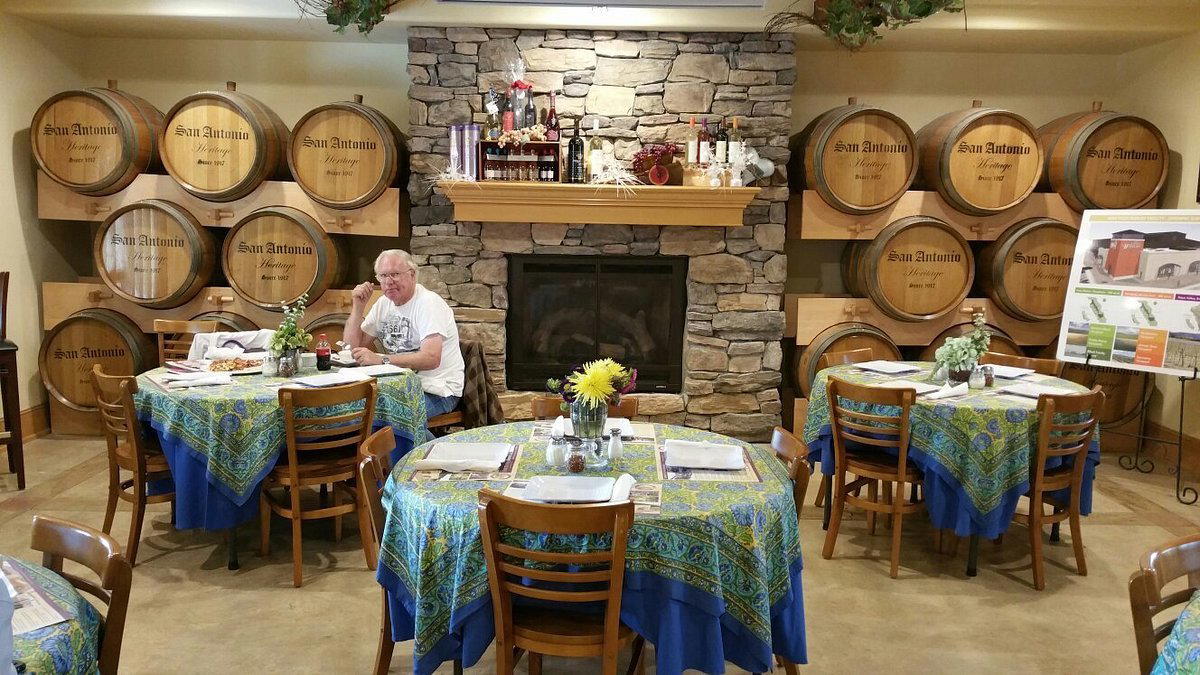
Details
- Lively
- Well Known
- Bohemian
- Casual Hangout
- Family
- Group Dining
- Historic Building
- Open Kitchen
- A La Carte
- Coffee
- Boba Tea
- Vegetarian Friendly
- Vegan Options
Current opening hours
- Monday
- 9 AM–9 PM
- Tuesday
- 9 AM–9 PM
- Wednesday
- 9 AM–9 PM
- Thursday
- 9 AM–9 PM
- Friday
- 9 AM–9 PM
- Saturday
- 10 AM–9 PM
- Sunday
- 10 AM–7 PM
Hours can change for holidays and private events. Last verified .
Bustling outdoor market atmosphere with long rows of stalls, folding chairs and tables, and a lively multicultural energy reflecting the community.