Famous Ben's Pizza
On Spring Street in SoHo, Famous Ben's Pizza occupies the same address that has served New York slices for decades. Where the city's fine-dining tier runs from tasting-menu temples like Le Bernardin and Masa to modernist rooms like Eleven Madison Park, Ben's anchors the opposite end: a neighbourhood counter built on the unreformed logic of New York street-slice culture and the coal- and deck-oven traditions that define it.
Pearl is the En Primeur Club membership app — saves, bookings, and concierge access live there. Same editors, same standards.
- Address
- 177 Spring St, New York, NY 10012
- Phone
- +12129664494
- Website
- famousbenspizzaofsoho.com
- Directions
- Get directions
 Saves & bookings on Pearl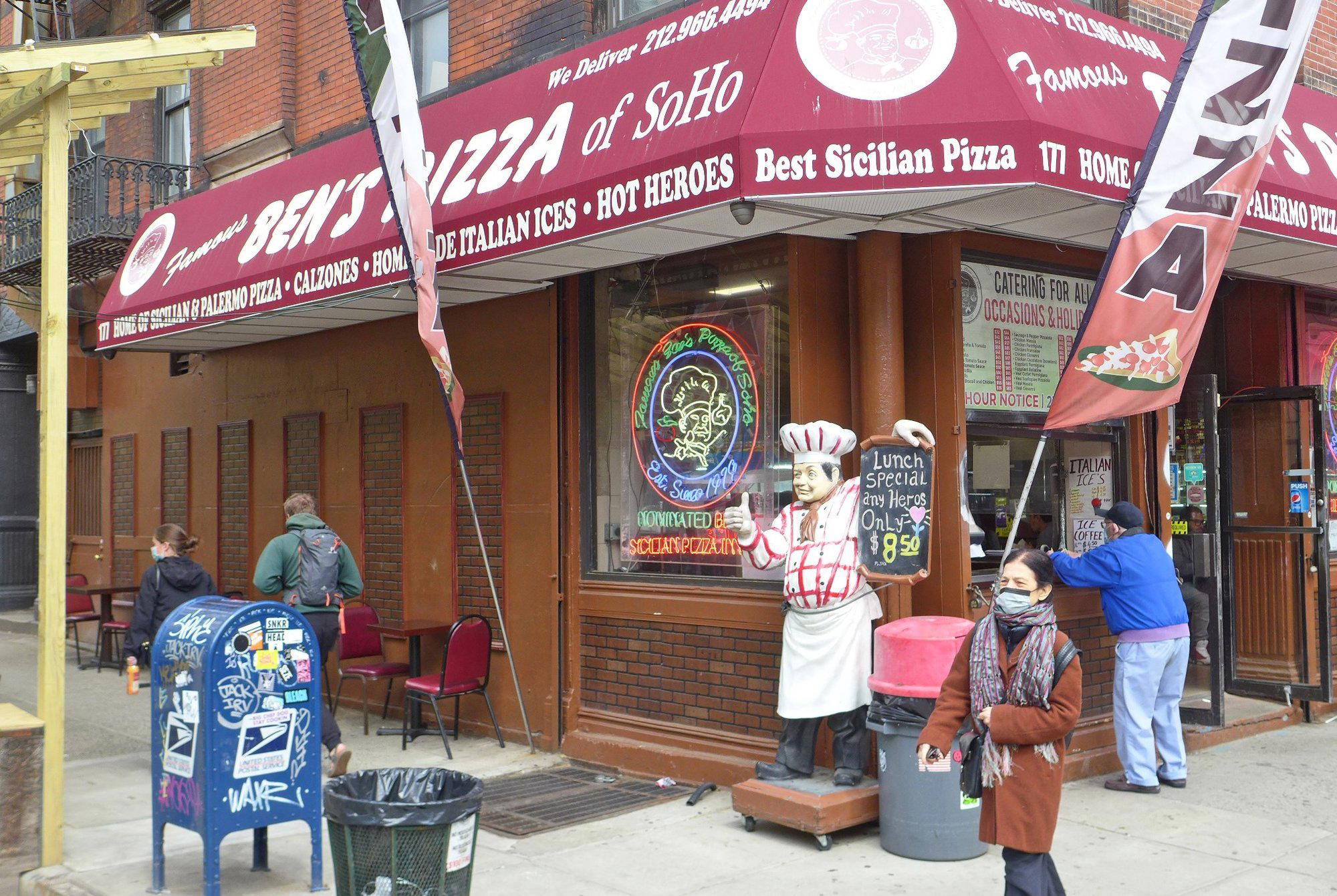
SoHo's Slice Counter and the Street-Pizza Tradition It Represents
Spring Street sits at the southern edge of SoHo, a block where the neighbourhood's boutique density gives way to something older and less curated. At 177 Spring St, Famous Ben's Pizza is a New York Sicilian pizza restaurant in New York City, with a casual dress code, walk-in-friendly service, and an average price of about $15 per person. The competitive reference point here is not the Michelin-starred tier that New York exports as its dining identity; it is the borough-wide network of slice shops that form the functional backbone of how the city actually eats on any given afternoon.
New York pizza is not a single tradition but a set of overlapping ones, each with distinct cultural roots. The thin, wide, foldable slice sold by the triangle at street-level counters traces its lineage to the southern Italian immigrant communities that established pizzerias across Manhattan and Brooklyn in the early twentieth century. The style that emerged, characterised by a well-fermented dough, a thin but sturdy base capable of supporting a pool of tomato sauce and shredded mozzarella without collapsing under its own weight when folded, became one of the city's most durable culinary exports. Famous Ben's operates inside that tradition, at an address in a neighbourhood that has seen successive waves of demographic and commercial change while the slice counter as a format has remained largely structurally unchanged.
The Cultural Logic of the New York Slice Shop
Understanding what a place like Famous Ben's represents requires some distance from the venue itself. The slice shop as a format is one of the few remaining examples of democratic urban food infrastructure in a city where dining costs have increased sharply across most categories. While Le Bernardin, Atomix, and Eleven Madison Park operate at price points that position them as occasion destinations for a narrow segment of the population, the slice counter operates on walk-in, pay-per-slice logic that predates the reservation economy entirely. That format has proved remarkably resistant to disruption: the counter model, the by-the-slice pricing, the standing-and-folding consumption ritual, these elements have not changed substantially because they function.
The SoHo location matters to this reading. SoHo's transformation from manufacturing district to luxury retail corridor over the past four decades is one of the more documented cases of commercial gentrification in American urban history. Independent food businesses at street level have become increasingly rare as retail rents have climbed. A slice counter holding its position on Spring Street is, in that context, less a curiosity than a data point about which food formats can sustain themselves against neighbourhood economic pressure. The slice, priced per unit, with low front-of-house overhead and a loyal transient customer base of workers, residents, and visitors, has a structural resilience that more elaborate restaurant formats do not.
What the SoHo Address Tells You About the Slice
Spring Street and its immediate surroundings draw a customer mix that few other New York micro-neighbourhoods replicate: gallery visitors, fashion industry workers, tourists moving between the High Line and lower Manhattan, and a residual population of longer-term SoHo residents who predate the neighbourhood's commercial reinvention. A slice counter in this location serves a population with different expectations from the counter's own history. That gap, between the neighbourhood's current identity and the format's origins in working-class immigrant foodways, is precisely what makes Famous Ben's culturally interesting to read rather than simply to visit.
Famous Ben's in the Context of American Pizza Culture
New York's slice tradition does not exist in isolation from wider American pizza culture, but it maintains a distinct identity within it. The deep-dish formats associated with Chicago, the wood-fired Neapolitan revival that has spread through upmarket restaurant contexts across the country, and the artisan pizza programmes attached to farm-to-table restaurants, these are all different answers to different questions. The New York slice is an answer to the question of how to feed a dense urban population quickly, affordably, and without a reservation. It is also, incidentally, the format that most directly reflects the original southern Italian flatbread traditions that arrived with immigrant communities in the late nineteenth and early twentieth centuries, before those traditions were formalised into restaurant dining contexts.
That lineage connects Famous Ben's, indirectly, to the same culinary geography that underlies the Italian fine-dining tradition visible in places like Dal Pescatore in Runate or the alpine precision of Atelier Moessmer Norbert Niederkofler in Brunico. The distance between those rooms and a SoHo slice counter is vast in terms of format, price, and intent, but the ingredient logic, the dough tradition, and the tomato-and-cheese foundation share common ancestry.
For EP Club readers whose New York itinerary includes dinner at Blue Hill at Stone Barns or a reservation at The Inn at Little Washington during a broader East Coast trip, the slice counter represents the other register of serious American food culture, not a lesser version, but a different one with its own internal logic and its own standards for what good looks like. The same curiosity that drives a reader toward Lazy Bear in San Francisco or Smyth in Chicago for a particular kind of cooking intelligence applies here, adjusted for format and scale.
Planning Your Visit
Address: 177 Spring St, New York, NY 10012. Reservations: Walk-in friendly. Dress: Casual. Budget: About $15 per person. Hours: Mon to Sat 11 AM to 12 AM, Sun 12 to 10 PM.
The Quick Read
Comparable venues nearby, for context on price, style, and recognition.
| Venue | Cuisine | Price | Notes |
|---|---|---|---|
| Famous Ben's PizzaThis venue — the venue you are viewing | Not listed | $ | Not listed |
| Percy's Pizza | Not listed | $ | Greenwich Village, New York Dollar Slice Pizza |
| Freddie & Pepper's | Not listed | $ | Upper West Side (Central), New York Style Pizza |
| Paulie Gee's Slice Shop | Greenpoint, New York-Style Pizza Slices | $ | Not listed |
| San Marzano | East Village, Italian Pasta | $$ | Not listed |
| Il Forno | Hell's Kitchen, Modern Italian Trattoria | $$ | Not listed |
Continue exploring
More in New York City
Restaurants in New York City
Browse all →
Bars in New York City
Browse all →
Hotels in New York City
Browse all →







At a Glance
- Classic
- Well Known
- Casual Hangout
- Late Night
- Standalone
Current opening hours
- Monday
- 11 AM–12 AM
- Tuesday
- 11 AM–12 AM
- Wednesday
- 11 AM–12 AM
- Thursday
- 11 AM–12 AM
- Friday
- 11 AM–12 AM
- Saturday
- 11 AM–12 AM
- Sunday
- 12–10 PM
Hours can change for holidays and private events. Last verified .
Classic no-frills pizza joint with simplistic decor and pizza quotes on the walls.