Exquisine

1 Michelin Star
Our verdict
Exquisine brings Seoul’s contemporary Korean conversation into a compact Cheongdam dining room, with frequently changing lunch and dinner course menus built around local ingredients and herbs grown in-house. Its Michelin 1 Star recognition in 2024 places it in the city’s serious modern dining tier, while the ₩₩₩ price band keeps it below several grander Gangnam peers.

Pearl is the En Primeur Club membership app, where members save venues, book tables and use the concierge.
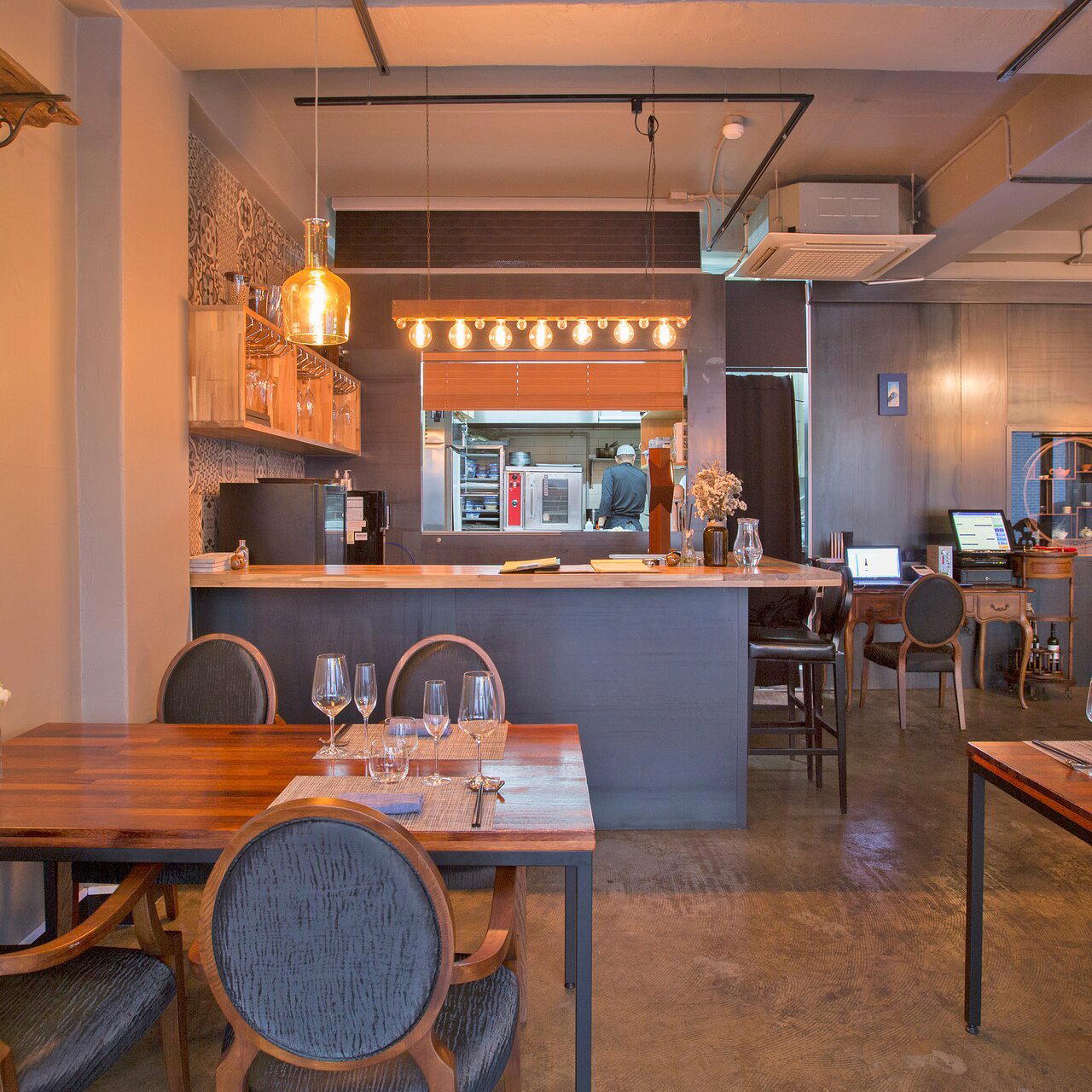
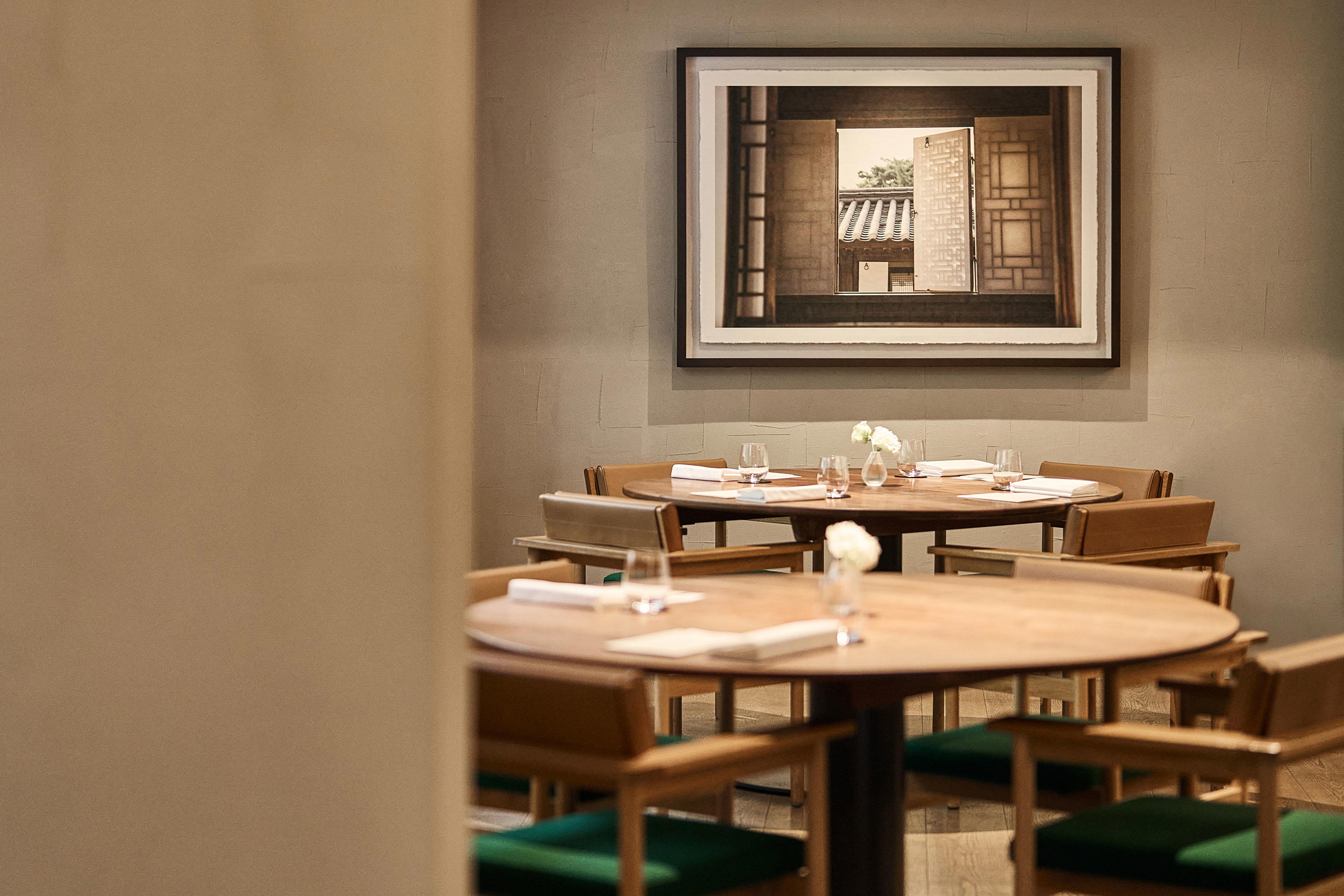
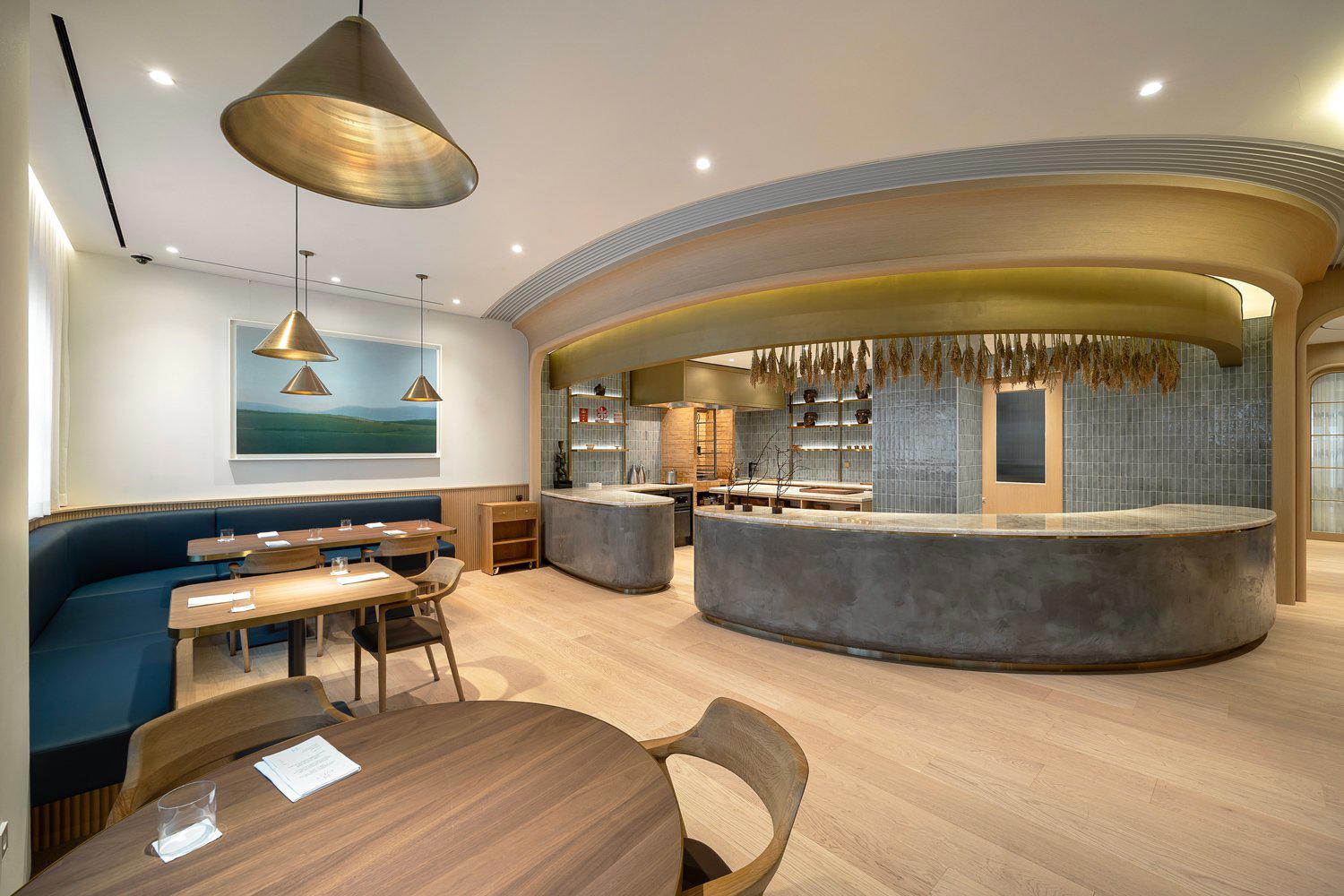
Seoul’s quieter residential side shifts the rhythm before dinner. Exquisine is compact, black and grey, softly lit rather than theatrical; that restraint matters in a city where ingredient-led dining can swing from polished formality to conceptual tasting-menu drama. It sits at the smaller, more intimate end of Seoul’s modern restaurant spectrum: course-menu discipline, local produce, and a controlled pace suited to dates, quiet meals, and diners tracking the kitchen rather than the room.
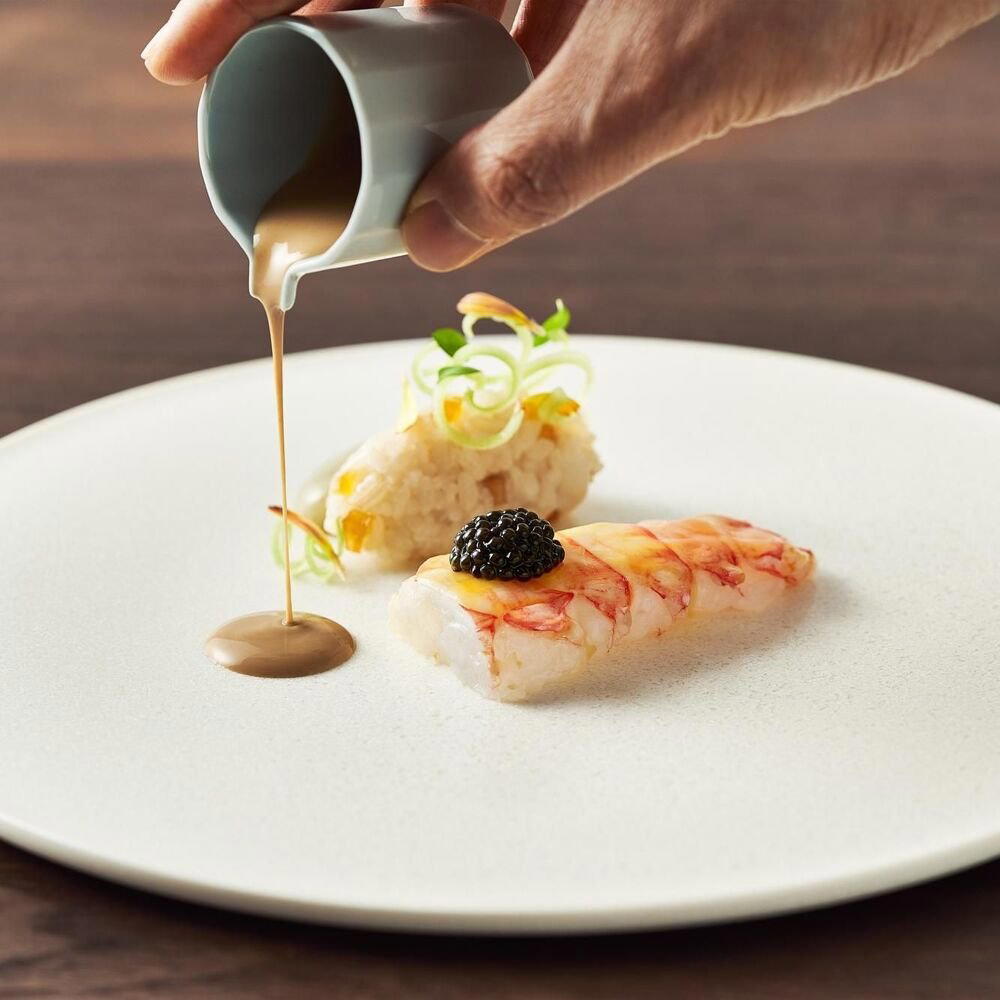
Over the past decade, Seoul’s contemporary restaurants have translated Korean ingredients through tighter sourcing, minimalist rooms, and sharper plating. The better ones do not use Korean pantry staples as decoration; they test what local herbs, regional vegetables, fermentation, seasonality, and texture can do inside a modern course structure. Exquisine’s frequently changing lunch and dinner menus are therefore less about fixed signature dishes than ingredient condition and kitchen judgment on the day.
For a wider map of the city’s dining tier, Our full Seoul restaurants guide gives the broader field, while serious travellers should also keep Our full Seoul hotels guide, Our full Seoul bars guide, Our full Seoul wineries guide, and Our full Seoul experiences guide close when building a Seoul-led itinerary.
Contemporary cooking, scaled down to a quieter register
Seoul’s ingredient-led dining category is not a single lane. At the more formal end, Jungsik and Ile de Cheongdam sit in a more ceremonial bracket, with presentation aligned to international tasting-menu expectations. Exquisine works at another scale: structured and ambitious, but less dependent on grandeur. Its reasonably priced lunch and dinner menus matter because serious dining becomes expensive quickly in Seoul. The value is not abundance, but seeing contemporary technique applied to Korean ingredients in a smaller room with fewer distractions.
The kitchen’s focus on Korean ingredients, regionally sourced produce, and herbs grown in-house places it inside a larger local movement now more confident about specificity. Change is not incidental; in this category, it is the operating system. Spring greens, summer aromatics, autumn roots, seafood availability, and kitchen conditions can all alter the sequence. Diners seeking a fixed order of famous plates will miss the logic. Expect menus shaped by availability, with the kitchen’s authorship visible in combinations rather than permanent public signatures.
That makes Exquisine a useful contrast with other Seoul contemporary addresses. Some dining rooms push the city’s high-concept conversation elsewhere; others reflect Seoul’s appetite for personal, tightly edited restaurants; still more show the city’s parallel respect for precision. These comparisons do not make the category interchangeable. They show how Seoul rewards restaurants that define a narrow point of view without overexplaining it.
Why Seoul suits this kind of restraint
Seoul is often read through luxury retail, gallery polish, and late-night spending, but its dining culture also has a quieter side. Quieter parts of the city let small restaurants work at a slower cadence than Seoul’s brighter, louder zones. That context suits a compact, minimalist room. Modern cooking can feel strained when the dining room is louder than the food; in a subdued space, technique, pacing, and ingredient clarity matter more.
Chef Kyung-won Jang’s role is best understood through that city context rather than as a personality story. Seoul’s contemporary cooks are increasingly judged on how convincingly they translate local materials into a course-menu grammar without flattening them into generic international luxury. In-house herbs and fresh regional produce give the kitchen a clear vocabulary, but also demand balance: at this level, food cannot rely on novelty, because Seoul diners already understand the original references.
Recognition of Exquisine focuses on Chef Jang’s knack for reinvention and on the restaurant as a creative space for Korean ingredients. More telling are the structure: compact dining room, lunch and dinner menu formats, frequent menu changes, and a restrained atmosphere below several more formal peers in scale. For visitors, that combination is an efficient way into Seoul’s modern dining scene without committing the evening to a maximalist production.
How to read the meal before choosing it
This is not the Seoul restaurant for a sprawling table of shared stews, grilled meats, and drinking snacks. It belongs to the course-menu tradition, where the kitchen controls the sequence and the diner accepts a narrower format in exchange for focus. That trade-off is central to contemporary dining in the city. The format borrows from tasting-menu culture; the interest lies in how Korean ingredients behave when removed from the usual communal table and set into a measured progression.
Travellers building a Korea trip around food should pair this Seoul meal with contrasting regional stops rather than repeat similar formats nightly. Unnamed cold-noodle specialists, casual pork addresses, coastal rooms, and temple-food contexts show how broad Korean eating becomes beyond the capital’s course-menu frame. Outside Korea, useful parallels can be found in small modern kitchens where locality works as discipline rather than theme.
Within Seoul, the decision is simple. Choose Exquisine for a composed meal in a restrained room, not a status-heavy dining event. Choose a grander peer when the evening needs ceremony, a larger wine program, or a more formal sense of occasion. Add unnamed regional alternatives only if the trip extends beyond Seoul and can support a wider reading of Korea’s food culture.
Frequently asked questions
Is Exquisine a family-friendly restaurant?
Exquisine is best read as a quiet Seoul restaurant for intimate meals. The dining room runs frequently changing lunch and dinner menus, and the compact setting is especially suited to dates and calm dining.
What's the vibe at Exquisine?
The room is small, with soft lighting and minimalist black-and-grey decor. In Seoul, that creates an intimate setting for a frequently changing course menu rather than a lively dining room.
Is Exquisine Michelin-listed?
Exquisine has received recognition for being Chef Kyung-won Jang’s creative space for exploring the character and potential of Korean ingredients, using in-house herbs and fresh, regionally sourced produce in frequently changing lunch and dinner menus.
What kind of cuisine does Exquisine serve?
Exquisine focuses on Korean ingredients, in-house herbs, and fresh regional produce through frequently changing lunch and dinner menus.
Budget and Context
Side-by-side context: comparable cuisine and price.
| Venue | Cuisine | Price | Awards | Notes |
|---|---|---|---|---|
| ExquisineThis venue (the venue you are viewing) | Modern Fusion Fine Dining | $50–100 | 1 Michelin Star | Not listed |
| Olh Eum | Modern Korean Fine Dining | Not listed | Michelin Plate | Contemporary |
| Toc Toc | Contemporary | Not listed | Not listed | Not listed |
| Muoki | Contemporary Fine Dining | $100–150 | 1 Michelin Star · La Liste Top Restaurants | Contemporary |
| Ile de Cheongdam | Contemporary | Not listed | Michelin Plate | Not listed |
| Jungsik | Modern Korean Fine Dining | $200–300 | 2 Michelin Stars · World's 50 Best #87 | Contemporary |
Recognition history
Dated appearances from independent guides and award organizations, with the underlying list record or original source where available.
Michelin 1 Star
Michelin
Full recognition history (3 entries)
Michelin 1 Star
Michelin
Michelin 1 Star
Michelin
Continue exploring
More in Seoul
Restaurants in Seoul
All restaurants in Seoul →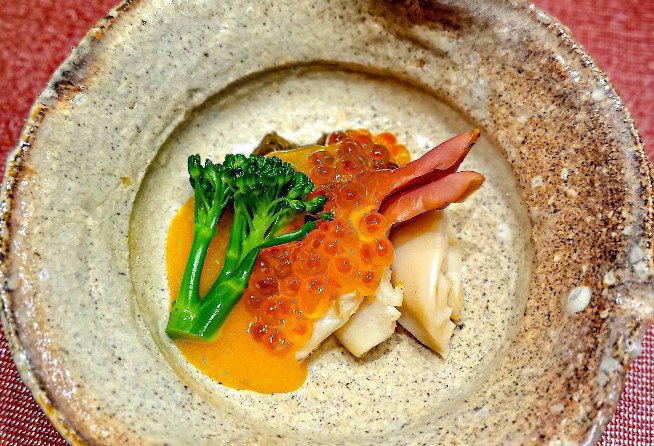
Bars in Seoul
All bars in Seoul →
Details
- Intimate
- Relaxed
- Elegant
- Modern
- Date Night
- Special Occasion
- Open Kitchen
- Chefs Counter
- Extensive Wine List
- Local Sourcing
- Organic
- Tasting Menu
- Vegetarian Friendly
Current opening hours
- Monday
- 12–3 PM, 6–10 PM
- Tuesday
- 12–3 PM, 6–10 PM
- Wednesday
- 12–3 PM, 6–10 PM
- Thursday
- 12–3 PM, 6–10 PM
- Friday
- 12–3 PM, 6–10 PM
- Saturday
- 12–3 PM, 6–10 PM
- Sunday
- 12–3 PM, 6–10 PM
Hours can change for holidays and private events. Hours as of .
Understated, relaxed, and informal space with an open kitchen fostering close chef-customer interaction.