Ewe's Delicious Treats

New York Times Best Restaurants in New York City
Our verdict
Ewe's Delicious Treats on Granville Payne Ave in East New York, Brooklyn, brings Nigerian and West African cooking to a borough neighbourhood that Manhattan-focused dining coverage rarely reaches. Named to the New York Times Best Restaurants in New York City list for 2025, it occupies a specific and underserved space in the city's West African dining conversation, drawing serious eaters east across borough lines.

Pearl is the En Primeur Club membership app, where members save venues, book tables and use the concierge.

The menu
What to order
- Egusi soup with fufu
- Goat pepper soup
- Okro soup
- Jollof rice
East New York and the Geography of Brooklyn's West African Table
Brooklyn's West African dining presence is geographically uneven. The borough's more-covered neighbourhoods attract food media attention proportional to their proximity to transit hubs and wealthier residential catchments. East New York, at the far eastern edge of Brooklyn along the J and Z lines, sits outside that coverage radius for most publications. Granville Payne Avenue is a working commercial strip in a neighbourhood that has seen sustained disinvestment and, more recently, the early pressures of displacement. Restaurants here serve a community first, not a food tourism circuit.
That context matters for understanding what Ewe's Delicious Treats is and who it serves. Nigerian and West African cooking in New York City has historically been concentrated in the Bronx and in pockets of Harlem and the Flatbush corridor, where diaspora population density justifies the supply chains for ingredients like egusi, crayfish, and oxtail cuts that define the cuisine. East New York's version of that diaspora has its own culinary geography, and spots like Ewe's represent where that geography is actively being mapped by the city's dining infrastructure, however belatedly.
The New York Times named Ewe's Delicious Treats to its Leading Restaurants in New York City list for 2025, a recognition that arrives with specific weight. The Times list has historically skewed toward Manhattan fine dining, with outer-borough inclusions functioning as editorial statements about where the city's dining energy is actually moving. An East New York Nigerian spot appearing alongside the more familiar names in that list's orbit is a signal, not an accident.
What West African Cooking at This Level Looks Like
West African cuisines, and Nigerian cooking in particular, have a coherence and complexity that the city's broader dining discourse has been slow to engage with seriously. The cooking tradition spans a range of techniques, from low-and-slow braising and the layered spice work of suya preparation, to rice dishes with structural parallels to West African jollof traditions that vary meaningfully by region and family. The proteins are treated with specificity: goat, oxtail, tripe, and fish carry different preparation logics, and short-cutting any of them produces a dish that a knowledgeable eater will notice immediately.
At the neighbourhood-restaurant tier where Ewe's operates, the cooking is typically less focused on theatrical presentation than on the integrity of the base flavours. Pepper soup has to carry its own heat logic. Egusi stew needs its fermented finish. Fried plantains depend on ripeness timing that a distracted kitchen gets wrong. The craft here is less visible than at the kind of multi-course tasting operations that earn Michelin attention, like Atomix in Midtown or Eleven Madison Park, but the precision required is not different in kind. It is simply applied to different reference points.
The comparative context matters. New York's most decorated restaurants, including Le Bernardin, Masa, and Per Se, operate at price points and within institutional structures that make them function as separate category entirely from the community restaurant. The Times list covering both in the same year is an editorial argument: the city's dining conversation is more geographically and culturally distributed than the Michelin-forward coverage suggests.
Placing Ewe's in the Broader New York Nigerian Dining Conversation
New York City's Nigerian restaurant scene operates across a wide price and formality range. At the upscale end, a small number of spots have begun to attract the kind of press attention that West African fine dining receives in London, where the conversation is more developed. At the neighbourhood end, which is where most of the volume and most of the city's Nigerian community actually eats, the standard is set by restaurants that have earned local loyalty over years of consistent execution, not editorial cycles.
Ewe's sits in the latter camp, and its Times recognition in 2025 is partly a function of food media's belated interest in exactly that camp. This is a pattern visible in other American cities too. Spots like Emeril's in New Orleans and Lazy Bear in San Francisco illustrate how local dining cultures develop their own internal hierarchies that external media awards eventually catch up with. The same dynamic applies here at a different price tier and cultural register. An East New York restaurant that has built a community following does not need the Times to validate it for its regulars. The recognition changes who else shows up.
That shift in audience is worth thinking about for anyone planning a visit. East New York is not a neighbourhood where dining tourism has created an infrastructure of adjacent amenities. You are going to eat, and then you are going back to wherever you came from. The journey from Midtown or from the more media-saturated Brooklyn neighbourhoods is real, involving the J or Z trains and a walk through a part of Brooklyn that does not look like the borough's more photographed quarters. That friction is part of what the Times recognition is implicitly asking readers to accept as worth it.
Planning a Visit
The practical reality of eating at a neighbourhood restaurant with a recent spike in external attention is that demand patterns shift faster than operations can adapt. Restaurants at this scale, serving a community on a commercial strip in East New York, are not built around reservation systems designed for a citywide audience. The safest approach is to go with flexibility on timing and without fixed expectations about wait logistics.
For visitors staying in Midtown or Lower Manhattan, the full New York City dining picture is wide enough that a trip to East New York makes most sense as a dedicated outing. Our full New York City restaurants guide maps the city's dining tiers across neighbourhoods and cuisines, and the broader city guides for hotels, bars, wineries, and experiences are available for fuller trip planning.
For reference, the restaurant's address is 453 Granville Payne Ave, Brooklyn, NY 11207.
Comparable destination-dining efforts in other cities, such as those made for Alinea in Chicago, Single Thread Farm in Healdsburg, The French Laundry in Napa, or Providence in Los Angeles, involve a different scale of commitment. Ewe's asks for a subway ride, not a flight. The proportionality of the effort versus what the Times recognition implies is, on balance, in the visitor's favour.
For international context, the growing seriousness with which West African cuisines are being covered globally, visible in the press around spots like 8 1/2 Otto e Mezzo Bombana in Hong Kong and the legacy of destination dining at Alain Ducasse's Louis XV in Monte Carlo, shows how cuisines that once operated outside the institutional fine dining conversation earn recognition through consistent quality and shifting critical attention. East New York's version of that shift is quieter and less formal. The food is the argument.
Quick reference:
Frequently asked questions
What makes Ewe's Delicious Treats worth seeking out?
The Times Leading Restaurants 2025 citation is the clearest external signal. Beyond the award, it represents something specific: Nigerian and West African cooking in a part of Brooklyn that the city's food media infrastructure has largely bypassed, now confirmed by the publication that carries the most weight in the local dining conversation. For anyone building a serious picture of how New York eats in 2025, that geography is part of the answer. The cuisine tradition behind the menu, rooted in West African techniques with deep preparation logic, is the other part.
Is Ewe's Delicious Treats representative of East New York's broader dining scene?
East New York has a West African and Caribbean dining presence that significantly predates any external media attention, built around community demand rather than food tourism. Ewe's is part of that existing fabric, not an outlier imported into the neighbourhood. Its 2025 New York Times recognition is better read as the city's critical establishment catching up with a dining scene that has been operating on its own terms, serving a specific diaspora community on Granville Payne Avenue, for some time before the broader audience arrived.
A Lean Comparison
Comparable venues nearby, for context on price, style, and recognition.
| Venue | Cuisine | Price | Awards | Notes |
|---|---|---|---|---|
| Ewe's Delicious TreatsThis venue (the venue you are viewing) | Authentic Nigerian | $10–20 | New York Times Best Restaurants in New York City | Not listed |
| Makina Cafe | Eritrean-Ethiopian | Not listed | Not listed | Sunnyside, Eritrean-Ethiopian |
| Tacombi Fonda | Authentic Mexican Street Food Taqueria | $20–30 | Not listed | SoHo-Little Italy-Hudson Square, Authentic Mexican Street Food Taqueria |
| Nepali Bhanchha Ghar | Traditional Nepali | $10–20 | Eater 38 #11 | Jackson Heights, Traditional Nepali |
| Africana | Senegalese West African | $20–30 | Not listed | Jamaica, Senegalese West African |
| Coppelia | Latin Cuban Diner | $20–30 | Not listed | Chelsea-Hudson Yards, Latin Cuban Diner |
Recognition history
Dated appearances from independent guides and award organizations, with the underlying list record or original source where available.
New York Times Best Restaurants in New York City
New York Times
Continue exploring
More in New York City
Restaurants in New York City
All restaurants in New York City →
Bars in New York City
All bars in New York City →





Details
- Cozy
- Casual Hangout
- Family
- Standalone
- A La Carte
Current opening hours
- Monday
- 7 AM–10 PM
- Tuesday
- 7 AM–10 PM
- Wednesday
- 7 AM–10 PM
- Thursday
- 7 AM–10 PM
- Friday
- 7 AM–10 PM
- Saturday
- Closed
- Sunday
- 10 AM–10 PM
Hours can change for holidays and private events. Hours as of .
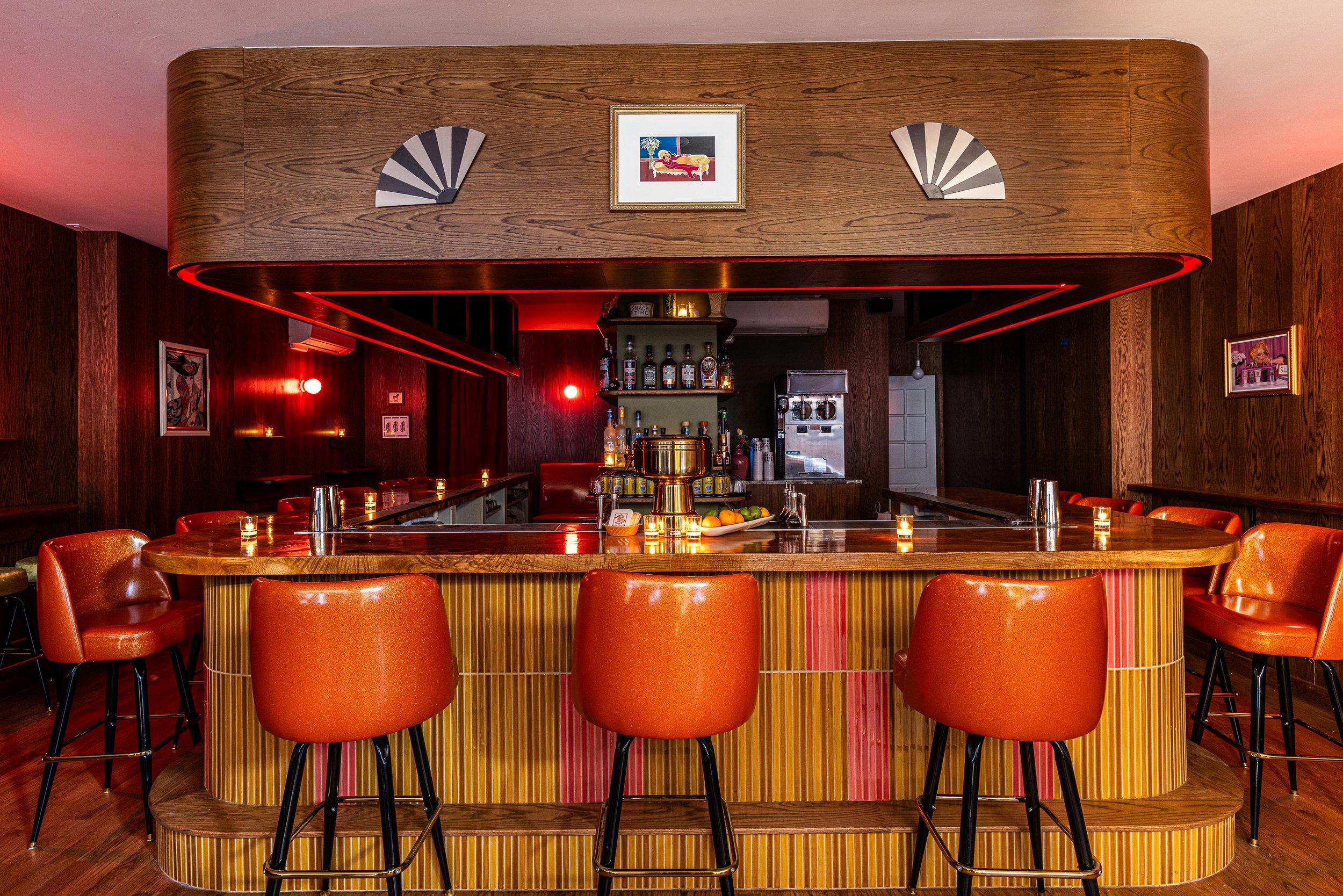
Homey and welcoming, like eating in the owner's kitchen, with a casual, unpretentious atmosphere.