Essex Market
Essex Market at 88 Essex Street sits at the center of the Lower East Side's evolved food identity, where market-hall culture meets a neighborhood long defined by immigrant provisions and street commerce. Unlike the tasting-menu tier represented by venues such as Le Bernardin or Eleven Madison Park, Essex Market operates in the informal, producer-facing mode that has become one of New York's more durable dining formats.
Pearl is the En Primeur Club membership app — saves, bookings, and concierge access live there. Same editors, same standards.
- Address
- 88 Essex St, New York, NY 10002
- Phone
- +19178817096
- Website
- essexmarket.nyc
- Directions
- Get directions
 Saves & bookings on Pearl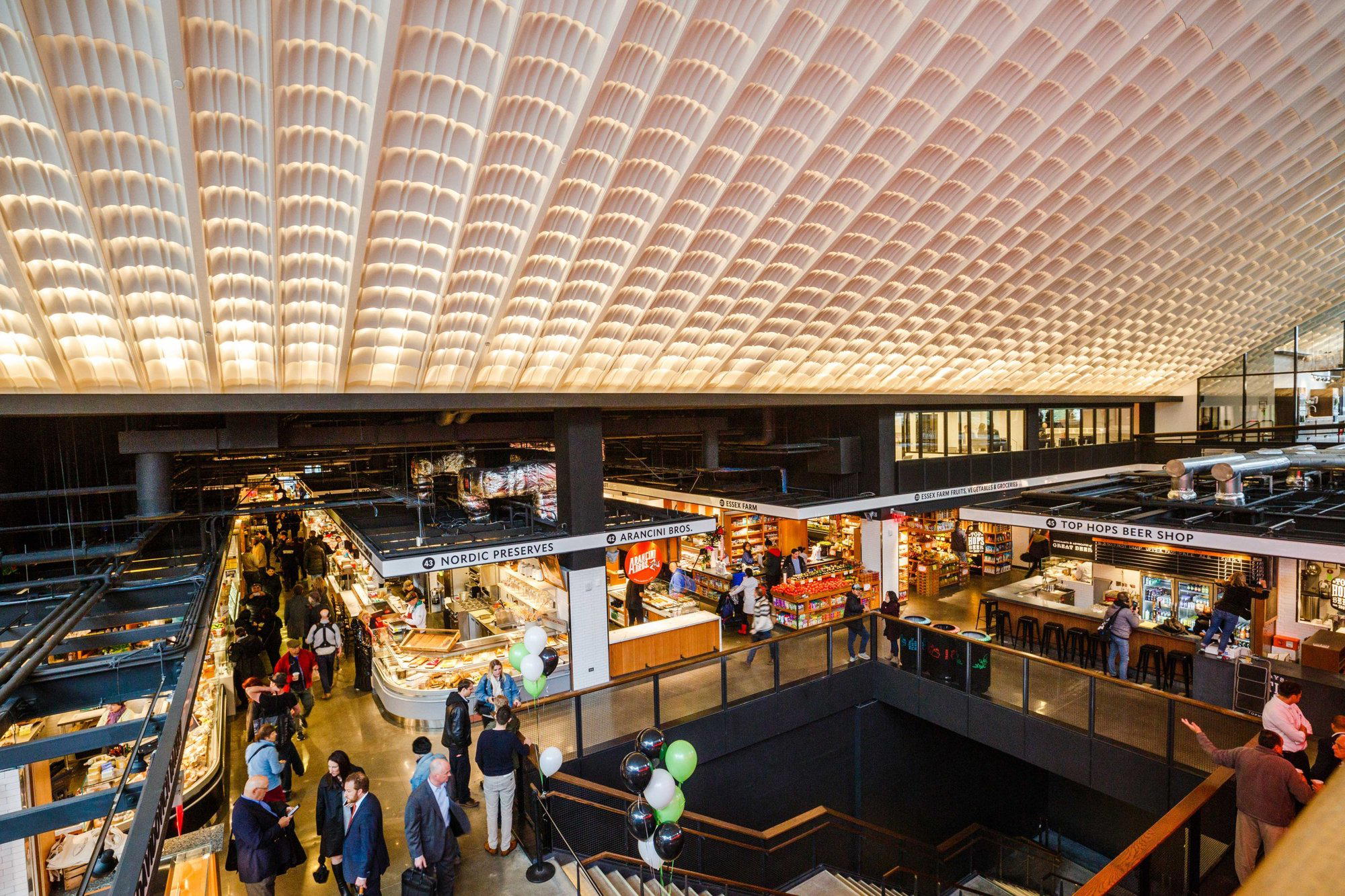
A Market Hall in the Lower East Side's Longer Story
New York's market-hall format has gone through several cycles of enthusiasm and skepticism, but the Lower East Side version carries extra weight. The Essex Street corridor has been a provisioning address for successive immigrant communities since the late nineteenth century, and the current Essex Market at 88 Essex Street is the latest institutional iteration of that role. Where the original Essex Street Market operated for decades as a city-run indoor market serving a neighborhood that couldn't easily access pushcart commerce, the current format represents a shift toward curated vendor halls that have become common across American cities in the past decade. Understanding what Essex Market is requires placing it inside that broader arc rather than treating it as a freestanding concept.
The market-hall model that Essex Market inhabits sits in a different competitive register than the tasting-menu destinations that define much of New York's dining conversation. A meal at Le Bernardin, Atomix, Per Se, Masa, or Eleven Madison Park is a structured, time-committed, high-spend event. Essex Market is something else: a format built around browsing, grazing, and producer access, where the editorial logic is curation of vendors rather than a single culinary vision. That distinction matters when you're deciding how to spend an afternoon in Lower Manhattan.
The Vendor-Hall Format and What It Demands of a Drinker
Market halls present an underappreciated challenge for anyone who takes wine and drinks seriously. At a conventional restaurant, the sommelier anchors the experience, their cellar depth, allocation relationships, and ability to read a table define what ends up in the glass. At a multi-vendor hall, that through-line disappears. You're moving between independent stalls, each with its own drinks logic (or none at all), and the coherence that a well-run wine program provides is largely absent by structural design.
This is not a criticism specific to the restaurant. It's the central tension of the format, visible in comparable venues across American cities. At Lazy Bear in San Francisco, the wine and beverage program is unified precisely because it operates as a single-kitchen, single-team experience, the sommelier can build a pairing arc across courses. Multi-vendor halls can't replicate that. What they can offer instead is access to specialist producers: a cheesemonger with a curated selection of natural wines by the glass, a fishmonger with cold sake, a prepared-foods vendor with craft beer. The drinks experience is episodic rather than composed.
For the reader who prioritizes cellar depth and sommelier guidance, the restaurant will read as a stop for provisions and casual eating rather than a destination for serious drinking. That's not a failure of execution, it's a consequence of format. The venues that pair serious wine programming with serious food in New York's current scene tend to operate at the higher price tiers, with dedicated floor teams and the capital investment that deep cellars require. Comparable programs exist at places like Blue Hill at Stone Barns in Tarrytown or, further afield, at Frasca Food and Wine in Boulder, where the wine list is as argued-over as the menu.
Lower East Side Context: What the Neighborhood Adds
The specific address, 88 Essex Street, places the restaurant inside a neighborhood whose food identity has never been monolithic. The Lower East Side absorbed waves of Jewish, Puerto Rican, Chinese, and Dominican commerce, and each left residue in what gets sold and eaten here. That layering is part of what makes the area interesting for a food-focused visitor: you're not arriving at a purpose-built dining district but at a place where the food culture accumulated over generations rather than through a single development cycle.
Newer market-hall projects in other American cities often arrive in neighborhoods without that depth, which is why they can feel generic. The restaurant inherits something, a location memory, a vendor tradition, that similar formats in less freighted neighborhoods don't have access to. Whether a given visit makes that history felt depends on which vendors are operating and what they're selling, but the structural advantage exists.
For visitors building a Lower Manhattan food itinerary, the restaurant functions leading as part of a wider neighborhood exploration rather than as a standalone destination. The surrounding blocks carry the same layered food character: canal street produce, Chinatown dim sum operations, Orchard Street delis.
How Essex Market Compares to Other American Market Formats
The vendor-hall format has matured differently in different American cities. Smyth in Chicago shows what happens when a chef operates with total kitchen control in a single-service environment, the result is cohesion and a cellar that can be argued on its own terms. Single Thread Farm in Healdsburg extends that logic into hospitality, with wine access built around the estate and local producer relationships. These are fundamentally different propositions from a multi-vendor hall, and the comparison is worth making explicitly so that readers arrive at the restaurant with calibrated expectations.
In the mid-tier and casual-market space, the more relevant comparable set includes similar urban market halls that have opened or relaunched across American cities in the past decade: places in Philadelphia, Los Angeles, and Washington that follow the same curatorial logic of bringing independent vendors under one roof. Providence in Los Angeles represents the opposite pole, a single-kitchen, wine-program-forward operation where the sommelier's work is as considered as the chef's. Addison in San Diego and The Inn at Little Washington sit in that same register. The restaurant is doing something different and shouldn't be scored against those benchmarks.
Beyond the United States, the market-hall tradition has different roots. Dal Pescatore in Runate and Atelier Moessmer Norbert Niederkofler in Brunico represent the European model of deeply rooted, single-kitchen regional cooking, a format where provenance and producer relationships are expressed through a single culinary voice rather than distributed across vendors. Emeril's in New Orleans and The French Laundry in Napa each built their reputations on kitchen authorship rather than curation. The market-hall model is a different bet: that the aggregated energy of multiple producers is more interesting than any single kitchen's vision.
Planning a Visit
The restaurant sits at 88 Essex Street on the Lower East Side, accessible by subway from several Manhattan lines. The market-hall format means timing is more flexible than at reservation-only restaurants, arrival outside weekend peak hours generally means easier movement between vendors. Address: 88 Essex St, New York, NY 10002. Reservations: Walk-in friendly. Budget: About $20 per person. Leading use: Provisions, casual grazing, and neighborhood exploration.
A Lean Comparison
Comparable venues nearby, for context on price, style, and recognition.
| Venue | Cuisine | Price | Notes |
|---|---|---|---|
| Essex MarketThis venue — the venue you are viewing | Not listed | $$ | Not listed |
| FOOD | Not listed | $$ | Chinatown-Two Bridges, Quirky Daily Changing Menu |
| Mountain Province | Not listed | $$ | East Williamsburg, Philippine Single-Origin Coffee |
| Let's Chama! | Bushwick, Georgian Bakery and Restaurant | $$ | Not listed |
| Village Café | Not listed | $$ | Gravesend (East)-Homecrest, Authentic Azerbaijani |
| La Gran Uruguaya Restaurant | Not listed | $$ | Jackson Heights, Authentic Uruguayan Parrillada |
Continue exploring
More in New York City
Restaurants in New York City
Browse all →
Bars in New York City
Browse all →
Hotels in New York City
Browse all →






At a Glance
- Lively
- Trendy
- Energetic
- Casual Hangout
- Brunch
- Historic Building
- Beer Program
- Local Sourcing
Current opening hours
- Monday
- 8 AM–8 PM
- Tuesday
- 8 AM–8 PM
- Wednesday
- 8 AM–8 PM
- Thursday
- 8 AM–9 PM
- Friday
- 8 AM–9 PM
- Saturday
- 8 AM–9 PM
- Sunday
- 10 AM–6 PM
Hours can change for holidays and private events. Last verified .
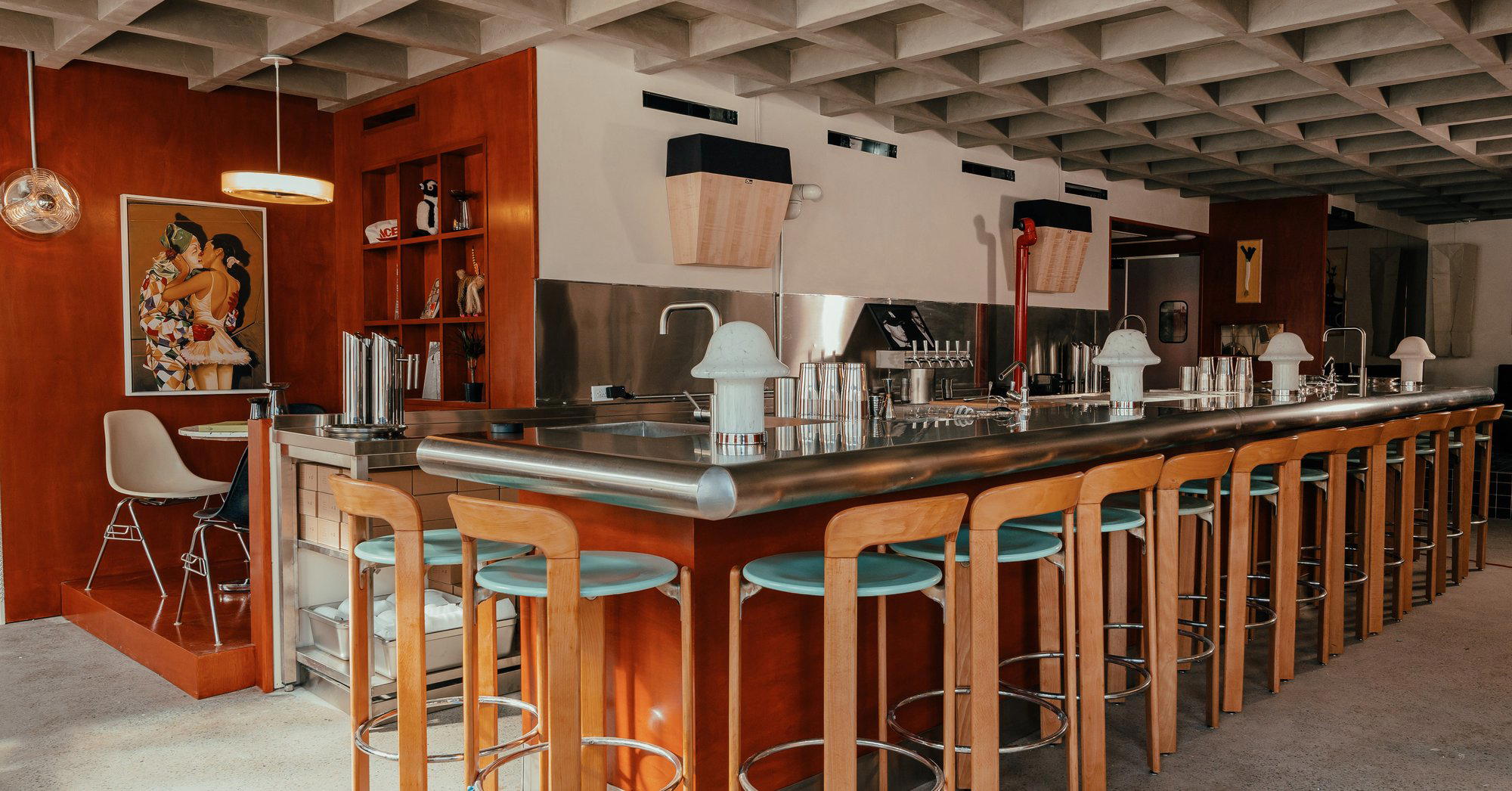
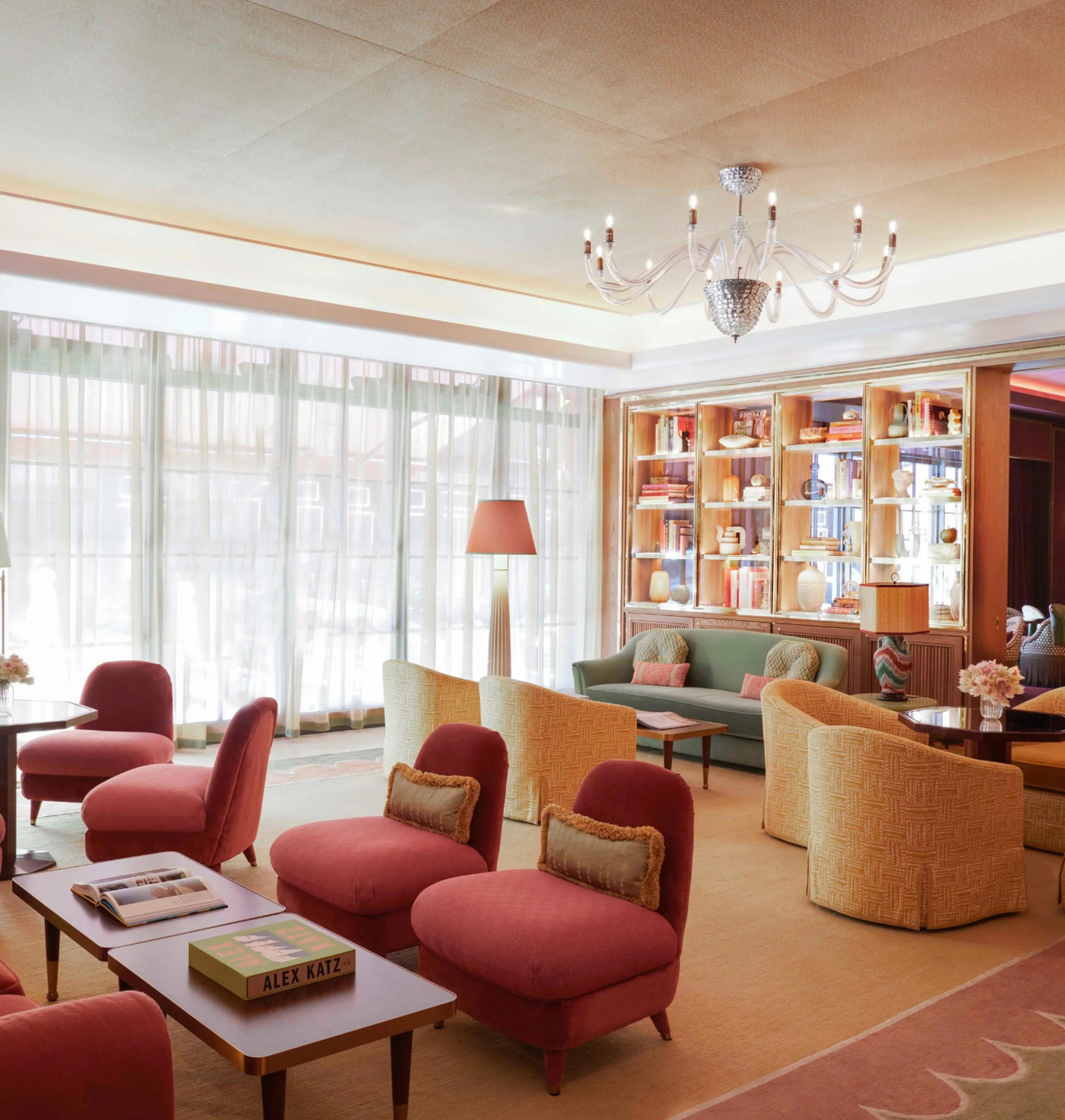
Sunlight-drenched 37,000 sq ft space filled with aromas of tacos, bagels, and international foods, creating a lively community atmosphere.