Esplanade




2 Michelin Stars · La Liste Top Restaurants · Falstaff Restaurant - 96 Falstaff Points
Our verdict
At Nauwieserstraße 5 in central Saarbrücken, Esplanade holds two Michelin stars and an 85-point La Liste score for 2026, placing it among Germany's serious classical French addresses. Chef Silio Del Fabro operates within a precise, French-rooted idiom that sits at the upper tier of Saarland dining. Service runs across tight lunch and dinner windows, making advance planning essential.

Pearl is the En Primeur Club membership app — saves, bookings, and concierge access live there. Same editors, same standards.
- Address
- Nauwieserstraße 5, 66111 Saarbrücken, Germany
- Phone
- +49 681 84499125
- Hours
- Mon–Tue ClosedWed–Sat 12–2 PM, 6:30–10 PMSun Closed
- Website
- esplanade-sb.de
- Directions
- Get directions
- Booking
- Book on OpenTable
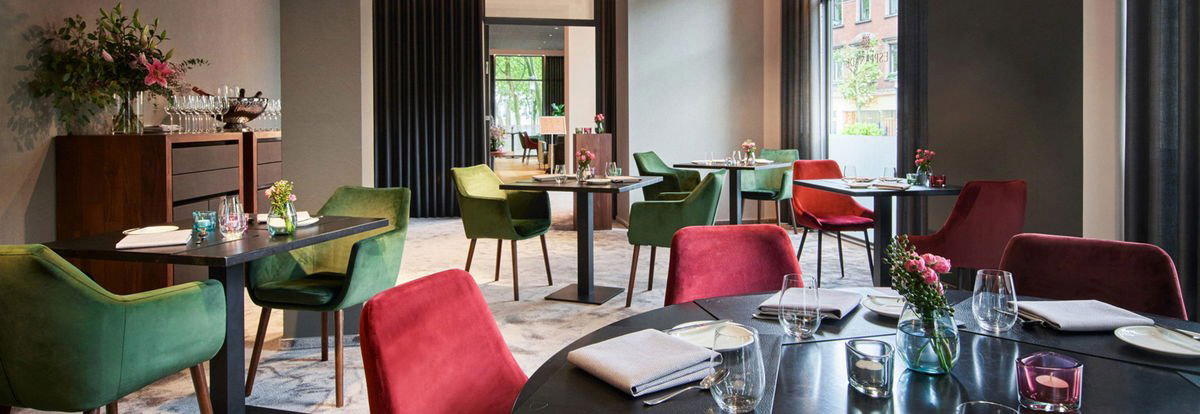
French Classicism at the Franco-German Border
Saarbrücken occupies a position that few German cities can claim: it sits within a few kilometres of the French border, and that proximity has shaped the city's restaurant culture more than almost any other geographic fact in the German dining scene. The Saar region absorbed French culinary influence long before cross-border cooking became fashionable elsewhere, and the result is a small but serious cluster of classical French-oriented restaurants that punch well above the city's size. Esplanade, on Nauwieserstraße in the city centre, sits at the top of that cluster, holding two Michelin stars continuously through 2024 and 2025 and scoring 85 points on La Liste's 2026 ranking.
The address itself frames expectations. Nauwieserstraße runs through one of Saarbrücken's more characterful quarters, and arriving at the restaurant, the restraint of the exterior signals the register inside: this is a room built for the cooking, not for spectacle. Classical French fine dining in Germany tends to favour exactly that discipline — rooms that do not compete with the plate, service cadences borrowed from the French tradition, and menus where the logic is legibility rather than surprise. Esplanade operates within that discipline under chef Silio Del Fabro.
Where Esplanade Sits in Saarbrücken's Dining Tier
To understand Esplanade's position, it helps to map the city's fine dining options. At the top tier, two restaurants hold two Michelin stars: Esplanade and GästeHaus Klaus Erfort, also a classical French address at the €€€€ price point. Below them, the city's creative and contemporary options — Le Comptoir and Le petit CINQ, operate at the €€€ tier with different culinary propositions. At a more accessible price point, Le Schloss Halberg and Restaurant Quack in der Villa Weismüller offer French and Mediterranean approaches respectively.
The Opinionated About Dining Classical Europe ranking places Esplanade at number 332 for 2024, which locates it precisely within the continental classical tradition rather than in the experimental or new-wave European cooking that has attracted more critical attention in recent years. That ranking reflects a consistent editorial position: Esplanade is a restaurant for those who want classical French craft executed at a serious level, not for those seeking the kind of format innovation that drives rankings at places like CODA Dessert Dining in Berlin or the progressive German fine dining represented by ES:SENZ in Grassau.
The French Tradition and What It Means on This Side of the Border
Classical French cuisine, as practised at this level, is not a nostalgic exercise. The tradition that runs from haute cuisine through nouvelle cuisine and into the current phase, sometimes called cuisine de terroir or cuisine du marché, is one built on rigorous technique applied to ingredient quality. The closer a kitchen sits to France's northeastern and eastern producing regions, the more directly it can source: Alsatian produce, Moselle valley wines, Lorraine dairy and game all become practically available in Saarbrücken in ways they are not in Munich or Hamburg. That geographic advantage is structural, not incidental.
The great classical French houses that Esplanade implicitly references in its culinary tradition include addresses like L'Ambroisie in Paris and Auberge de l'Ill in Illhaeusern, the latter barely 90 kilometres from Saarbrücken across the French border. Auberge de l'Ill has held three Michelin stars since 1967 and represents the Alsatian strand of French classicism that values regional product and generational continuity. Whether Esplanade draws directly from that Alsatian lineage or from a broader French classical inheritance is not the point; what matters is that kitchens operating at this price and award level in the Saar-Moselle-Alsace triangle are cooking within a tradition shaped by proximity to France's most technically demanding culinary culture.
Germany's own two-star classical French cohort is smaller than it was twenty years ago. Rooms that once defined the upper end of German fine dining, anchored in French technique, grand service, and wine lists built around Bordeaux and Burgundy, now compete with a generation of German chefs who have developed an identifiably German idiom at the same award tier. Places like JAN in Munich and Aqua in Wolfsburg occupy different parts of the spectrum. Esplanade's continued commitment to classical French cuisine at the two-star level in 2025 is therefore a deliberate editorial position as much as a culinary one.
Reading the Awards Trajectory
Esplanade's La Liste score moved from 83 points in 2025 to 85 points in 2026, a two-point gain that, within La Liste's compressed upper scoring band, indicates upward momentum rather than plateau. La Liste aggregates critical scores from multiple guide sources internationally, which makes consistent point gains meaningful: they reflect broad critical consensus rather than a single guide's editorial preferences. Two Michelin stars held across consecutive editions (2024 and 2025) confirm that the kitchen is not relying on a single strong year but maintaining a level that Michelin's inspectors have returned to verify.
Service Hours and Planning Your Visit
Esplanade operates tight service windows that define the experience before a guest sits down. The kitchen runs lunch from 12:30 to 1:45pm and dinner from 8:00 to 9:45pm, Tuesday through Monday excluding Wednesday, when the restaurant is closed. Those windows, 75 minutes for lunch, under two hours for dinner service, are shorter than many comparable rooms and signal a structured, coursed format rather than an open-ended à la carte sitting. The practical implication is that reservations need to be timed precisely, and late arrivals compress the experience materially. Wednesday closures are standard for kitchens operating at this intensity, giving the team a full mid-week break.
At the €€€€ price tier, Esplanade sits at the upper end of Saarbrücken dining. Visitors combining a trip to the region can cross-reference our full Saarbrücken restaurants guide for a broader picture of the dining scene, or use our guides for Saarbrücken hotels, bars, wineries, and experiences to build a fuller itinerary around the visit. Given the restaurant's compact service slots and its position as one of only two two-star rooms in the city, booking well in advance is the practical baseline.
What the Cooking Represents
At the two-star classical French level anywhere in Europe, the plate is not an experiment. It is a statement of position: this kitchen knows the tradition, can execute its techniques at the highest level, and chooses to work within a defined set of culinary values rather than against them. The ingredients that appear on menus in this tradition, seasonal, sourced with care for provenance, prepared with classical method, arrive on the plate as evidence of a position, not as a journey narrative. For a diner who has eaten at the reference addresses of French classicism, the pleasure is in the precision. For a diner new to this tier, Esplanade's two-star status and La Liste recognition provide a reliable framework for what to expect: serious cooking, formal service, and a room in which the meal itself is the event.
What should I eat at Esplanade?
Esplanade's cuisine is classical French, operating at the two-Michelin-star level under chef Silio Del Fabro. The kitchen does not publish specific signature dishes through publicly available channels, and generating invented dish descriptions would misrepresent what the menu actually offers at any given time. What the awards record makes clear is that the cooking sits within a rigorous classical French tradition: technique-led, seasonally oriented, and priced at the €€€€ tier consistent with tasting or set-menu formats at this level. The most reliable approach is to arrive without a fixed expectation of specific dishes and trust the menu as composed, that is, after all, how classical French fine dining is designed to be experienced. The 75-minute lunch window is a more compressed format than the evening service and suits guests who want a serious meal without a full evening commitment.
How It Stacks Up
| Venue | Cuisine | Price | Awards | Notes |
|---|---|---|---|---|
| EsplanadeThis venue — the venue you are viewing | Modern French Haute Cuisine with Mediterranean & Japanese Influences | Not listed | 2 Michelin Stars · La Liste Top Restaurants | Not listed |
| GästeHaus Klaus Erfort | Classical French Fine Dining | $200–300 | 2 Michelin Stars · La Liste Top Restaurants | Classic French |
| Le Comptoir | Modern French Bistro | $100–150 | Michelin Plate | Creative |
| Le petit CINQ | Modern French Bistro | $50–100 | Michelin Plate | Contemporary |
| Le Schloss Halberg | Classic French | $50–100 | Michelin Plate | Not listed |
| Restaurant Quack in der Villa Weismüller | Modern European with Mediterranean and Regional Influences | $50–100 | Michelin Plate | Mediterranean Cuisine |
Recognition history
Dated appearances from independent guides and award organizations, with the underlying list record or original source where available.
Michelin 2 Stars
Michelin
La Liste Top Restaurants
La Liste
Falstaff Restaurant - 96 Falstaff Points
Falstaff
Opinionated About Dining Classical in Europe Ranked #332
Opinionated About Dining
Full recognition history (7 entries)
La Liste Top Restaurants
La Liste
Michelin 2 Stars
Michelin
Michelin 2 Stars
Michelin
Continue exploring
More in Saarbrücken
Restaurants in Saarbrücken
Browse all →
Bars in Saarbrücken
Browse all →
Hotels in Saarbrücken
Browse all →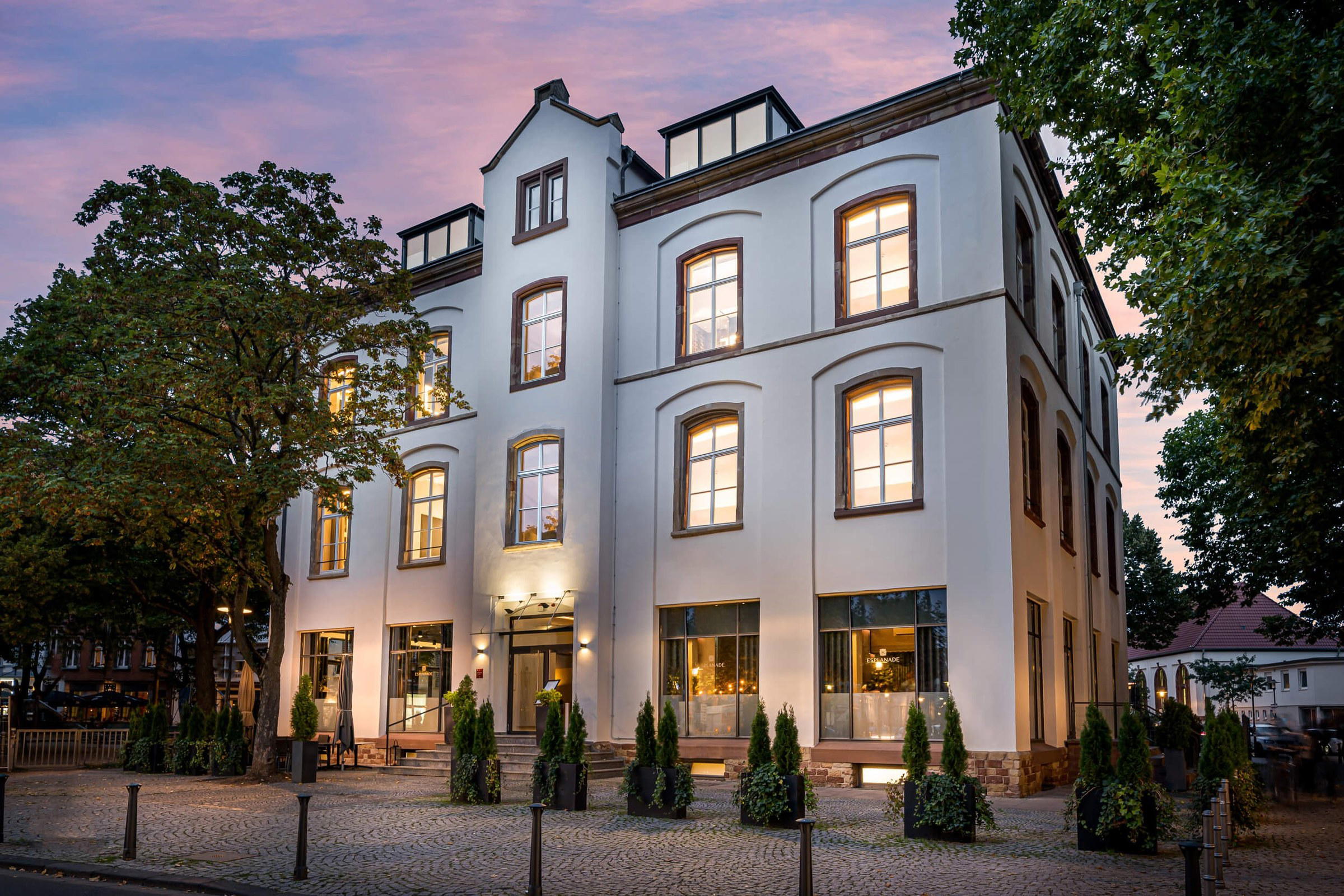

Details
- Elegant
- Sophisticated
- Modern
- Intimate
- Classic
- Date Night
- Special Occasion
- Business Dinner
- Historic Building
- Hotel Restaurant
- Extensive Wine List
- Sommelier Led
- Farm To Table
- Local Sourcing
- Biodynamic
- Tasting Menu
- A La Carte
- Vegetarian Friendly
- Allergy Accommodating
Current opening hours
- Monday
- Closed
- Tuesday
- Closed
- Wednesday
- 12–2 PM, 6:30–10 PM
- Thursday
- 12–2 PM, 6:30–10 PM
- Friday
- 12–2 PM, 6:30–10 PM
- Saturday
- 12–2 PM, 6:30–10 PM
- Sunday
- Closed
Hours can change for holidays and private events. Last verified .
Timeless elegant interior with minimalist mid-century design, clear lines, noble materials, and harmonious ambiance featuring floor-to-ceiling windows.